Calgary homeowners can efficiently finance attic insulation and air sealing upgrades by leveraging existing home equity through second mortgages or home equity lines of credit (HELOCs). By accessing these secured funds, property owners can complete critical building envelope improvements, significantly reduce monthly utility expenditures, and increase their home’s overall market value without relying on high-interest unsecured personal loans.
Key Takeaways
- Equity Extraction: Homeowners can borrow up to 80% to 85% of their property’s Loan-to-Value (LTV) ratio to fund energy upgrades.
- Utility Reductions: Proper air sealing and R-60 insulation can reduce heating and cooling costs by up to 20%.
- Building Envelope Priority: Upgrading the attic is the most cost-effective method to combat the “stack effect” in cold climates.
- Cost vs. Value: Average 2026 insulation projects cost between $2,500 and $5,500, but immediately increase property resilience and resale appeal.
- Financing Options: Second mortgages offer lower interest rates than traditional credit cards, making them ideal for rapid property improvements.
The Critical Role of the Building Envelope in Calgary’s Climate
In 2026, managing household energy consumption in Alberta requires a strategic approach to a property’s building envelope. Calgary averages over 5,000 heating degree days annually, making winter climate control a significant financial burden for property owners. The building envelope—comprising the roof, walls, windows, and foundation—acts as the primary defense against thermal transfer.
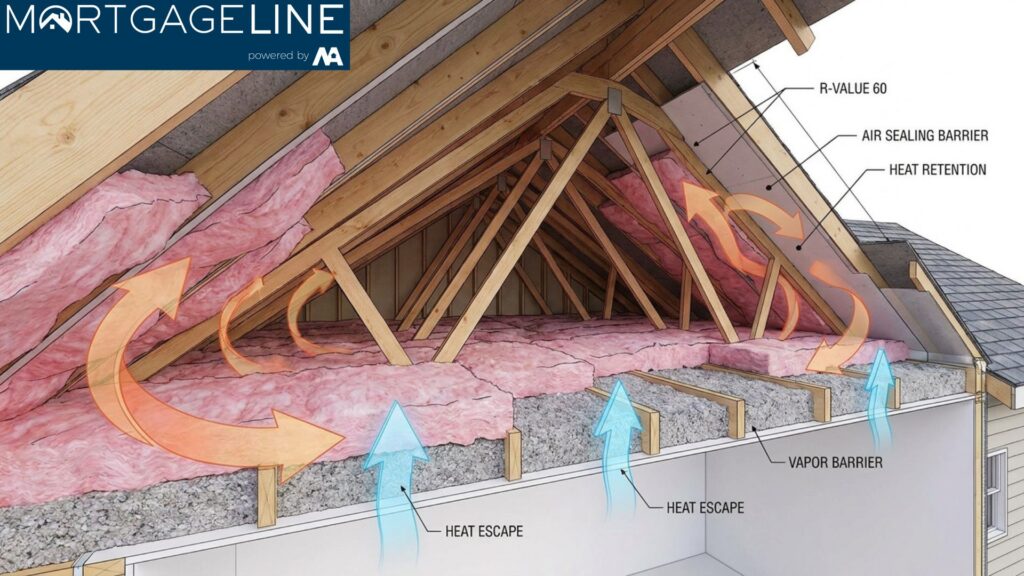
When an attic is poorly insulated, it suffers from the “stack effect.” Warm air naturally rises, escaping through microscopic gaps in the ceiling and roof structure. This depressurizes the lower levels of the house, drawing in freezing exterior air through basement walls and window frames. According to official guidance from Natural Resources Canada, “improving the building envelope is the most cost-effective way to improve a home’s energy efficiency and comfort.”
Furthermore, the unique phenomenon of Calgary’s Chinook winds causes rapid freeze-thaw cycles. Heat escaping into a poorly insulated attic melts roof snow, which then refreezes at the eaves, creating destructive ice dams. Proper insulation and air sealing mitigate this expensive structural risk.
Understanding Attic Insulation and Air Sealing Upgrades
Many homeowners mistakenly believe that simply adding more insulation will solve their energy woes. However, building science dictates that air sealing must always precede insulation. If air sealing is ignored, warm, moisture-laden air will continue to bypass the insulation, potentially causing mold growth and rotting roof trusses.
The Mechanics of Air Sealing
Air sealing involves locating and permanently blocking structural penetrations. Common leakage points include around pot lights, plumbing stacks, electrical wiring, and the attic hatch. Energy Star publications state that “air leakage can account for 25 to 40 percent of the energy used for heating and cooling in a typical residence.” By applying polyurethane spray foam and specialized caulking to these areas, contractors eliminate thermal bridging and drafts.
Achieving R-60 Standards in 2026
Thermal resistance is measured in R-value. In 2026, the recommended standard for attic insulation in Calgary (Climate Zone 7A/7B) is R-60. Depending on the existing materials, achieving this often involves blowing in specialized cellulose or fiberglass on top of an adequately sealed vapor barrier. Ensuring proper ventilation through soffit baffles is equally crucial to maintain a cold roof deck and optimize the new insulation’s R-value.
The True Cost of Energy Inefficiency
Delaying essential thermal upgrades carries steep hidden costs. Research from Natural Resources Canada indicates that space heating accounts for over 60% of energy use in Canadian homes, and up to 25% of that heat loss occurs directly through an under-insulated roof. As carbon pricing and utility rates fluctuate in 2026, this unmitigated heat loss translates directly into hundreds of dollars burned annually.
Conversely, investing in these upgrades provides a tangible return. By properly sealing and insulating the attic space, property owners can reduce their overall heating and cooling energy usage by 10% to 20%. Beyond immediate utility savings, these upgrades prevent costly future repairs related to moisture damage, ice damming, and premature roof replacement.
Leveraging Home Equity for Home Improvements
While the long-term ROI of energy efficiency is clear, the upfront capital required for professional abatement, air sealing, and blowing in R-60 insulation can be a barrier. In 2026, a comprehensive professional attic upgrade for an average single-family home in Calgary ranges from $2,500 to $5,500, depending on the square footage and complexity.
Home equity financing provides a highly effective solution. Equity is the difference between your property’s current market value and the outstanding balance of your primary mortgage. By tapping into this accrued value, homeowners can secure funds at rates significantly lower than unsecured personal loans or credit cards, which often carry interest rates approaching 19.99%.
According to principles outlined by the Financial Consumer Agency of Canada, “secured lending products like home equity loans generally provide consumers with lower interest rates compared to unsecured credit options.” This makes equity extraction the most logical path for substantial renovation projects.
Types of Equity Extraction
When assessing how to fund these upgrades, property owners typically choose between two secured financial instruments. When comparing a second mortgage to a HELOC, it is vital to understand your long-term financial strategy.
- Second Mortgages: A one-time lump-sum loan secured against the property. This offers a fixed term, a predictable amortization schedule, and is ideal for paying a contractor’s invoice outright. Understanding the current second mortgage rates is essential for calculating the total cost of borrowing.
- Home Equity Lines of Credit (HELOC): A revolving credit facility that allows you to draw funds as needed, paying interest only on the utilized amount. This is highly flexible for phased home improvements.
Second Mortgages vs. Unsecured Loans for Renovation Financing
To highlight the financial efficiency of utilizing home equity, the following table compares secured second mortgages against standard unsecured personal loans for a $5,000 renovation project.
| Feature | Secured Second Mortgage | Unsecured Personal Loan / Credit Card |
|---|---|---|
| Interest Rates (2026 Est.) | Moderate (Generally 8% – 15%) | High (15% – 24%+) |
| Approval Criteria | Based heavily on property equity (LTV) | Based entirely on credit score & income |
| Borrowing Limits | High (Up to 80%-85% of home value) | Low (Capped by personal credit limit) |
| Amortization | Flexible long-term options available | Short-term rigid repayment schedules |
Step-by-Step Guide: Funding Your Insulation Project
For Calgary homeowners ready to upgrade their building envelope, following a structured process ensures maximum financial efficiency.
- Assess Your Available Equity: Calculate your home’s estimated 2026 market value and subtract your primary mortgage balance. In Alberta, you can generally borrow up to 80% to 85% of this total value. If you have unique employment circumstances, you can still secure funding despite having variable energy sector income.
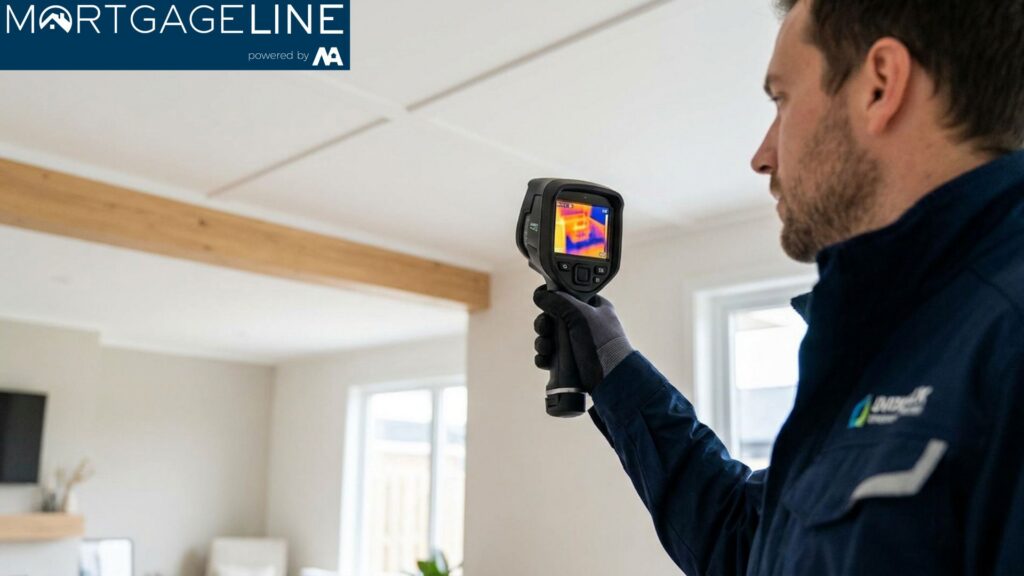
- Obtain Comprehensive Quotes: Bring in certified contractors who use thermal imaging to detect specific air leaks. Ensure quotes explicitly state the cost of air sealing separate from the cost of blowing in R-60 insulation.
- Secure the Financing: Apply for a second mortgage or HELOC. Depending on the lender, the process is incredibly streamlined. Some property owners opt to work with private lenders requiring no formal appraisal to expedite the funding process.
- Execute and Document the Upgrades: Once funded, have the professionals complete the work. Retain all invoices, EnerGuide evaluations, and spec sheets. This documentation is vital for potential municipal rebates and future resale valuation.
Financial Returns: ROI and Real Estate Value
Beyond immediate comfort and lowered utility bills, insulation upgrades are an investment in your property’s net worth. The Canadian Real Estate Association (CREA) reports that “energy-efficient homes often benefit from higher resale values and shorter times on the market.”
In the competitive 2026 Calgary real estate landscape, buyers actively scrutinize utility costs and HVAC efficiency. A home boasting verified R-60 attic insulation and professional air sealing commands a premium, as buyers know they are protected from extreme winter cold and summer heat waves. The increased equity generated by the home’s rising value frequently outpaces the interest paid on the second mortgage used to finance the project.

Alternative Scenarios: Bundling Major Repairs
Once the financing facility is open, many homeowners choose to bundle their attic insulation project with other vital property improvements to maximize the utility of the loan. Since opening a second mortgage involves fixed administrative and legal costs, grouping projects is a sound financial strategy.
For example, property owners dealing with foundation cracks might seek equity financing for major structural repairs simultaneously. Likewise, owners of heritage properties in older Calgary neighborhoods might combine their insulation upgrades with older home upgrades like knob and tube wiring replacement. By securing one comprehensive secondary loan, the entire building is modernized, safeguarded, and optimized for maximum market value in a single phase.
For more insights into strategic real estate borrowing, homeowners can explore our comprehensive real estate finance blog.
Frequently Asked Questions
How much equity do I need to finance attic insulation in Calgary?
You typically need to have at least 15% to 20% equity remaining in your home after the new loan is applied. Most lenders in Alberta allow you to borrow up to 80% to 85% of your property’s total appraised value.
Does air sealing really make a difference compared to just adding insulation?
Yes, air sealing is absolutely critical. Without it, warm air bypasses the insulation, rendering the R-value ineffective and drastically increasing the risk of attic mold and ice dams.
What is the recommended R-value for Calgary attics in 2026?
The current recommended standard for attic insulation in Calgary’s climate zone is R-60. This provides optimal thermal resistance against severe winter cold and extreme summer heat.
Will a second mortgage affect my primary mortgage?
No, a second mortgage is a completely separate loan registered behind your primary mortgage. Your first mortgage’s interest rate, term, and amortization schedule remain entirely unaffected.
How quickly can I access home equity funds for winter preparations?
Depending on the lender and your application readiness, second mortgage funds can often be accessed within one to two weeks, allowing you to secure contractors before severe winter weather sets in.
Conclusion
Upgrading your home’s attic insulation and executing thorough air sealing are essential steps for any Calgary homeowner looking to permanently lower utility bills, enhance indoor comfort, and protect their property from structural moisture damage. In 2026, the financial burden of these essential building envelope upgrades can be easily managed by utilizing a second mortgage or HELOC. By leveraging the dormant equity in your home, you gain access to low-cost capital, allowing you to modernize your property immediately while reaping the long-term rewards of increased resale value and massive energy savings.
If you are ready to explore your borrowing options and fund your property’s energy upgrades, contact us today to speak with a specialized equity lending expert.