Calgary homeowners can access up to 80% of their property’s appraised value through home equity financing to fund energy-efficient window and door replacements without liquidating personal savings. By leveraging a second mortgage or a Home Equity Line of Credit (HELOC), residents can immediately offset upfront installation costs, secure lower interest rates compared to unsecured personal debt, and drastically reduce their winter heating bills through improved thermal retention.
Key Takeaways
- Accessing Capital: Home equity financing allows you to borrow against your home’s value to fund renovations, typically up to an 80% Loan-to-Value (LTV) ratio.
- Energy Savings: Upgrading to ENERGY STAR-certified windows can reduce residential heat loss by up to 20%, a critical factor in Calgary’s harsh winter climate.
- Preserving First Mortgages: A second mortgage allows you to fund upgrades without breaking your existing primary mortgage, avoiding high prepayment penalties.
- Property Valuation: High-efficiency windows and doors are among the highest-return investments for increasing overall property resale value.
- Structural Synergy: While upgrading, many homeowners roll other crucial repairs into their financing, maximizing the utility of the borrowed funds.
The Financial Case for Upgrading Your Home’s Envelope
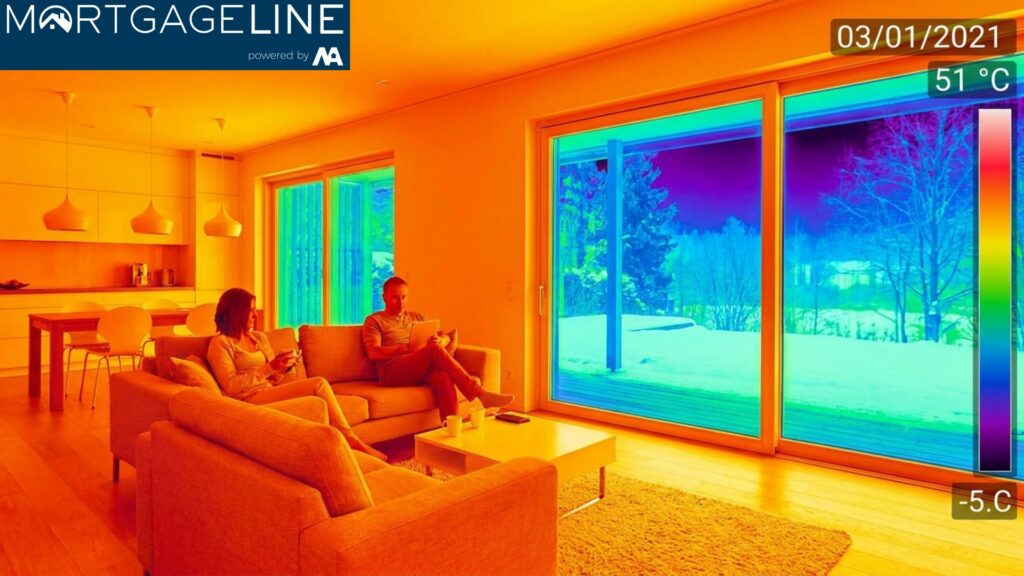
Living in Alberta means managing extreme temperature fluctuations. From deep winter freezes to rapid warming caused by Chinook winds, a home’s exterior envelope undergoes massive thermal stress. Older homes, particularly those built before the year 2000, often feature single or standard double-pane windows that fail to meet modern efficiency standards. According to Statistics Canada, space heating accounts for more than 60% of the energy consumed in the average Canadian household. Consequently, inefficient windows and doors are not just aesthetic issues; they are massive financial liabilities.
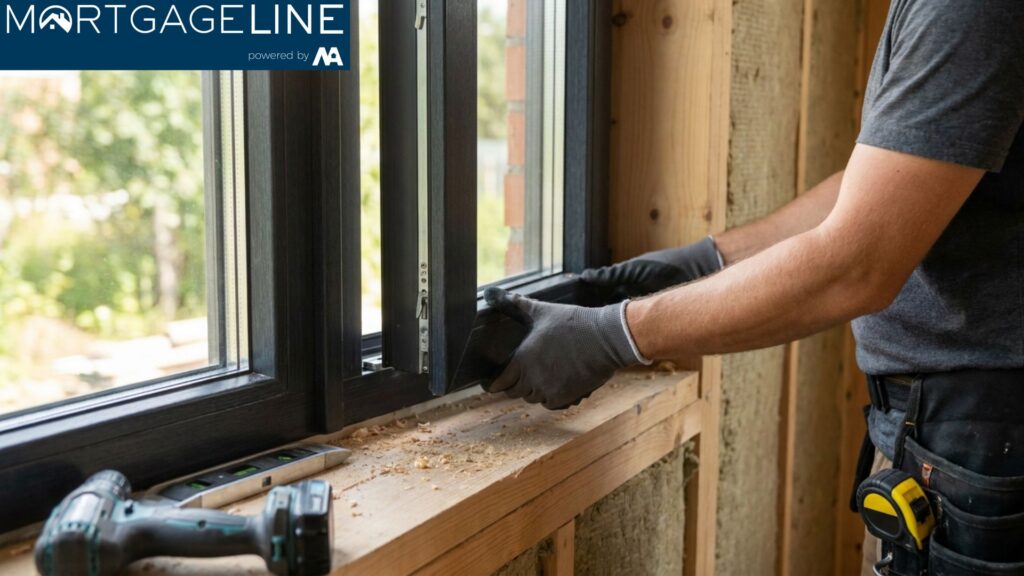
By upgrading your property’s thermal envelope, you are actively hedging against rising utility costs. However, full-house window and door replacements are capital-intensive. In 2026, a comprehensive replacement for a standard single-family home in Calgary can easily range between $15,000 and $30,000, depending on the materials used. This is where leveraging your home’s accrued equity becomes a highly logical financial strategy.
Understanding Home Equity Financing Options
When you have built up equity in your property—either through paying down your mortgage principal or through localized property appreciation—you can borrow against that value. For homeowners considering major energy-efficient renovations, there are two primary vehicles for accessing this capital without selling the home.
Second Mortgages vs. HELOCs
It is important to understand the distinctions when comparing a second mortgage to a HELOC. A Home Equity Line of Credit (HELOC) acts as revolving credit, usually with a variable interest rate tied to the prime lending rate. You only pay interest on the amount you actively draw. Conversely, a second mortgage provides a lump sum of cash upfront, often with a fixed interest rate and a structured repayment term. This lump sum is ideal for paying contractors who require staged payments for custom window and door manufacturing and installation.
| Feature | Second Mortgage | HELOC | Unsecured Personal Loan |
|---|---|---|---|
| Funding Method | Single lump sum upfront | Revolving line of credit | Single lump sum upfront |
| Interest Rates | Usually fixed, lower than unsecured | Usually variable, tied to prime | High, heavily dependent on credit |
| Repayment Term | Fixed schedule (e.g., 1 to 5 years) | Flexible, often interest-only initially | Fixed schedule |
| Qualification | Asset-based, easier with high equity | Requires excellent credit score | Requires excellent credit score |
Given the economic environment in 2026, many homeowners hold a first mortgage with an exceptionally favorable interest rate locked in from previous years. Refinancing the entire first mortgage to access $20,000 for windows would mean surrendering that low rate on the entire mortgage balance. Therefore, taking out a subordinate loan to cover the renovation costs makes the most mathematical sense. Be sure to review current second mortgage rates in 2026 to accurately project your monthly carrying costs.
Calculating Your Available Equity for Renovations
Before contacting window installation companies, you must determine your borrowing capacity. Canadian lending regulations typically cap total borrowing at 80% of a home’s appraised value. The calculation is straightforward:
(Appraised Home Value × 80%) – Current Mortgage Balance = Available Equity
For example, if your Calgary property is appraised at $600,000, 80% of that value is $480,000. If your remaining first mortgage balance is $350,000, you have $130,000 in available equity. This is more than enough to cover a premium triple-pane window package, a custom fiberglass entry door, and potentially other necessary upgrades, such as financing structural property repairs or upgrading outdated aluminum wiring while the walls are open.
Navigating Calgary’s Specific Climate Needs
When investing borrowed funds into your home, you must choose materials that offer the highest return on investment for the local climate. The Natural Resources Canada documentation explicitly states that windows, doors, and skylights are a major source of heat loss in Canadian homes. In Calgary, specific technical specifications should be prioritized:
Key Window Metrics for Alberta Homes
- U-Factor: This measures the rate of heat transfer. A lower U-factor indicates better insulation. For Calgary’s climate, look for the lowest possible U-factor to keep indoor heat from escaping during minus 30-degree cold snaps.
- Solar Heat Gain Coefficient (SHGC): This measures how much solar radiation is admitted through the window. In Calgary, a higher SHGC on south-facing windows can help passively heat your home during sunny winter days.
- Triple-Pane vs. Double-Pane: While double-pane is standard, triple-pane windows featuring two layers of argon gas and Low-Emissivity (Low-E) coatings offer superior thermal resistance and soundproofing—a bonus if you live near major Calgary transit corridors.
While discussing financing options, homeowners in nearby municipalities can explore localized home equity options in neighboring areas like Chestermere to ensure they receive terms suited to their specific suburban property valuations.

Step-by-Step Guide to Funding Your Replacements
Executing a major home improvement project using equity requires careful sequencing. Follow these steps to ensure your project stays on budget and on schedule:
- Obtain Professional Appraisals and Estimates: Before applying for financing, request detailed written quotes from at least three reputable Calgary window and door companies. Simultaneously, get a clear estimate of your home’s current market value.
- Consult a Mortgage Specialist: Discuss your renovation goals with a broker. If your credit history is complex or you are self-employed, a broker can connect you with private lending options that may bypass traditional appraisals.
- Apply and Secure the Funds: Submit your application for a second mortgage or HELOC. Ensure the requested amount includes a 10% to 15% contingency buffer for unexpected issues, such as discovering water rot in the window frames once the old units are removed.
- Schedule the Installation: Once funds are deposited into your account, sign the final contract with your installer and pay the required deposit (usually 30% to 50% upfront for custom manufacturing).
- Complete the Project and Collect Documentation: Keep all receipts, ENERGY STAR certificates, and warranty documents. These are essential for proving the home’s increased value during future appraisals or resale.
The Return on Investment (ROI) of Energy Efficiency
The Canada Mortgage and Housing Corporation (CMHC) notes that maintaining and improving a property’s energy efficiency is vital for long-term real estate value preservation. While the exact ROI varies, energy-efficient window and door replacements consistently rank among the top home improvements for cost recovery at resale.
Furthermore, the monthly cash flow impact should not be underestimated. By reducing heat loss, your furnace runs less frequently. The savings generated on your monthly natural gas and electricity bills can be directly applied to servicing the interest on your home equity loan. Over a 10 to 15-year period, these high-efficiency upgrades often pay for themselves through accumulated utility savings, making the use of equity a highly rational financial decision.
Macroeconomic Factors to Consider
When taking on additional debt, it is crucial to understand the broader economic landscape. The Bank of Canada policy interest rate directly impacts the cost of borrowing. If rates are projected to fluctuate, securing a fixed-rate second mortgage provides payment certainty. You will know exactly what your monthly obligations are, shielding your household budget from unexpected spikes in interest costs.
If you are tapping into equity, ensure that your employment income is stable enough to manage the new monthly payment. Lenders will calculate your Total Debt Service (TDS) ratio to ensure you are not over-leveraged. Proper planning guarantees that upgrading your home remains a source of comfort, rather than financial stress.
Frequently Asked Questions
Can I use a second mortgage for partial window replacements?
Yes, you can use equity financing for any portion of your home improvements. However, because setting up a second mortgage involves legal and administrative fees, it is generally more cost-effective to undertake larger, comprehensive projects rather than replacing just one or two windows.
Will new doors and windows increase my property appraisal value?
Absolutely. High-quality exterior upgrades improve curb appeal, increase security, and boost energy efficiency. Appraisers and future buyers highly value homes with modern, maintenance-free thermal envelopes.
How long does it take to secure a home equity loan for renovations?
Depending on the lender and the complexity of your file, securing a second mortgage can take anywhere from a few days to three weeks. Private lenders often process applications faster than traditional banks.
Is it better to get a fixed or variable rate for renovation financing?
This depends on your risk tolerance. A fixed-rate second mortgage offers predictable monthly payments, which is excellent for budgeting. A variable-rate HELOC might offer a lower initial rate but carries the risk of increasing if the Bank of Canada raises interest rates.
What happens to the second mortgage if I sell my house?
When you sell your property, the proceeds of the sale are used to pay off all registered encumbrances. The first mortgage is paid off first, followed immediately by the second mortgage, before the remaining profits are released to you.
Are there any government rebates available for window upgrades in 2026?
Government grant and rebate programs change frequently. It is highly recommended to check current municipal and federal energy efficiency programs, as they can sometimes be combined with your equity financing to further reduce out-of-pocket costs.
Conclusion
Utilizing home equity financing for energy-efficient window and door replacements is a strategic move for Calgary homeowners aiming to combat severe winter weather and rising utility costs. By choosing the right financial product—whether a second mortgage or a HELOC—you can secure the capital necessary to modernize your home’s envelope without disturbing your primary mortgage rate. The long-term benefits of enhanced comfort, lower monthly energy bills, and increased property valuation make this investment incredibly worthwhile. Contact us today to discuss your specific financing needs and explore the best equity options available for your renovation project.