Securing a second mortgage for a property situated in a landslide or slope risk area in Calgary requires passing rigorous geological assessments, adjusting to reduced Loan-to-Value (LTV) limits, and often partnering with specialized private lenders. Because traditional banks typically view active geological hazards as unquantifiable risks, homeowners must rely on comprehensive geotechnical reports and alternative equity financing to unlock their property’s value. In 2026, as climate adaptations and municipal zoning regulations become stricter, leveraging home equity on an escarpment or river valley property demands a strategic, data-backed approach.
Key Takeaways
- Geotechnical Reports are Mandatory: Lenders require recent, certified engineering assessments confirming a satisfactory “Factor of Safety” for the slope before approving equity loans.
- Reduced Loan-to-Value (LTV) Limits: Expect maximum LTV ratios to be capped between 55% and 65% for properties in designated hazard zones, compared to the standard 80%.
- Private Lenders Bridge the Gap: Traditional institutional banks largely reject properties with active subsidence risks, making private equity lenders the primary funding source.
- Funding Remediation: Second mortgages are frequently used to finance critical structural adaptations, such as retaining walls, deep piling, and drainage improvements.
- Insurance Limitations: Earth movement and landslide insurance coverage is highly restricted in Canada, heavily influencing a lender’s risk calculation.
The Geological Reality of Calgary Real Estate
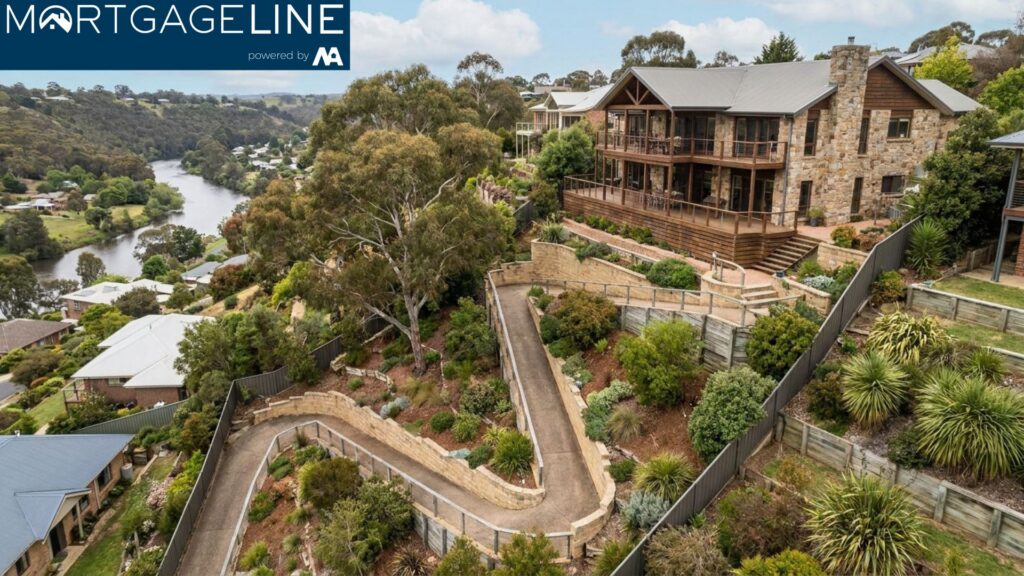
Calgary’s stunning topography is defined by the Bow and Elbow River valleys, coulees, and deep escarpments. While these geological features provide homeowners with breathtaking views, they also introduce significant topographical vulnerabilities. Neighborhoods built along the river banks or atop the Paskapoo Formation often contend with glacial till, clay-rich soils, and underground water movement. Over time, erosion, heavy precipitation, and shifting water tables can destabilize these slopes, leading to subsidence or outright landslides.
According to the City of Calgary, properties located near slopes steeper than 15% are subject to stringent land use bylaws and development setbacks. When homeowners in these hazard zones seek to borrow against their home equity, the geological reality directly intersects with financial viability. Lenders assess the physical ground as heavily as they assess the borrower’s credit score.
How Slope Instability Influences Property Valuation and LTV
Valuing a property located in a landslide hazard zone is a complex process. Traditional Automated Valuation Models (AVMs) used by major banks automatically flag properties located in designated flood fringes or slope hazard zones. Once flagged, a manual appraisal is required. As outlined by the Appraisal Institute of Canada, appraisers must account for environmental and topographical hazards when determining marketability and residual value.
If a slope shows signs of active movement—such as cracking foundations, leaning retaining walls, or shifting soil—the property’s appraised value can plummet. To insulate themselves from potential catastrophic loss, lenders reduce the maximum Loan-to-Value (LTV) ratio. While a standard home might qualify for up to 80% LTV, a home on a risky escarpment may be capped at 55% to 65%. For homeowners looking into Calgary second mortgage rates 2026 guide expectations, it is vital to understand that the perceived physical risk will also command a premium on the interest rate.
Traditional Banks vs. Private Equity for High-Risk Topography
The divide between A-lenders (banks) and alternative lenders is never more apparent than when dealing with geological hazards. Federally regulated financial institutions are bound by strict risk management frameworks. If a property is deemed at risk of sliding, the bank’s security (the house) is literally on unstable ground. Consequently, traditional banks usually issue immediate declines for secondary financing in these scenarios.
Private lenders, however, operate on an equity-based model and possess the flexibility to underwrite unique risks. They evaluate the strength of the required geotechnical engineering report and the viability of the borrower’s exit strategy. If you are struggling with bank rejections, exploring Calgary private lenders no appraisal alternatives or specialized equity financing is often the only path forward.
Lender Comparison: Slope Risk Properties
| Feature | Traditional Banks (A-Lenders) | Private Lenders (Equity-Based) |
|---|---|---|
| Approval Likelihood | Extremely Low (often instant decline) | Moderate to High (subject to engineering data) |
| Maximum LTV | Typically 0% (Decline) or heavily restricted | 55% – 65% based on stability |
| Report Requirements | Mandatory full environmental & geotechnical | Geotechnical assessment focusing on structural safety |
| Speed of Funding | 30 to 60 days (if considered) | 7 to 14 days |
Essential Steps to Secure a Second Mortgage in a Landslide Zone
Successfully accessing your home’s equity when residing in a vulnerable topographical zone requires meticulous preparation. Homeowners must proactively address the lender’s primary concern: the physical preservation of the asset.
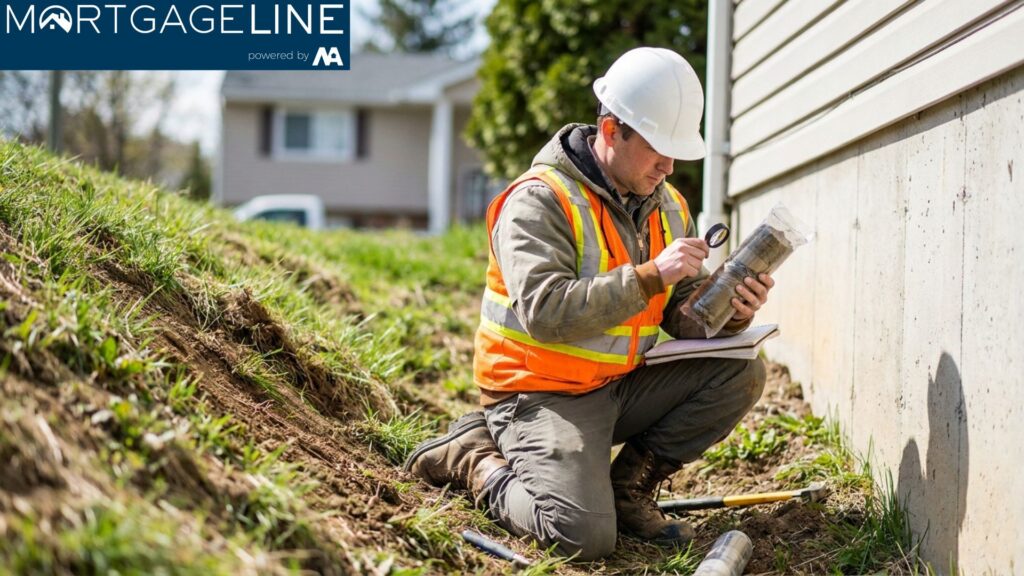
- Obtain a Geotechnical Engineering Report: This is the most critical step. You must hire a licensed engineer associated with the Canadian Geotechnical Society to conduct a slope stability analysis. This report will calculate the “Factor of Safety” (FoS). An FoS of 1.5 or higher is generally required to prove the slope is stable under normal conditions.
- Assess Insurance Viability: Review your current homeowner’s policy. According to the Insurance Bureau of Canada, “earth movement” (including landslides, subsidence, and sinkholes) is broadly excluded from standard Canadian home insurance policies. You must present the lender with proof of whatever comprehensive structural coverage you do have, or demonstrate sufficient retained equity to self-insure against minor shifts.
- Evaluate Structural Integrity: Lenders will want to know if the slope risk has already impacted the dwelling. If the foundation is compromised, you may need to look into financing Calgary homes foundation issues to rectify the problem simultaneously with the loan disbursement.
- Determine Accurate LTV: Work with an appraiser who understands geological setbacks to determine the current, as-is market value of the home, factoring in the slope risk. Calculate your requested loan amount to ensure it falls within the strict 65% LTV ceiling.
- Partner with a Specialty Broker: Do not submit applications to standard banks, as repeated credit hits and rejections will damage your file. Engage a broker who has direct channels to private equity lenders specializing in complex real estate.
Leveraging Home Equity for Structural and Slope Remediation
One of the most common reasons homeowners seek a second mortgage on a slope-risk property is to fund the mitigation of that very risk. Proactive geological stabilization is expensive, but it protects the primary asset from catastrophic loss and restores market value.
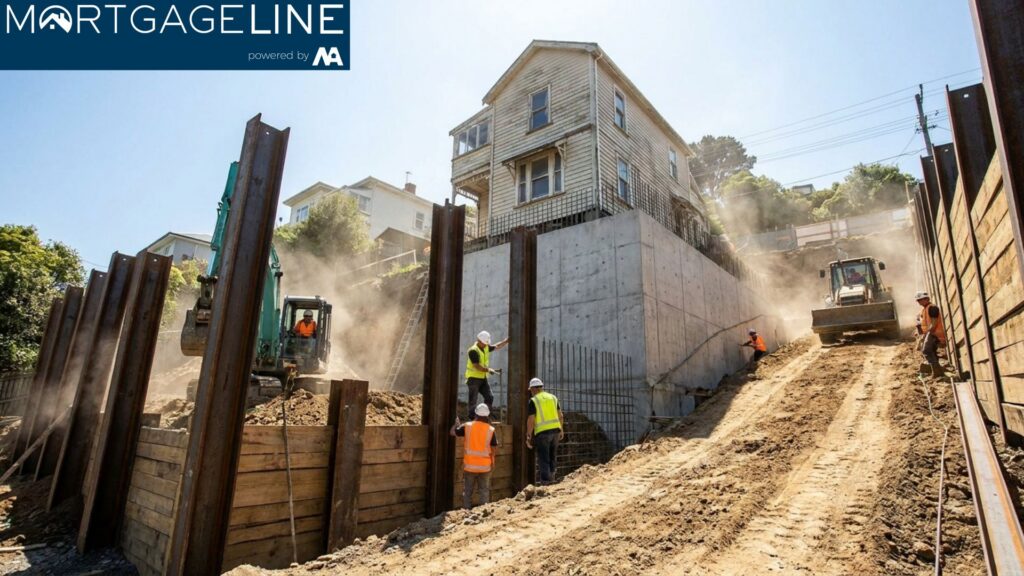
Remediation projects typically involve civil engineering interventions. Retaining walls must be anchored deep into stable bedrock using tie-backs or soil nailing. Weeping tile systems and advanced surface drainage are critical, as water saturation is the leading catalyst for landslides. Furthermore, underpinning the foundation with helical piles or steel soldier piles can transfer the weight of the home past the active slip plane and into stable earth.
By utilizing Calgary structural repair equity financing, homeowners can draw on a second mortgage to pay contractors directly. Private lenders are often willing to structure these as “progress draw” mortgages, releasing funds in tranches as the engineering work is completed and certified by a municipal inspector.
Navigating Environmental Overlay and City Guidelines
Homeowners must be aware of municipal regulatory overlays. The City of Calgary utilizes detailed mapping to identify properties in both flood fringes and landslide hazard zones. If your property falls into these categories, any restorative work funded by your second mortgage will require development permits, building permits, and strict adherence to geotechnical design criteria. Just as homeowners in low-lying areas utilize home equity financing Calgary flood fringe programs to adapt to river flooding, escarpment homeowners must finance earth-retention systems.
It is important to note that unpermitted structural work on a slope can result in stop-work orders and municipal caveats being placed on the property title. A caveat will halt any mortgage funding until the compliance issue is resolved. Therefore, presenting your lender with fully approved municipal development permits alongside your geotechnical report dramatically increases your chances of funding approval.
The Intersection of Property Devaluation and Foreclosure Risk
There is a severe financial hazard for property owners who ignore slope instability: unmarketability. If a slope begins to fail, the property cannot be sold on the open market for a price that will clear the existing first mortgage. If the homeowner also faces income loss or financial distress, they may default on the primary mortgage, triggering legal action.
Foreclosure on a structurally compromised home is a complex legal scenario. As outlined in the Alberta foreclosure valuation requirements, the court must rely on specialized appraisals. If the home is deemed uninhabitable due to landslide risk, the first mortgage holder may seek a deficiency judgment against the borrower’s other assets, as the property itself no longer covers the debt. Securing a second mortgage early—to fund repairs or bridge financial gaps—can prevent the catastrophic loss of the entire property.
Conclusion
Obtaining a second mortgage for a property located in a landslide or slope risk area in Calgary is undoubtedly challenging, but it is entirely possible with the right approach. By securing a certified geotechnical report, understanding the constraints of reduced Loan-to-Value limits, and bypassing traditional banks in favor of specialized private equity lenders, homeowners can access the capital they need. Whether the funds are used for debt consolidation, emergency cash flow, or vital structural stabilization to protect the home from earth movement, leveraging home equity remains a powerful financial tool for escarpment properties in 2026.
If you are facing financing challenges due to your property’s topography, you need a team that understands both complex real estate valuation and alternative lending solutions. Contact us today to discuss your situation and explore your specialized second mortgage options.