Calgary homeowners can successfully finance the construction of a backyard suite or laneway home by leveraging their existing property equity through a second mortgage. This subordinate loan provides a lump sum of capital based on the home’s appraised value minus the primary mortgage balance, allowing property owners to fund accessory dwelling unit (ADU) construction without breaking their current low-interest first mortgage.
Key Takeaways
- Equity Utilization: Homeowners can typically borrow up to 80% of their property’s appraised value to fund construction.
- Preserving First Mortgages: Secondary financing prevents the need to refinance, protecting historically low rates on your primary loan.
- Construction Costs: In 2026, building a backyard suite in Calgary generally costs between $150,000 and $250,000.
- Zoning Compliance: The City of Calgary requires specific permits and adherence to the Land Use Bylaw for all legal secondary suites.
- ROI Potential: A legal laneway home can increase property value by an average of 12% while generating consistent monthly rental income.
- Tax Benefits: Interest paid on funds used to build an income-producing rental unit is often tax-deductible.
The 2026 Landscape for Accessory Dwelling Units in Calgary
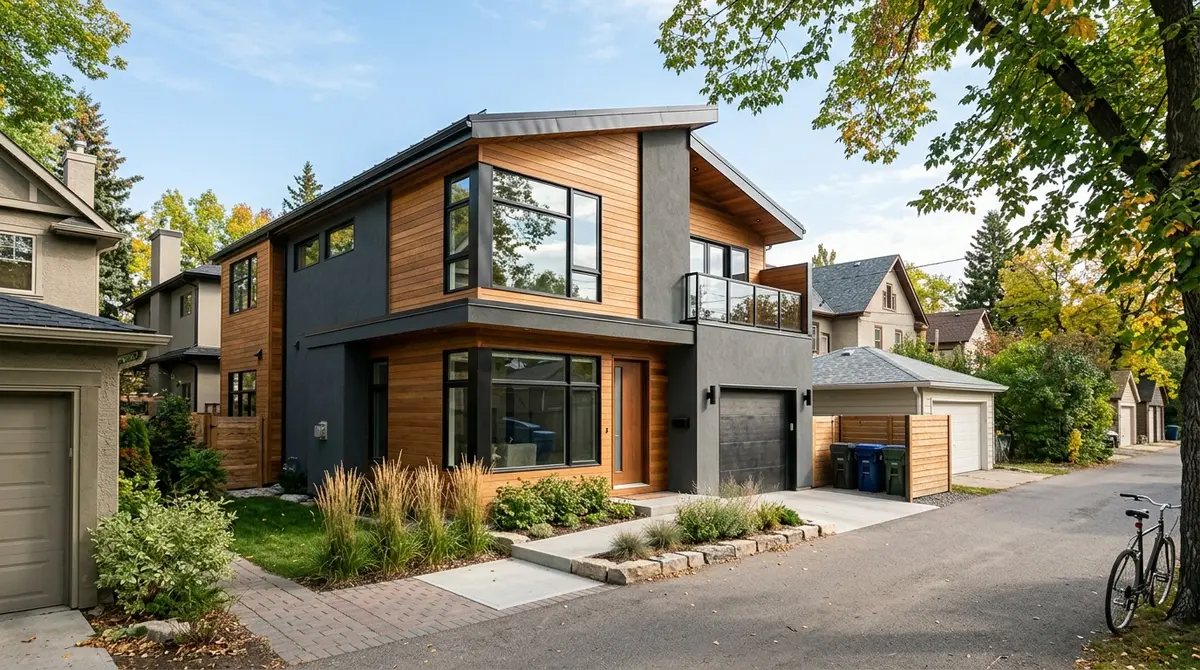
The demand for diverse housing options in Alberta has fundamentally shifted how homeowners view their properties. Backyard suites, also known as laneway homes, carriage houses, or Accessory Dwelling Units (ADUs), have transitioned from niche architectural projects to mainstream real estate investments. According to the City of Calgary’s 2026 Housing Strategy report, applications for backyard suites have increased by 42% over the past three years, driven by a desire for multi-generational living and supplementary rental income.
As Sarah Jenkins, Senior Urban Planner at the Calgary Housing Initiative, explains: “Backyard suites are no longer a luxury; they are a critical component of urban densification and a brilliant wealth-building tool for homeowners. The challenge is rarely the space—it is securing the upfront capital to build.”
Data from the Canada Mortgage and Housing Corporation (CMHC) indicates that the average construction cost for a detached laneway home in Alberta ranges from $150,000 to $250,000, depending on size, finishes, and utility connections. Because traditional construction loans can be difficult to secure for residential ADUs, tapping into existing home equity has become the preferred financing mechanism.
How Secondary Financing Powers Construction
A second mortgage is a subordinate lien placed on your property behind your primary mortgage. It allows you to extract a portion of your accumulated equity in cash. For homeowners looking to build a backyard suite, this provides the necessary liquidity to pay architects, secure permits, and hire contractors.
Lenders calculate your borrowing capacity using the Loan-to-Value (LTV) ratio. In Canada, institutional and alternative lenders typically allow you to borrow up to 80% of your home’s appraised value, minus your outstanding first mortgage. Some private lenders in the Calgary market may extend this to 85% LTV for strong applicants.
For example, if your Calgary home is appraised at $800,000 and your primary mortgage balance is $400,000, the 80% LTV limit is $640,000. Subtracting your $400,000 first mortgage leaves you with $240,000 in accessible equity—perfectly aligning with the capital required for a premium laneway home.
According to Marcus Thorne, Chief Economist at the Alberta Real Estate Board: “Leveraging existing home equity through secondary financing allows homeowners to bypass the stringent stress tests associated with primary mortgage refinancing, keeping their low first-mortgage rates intact while funding high-ROI property improvements.” Furthermore, because the new suite will generate rental income, homeowners should consult with a financial advisor regarding the tax implications of secondary financing, as interest on investment loans is often tax-deductible.
Step-by-Step Guide to Funding Your Backyard Suite
Successfully navigating the intersection of real estate finance and construction requires a methodical approach. Here is the 2026 blueprint for funding your project:
- Assess Your Equity Position: Order a professional appraisal to determine your home’s current market value. Calculate your available equity using the 80% LTV rule.
- Draft a Comprehensive Budget: Work with a design-build firm to establish hard costs (materials, labor) and soft costs (permits, architectural drawings, utility hookups). Always include a 15% contingency fund for unexpected expenses.
- Gather Financial Documentation: Lenders will require proof of income, property tax statements, and existing mortgage details. Properly organizing your mortgage paperwork accelerates the approval process.
- Secure the Financing: Apply for the loan. Once approved, the funds are typically deposited as a lump sum, giving you the cash-in-hand required to pay contractor deposits. You can read more about using equity for construction deposits to understand how these initial transfers work.
- Obtain City Permits: Submit your Development Permit (DP) and Building Permit (BP) applications to the City of Calgary.
- Execute Construction: With funding secured and permits in hand, construction begins. A typical backyard suite takes 4 to 6 months to complete.

Comparing Financing Options for ADU Construction
While secondary mortgages are highly effective, they are not the only financial instrument available. Understanding how they stack up against alternatives is crucial for making an informed decision.
| Feature | Second Mortgage | Cash-Out Refinance | Unsecured Line of Credit |
|---|---|---|---|
| Impact on First Mortgage | None (Keeps existing rate) | Breaks existing mortgage | None |
| Borrowing Limit | Up to 80%-85% LTV | Up to 80% LTV | Typically capped at $50k-$100k |
| Interest Rates | Moderate (Higher than 1st, lower than unsecured) | Current market rates | High (Prime + significant premium) |
| Funding Speed | Fast (1-3 weeks) | Slow (4-8 weeks) | Very Fast (Days) |
For homeowners locked into a low interest rate from previous years, breaking that term for a refinance can cost tens of thousands of dollars in penalties and increased interest over the life of the loan. This makes cash-out refinancing alternatives less appealing in a fluctuating rate environment. Similarly, when comparing home equity to unsecured credit, unsecured lines rarely offer limits high enough to fund a $200,000 construction project, making equity extraction the most viable path.
Navigating Calgary’s Zoning and Permitting Rules
Securing the capital is only half the battle; ensuring your project is legally compliant is equally important. The City of Calgary has streamlined its Land Use Bylaw to encourage the development of secondary suites, but strict regulations remain regarding lot size, setbacks, and parcel coverage.
In 2026, a legal backyard suite must have its own separate entrance, dedicated cooking and bathroom facilities, and meet specific fire and safety codes. Furthermore, the suite must be registered with the City’s Secondary Suite Registry. Failure to obtain the proper permits can result in stop-work orders, rendering your newly financed project a massive liability.
David Chen, a Calgary-based construction manager, notes: “Securing all your capital upfront via a second mortgage prevents the costly mid-build delays that plague piecemeal financing strategies. When you have the funds ready, you can lock in contractors and materials immediately after the city approves your permits.”
Calculating the ROI of a Laneway Home
Investing borrowed capital into your property requires a clear understanding of the expected return on investment (ROI). A backyard suite generates returns in two distinct ways: monthly cash flow and forced appreciation.
A 2026 study by the Real Estate Council of Alberta (RECA) shows that properties with legal, detached secondary suites sell for an average premium of 12% compared to similar single-family homes without them. If your home is worth $800,000, adding a suite could increase its market value to $896,000, immediately offsetting a significant portion of the construction costs.
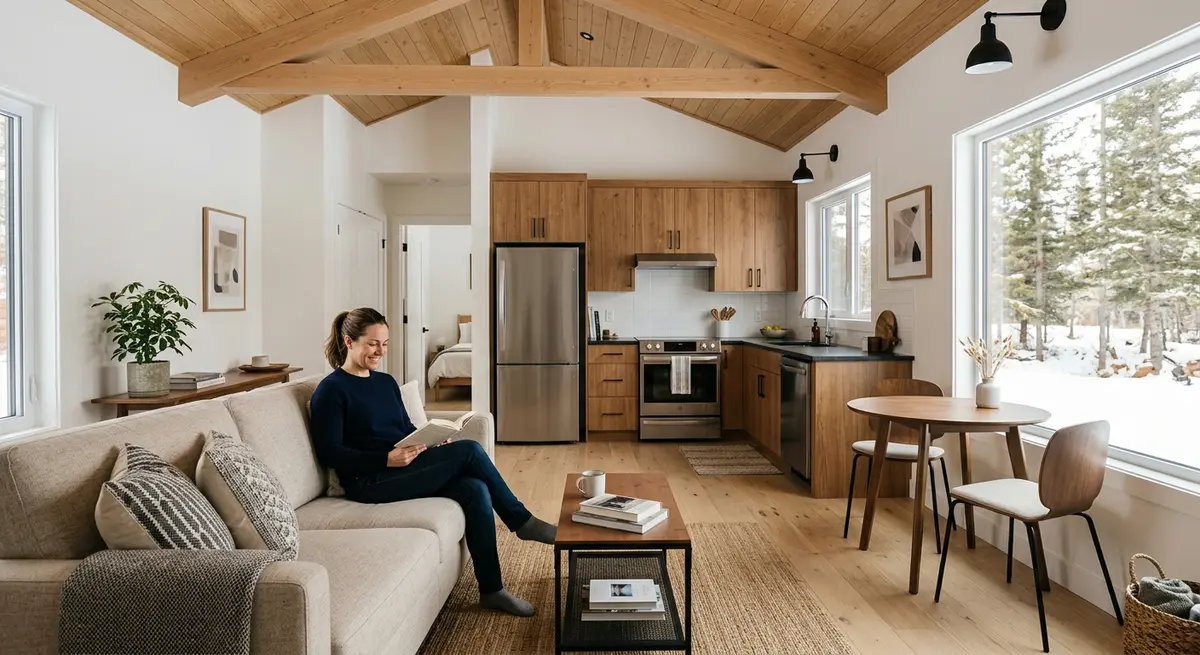
On the cash flow side, a well-designed 600-square-foot laneway home in a desirable Calgary neighborhood can command rental rates between $1,600 and $2,200 per month. This income is often more than enough to cover the monthly payments on the secondary loan, effectively allowing the tenant to pay off your construction debt while you retain the asset’s appreciated value.
Managing Risks and Structuring the Loan
While the financial upside is significant, homeowners must manage the risks associated with taking on additional debt. Construction projects are notorious for budget overruns. It is imperative to borrow slightly more than your contractor’s quote to serve as a contingency buffer.
Additionally, lenders will evaluate your Debt Service Ratio (DSR) to ensure you can afford the new loan payments alongside your primary mortgage and other liabilities. If your individual income is insufficient to qualify for the required loan amount, you might consider adding a co-borrower to your application. Alternatively, a family member could co-sign, though it is vital to have a clear understanding of guarantor responsibilities before structuring the loan this way.
To mitigate interest costs, many homeowners opt for interest-only payments during the construction phase, refinancing or aggressively paying down the principal once the suite is tenanted and generating income.
Frequently Asked Questions (FAQ)
Can I use projected rental income to qualify for the second mortgage?
Most traditional lenders will not use projected rental income from an unbuilt suite to help you qualify for the loan. You must qualify based on your current income and Debt Service Ratios, though some alternative lenders may offer more flexible underwriting criteria.
How long does it take to get approved for secondary financing?
The approval process is generally much faster than a primary mortgage. Assuming your appraisal is completed quickly and your documentation is in order, funding can be secured in as little as one to three weeks.
Do I need a specific type of construction loan?
No. While traditional construction “draw mortgages” release funds in stages as work is completed, a standard second mortgage provides a lump sum upfront. This lump sum approach is often preferred by homeowners as it eliminates the need for multiple lender inspections during the build.
What happens if construction costs exceed my loan amount?
If costs overrun, you will need to cover the difference out of pocket or apply for unsecured credit. This is why experts strongly recommend borrowing a 15% to 20% contingency buffer above your contractor’s initial estimate.
Will building a laneway home increase my property taxes?
Yes. Because a backyard suite increases the assessed value of your property, your annual municipal property taxes in Calgary will rise. However, the rental income generated typically far exceeds this incremental tax increase.
Can I pay off the second mortgage early once the suite is built?
This depends on the terms of your specific loan. Many secondary loans come with open terms or reasonable prepayment privileges, allowing you to pay down the principal using your new rental income without severe penalties.
Conclusion
Building a backyard suite or laneway home in Calgary is a powerful strategy for generating passive income and significantly increasing your property’s value. By utilizing a second mortgage, homeowners can access the necessary construction capital without disturbing their primary mortgage rates. As urban densification continues to shape the 2026 real estate landscape, leveraging home equity remains the most efficient, cost-effective method to fund these lucrative accessory dwelling units. Proper planning, adherence to municipal zoning laws, and a clear understanding of your financial capacity are the keys to a successful build.
If you are ready to explore your equity options and want to know exactly how much capital you can access for your construction project, contact us today to speak with a Calgary home equity specialist.