When preparing for a second mortgage appraisal, homeowners must understand that evaluators prioritize four primary factors: structural property condition, hyper-local comparative market analysis (CMA), precise neighborhood location dynamics, and the combined loan-to-value (CLTV) ratio. Because subordinate lenders take a secondary position on the property title, they face significantly higher risks in the event of a default. Consequently, appraisers apply much stricter valuation standards than they do for primary mortgages, heavily scrutinizing deferred maintenance, unpermitted renovations, and local market volatility to ensure the asset’s long-term marketability.
Key Takeaways
- Strict Risk Mitigation: Second mortgage appraisals are significantly more rigorous than first mortgage valuations due to the lender’s subordinate title position.
- Hyper-Local Comparables: Appraisers rely on recent sales data strictly from the past 90 to 180 days, typically within a 1-kilometer radius of the subject property.
- Equity Ceilings: In 2026, the vast majority of Calgary alternative lenders cap the Combined Loan-to-Value (CLTV) ratio at 80% to 85%.
- The Cost of Unpermitted Work: Illegal secondary suites or unpermitted structural additions can reduce a home’s appraised value by up to 10%.
- Proactive Preparation: Addressing minor deferred maintenance before the inspection can increase the final valuation by 3% to 5%.
- Validity Timelines: A completed appraisal report is generally only valid for 30 to 60 days in the current fast-moving real estate market.
The 2026 Landscape of Subordinate Financing Valuations
The appraisal process for secondary financing differs fundamentally from traditional first mortgage evaluations. When a financial institution issues a second mortgage, they accept a subordinate position on the property’s title. If the borrower defaults and the property enters foreclosure, the primary mortgage holder is legally entitled to be paid first from the sale proceeds. This inherent structural risk means that subordinate lenders require absolute certainty regarding the property’s current and future market value.
As Marcus Thorne, Senior Valuation Specialist at the Appraisal Institute of Canada, explains: “Because a second mortgage sits in a subordinate position, lenders require absolute certainty in the underlying asset’s valuation. In 2026, we are seeing appraisers apply highly conservative adjustment factors to protect against potential market corrections, particularly in regions sensitive to macroeconomic shifts.”
To mitigate these risks, appraisers are instructed to identify properties that not only hold their value today but possess strong marketability for the future. They utilize comprehensive, real-time data from the Real Estate Council of Alberta to ensure their valuations align with the most current market realities, rather than relying on outdated automated valuation models (AVMs).
Structural Integrity and Property Condition Assessment
Physical property condition represents one of the most critical factors during a home valuation. Unlike first mortgage appraisals that might overlook minor cosmetic issues or rely on a simple drive-by inspection, secondary appraisers conduct thorough interior and exterior inspections. They meticulously document any conditions that could affect marketability or value retention.
Structural integrity assessment always begins with the foundation. Calgary’s unique climate conditions, characterized by severe freeze-thaw cycles and potential soil movement, make foundation stability paramount. Appraisers actively look for signs of settlement, concrete cracking, or moisture intrusion in the basement. If significant issues are spotted, the appraiser will mandate an independent engineering report before finalizing the valuation.
Mechanical systems also receive intense scrutiny. The evaluation encompasses heating, cooling, electrical, and plumbing systems. Given Calgary’s harsh winter climate, a high-efficiency, reliable HVAC system is not just a luxury; it is a necessity that directly impacts the home’s value. Outdated systems, such as mid-efficiency furnaces or electrical panels failing to meet 2026 building codes, are classified under functional obsolescence. This classification can severely and negatively impact the final appraised value.

Comparative Market Analysis (CMA) Requirements
Comparative market analysis forms the mathematical backbone of property valuation. Appraisers must identify and analyze recent sales of highly similar properties within the local market area. For subordinate financing, lenders typically require conservative valuations supported by robust, recent comparable sales data.
The selection of comparable properties follows strict, standardized criteria. Appraisers seek sales that occurred strictly within the past 90 to 180 days. Location proximity is crucial; appraisers generally restrict their search to a 1-kilometer radius for urban properties in Calgary, expanding this radius only for rural acreages or highly unique architectural properties where local data is scarce.
Property similarity encompasses above-grade square footage, bedroom and bathroom counts, lot size, and architectural style. The adjustment methodology requires appraisers to quantify differences between sold properties and the subject home. For instance, if a comparable home has a fully finished basement and the subject property does not, the appraiser applies a negative adjustment to the subject’s baseline value. In 2026, appraisers are applying much stricter adjustment penalties for homes lacking modern energy-efficient upgrades, reflecting shifting buyer preferences.
Location Dynamics and Neighborhood Assessment
Location analysis is a fundamental component of the appraisal report. Calgary’s sprawling urban layout means that neighborhood characteristics significantly influence both current value and long-term marketability. Appraisers evaluate proximity to major employment centers, the LRT transportation network, schools, and recreational facilities.
Neighborhood stability is assessed by analyzing demographic trends, commercial development patterns, and market activity. Established neighborhoods with consistent property values, such as the Beltline, Brentwood, or Mount Royal, typically receive more favorable assessments than areas experiencing high inventory turnover or economic uncertainty. Furthermore, proximity to highly-rated school districts commands premium values—a factor that secondary lenders highly value for long-term security.
Homeowners can review their neighborhood’s baseline assessment trends through the City of Calgary Property Assessment portal to understand how municipal evaluators view their area compared to private appraisers.
First Mortgage vs. Second Mortgage Appraisals
Understanding the difference between primary and secondary mortgage appraisals can help homeowners set realistic expectations before the evaluator arrives. Below is a detailed comparison of how these two evaluations differ in the 2026 lending environment:
| Evaluation Metric | First Mortgage Appraisal | Second Mortgage Appraisal |
|---|---|---|
| Inspection Depth | Often drive-by or automated valuation models (AVM). | Mandatory full interior and exterior physical inspection. |
| Deferred Maintenance | Minor cosmetic issues are generally overlooked. | Strictly documented; often requires repairs prior to funding. |
| Comparable Timeframe | Sales within the last 6 to 12 months are acceptable. | Strictly limited to sales within the last 90 to 180 days. |
| Risk Tolerance | Standard risk adjustments based on primary position. | Highly conservative risk adjustments to protect subordinate position. |
Calculating Combined Loan-to-Value (CLTV) and Equity
The Combined Loan-to-Value (CLTV) ratio calculation is arguably the most critical mathematical aspect of the appraisal process. It determines the total debt burden against the property’s newly appraised value. Appraisers must provide highly accurate valuations that allow underwriters to calculate precise CLTV ratios, ensuring adequate equity protection remains in the home.
In 2026, most Calgary alternative lenders require a maximum CLTV of 80% to 85%. For example, if your home appraises at $600,000, an 80% CLTV means your total allowable debt (first mortgage plus second mortgage) cannot exceed $480,000. If your current first mortgage balance is $400,000, the maximum secondary financing you could secure is $80,000.
This strict equity requirement is why many borrowers carefully weigh their options, often comparing a secondary loan against cash-out refinancing alternatives or unsecured credit options to determine the most cost-effective borrowing strategy. Additionally, borrowers must consider how compounding frequency impacts their overall debt load when calculating their ability to carry multiple mortgages.

Step-by-Step: How to Prepare Your Property for Maximum Valuation
To maximize your valuation, Calgary market data suggests that proactive preparation can significantly influence the final report. Follow these steps to prepare your property before the appraiser arrives:
- Complete Minor Repairs: Fix leaky faucets, patch drywall holes, replace burnt-out lightbulbs, and fix loose door hinges. Appraisers note deferred maintenance, which signals to the lender that there may be larger, hidden issues with the property.
- Compile a List of Upgrades: Document all recent renovations, including completion dates and total costs. Provide this list directly to the appraiser upon arrival. Highlight energy-efficient upgrades like triple-pane windows, a new roof, or a high-efficiency furnace.
- Organize Your Paperwork: Ensure you have your property tax bill, land survey, and any municipal permits for past renovations readily available. Having a comprehensive document checklist prepared shows the appraiser you are organized and transparent.
- Enhance Curb Appeal: First impressions matter immensely. Ensure the lawn is mowed, snow is shoveled from all walkways, and the exterior siding is tidy. A well-maintained exterior sets a positive tone for the interior inspection.
- Clean and Declutter: While appraisers are trained not to value your furniture or personal belongings, a clean, uncluttered home appears larger and better maintained. This subtly influences the appraiser’s perception of the property’s overall condition.
Elena Rostova, Chief Risk Officer at Alberta Subordinate Lending Corp, notes: “Homeowners who proactively address minor repairs before the appraiser arrives often see valuations 3% to 5% higher than those who leave deferred maintenance visible. It demonstrates pride of ownership, which translates directly to lower risk for the lender.”
Common Deal-Breakers in 2026
Certain property issues can immediately derail a financing application. Unpermitted work is a primary culprit in the Calgary market. If you have developed a basement, added a structural deck, or installed a secondary kitchen without proper municipal permits, the appraiser cannot legally include that square footage or feature in the valuation. In some cases, unpermitted work can reduce the appraised value by up to 10% due to the liability and forced-repair costs it presents to a future buyer.
Another common issue is functional obsolescence. This occurs when a property features an outdated design that no longer meets current market expectations, such as a five-bedroom home with only one bathroom, or a layout that requires walking through one bedroom to access another. Lenders view these properties as highly difficult to sell in the event of foreclosure.
If your appraisal comes in lower than expected due to these factors, you may need to explore principal reduction strategies to build more equity before reapplying, or consider adding an adult child as a co-borrower to strengthen the overall application.
Edge Cases: Secondary Suites and Unique Zoning
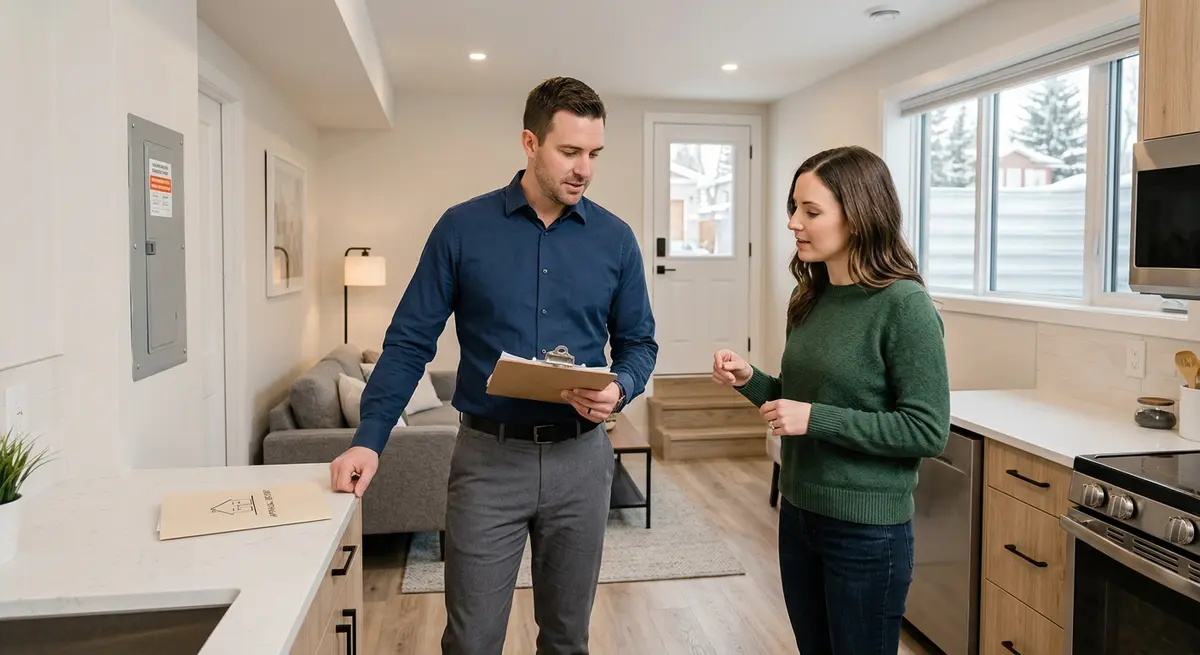
Calgary’s diverse real estate landscape includes unique properties that require specialized appraisal approaches. Acreages on the city’s outskirts, mixed-use properties, and homes with secondary suites present specific valuation challenges that require highly experienced appraisers.
David Chen, Lead Appraiser at Calgary Metro Valuations, states: “Calgary’s recent zoning adjustments have shifted how we evaluate properties with secondary suite potential. A legal, permitted suite can significantly bolster the final appraised value for a second mortgage, often adding a 15% to 25% premium compared to standard single-family homes without income potential.”
However, if the suite is illegal or non-conforming, the appraiser must value the home strictly as a single-family dwelling. Furthermore, they may apply a financial deduction for the estimated cost required to decommission the illegal kitchen to bring the property back into municipal compliance.
Documentation, Costs, and Validity Timelines
Once the physical inspection is complete, the appraiser typically spends 2 to 3 days compiling market data and finalizing the comprehensive report, which is then submitted directly to the lender or mortgage broker. It is important to note that appraisals are typically valid for only 30 to 60 days in the fast-moving 2026 market.
If your financing is delayed due to administrative hurdles, such as verifying self-employed income, you may be required to pay for an appraisal update or a completely new report. The cost of a comprehensive residential appraisal in Calgary currently ranges between $400 and $600, depending on the property’s size, location, and complexity.
This fee is an out-of-pocket expense for the borrower, payable whether the mortgage is ultimately approved or declined. Therefore, ensuring your home is fully prepared before the appraiser arrives is a vital financial strategy, especially if you are relying on this equity to secure a down payment on an investment property.
Frequently Asked Questions (FAQ)
How much does a second mortgage appraisal in Calgary cost in 2026?
A standard residential appraisal for secondary financing in Calgary typically costs between $400 and $600. Larger properties, rural acreages, or homes requiring complex income-suite evaluations may cost upwards of $800 due to the extra research required.
Can I use the appraisal report from my first mortgage?
No, subordinate lenders require a fresh, independent appraisal commissioned specifically for their use. Appraisals are generally only valid for 30 to 60 days, and secondary lenders require a valuation tailored to their specific, conservative risk parameters.
What happens if the appraisal comes in lower than expected?
If the valuation is low, your maximum borrowing amount will decrease to maintain the lender’s required CLTV ratio (usually 80% to 85%). You can appeal the appraisal, but only if you have concrete proof of recent, higher-priced comparable sales that the appraiser demonstrably missed.
Do appraisers actively check for municipal building permits?
Yes, appraisers actively verify municipal permits for major renovations, structural additions, and secondary suites. Unpermitted work is typically excluded from the home’s overall value and can even result in a penalty deduction for the cost of future compliance.
How long does the physical appraisal inspection take?
The physical interior and exterior inspection usually takes 30 to 60 minutes, depending on the size of the home. Following the visit, the appraiser will spend 2 to 3 days compiling market data and finalizing the comprehensive written report.
Will a messy or cluttered house result in a lower appraised value?
While appraisers are trained to look past everyday clutter, excessive mess can obscure structural elements and give the false impression of deferred maintenance. A clean, well-organized home ensures the appraiser can accurately assess the property’s true condition without obstruction.
Conclusion
Navigating a property valuation for subordinate financing requires a clear understanding of what evaluators prioritize in 2026. By recognizing the importance of structural integrity, hyper-local market comparables, and strict CLTV limits, homeowners can take proactive steps to maximize their property’s appraised value. Addressing deferred maintenance, ensuring all renovations are permitted, and presenting a well-maintained home are proven strategies to secure the equity you need. If you are considering leveraging your home’s equity and want to ensure your property is ready for the valuation process, get in touch with our team today for expert guidance tailored to the Calgary market.