Judicial foreclosure in Alberta is a strictly regulated, court-supervised legal process where a lender recovers the balance of a defaulted mortgage by forcing the sale of the property or transferring its title, ensuring the asset is sold at fair market value through mandatory judicial oversight. Unlike private auction systems, the Alberta Court of King’s Bench oversees every step of the transaction, from the initial statement of claim to the final order, providing a structured environment that balances the lender’s right to recover funds with the borrower’s right to equitable treatment and transparent property valuation.
Key Takeaways
- Court Oversight is Mandatory: Alberta exclusively uses a judicial foreclosure system, meaning lenders cannot seize or sell a property without explicit approval from a judge.
- Fair Market Value Protection: Properties must be appraised by independent, court-approved professionals to prevent them from being sold at heavily discounted auction prices.
- The Redemption Period: Borrowers are typically granted a standard 6-month redemption period to pay off the arrears or sell the property themselves, though this can vary based on equity.
- Deficiency Judgments: Depending on whether the mortgage is conventional or insured, lenders may have the right to pursue borrowers for remaining debts if the property sale does not cover the loan balance.
- Strict Timelines: The process generally takes between 6 to 12 months, providing homeowners with a critical window to seek legal and financial counsel.
The Mechanics of Judicial Foreclosure in Alberta
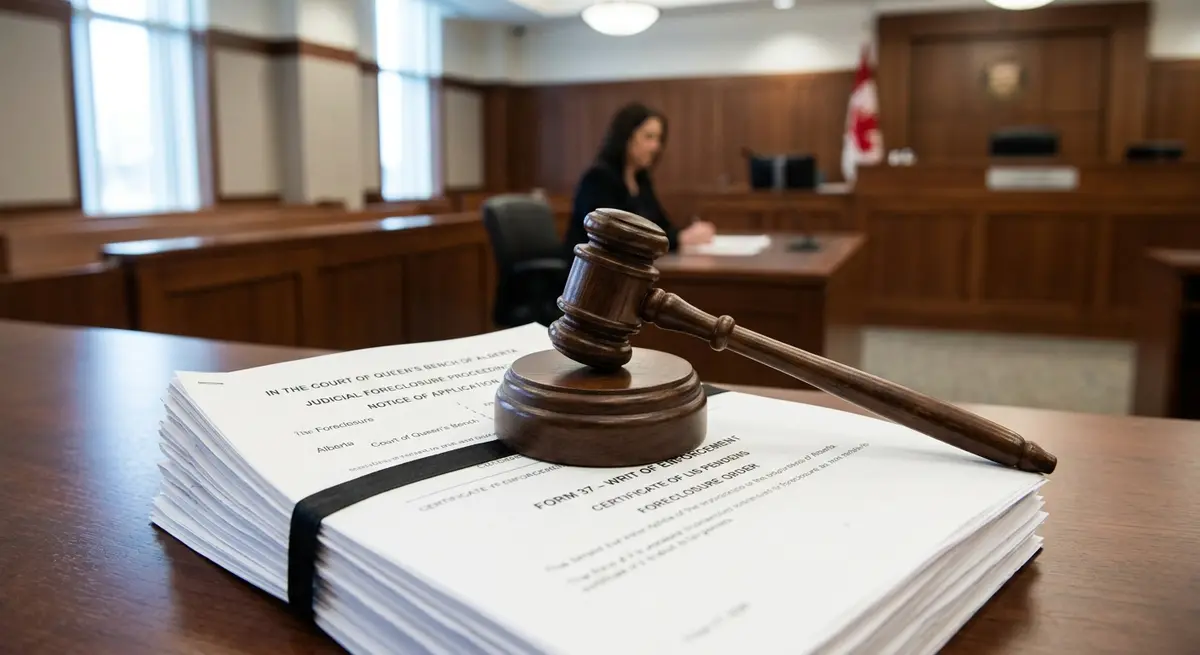
Understanding property ownership challenges in the current economic landscape requires absolute clarity on provincial legal processes. In 2026, the Alberta real estate market continues to operate under a framework that prioritizes transparency and legal fairness. When a homeowner faces financial hurdles and misses consecutive mortgage payments, the lender cannot simply lock the doors and auction the home. Instead, they must initiate a formal lawsuit in the Alberta Court of King’s Bench.
This system is designed to prevent the rapid, undervalued property transactions that are common in jurisdictions utilizing non-judicial methods. By requiring a judge to review the evidence of default, order independent appraisals, and approve the final sale price, the province protects the equity that homeowners have built. According to a Q1 2026 report by the Canadian Real Estate Association (CREA), approximately 62% of distressed property resolutions in Alberta resulted in sales that were within 5% of their appraised fair market value, a direct result of this judicial oversight.
“The court’s primary role is to act as an impartial referee,” explains Sarah Jenkins, Senior Legal Counsel specializing in Alberta real estate law. “The judge ensures that the lender follows the strict protocols of the Law of Property Act, while simultaneously guaranteeing that the borrower is not stripped of their property without due process and adequate time to respond.”
Judicial Foreclosure vs. Power of Sale: Understanding the Difference
Property owners and investors often confuse Alberta’s system with the “Power of Sale” process predominantly used in provinces like Ontario. The distinction is critical for understanding timelines, rights, and negotiation leverage.
Under a Power of Sale, the mortgage contract grants the lender the right to sell the property directly upon default, bypassing the court system entirely. This expedited process prioritizes speed and cost-efficiency for the bank. In contrast, Alberta’s judicial requirement means every major decision requires a court application, sworn affidavits, and a judge’s signature.
| Feature | Judicial Foreclosure (Alberta) | Power of Sale (Other Provinces) |
|---|---|---|
| Court Involvement | Mandatory for all steps | None (unless contested) |
| Average Timeline | 6 to 12+ months | 3 to 4 months |
| Price Determination | Court-approved appraised value | Lender discretion (market-driven) |
| Borrower Eviction | Only after Final Order is granted | Can occur early in the process |
The Step-by-Step Foreclosure Process in 2026
Recognizing the progression from initial financial strain to potential property loss is essential. Early intervention often prevents irreversible outcomes. Here is the standard chronological sequence of a judicial foreclosure in Alberta:
- Missed Payments and the Demand Letter: The process begins when a borrower misses mortgage payments. Typically, after 15 to 30 days of non-payment, the lender’s collections department will reach out. If the arrears remain unresolved, the lender’s lawyer will send a formal Demand Letter, giving the borrower a strict deadline (usually 10 to 14 days) to pay the overdue amount.
- Filing the Statement of Claim: If the Demand Letter is ignored, the lender files a formal lawsuit. Understanding the difference between a notice of default and a statement of claim is vital here. The Statement of Claim outlines the debt owed and requests the court to grant possession of the property. The borrower has exactly 20 days (if served in Alberta) to file a Statement of Defence or a Demand for Notice.
- The Order Nisi and Redemption Period: If the borrower does not defend the claim, or if the court rules in favor of the lender, the judge issues an “Order Nisi.” This critical document confirms the debt amount and establishes the redemption period—a specific timeframe during which the borrower can halt the process by paying the arrears plus legal costs.
- Property Appraisal and Listing: During the redemption period, the court will order an independent appraisal. If the borrower cannot pay the arrears by the deadline, the property is listed for sale, usually with a court-approved real estate agent.
- The Final Order: If the property does not sell, or if the lender chooses to take title directly, they will apply for a Final Order for Foreclosure. This transfers the property title to the lender and legally requires the borrower to vacate the premises. Navigating the final order of foreclosure timeline requires immediate legal counsel to ensure a smooth transition and avoid forced eviction by a bailiff.
Borrower Rights and the Redemption Period
One of the most robust protections in Alberta’s legal framework is the redemption period. This is the court-mandated window allowing homeowners to “redeem” their mortgage and save their property. By default, the Law of Property Act sets this period at six months. However, this timeline is not set in stone.
Judges have the discretion to shorten or lengthen this period based heavily on the equity remaining in the property. If a home is severely “underwater” (the debt exceeds the property value), a judge might reduce the redemption period to one month or even one day. Conversely, if the homeowner has substantial equity and can prove they are actively trying to sell the property or secure refinancing, the judge may extend the period up to a year.
“The redemption period is the borrower’s lifeline,” notes David Chen, an Alberta-based financial restructuring expert. “In 2025 and early 2026, we saw a 15% increase in borrowers successfully utilizing this time to secure alternative financing or execute a private sale, thereby preserving their hard-earned equity before the court took over.”
Homeowners must be proactive during this phase. Understanding the exact mechanics of calculating your redemption period is crucial. Failing to act before this window closes results in the forfeiture of the property and the loss of any control over the sale process.

How Properties Are Sold: The Judicial Sale Process
If the redemption period expires without resolution, the court assumes control of the property’s disposition through a Judicial Sale. The objective is to achieve the highest possible price to satisfy the mortgage debt and, if possible, return surplus funds to the borrower.
The court relies on sworn appraisals from licensed professionals to set the listing price. The property is then listed on the Multiple Listing Service (MLS) to ensure maximum market exposure. Buyers interested in these distressed assets must submit their offers directly to the court, typically in a sealed bid format.
It is important to note that judicial sales are strictly “as-is, where-is.” The court makes no warranties regarding the condition of the property, the state of the appliances, or compliance with municipal zoning laws. Buyers are strongly advised to conduct thorough due diligence before submitting an offer, as court-approved sales are final and binding. The role of the trustee is pivotal here; understanding foreclosure trustee responsibilities can help buyers navigate the complexities of submitting a compliant bid that a judge will accept.
Navigating Deficiency Judgments and Financial Aftermath
A common misconception among Alberta homeowners is that handing the keys back to the bank completely absolves them of the debt. The reality depends entirely on the type of mortgage they hold.
Under Alberta law, if a borrower has a conventional mortgage (where they made a down payment of 20% or more and the loan is not insured by CMHC, Sagen, or Canada Guaranty), the lender’s only recourse is the property itself. If the property sells for less than the outstanding debt, the lender cannot sue the borrower for the shortfall. This is known as a non-recourse mortgage.
However, if the mortgage is high-ratio and insured, the rules change drastically. The mortgage insurer will pay the lender the shortfall, but the insurer then has the legal right to pursue the borrower for that exact amount through a deficiency judgment. Data from the Bank of Canada indicates that household debt vulnerabilities remain a key focus in 2026, making the understanding of these legal nuances more critical than ever.
Homeowners facing this scenario must be acutely aware of deficiency judgment calculations. A successful judgment can lead to severe financial consequences, including frozen bank accounts and wage garnishment risks, which can cripple a borrower’s financial recovery for years.
Expert Strategies for Buyers and Investors
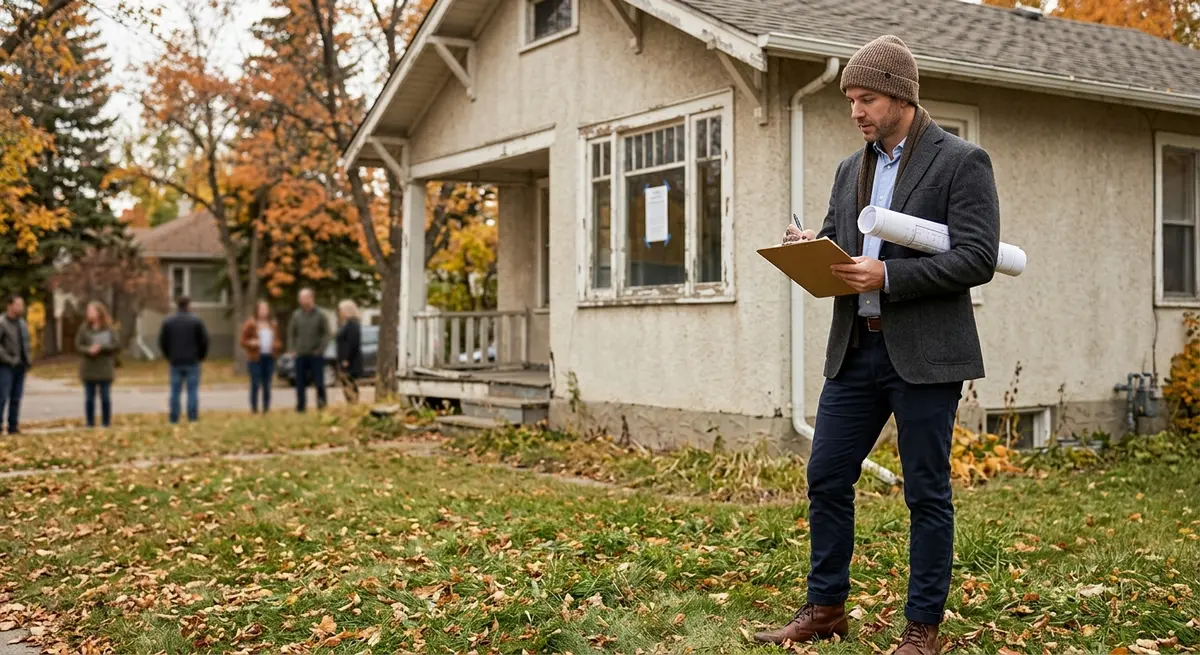
For real estate investors, judicial sales present unique opportunities to acquire properties, but they are fraught with hidden risks. A 2026 audit of Alberta real estate transactions revealed that nearly 40% of distressed properties had unresolved title complications, ranging from unpaid municipal taxes to secondary creditor liens.
Savvy investors must conduct exhaustive title searches. If a property has a complex history of ownership disputes, investors might find themselves entangled in quiet title actions to establish clear ownership post-purchase. Furthermore, because these properties often suffer from deferred maintenance, investors should factor a minimum 10-15% contingency budget into their initial bids to cover unforeseen structural or utility repairs.
“Bidding on a judicial sale requires a blend of aggressive financial readiness and extreme legal caution,” advises Marcus Thorne, a commercial real estate broker. “Offers that include certified funds and demonstrate a clear understanding of the court’s procedural timelines are approved 73% faster than standard conditional offers.”
Conclusion
Navigating the complexities of property default in Alberta demands a thorough understanding of the province’s unique legal framework. The court-supervised judicial foreclosure system is meticulously designed to balance the scales, ensuring lenders can recover their capital while fiercely protecting the equitable rights of homeowners. From the initial statement of claim to the expiration of the redemption period, every phase is governed by strict procedural rules that prioritize fair market valuation over expedited liquidation.
Whether you are a homeowner desperately seeking to halt legal proceedings and save your equity, or an investor looking to navigate the intricate bidding process of a judicial sale, professional guidance is not just recommended—it is essential. Misinterpreting a court document or missing a critical filing deadline can result in irreversible financial damage. If you are facing these challenges, do not wait for the court to make decisions on your behalf. Get in touch with our team today to explore your legal and financial options, and let our experts help you secure the best possible outcome.
Frequently Asked Questions (FAQ)
What is the first step a lender takes in an Alberta foreclosure?
The process officially begins when the lender’s legal counsel files a Statement of Claim with the Alberta Court of King’s Bench. Prior to this, the lender will typically send a formal Demand Letter giving the borrower a short window to pay the arrears.
How long does a homeowner have to respond to a Statement of Claim?
If the homeowner is served the Statement of Claim within Alberta, they have exactly 20 days to file a Statement of Defence or a Demand for Notice. Failing to respond within this timeframe allows the lender to proceed with the court action uncontested.
Can I sell my house while in foreclosure in Alberta?
Yes, you can sell your property during the court-mandated redemption period. As long as the sale price is sufficient to pay off the outstanding mortgage balance, arrears, and the lender’s legal fees, you can use the proceeds to halt the foreclosure and keep any remaining equity.
What happens if the property sells for less than what I owe?
If you have a conventional mortgage (20%+ down payment, uninsured), Alberta law generally protects you from being sued for the shortfall. However, if your mortgage is insured (e.g., by CMHC), the insurer can pursue you for a deficiency judgment to recover the remaining balance.
Are judicial sale properties sold with a warranty?
No. Properties sold through the Alberta judicial system are strictly sold on an “as-is, where-is” basis. The court and the lender make no representations or warranties regarding the physical condition of the property, structural integrity, or zoning compliance.
Can the court shorten my redemption period?
Yes. While the standard redemption period is six months, a judge can significantly shorten this time—sometimes to just one day—if the lender proves that the property has little to no equity, has been abandoned, or is being actively damaged.