For Calgary homeowners facing significant financial undertakings in 2026, peer-to-peer (P2P) lending platforms frequently fall short due to restrictive $35,000 borrowing caps and high unsecured interest rates. Utilizing a second mortgage to leverage existing home equity provides a superior, asset-backed alternative that unlocks higher capital limits, significantly lower borrowing costs, and flexible repayment terms tailored to complex income structures. When funding major renovations, business expansions, or substantial debt consolidation, securing a loan against real estate remains the most mathematically sound strategy to ensure projects are fully capitalized from start to finish.
Key Takeaways
- Borrowing Limits: Canadian P2P platforms typically cap unsecured loans at $35,000, whereas equity financing allows access to up to 80% of your property’s appraised value.
- Interest Rate Reality: Unsecured P2P loans carry steep risk premiums, often resulting in rates between 18% and 34% for average credit profiles, compared to much lower secured rates.
- Underwriting Flexibility: Fintech algorithms frequently reject self-employed applicants, while equity lenders use common-sense, asset-based approval metrics.
- Cash Flow Control: Equity loans often feature interest-only payment options, preserving monthly cash flow better than the forced, aggressive amortization of P2P loans.
- Total Cost of Borrowing: For amounts exceeding $20,000, the long-term cost of a secured loan is almost always lower despite initial setup fees.
The 2026 Financial Landscape: Why Project Scale Dictates Your Lending Strategy
The rise of financial technology has undeniably transformed how Canadians access capital. Digital peer-to-peer lending platforms have positioned themselves as frictionless alternatives to traditional banking, promising instant approvals and rapid funding. For minor financial hiccups—such as an unexpected $5,000 vehicle repair or a small credit card balance—these applications offer undeniable convenience. However, the economic realities of 2026 demand a more robust approach to large-scale financing.
According to recent data from Statistics Canada’s Construction Price Indexes, the cost of building materials and specialized labor in Alberta has stabilized at a premium level. A comprehensive kitchen modernization in Calgary now averages between $55,000 and $75,000, while legal basement suites routinely exceed the $90,000 mark. When project budgets scale into these territories, the structural limitations of unsecured digital lending become glaringly apparent, forcing homeowners to seek more substantial financial instruments.
Analyzing the $35,000 Ceiling: Where Peer-to-Peer Lending Falls Short
The most significant vulnerability of the P2P lending model in Canada is its arbitrary borrowing ceiling. To mitigate the risk of unsecured defaults, leading platforms enforce strict maximums, typically capping personal loans at $35,000. In the context of modern home improvement or aggressive debt restructuring, this limit is often insufficient.
Relying on a capped P2P loan for a major project introduces severe completion risk. A homeowner might successfully fund the framing, plumbing, and electrical work of a home addition, only to exhaust their capital before drywall and finishing. This scenario leaves the property in a state of depreciated value and the borrower scrambling for high-interest bridge financing.
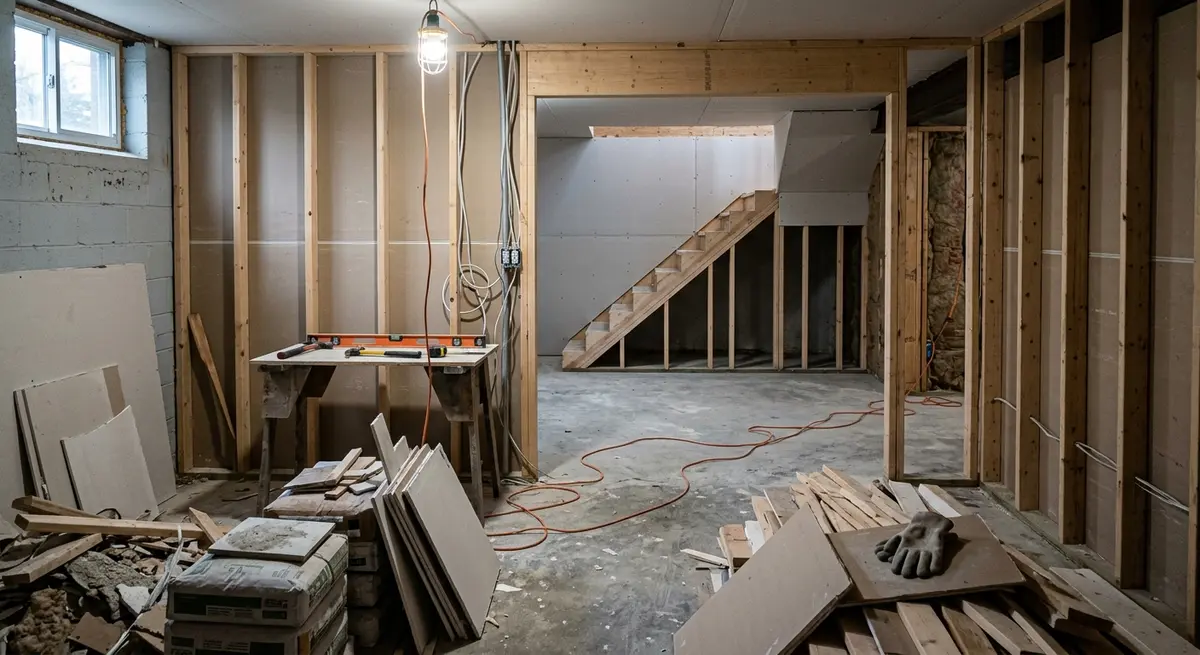
In contrast, equity financing removes these artificial barriers. The borrowing limit is dictated by the tangible value of the asset. If a property in a stable neighborhood like Evanston or Altadore holds $250,000 in accessible equity, the homeowner can secure that entire amount. This guarantees that the project is fully capitalized before the first contractor is hired, effectively eliminating the risk of stalled renovations.
Secured vs. Unsecured Debt: The Interest Rate Reality
The fundamental difference between these two financing methods lies in collateral. Peer-to-peer loans are unsecured; the investors funding the loan have no physical asset to claim if the borrower defaults. To offset this high risk, lenders demand substantial returns. While marketing materials frequently highlight rates “starting at 8.99%,” these are exclusively reserved for borrowers with immaculate credit scores exceeding 750 and pristine debt-to-income ratios.
For the average borrower, the reality is much harsher. The Financial Consumer Agency of Canada (FCAC) notes that unsecured alternative lending rates can legally reach up to the criminal interest rate threshold. In practice, P2P rates for average credit profiles often land between 18.5% and 29.9%.
Because secondary financing uses real estate as collateral, the risk profile drops dramatically. This security translates directly into lower borrowing costs. Even for individuals with bruised credit, secured rates remain highly competitive compared to the mid-to-high tiers of unsecured fintech loans. Understanding how compounding frequency impacts your debt is crucial here; a lower rate on a secured loan compounded semi-annually will save thousands compared to a high-rate P2P loan compounded daily or monthly.
Comparative Analysis: P2P vs. Equity Financing
| Feature | Peer-to-Peer (P2P) Lending | Home Equity Financing |
|---|---|---|
| Maximum Loan Amount | Typically capped at $35,000 | Up to 80% of property value (Often $100k+) |
| Collateral Required | None (Unsecured) | Real Estate (Secured) |
| Average Interest Rates | 15% – 34% (for average credit) | Significantly lower, risk-adjusted rates |
| Approval Metric | Rigid credit & income algorithms | Asset value & common-sense underwriting |
| Repayment Structure | Forced aggressive amortization (1-5 yrs) | Flexible, including interest-only options |
Algorithmic Rejections vs. Asset-Based Approvals
Fintech platforms pride themselves on automation, utilizing rigid algorithms to assess risk in milliseconds. While efficient, these systems lack nuance. If an applicant’s debt-to-income ratio deviates slightly from the programmed acceptable range, or if their income fluctuates due to the seasonal nature of their business, the algorithm issues an instant rejection. There is no human underwriter available to review the broader financial picture.
This automated gatekeeping disproportionately affects Calgary’s robust population of entrepreneurs, tradespeople, and contract workers. As Marcus Thorne, a Senior Underwriting Analyst, explains: “Digital lending algorithms are designed for T4 employees with predictable bi-weekly paychecks. They fundamentally misunderstand the cash flow dynamics of self-employed professionals, often penalizing them for smart corporate tax strategies that minimize personal net income.”
Equity lenders employ a fundamentally different philosophy. By focusing on the asset rather than just the credit bureau, they can apply common-sense underwriting. If a borrower has substantial equity, lenders can look past temporary credit dips or complex corporate structures. For business owners, utilizing alternative documentation for approvals provides a pathway to capital that algorithms simply cannot accommodate. Lenders apply a reasonability test to verify self-employed income, looking at gross business revenue rather than just net personal claims.
Cash Flow Management: Amortization and Repayment Flexibility
Securing the funds is only half the equation; managing the repayment is equally critical. P2P loans are typically structured with aggressive amortization schedules, usually spanning three to five years. This means borrowers are forced to pay back both principal and high interest simultaneously, resulting in heavy monthly obligations. On a $30,000 P2P loan at 20% interest over three years, the monthly payment exceeds $1,100.

Conversely, equity financing offers superior cash flow management. Many secured loans can be structured with interest-only payments. By deferring the principal repayment to the end of the term, the monthly carrying cost is drastically reduced. This liquidity is vital during a major renovation when unexpected expenses inevitably arise, or when a business owner needs to maintain operational capital.
Step-by-Step Guide: Transitioning from Unsecured Apps to Equity Financing
If you have recognized that a digital app will not cover your project’s scope, transitioning to an asset-backed loan requires a strategic approach. The process is highly structured but entirely transparent.
- Determine Your Available Equity: Calculate your home’s current market value and subtract your existing primary mortgage balance. You can typically borrow up to 80% of the remaining figure.
- Gather Essential Documentation: Unlike apps that scrape your banking data, equity lenders require specific paperwork. Review a comprehensive document checklist to prepare your property tax bills, current mortgage statements, and home insurance details.
- Assess Your Exit Strategy: Determine how you will eventually clear the debt. Common strategies include selling the property, receiving an expected lump sum, or planning a cash-out refinance of your primary mortgage at renewal.
- Order an Appraisal: A licensed appraiser will visit your property to confirm its current market value, ensuring the lender has accurate collateral data.
- Legal Registration and Funding: Once approved, the loan is registered on your property title by a real estate lawyer, and the funds are deposited directly into your account.
Strategic Use Cases: When Does P2P Actually Make Sense?
It is important to maintain objectivity: P2P lending is not inherently flawed; it is simply misapplied when used for large-scale capital needs. There are specific scenarios where an unsecured digital loan is the optimal choice.
For individuals who do not own real estate, P2P platforms serve as a vital alternative to predatory payday loans. Furthermore, if a homeowner requires a very small amount of capital—such as $4,000 for an emergency furnace replacement—and intends to pay it off within three months, the speed of a P2P app outweighs the setup costs associated with registering a lien on a property. According to a 2026 report by Reuters Financial, micro-loans under $5,000 remain the most successful and sustainable segment of the fintech lending market.
However, when comparing leveraging home equity versus unsecured credit for amounts exceeding $20,000, the mathematical advantage heavily favors secured borrowing.
Mitigating Risk: Asset Protection and Responsible Borrowing
The primary deterrent for some homeowners considering equity financing is the perceived risk to their property. It is a factual reality that failing to repay a secured loan can lead to legal action. If a borrower defaults on a P2P loan, their credit score plummets and they face aggressive collections, but their home is not immediately at risk. With a secured loan, the property is pledged as collateral.

This is precisely why responsible borrowing and professional guidance are paramount. A secured loan should never be a desperate measure; it must be a calculated financial tool. Because the monthly payments are often significantly lower due to interest-only structures, borrowers generally find them easier to service than the demanding payments of unsecured debt. By working with experienced professionals who understand alternative financing for entrepreneurs, borrowers can ensure their loan size is manageable and their exit strategy is viable.
Frequently Asked Questions (FAQ)
Can I secure a P2P loan if my credit score is below 600?
It is highly unlikely. Most Canadian P2P platforms require a minimum credit score of 600 to 620. Applicants with scores below this threshold are typically rejected automatically by the underwriting algorithm or offered punitive interest rates exceeding 30%.
How long does it take to fund an equity loan compared to a P2P app?
P2P apps can often fund small loans within 24 to 48 hours. Equity loans require property appraisals and legal registration, typically taking 5 to 10 business days. However, for large amounts, the brief wait is justified by the substantial interest savings.
Will taking out a secondary loan affect my primary bank mortgage?
No. Your primary mortgage remains completely untouched. The new loan is registered in second position on your property title, meaning your original interest rate, amortization, and terms with your primary bank stay exactly the same.
Are there upfront costs associated with asset-backed lending?
Yes. Because it involves real estate, you will encounter appraisal fees, legal fees, and broker/lender fees. However, P2P loans also charge “origination fees” (often 1% to 5% of the loan amount). For large loans, the lower interest rate of a secured loan quickly offsets the initial setup costs.
Can I use the funds from my home equity for business purposes?
Absolutely. Unlike traditional bank loans that may dictate how funds are spent, equity capital is unrestricted. You can use it for business expansion, purchasing inventory, funding renovations, or consolidating high-interest consumer debt.
What happens if I want to pay off the secured loan early?
This depends on the specific terms of your contract. Some loans are fully open, allowing repayment at any time without penalty, while others may require a standard three-month interest penalty. It is crucial to discuss your timeline with your broker to secure a product that matches your goals.
Conclusion
While peer-to-peer lending applications offer a modern, frictionless way to borrow small sums of money, they are fundamentally unsuited for heavy-lifting financial requirements. The restrictive $35,000 borrowing caps, combined with the high interest rates demanded by unsecured investors, make P2P a highly inefficient choice for major renovations, business investments, or substantial debt consolidation in 2026.
By choosing to leverage the existing equity in your property, you unlock a tier of financing designed for scale. Asset-backed lending provides the necessary capital limits to see large projects through to completion, offers flexible repayment structures that protect your monthly cash flow, and utilizes common-sense underwriting that respects the realities of self-employment. If you are ready to move beyond the limitations of digital algorithms and fund your project properly, contact us today to explore your equity options with a dedicated expert.