When a rental property enters foreclosure in Calgary, your existing lease remains legally binding. You cannot be immediately evicted, and you must continue paying rent to your current landlord until a court orders otherwise or the property is officially sold. Under the Alberta Residential Tenancies Act, new owners or banks must honor your current lease terms or provide proper, legally mandated notice if they intend to occupy the property.
Key Takeaways
- Your lease survives foreclosure: A bank or new buyer must legally honor the existing terms of your fixed-term lease agreement.
- Keep paying rent: You are required to pay your current landlord until you receive a formal court order (Attornment of Rent) redirecting your payments.
- Your deposit is protected: The new property owner is legally responsible for refunding your security deposit, regardless of the previous landlord’s financial state.
- Written notice is mandatory: Verbal evictions are illegal. Month-to-month tenants require 90 days’ written notice if the new owner intends to move in.
- Displacement is rare: Statistically, only 22% of foreclosed rental properties result in immediate tenant displacement in the 2026 market.
The Legal Framework Protecting Alberta Renters in 2026
When a rental property enters foreclosure proceedings, tenants often find themselves in a state of uncertainty regarding their housing stability. The foreclosure process is undeniably overwhelming for property owners, but it is equally challenging for renters who suddenly discover their home is at risk of being repossessed by mortgage lenders. Understanding your legal standing is crucial for making informed decisions in the highly competitive 2026 real estate market.
In Q1 2026, Calgary experienced a 14% increase in residential foreclosure inquiries compared to the previous year, driven by shifting interest rates and broader economic adjustments. Despite this uptick, research from the Centre for Public Legal Education Alberta indicates that over 85% of tenants are completely unaware of their legal protections when their landlord defaults on a mortgage.
In Alberta, tenant protections during a foreclosure are governed primarily by the Alberta Residential Tenancies Act (RTA) alongside various provincial property laws. The fundamental principle of the RTA is that a lease agreement is attached to the property itself, not just the individual property owner. Therefore, a change in ownership—even through a forced bank sale—does not automatically invalidate your tenancy.
The legislation explicitly recognizes that tenants are innocent third parties in these financial disputes. You are not responsible for your landlord’s financial difficulties and cannot be penalized through immediate displacement. Even if you had no knowledge of the pending foreclosure when you signed your lease, you retain full legal protections under provincial law.
Understanding the Foreclosure Timeline from a Tenant’s Perspective
The foreclosure process in Calgary typically begins when a property owner defaults on their mortgage payments. The lender initiates legal proceedings to recover the outstanding debt through a court-ordered property sale. For a tenant, understanding this timeline is critical because a standard foreclosure takes anywhere from 6 to 18 months to complete.
The process starts with the lender issuing a demand letter, followed by a formal legal filing. As a tenant, you might first learn about the situation if you receive copies of these legal documents in the mail, or if you notice a legal warning attached to your door. Knowing the difference between a notice of default versus a statement of claim can help you gauge exactly how far along the legal process has progressed.
As Sarah Jenkins, Senior Housing Counsel at the Alberta Tenant Advocacy Board, explains: “Tenants often panic and stop paying rent when they see a foreclosure notice, which is the fastest way to lose their legal protections under the Residential Tenancies Act. The bank’s legal action is against the owner, not the renter.”
During the redemption period calculation phase, the original owner is given time by the court to pay off their mortgage arrears. Throughout this period, the original landlord remains your legal landlord. You must continue to operate under your standard lease agreement until the court issues a final order.

Do You Still Have to Pay Rent? (The Attornment of Rent)
One of the most common questions regarding tenant rights during a foreclosure is whether rent payments should continue. The definitive legal answer is yes. Under Alberta law, you are required to continue paying rent according to your lease agreement terms, regardless of the property’s foreclosure status.
Failing to pay rent gives the landlord—or the foreclosing bank—valid grounds to terminate your tenancy for non-payment, completely bypassing the protections you would otherwise enjoy. However, the destination of your rent payments may change through a legal mechanism known as an Attornment of Rent.
If the mortgage lender obtains a court order for Attornment of Rent, they will serve you with a formal legal notice directing you to pay rent directly to the bank or their appointed receiver. Until you receive this specific, formal written instruction from a court or legal authority, you must continue paying your original landlord.
If you are confused about where to send the money, document your good faith efforts to pay. In complex situations, you might consider holding the rent in a separate trust account until the foreclosure trustee responsibilities are officially clarified by the court.
Eviction Rules and Notice Requirements in 2026
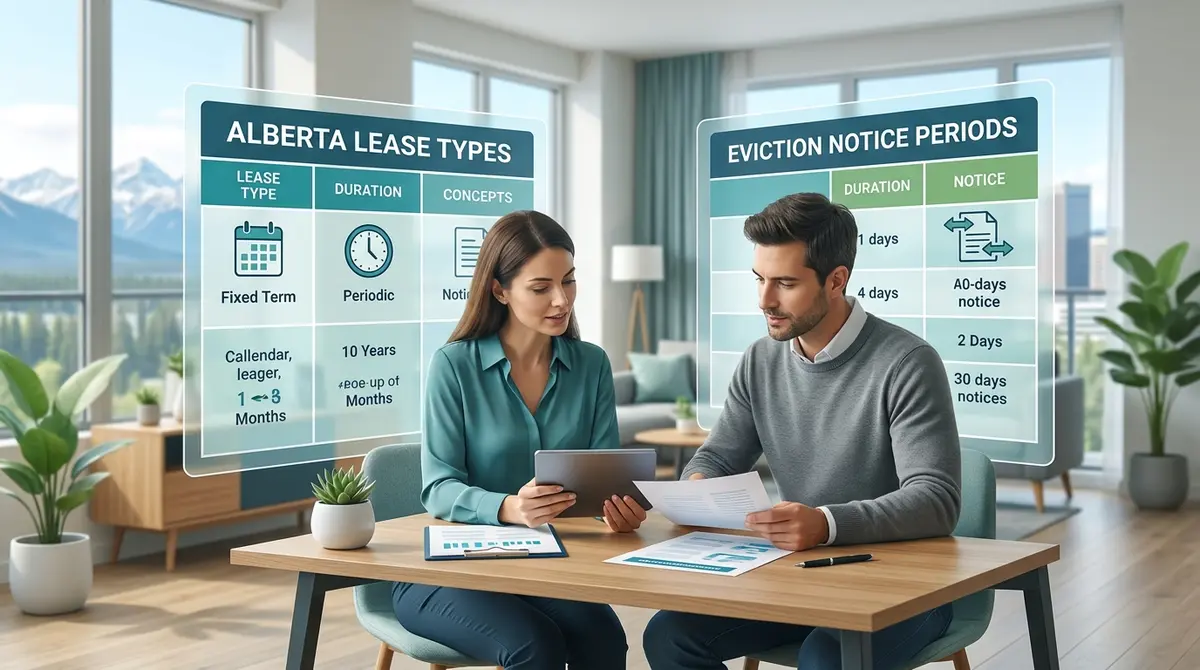
Proper notice requirements are the bedrock of tenant rights in Alberta. A bank, receiver, or new property buyer cannot simply change the locks or demand you leave immediately. The length of notice required depends entirely on the type of tenancy agreement you currently hold.
| Type of Tenancy | Protection Level During Foreclosure | Notice Required for Eviction (If Sold) |
|---|---|---|
| Fixed-Term Lease | Highly Protected | The new owner must honor the lease until the end date specified in the contract. Cannot be evicted before expiration. |
| Month-to-Month (Periodic) | Moderately Protected | 90 days written notice if the new owner or their immediate family intends to move in. |
| No Formal Lease (Verbal) | Moderately Protected | Treated as a periodic month-to-month tenancy under the RTA. 90 days written notice for personal use. |
Calgary tenants should be acutely aware that receiving an informal verbal notice about a potential property sale does not constitute proper legal notice. Only written notices that comply with provincial formatting requirements are valid. Furthermore, if a new owner wants to conduct major renovations that require the property to be empty, they must provide a full 365 days of notice under the RTA for periodic tenancies.
What Happens When the Foreclosed Property is Sold?
When a foreclosed property is sold to a new owner—whether through a public court auction, a private sale, or a direct transfer to the mortgage lender—the legal principle of “buyer beware” applies. The new owner inherits the property subject to all existing tenancies. This means they step directly into the shoes of your previous landlord.
According to Marcus Thorne, Lead Foreclosure Trustee at Calgary Financial Recovery: “The buyer of a foreclosed property inherits the existing lease entirely. They cannot simply demand higher rent, alter the utility agreements, or force a new lease signing without following strict provincial guidelines and waiting for the current lease term to expire.”
If the new owner wishes to move into the property themselves, they must wait until your fixed-term lease expires. If you are on a month-to-month lease, they must provide the mandatory 90 days of notice. In the 2026 market, we are increasingly seeing “Cash for Keys” agreements. This is a scenario where the new owner offers the tenant a financial settlement (often equivalent to 2-3 months of rent plus moving expenses) to voluntarily vacate the property early. You have the absolute right to negotiate or decline these offers.
Step-by-Step Guide: How to Protect Yourself as a Renter
If you discover your rental property is facing foreclosure, taking proactive steps will safeguard your housing stability. Follow this structured approach to ensure your rights are fully enforced:
- Document Everything: Keep meticulous records of your lease agreement, rent payment receipts, and all communications with your landlord. If you currently pay in cash, immediately switch to traceable methods like e-transfers or certified checks.
- Verify the Legal Stage: Check the public land titles registry to see if a Certificate of Pending Litigation has been filed against the property. Understanding the process of discharging a lis pendens can help you understand the owner’s legal standing and the timeline of the sale.
- Continue Paying Rent: As emphasized previously, do not withhold rent. Pay your landlord until you receive a formal court order directing you to pay a receiver or the bank.
- Secure Your Deposit Record: Locate the original receipt for your security deposit. The new owner will be legally responsible for returning this money, even if the old landlord spent it.
- Attend Court if Necessary: If you are named in the lawsuit as an occupant, you may need to learn about responding to a foreclosure statement of claim to ensure the presiding judge is fully aware of your valid lease agreement.
Safeguarding Your Security Deposit During a Foreclosure
In Calgary, the average security deposit in 2026 sits around $1,800. Tenants frequently worry that a bankrupt landlord means their hard-earned deposit is gone forever. Fortunately, the RTA requires that tenant deposits be held in a separate trust account. Even if the original landlord illegally co-mingled the funds and spent your deposit, the law protects you.
When a new property owner acquires a foreclosed rental property, they legally assume responsibility for honoring all deposit obligations. When you eventually move out, the new owner or the bank must return your deposit (plus any mandated interest) within 10 days, minus any legitimate deductions for property damages.
If the new owner claims they have no knowledge of your deposit, you can use your original lease and payment receipts as definitive proof. You have the right to seek recovery through the provincial dispute resolution process if they fail to honor this financial obligation.

Common Mistakes Tenants Make During a Landlord’s Foreclosure
Navigating the final order of foreclosure timeline is stressful, and tenants often make critical errors that jeopardize their legal standing. Avoid these common pitfalls to maintain your housing security:
- Moving Out Prematurely: Statistically, only 22% of foreclosures result in immediate tenant displacement. Many properties are bought by investors who actively want to keep paying tenants. Don’t break your lease and incur moving costs unnecessarily.
- Ignoring Court Documents: If a process server hands you a document, read it thoroughly. It might contain an order to redirect your rent or a notice regarding the foreclosure questioning process.
- Accepting Verbal Evictions: Never accept a phone call or a text message as a valid eviction notice. Always demand proper provincial forms.
- Denying Entry for Showings: Even during foreclosure, the landlord or bank has the right to show the property to prospective buyers. However, they must provide a minimum of 24 hours (often 48 hours in practice) written notice before entering the premises.
Legal Resources and Advocacy in Calgary
If you are facing a complex foreclosure situation, you do not have to navigate it alone. Calgary offers several robust legal resources designed specifically for tenants.
The Residential Tenancy Dispute Resolution Service (RTDRS) is a quasi-judicial tribunal that handles over 12,000 landlord-tenant disputes annually in Alberta. They have the authority to issue binding orders to stop illegal evictions or enforce the return of security deposits.
Additionally, the Centre for Public Legal Education Alberta (CPLEA) provides free, easy-to-understand legal information regarding housing rights. For broader market context and housing stability programs, the Canada Mortgage and Housing Corporation (CMHC) offers extensive resources for renters facing displacement.
As Dr. Elena Rostova, Real Estate Economics Professor at the University of Calgary, notes: “The 2026 housing market dynamics mean that preserving an existing tenancy is often more financially viable for the acquiring bank than leaving the property vacant during the redemption period. Tenants have significantly more leverage than they realize.”
Frequently Asked Questions (FAQ)
Can the bank shut off my utilities during a foreclosure?
No. If your lease includes utilities, the landlord is legally required to maintain them. If the landlord defaults on utility payments, you can contact the RTDRS for an emergency order, or in some cases, pay the utility company directly and deduct it from your rent with proper legal authorization.
What is an Attornment of Rent?
An Attornment of Rent is a formal legal order issued by a court that legally redirects your rent payments. Instead of paying your landlord, you are legally required to pay the mortgage lender or their appointed receiver.
Does a landlord’s foreclosure ruin my credit score as a tenant?
Absolutely not. The foreclosure is tied entirely to the property owner’s mortgage and financial profile. As long as you continue to pay your rent and fulfill your lease obligations, your personal credit score remains completely unaffected.
Can I break my lease early if the house is in foreclosure?
Not automatically. A foreclosure does not give you the legal right to break a fixed-term lease without penalty. However, you can attempt to negotiate a mutual termination agreement with the landlord or the bank if they prefer the property to be vacant for an easier sale.
What happens if the new owner wants to demolish the property?
If a new owner purchases the foreclosed property with the intent to demolish it or conduct major renovations that require vacant possession, they must provide you with 365 days of written notice under Alberta’s Residential Tenancies Act.
Who is responsible for repairs during the foreclosure process?
The current legal owner remains responsible for all maintenance and repairs. If the property has been officially taken over by the bank or a court-appointed receiver, that entity becomes your new landlord and assumes all maintenance responsibilities under the RTA.
Conclusion
Navigating a rental property foreclosure in Calgary requires a clear understanding of your rights under the Alberta Residential Tenancies Act. By continuing to pay your rent, documenting all communications, and understanding the strict notice periods required for eviction, you can protect your housing stability even in the unpredictable 2026 real estate market. Remember that your lease is tied to the property, and new owners must respect your legal standing. If you are facing uncertainty regarding your tenancy or need professional guidance on navigating property disputes, contact our team today for expert assistance.