Property owners in rural Calgary areas can leverage their existing real estate equity through a secondary mortgage to finance heavy agricultural equipment, bypassing the strict lending criteria and high down payments of traditional machinery loans. By borrowing against the appraised value of their acreage or farmland, agricultural operators can secure capital for tractors, combines, and irrigation systems at blended interest rates, while preserving their primary working capital for daily operations.
Key Takeaways
- Equity Extraction: Rural property owners can typically access up to 65-75% of their property’s appraised value to fund machinery purchases.
- Collateral Shift: Unlike chattel mortgages that tie debt to depreciating equipment, secondary financing secures the loan against appreciating real estate.
- Flexible Qualification: Alternative lenders focus heavily on property equity rather than strict traditional income metrics, benefiting self-employed farmers.
- Tax Efficiency: Interest paid on equity loans used for agricultural business purposes is generally tax-deductible under Canadian tax law.
- Speed of Funding: Private equity financing can often be secured and funded within 10 to 14 days, allowing operators to capitalize on time-sensitive equipment sales.
The 2026 Landscape of Agricultural Financing in Alberta
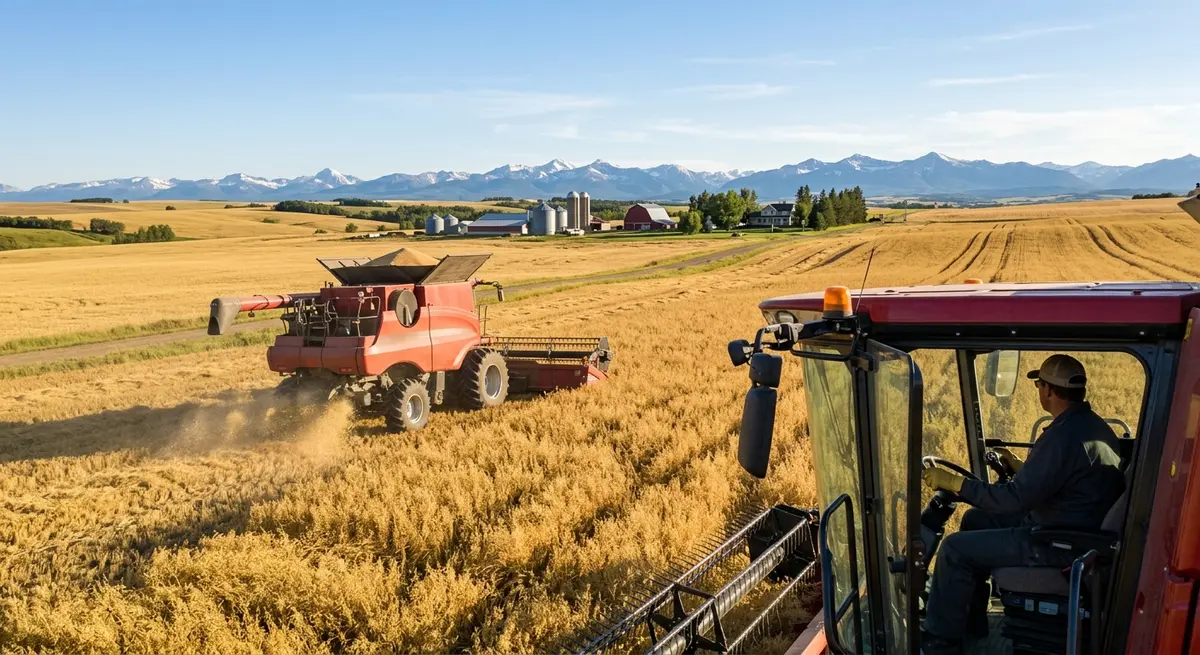
The agricultural sector surrounding Calgary—encompassing Rocky View County, Foothills County, and Wheatland County—has seen significant technological advancements by 2026. However, the cost of modernizing farm operations has surged. According to a recent report from Statistics Canada, the average cost of a high-horsepower tractor now exceeds $450,000, while advanced combine harvesters equipped with precision agriculture technology routinely surpass the $750,000 mark.
Traditional equipment financing, often structured as chattel mortgages, requires substantial down payments—sometimes up to 25% of the purchase price. Furthermore, traditional banks have tightened their Debt Service Coverage Ratio (DSCR) requirements, making it difficult for seasonal operators to qualify. This economic environment has driven a surge in alternative financing strategies. Many acreage owners and agricultural producers are now utilizing the built-up equity in their land to fund these massive capital expenditures.
As Dr. James Henderson, an Agricultural Economist at the University of Alberta, explains: “The shift toward equity-based financing in Alberta’s agricultural belt is a direct response to equipment inflation. Farmers are realizing that their most powerful financial asset isn’t their crop yield, but the appreciating dirt beneath their feet.”
How Secondary Financing Works for Rural Properties
Securing a secondary loan against a rural property involves different mechanics than urban residential financing. When dealing with acreages, hobby farms, or commercial agricultural land, lenders evaluate the Loan-to-Value (LTV) ratio with stricter parameters. While an urban home might qualify for up to 80% LTV, rural properties are typically capped between 65% and 75%.
This reduction accounts for the specialized nature of the property. Rural appraisals must factor in outbuildings, well and septic systems, zoning restrictions, and the sheer size of the land parcel. Lenders separate the value of the primary residence and a few surrounding acres from the raw agricultural land.
For self-employed farmers, proving consistent income to a traditional bank can be a massive hurdle due to the cyclical nature of farming and aggressive tax write-offs. Fortunately, alternative lenders offer more flexible underwriting. By utilizing alternative documentation for self-employed operators, lenders focus on the viability of the farm operation and the hard equity in the real estate rather than a standard T4 slip.
Comparing Equipment Loans vs. Real Estate Equity Financing
When an agricultural operator needs to acquire machinery, they generally face two primary debt vehicles: a traditional equipment loan (chattel mortgage) or extracting equity from their real estate. Understanding the nuances of each is critical for long-term financial health.
| Feature | Traditional Equipment Loan | Real Estate Equity Financing |
|---|---|---|
| Collateral | The equipment itself (depreciating asset) | The rural property (appreciating asset) |
| Down Payment | Typically 10% – 25% cash required | None required (funded entirely by existing equity) |
| Amortization | Short-term (3 to 7 years) | Long-term options available (up to 25+ years) |
| Cash Flow Impact | High monthly payments due to short terms | Lower monthly payments, interest-only options |
| Flexibility | Funds locked to specific serial numbers | Capital can be split between equipment, repairs, and seed |
By shifting the debt from a depreciating asset (a tractor) to an appreciating asset (land), farmers can stretch the amortization period. This drastically reduces the monthly debt servicing requirements, freeing up cash flow for fertilizer, seed, and labor.
Step-by-Step Guide: Securing Equity for Machinery Purchases
Navigating the financing process requires preparation, especially when dealing with specialized agricultural properties. Here is the definitive 2026 process for accessing your property’s capital:
- Determine Available Equity: Calculate your estimated property value minus your current primary mortgage balance. Remember that rural lenders typically cap borrowing at 65% of the total value.
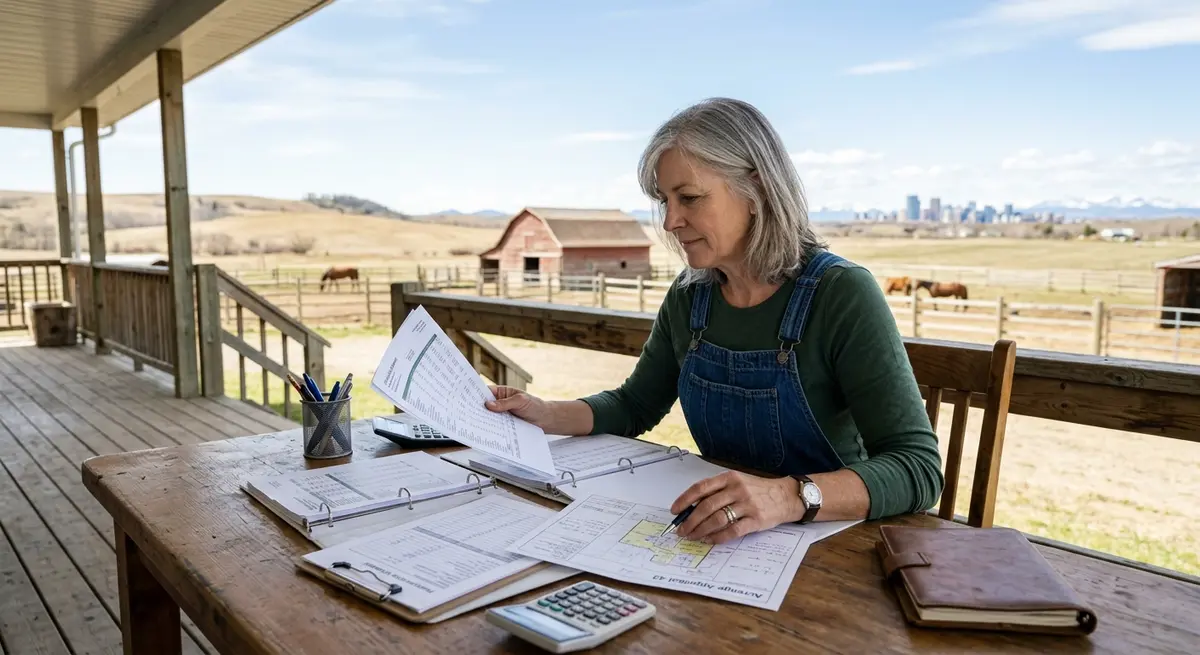
- Order a Specialized Rural Appraisal: Do not rely on standard residential appraisers. You need an appraiser certified in agricultural and rural properties who understands the value of outbuildings, heated shops, and arable land.
- Compile Financial Documentation: While private lenders are flexible, they still require proof of the farm’s viability. Organizing your mortgage paperwork efficiently—including recent notices of assessment, crop yield histories, and business bank statements—will expedite the process.
- Pass the Reasonability Test: Lenders will assess if your stated income aligns with your operation’s size. Familiarize yourself with the reasonability test for self-employed income to ensure your application makes logical sense to an underwriter.
- Select the Right Lender: Work with a brokerage that specializes in rural Alberta properties. Institutional banks, credit unions, and private Mortgage Investment Corporations (MICs) all have different risk appetites for agricultural land.
- Funding and Equipment Purchase: Once the legal documents are signed and registered on the title, the funds are deposited directly into your account. You can then negotiate cash deals with equipment dealerships, often securing significant discounts.
Tax Implications and Strategic Advantages for Farmers
One of the most compelling reasons to use property equity for agricultural machinery is the favorable tax treatment. Under guidelines from the Canada Revenue Agency (CRA), if borrowed funds are used to generate business income, the interest paid on that debt is generally tax-deductible.
This means that while the loan is secured against your personal or corporate real estate, the interest becomes a write-off against your farming revenue. It is crucial to maintain a clear paper trail showing the direct flow of funds from the mortgage advance to the equipment dealership. Commingling these funds with personal accounts can jeopardize the deduction. For a deeper dive into structuring this correctly, consult our guide on the tax implications of secondary financing.
Furthermore, purchasing equipment outright with cash generated from equity allows the farm to immediately claim Capital Cost Allowance (CCA) on the machinery. According to Alberta Agriculture and Irrigation, strategic use of CCA can dramatically lower a farm’s taxable income during highly profitable harvest years.
Common Pitfalls to Avoid When Pledging Rural Real Estate
While leveraging land is a powerful tool for home equity financing for owner-operators, it carries inherent risks. The most significant danger is over-leveraging. A bad harvest, severe drought, or sudden drop in commodity prices can severely impact your ability to service the debt.
Because the loan is secured against your property, defaulting puts your land—and potentially your home—at risk. It is vital to understand the foreclosure timeline in Alberta to recognize how quickly lenders can act if payments are missed. Always maintain a cash reserve equivalent to at least six months of debt servicing.
Additionally, borrowers must pay close attention to the terms of the loan. Private agricultural mortgages often come with interest-only payments and shorter terms (1 to 3 years), requiring a clear exit strategy. Borrowers should also be wary of the compounding frequency on your debt, as semi-annual versus monthly compounding can result in thousands of dollars in hidden interest costs over the life of the loan.
Sarah Jenkins, Senior Underwriter at Prairie Equity Solutions, warns: “We see operators who use equity to buy machinery, but fail to account for the maintenance and fuel costs of that new equipment. The equipment must generate enough additional revenue to cover both its operational costs and the new mortgage payment. If it doesn’t, you are slowly draining the equity from your family’s estate.”
Frequently Asked Questions (FAQ)
What is the maximum amount of equity I can extract from my rural property?
Most lenders in Alberta cap rural property borrowing at 65% to 75% of the appraised value. This limit is lower than urban properties due to the specialized nature of agricultural land, zoning restrictions, and longer typical selling periods.
Can I use the funds to buy used farm equipment or at auction?
Yes. Because the loan is secured against your real estate and not the machinery itself, you receive the funds as liquid cash. This allows you to purchase used equipment, bid at unreserved agricultural auctions, or buy privately without lender restrictions on the asset’s age.
How long does it take to secure funding against an acreage?
If you have a recent, specialized rural appraisal and clear title, private equity financing can be arranged and funded in as little as 10 to 14 days. Traditional institutional financing may take 30 to 45 days due to stricter underwriting processes.
Is the interest on the loan tax-deductible?
Generally, yes. If the funds extracted from your property are used exclusively for business purposes—such as buying farm equipment to generate income—the interest is tax-deductible. Always consult with a CPA to ensure proper tracking and compliance with CRA guidelines.
What happens if my farm has a bad year and I miss a payment?
Because the loan is secured by your property, missing payments can lead to legal action against your land. It is crucial to communicate with your lender immediately if you foresee cash flow issues, as many private lenders prefer to negotiate temporary interest-only relief rather than initiate legal proceedings.
Do my barns and outbuildings count toward my property’s equity?
Yes, permanent structures like heated shops, barns, and specialized outbuildings contribute to the overall appraised value of the property. However, an appraiser must evaluate their condition, utility, and market demand to determine their exact contribution to the property’s equity.
Conclusion
In 2026, navigating the high costs of agricultural machinery requires innovative financial strategies. By utilizing the built-up equity in rural Calgary properties, farmers and acreage owners can bypass the rigid constraints of traditional equipment loans. This approach offers lower monthly obligations, the ability to negotiate cash discounts at dealerships, and significant tax advantages. However, pledging your land is a serious commitment that requires careful cash flow planning, a deep understanding of rural property appraisals, and a clear strategy for debt repayment.
If you are considering leveraging your acreage or farm to modernize your operation, expert guidance is essential to ensure you secure the best rates and protect your most valuable asset. Contact us today to speak with a specialist in rural Alberta property financing and discover how much capital you can safely unlock for your next equipment purchase.