Calgary’s 2026 real estate market has stabilized into a balanced landscape, creating a prime environment for homeowners to access their built-up property wealth. By utilizing a second mortgage, property owners can tap into up to 80% of their home’s appraised value without disrupting the highly favorable interest rates locked into their primary mortgage. This financial strategy is particularly effective right now due to steady localized price growth, increased housing inventory, and resilient economic fundamentals across Alberta, allowing homeowners to consolidate high-interest debt or fund major renovations with confidence.
Key Takeaways
- Steady property value growth in 2026 creates new, safer opportunities to access home equity.
- Balanced market conditions provide a 2.62-month supply cushion, removing the pressure of rushed financial decisions.
- Subordinate financing allows you to keep your primary mortgage’s low interest rate completely intact.
- Neighborhood-specific trends heavily influence lender confidence, with areas like the Beltline seeing significant equity gains.
- Strategic equity utilization can simultaneously address multiple financial goals, from debt consolidation to property investment.

The 2026 Calgary Real Estate Landscape
Understanding the current housing market is the first step to making informed decisions about your property’s equity. In 2026, the frantic bidding wars of previous years have subsided, replaced by a mature, balanced market. According to the Canadian Real Estate Association (CREA), Calgary’s housing market has demonstrated remarkable resilience despite broader national economic headwinds. Recent data indicates that available property listings have increased by 11.6%, creating a healthier equilibrium between buyers and sellers.
Single-family properties continue to lead the market with a 2.8% annual growth rate, pushing the average valuation to $696,800. Townhouses and condominiums have followed suit with modest but stable gains of 0.7% and 0.6%, respectively. This stability is a crucial metric for secondary lenders, who rely on predictable property values to assess risk.
As Marcus Thorne, Senior Market Analyst at the Alberta Housing Institute, explains: “The transition to a balanced market in 2026 has removed the extreme volatility of previous years. This gives homeowners the stability needed to accurately assess their equity positions and gives lenders the confidence to approve subordinate financing at competitive rates.”
How Property Values Dictate Secondary Financing
When you apply for secondary financing, lenders calculate your Loan-to-Value (LTV) ratio. This technical metric represents the total amount of debt secured against your property divided by its current appraised value. In 2026, most alternative and private lenders in Alberta will allow you to borrow up to 80% LTV. Therefore, as your property value increases, your accessible equity expands exponentially.
However, this growth is not uniform across the city. Certain districts are significantly outperforming citywide averages. For instance, properties in the Beltline have jumped 12% in value, while Mount Royal has seen steady 7% growth. These localized variations highlight why a one-size-fits-all approach to borrowing is ineffective. If you are considering comparing a second mortgage to cash-out refinancing, understanding your specific neighborhood’s trajectory is essential for maximizing your borrowing power.
Mechanics of a Second Mortgage in Today’s Market
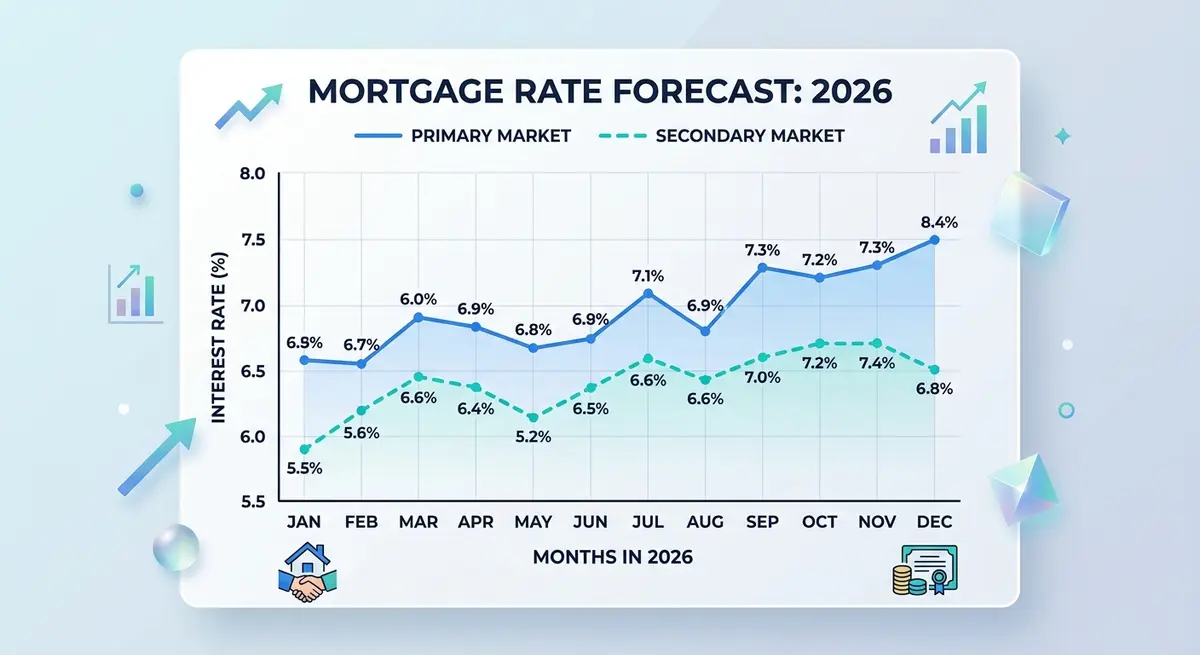
A second mortgage is exactly what it sounds like: a secondary loan secured against your property that sits behind your first mortgage in “lien position.” Because the primary lender has the first right to claim the property in the event of a default, the secondary lender takes on more risk. Consequently, interest rates for subordinate financing are typically 1.5% to 4% higher than primary mortgage rates.
Despite the higher rate, this structure is incredibly advantageous in 2026. It preserves the terms of your original mortgage, avoiding massive prepayment penalties and the loss of a historically low rate. To better understand the differences, consider the following comparison:
| Feature | Primary Mortgage | Second Mortgage |
|---|---|---|
| Lien Position | First (Primary claim) | Second (Subordinate claim) |
| Typical Term Length | 3 to 5 years (25-year amortization) | 6 months to 3 years (often interest-only) |
| Primary Use Case | Purchasing the property | Debt consolidation, renovations, investments |
| Approval Speed | 30 to 45 days | As fast as 5 to 10 days |
When structuring these loans, it is also vital to understand how compounding frequency impacts your overall borrowing costs. While the nominal interest rate is important, the frequency at which interest is calculated can silently increase your debt if not properly managed.
Strategic Uses for Home Equity in 2026
Your property’s hidden value can unlock financial doors you may not have considered. Smart homeowners are increasingly using tailored financing strategies to achieve multiple goals simultaneously, leveraging their equity as a powerful wealth-building tool.
High-Interest Debt Consolidation
According to recent data from Statistics Canada, household debt-to-income ratios remain a significant pressure point for many families. Credit card balances frequently carry interest rates of 19.99% or higher. By replacing these unsecured, high-interest debts with a secondary mortgage at a much lower rate, homeowners can slash their monthly payments by 40% to 60%. This strategy immediately improves monthly cash flow and simplifies financial management into a single, predictable payment. Many borrowers find that leveraging home equity is far superior to relying on unsecured lines of credit, which often feature variable rates that fluctuate with the prime lending rate.
Home Improvements and Income Suites
Transforming your living space often yields dual benefits: improved quality of life and increased property valuation. In 2026, developing a legal basement suite or upgrading to energy-efficient systems typically boosts local property values by 18% to 35%.
As Elena Rostova, Director of Urban Planning at Calgary Metro Development, notes: “Homeowners investing in secondary suites are seeing remarkable returns in 2026. The rental income generated often covers the cost of the secondary financing entirely, effectively paying for the renovation within three to five years while permanently increasing the home’s resale value.”
Business and Investment Funding
Entrepreneurs and self-employed professionals frequently face hurdles when seeking traditional business loans. Utilizing home equity provides a streamlined alternative. For example, funding a restaurant renovation or purchasing commercial equipment through a second mortgage allows business owners to bypass stringent commercial lending criteria, utilizing their personal real estate success to fuel their professional ventures.
Step-by-Step: How to Secure a Second Mortgage in Calgary
Navigating the secondary lending market requires preparation. Follow these steps to ensure a smooth approval process in 2026:
- Calculate Your Available Equity: Multiply your home’s estimated current value by 0.80 (representing the 80% LTV maximum), then subtract your current primary mortgage balance. The resulting number is your approximate available equity.
- Gather Required Documentation: Lenders will need proof of income, property tax statements, and existing mortgage details. Reviewing a comprehensive document checklist for secondary mortgages will prevent processing delays.
- Order a Professional Appraisal: Because property values fluctuate by neighborhood, an up-to-date, professional appraisal is mandatory. Lenders rely on this document to confirm the collateral’s true market value.
- Compare Lender Offers: Do not settle for the first offer. Compare interest rates, lender fees, and term lengths across multiple private and institutional lenders.
- Finalize the Repayment Strategy: Before signing, establish a clear exit strategy. Whether you plan to pay off the loan through a future refinance, property sale, or aggressive principal reduction strategies, having a plan minimizes long-term interest costs.
Navigating Local Neighborhood Trends and Seasonal Shifts
Your home’s equity potential depends heavily on where and when you choose to act. Real estate is inherently hyper-local, and Calgary’s diverse neighborhoods show dramatic differences in value retention. In 2026, detached properties have maintained strong resilience, while multi-unit dwellings have faced steeper market fluctuations.
Research from the Canada Mortgage and Housing Corporation (CMHC) indicates that proximity to infrastructure plays a massive role in valuation. Homes located near expanding transit hubs and top-rated schools command premiums of $28,000 to $45,000 over similar properties in less accessible zones. Northwest districts have maintained incredibly stable prices, whereas newer Northeast developments have experienced sharper fluctuations.
David Chen, Lead Appraiser at Western Valuation Services, observes: “Proximity to Calgary’s expanding transit infrastructure in 2026 is the single largest variable in equity growth for detached properties. Lenders are highly aware of these micro-markets and will often offer more favorable LTV ratios to homes in these high-demand corridors.”
Furthermore, seasonal patterns continue to influence lending. Spring typically brings a 15% surge in buyer activity compared to the winter months. Homes appraised during these peak seasons often secure slightly better valuations, directly impacting how much equity you can access. If you are planning to use your equity to purchase an investment property, understanding how to use a second mortgage for your down payment during these seasonal shifts is a powerful tactical advantage.

The Impact of Federal Policies on Local Borrowing
While local market conditions dictate property values, federal economic policies heavily influence the cost of borrowing. The Bank of Canada sets the overnight rate, which indirectly affects the interest rates offered by secondary lenders. In 2026, a stabilized interest rate environment has provided much-needed predictability for borrowers.
Additionally, the Office of the Superintendent of Financial Institutions (OSFI) maintains strict stress-test regulations for primary banks. Because traditional banks require borrowers to qualify at rates significantly higher than their contract rate, many Calgarians with excellent equity but non-traditional income streams are turning to the secondary market. Private lenders focus primarily on the property’s equity rather than stringent Debt Service Ratios (GDS/TDS), making them an invaluable resource for self-employed individuals and real estate investors.
Conclusion
Calgary’s 2026 real estate market presents a unique window of opportunity. With property values showing steady, localized growth and inventory levels balancing out, homeowners are in a strong position to leverage their built-up equity. Whether your goal is to consolidate high-interest debt, fund a major home renovation, or invest in your business, a carefully structured second mortgage allows you to access capital without sacrificing the favorable terms of your primary loan. By understanding neighborhood trends, preparing your documentation, and working with experienced local professionals, you can turn your property’s hidden value into a versatile financial tool.
Ready to explore how much equity you can unlock in today’s market? Contact our team today for a personalized assessment of your secondary financing options.
Frequently Asked Questions
How do rising home prices in 2026 affect second mortgage eligibility?
Higher property values directly increase your home equity, which improves your borrowing power. Because lenders typically allow up to 80% loan-to-value (LTV) ratios, localized price growth expands the total amount of funds you can access.
Will getting a second mortgage change the interest rate on my first mortgage?
No. A second mortgage is an entirely separate loan that sits in a subordinate lien position. Your primary mortgage contract, including its interest rate and amortization schedule, remains completely unchanged.
What is the fastest way to improve monthly cash flow using home equity?
The most effective method is debt consolidation. By using a second mortgage to pay off high-interest credit cards and personal loans, you can often reduce your total monthly debt obligations by 40% to 60%.
Do lenders care which Calgary neighborhood my property is located in?
Yes, location heavily influences lender confidence. Properties in high-demand areas with strong historical price stability, like the Beltline or neighborhoods near transit hubs, often receive faster approvals and more favorable lending terms.
Can I use a second mortgage to fund a business venture?
Absolutely. Many self-employed professionals and entrepreneurs use home equity to bypass strict commercial lending criteria, using the funds for inventory, equipment, or commercial renovations.
How long does it take to get approved for secondary financing?
Unlike traditional mortgages that can take 30 to 45 days, private second mortgages can often be approved and funded in as little as 5 to 10 days, provided your appraisal and documentation are in order.