Homeowners facing foreclosure in Calgary can stop the legal process and protect their equity by immediately securing legal representation and responding to the lender’s Statement of Claim within the mandated 20-day window. By leveraging local legal aid clinics, understanding Alberta’s specific redemption periods, and negotiating alternative payment structures, borrowers can successfully halt foreclosure proceedings and retain ownership of their properties.
Key Takeaways
- Act Immediately: You have exactly 20 days to file a Statement of Defence or Demand for Notice after being served with a Statement of Claim in Alberta.
- Free Legal Resources Exist: Organizations like Calgary Legal Guidance (CLG) and university student legal assistance programs offer pro bono support for qualifying low-income homeowners.
- Understand the Redemption Period: Alberta courts typically grant a 6-month redemption period, allowing you time to pay arrears, refinance, or sell the property yourself.
- Know Your Mortgage Type: Your liability for a deficiency judgment depends heavily on whether your mortgage is conventional (uninsured) or high-ratio (insured).
- Alternative Financing Can Help: In some cases, securing secondary financing can pay off the arrears and stop the foreclosure entirely.
Understanding the Foreclosure Process in Alberta (2026 Update)
The financial landscape of 2026 has presented unique challenges for Calgary homeowners. With fluctuating property values and evolving lending criteria, understanding the precise legal mechanics of property repossession is more critical than ever. Foreclosure is not an overnight event; it is a highly structured legal litigation process governed by the Court of King’s Bench of Alberta.
According to a 2026 report by the Canadian Bankers Association, the mortgage arrears rate in Alberta currently sits at approximately 0.45%. While this percentage seems small, it represents thousands of families navigating the complexities of the legal system. The process generally begins after a borrower misses two or more consecutive payments. At this juncture, the lender’s legal counsel will issue a demand letter, insisting on immediate payment of the arrears plus any accrued legal fees.
If the demand letter is ignored, the lender escalates the matter by filing a Statement of Claim. It is vital to understand the difference between a notice of default and a statement of claim, as the latter officially initiates a lawsuit against you. Once served, the clock starts ticking, and securing legal counsel becomes paramount.

Free and Low-Cost Legal Aid Options in Calgary
The prospect of hiring a lawyer while struggling to pay a mortgage can feel impossible. Fortunately, Calgary boasts a robust network of legal aid organizations dedicated to ensuring that financial hardship does not preclude access to justice.
Calgary Legal Guidance (CLG)
Calgary Legal Guidance is a cornerstone of pro bono legal services in the city. CLG provides free legal advice and guidance to individuals who do not qualify for Legal Aid Alberta but still cannot afford private counsel. Their services include one-on-one consultations where volunteer lawyers review your court documents, explain the litigation process, and help you draft necessary legal responses.
As Marcus Thorne, a senior volunteer litigator at CLG, explains: “The biggest mistake homeowners make is assuming that a Statement of Claim means immediate eviction. By engaging with legal aid early, we can often negotiate forbearance agreements or properly utilize the redemption period to save the home.”
Student Legal Assistance Programs
The University of Calgary’s Faculty of Law operates Student Legal Assistance (SLA), a program where upper-year law students provide legal information and representation under the strict supervision of practicing lawyers. This is an excellent resource for homeowners needing help drafting a Demand for Notice or understanding the procedural steps required by the Alberta Courts.
Your Legal Rights and Court Orders Explained
Alberta’s foreclosure laws are unique compared to other Canadian provinces, particularly regarding the Law of Property Act. Understanding the specific court orders that dictate the fate of your property is essential for protecting your financial future.
The Redemption Period
The redemption period is your legal safety net. When a judge grants an Order Nisi, they establish the exact amount owed and set a deadline for you to redeem the mortgage. Navigating Alberta foreclosure redemption periods requires strategic planning. Typically set at six months, this period can be shortened if the property is vacant or if there is little to no equity remaining in the home.
Types of Foreclosure Court Orders
During the litigation process, the court may issue several different types of orders. Here is a breakdown of the most common rulings:
| Court Order | Description | Implications for the Homeowner |
|---|---|---|
| Order Nisi | Confirms the debt amount and establishes the redemption period. | You retain ownership and can live in the home while attempting to pay off the arrears or sell the property. |
| Order for Sale | Directs the property to be listed with a real estate agent chosen by the court. | The home is sold to the highest bidder. You are entitled to any surplus funds after debts and real estate commissions are paid. |
| Order for Foreclosure | Transfers the property title directly to the lender. | You lose the home and any equity within it. You must vacate the premises immediately. |
It is also crucial to understand your liability after the loss of a home. Depending on whether your mortgage was insured by the Canada Mortgage and Housing Corporation (CMHC), you may be subject to further legal action. Reviewing deficiency judgment calculations with a legal professional can help you determine if the lender can pursue your other assets or initiate wage garnishment after foreclosure.
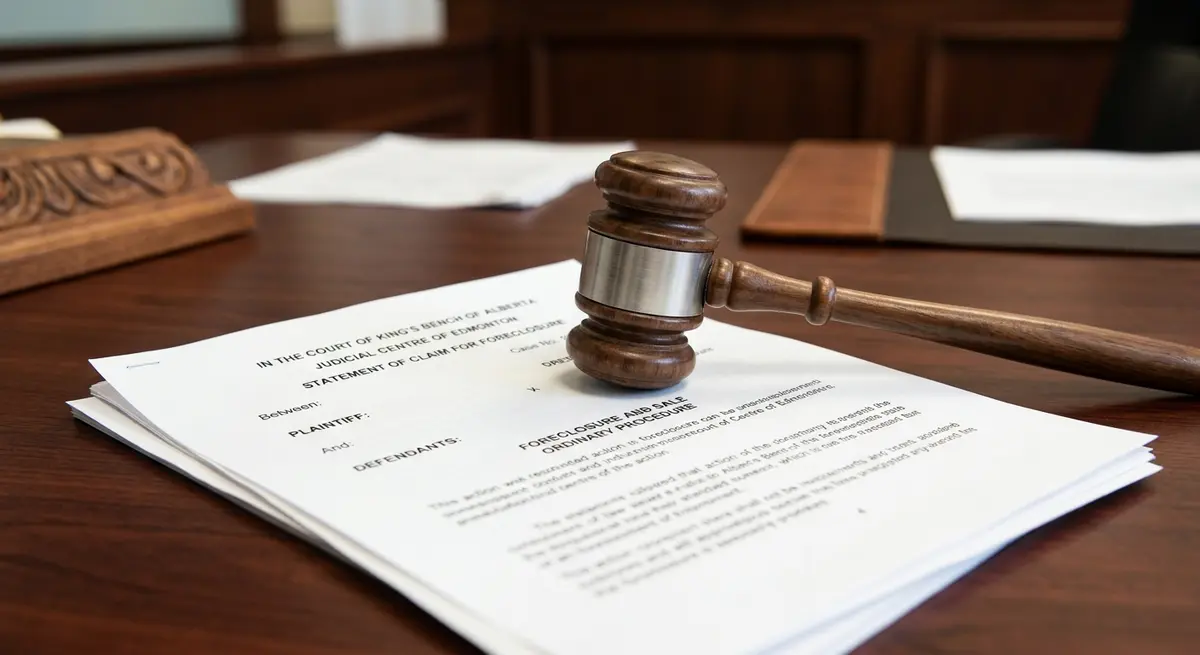
Step-by-Step: How to Respond to a Foreclosure Demand Letter
Receiving a demand letter or a Statement of Claim induces panic, but inaction is the worst possible response. Follow these steps to protect your rights:
- Do Not Ignore the Documents: Acknowledging the problem is the first step. Note the exact date you were served, as this dictates your legal deadlines.
- File a Demand for Notice: If you do not have a defense against the fact that you missed payments, filing a Demand for Notice ensures the lender cannot proceed with court applications without notifying you first. This is a critical part of responding to a foreclosure statement of claim.
- Gather Financial Documentation: Compile your most recent mortgage statements, property tax assessments, pay stubs, and a detailed list of monthly expenses.
- Contact Legal Aid: Reach out to Calgary Legal Guidance or a private foreclosure defense attorney immediately to schedule a consultation.
- Communicate with Your Lender: Sometimes, lenders are willing to negotiate a forbearance agreement or a capitalized arrears plan if they see you are actively seeking a resolution.
Essential Documentation for Your Legal Consultation
When you secure an appointment with a legal aid clinic or a private attorney, arriving unprepared wastes valuable time. To ensure your legal counsel can provide immediate, actionable advice, bring the following documentation:
- The Statement of Claim: Bring every page of the legal documents served to you.
- Original Mortgage Documents: Including the standard charge terms and any renewal agreements.
- Title Search: A recent pull of your property title showing all registered encumbrances.
- Proof of Income: Recent pay stubs, T4s, or Notice of Assessments from the CRA.
- Property Valuation: A recent property tax assessment or an appraisal from a licensed Calgary realtor to determine your current equity position.
How The Second Mortgage Store Can Help Stop Foreclosure
While legal aid can help you navigate the court system, solving the underlying financial deficit requires capital. At The Second Mortgage Store, we specialize in providing alternative financing solutions that can rescue your property from the brink of repossession.
If you have sufficient equity in your home, we can help you secure a secondary loan to pay off the mortgage arrears, legal fees, and property tax deficits. This effectively stops the foreclosure process in its tracks, allowing you to retain ownership. Furthermore, our team can advise you on principal reduction strategies to ensure your new mortgage structure is sustainable long-term.
Research from the Alberta Real Estate Association indicates that nearly 35% of foreclosures could be prevented if homeowners leveraged their existing equity before the final order of foreclosure timeline expires. Do not wait until the court orders the sale of your home to explore your financing options.

Conclusion
Facing the loss of your home is an incredibly stressful experience, but the Alberta legal system provides mechanisms to protect homeowners who take proactive steps. By utilizing Calgary’s legal aid resources, understanding the implications of court orders, and exploring alternative equity financing, you can successfully navigate this challenging period. Remember, the clock starts ticking the moment you are served with a Statement of Claim. Do not let inaction dictate your financial future.
If you are facing mortgage arrears and need immediate assistance exploring your equity options to halt legal proceedings, contact us today. Our team at The Second Mortgage Store is ready to help you find a viable path forward.
Frequently Asked Questions (FAQ)
What is the foreclosure process in Alberta, and how does it work?
The foreclosure process in Alberta is a judicial procedure initiated through the Court of King’s Bench when a borrower defaults on their mortgage. It begins with a Statement of Claim, followed by a redemption period, and concludes with either a court-ordered sale or a transfer of title to the lender.
How can I get free legal assistance for foreclosure in Calgary?
You can access free legal assistance through organizations like Calgary Legal Guidance (CLG) and the Student Legal Assistance program at the University of Calgary. These clinics offer pro bono advice and document review for low-income individuals facing property repossession.
What are my rights during the foreclosure process?
You have the right to remain in your home during the court-mandated redemption period. You also have the right to receive notice of all court applications, dispute the lender’s financial calculations, and sell the property yourself to pay off the debt before the final order is granted.
How long does the foreclosure process take in Alberta?
The timeline varies significantly based on the property’s equity and the homeowner’s response, but it typically takes between 6 to 12 months from the initial missed payment to the final loss of the property. Filing a Demand for Notice ensures you are kept informed throughout this timeline.
Can I stop a foreclosure once it has started?
Yes, foreclosure can be stopped at almost any point before the Final Order is granted. You can halt the process by paying the arrears and legal costs in full, negotiating a new payment plan with the lender, or securing alternative financing to consolidate the debt.
What documentation do I need to seek legal aid for foreclosure?
You should prepare all court documents served to you, your original mortgage agreement, recent correspondence with your lender, proof of current income, and a recent property tax assessment. Having these documents organized allows legal professionals to assess your case accurately and swiftly.
Will a foreclosure in Alberta affect my other assets?
If you have a conventional, uninsured mortgage, Alberta is generally a non-recourse province, meaning the lender cannot pursue your other assets. However, if your mortgage is insured (e.g., through CMHC), the lender can seek a deficiency judgment and potentially garnish your wages or seize other assets to cover the shortfall.