Homeowners in Alberta facing elevated indoor radon levels can effectively utilize their home equity to fund professional mitigation systems. Radon gas is a naturally occurring, radioactive gas that seeps into homes through the foundation, presenting a severe health risk when it accumulates indoors. Because the installation of a Sub-Slab Depressurization (SSD) system can cost several thousand dollars, secondary property financing offers a streamlined, accessible way to cover these unexpected health-safety retrofits without depleting emergency savings. By accessing built-up property wealth, homeowners can immediately eliminate this hazardous gas and permanently improve their indoor air quality.
Key Takeaways
- High Prevalence: Approximately 1 in 6 homes in Alberta tests above the Health Canada action level for radon gas exposure.
- Health Risks: Prolonged exposure to indoor radon is the leading cause of lung cancer among non-smokers in Canada.
- System Efficacy: Professional Sub-Slab Depressurization (SSD) systems can reduce indoor radon concentrations by up to 99%.
- Financing Options: Secondary property financing provides immediate capital to cover mitigation costs, which generally range from $2,500 to $4,500.
- Value Preservation: Installing a mitigation system resolves health hazards and prevents complications during future real estate transactions.
The Reality of Radon Gas in Alberta Properties
Geological conditions across Western Canada make the region particularly susceptible to high concentrations of soil-based uranium, which decays into radon gas. As this invisible, odorless, and tasteless gas rises to the surface, it enters residential buildings through microscopic cracks in the foundation, gaps around pipes, and floor drains. The structural design of modern homes, which are built to be highly energy-efficient and airtight, inadvertently traps this gas indoors, allowing concentrations to reach dangerous levels.
Research published by Evict Radon, a Canadian national health initiative led by university researchers, consistently shows that Western Canadian homes face some of the highest radon exposures globally. Furthermore, data provided by Health Canada indicates that roughly 16% (or 1 in 6) of Alberta homes contain radon levels that exceed the national action guideline of 200 Becquerels per cubic metre (Bq/m³). Health professionals note that even lower levels pose long-term risks, leading the World Health Organization to recommend a stricter reference level of 100 Bq/m³.
The medical implications of these statistics are profound. According to the Canadian Lung Association, radon exposure is responsible for over 3,000 lung cancer deaths in Canada every single year. The risk increases exponentially for individuals who smoke or have a history of smoking. Addressing this environmental hazard is not merely a home improvement project; it is a critical health intervention.
Why Homeowners Need Professional Mitigation Systems
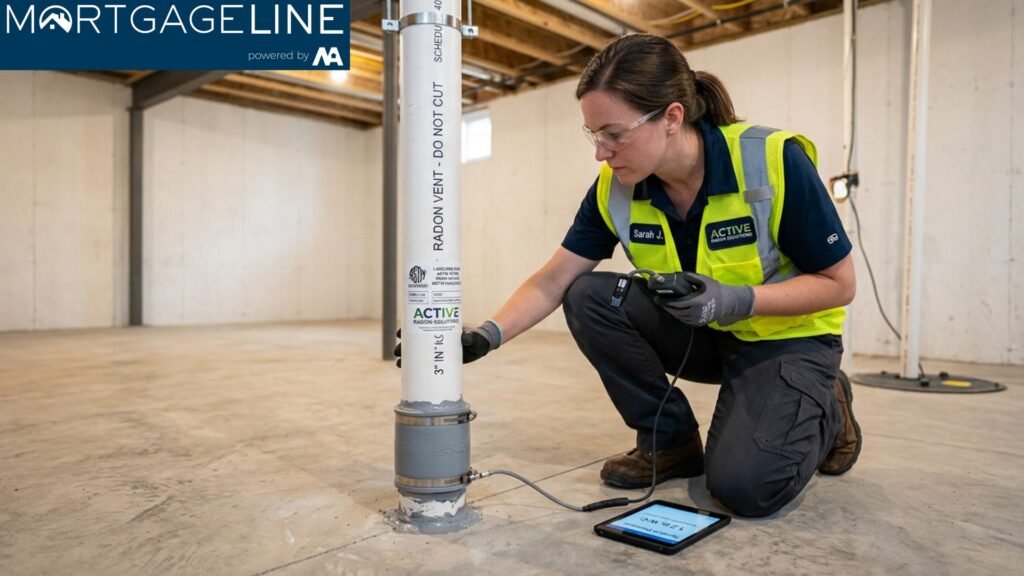
When long-term testing confirms high radon levels, immediate action is required to depressurize the soil beneath the home. The most effective, scientifically proven method for achieving this is Active Sub-Slab Depressurization (SSD). This process involves drilling a core hole through the basement concrete slab and installing a PVC pipe that runs either out the side of the house or up through the roofline. A specialized, continuously running fan is attached to the pipe, creating a vacuum that draws the radioactive gas from the soil and safely vents it into the outdoor atmosphere where it rapidly dilutes.
The upfront costs associated with these installations can be a barrier for many households. In 2026, the average cost of a professional SSD system installation in Alberta ranges between $2,500 and $4,500, depending on the home’s footprint, foundation type, and routing complexity. Homes with expansive crawl spaces, complex architectural layouts, or those requiring concurrent managing structural foundation repairs may see costs escalate beyond $5,000.
Attempting a “do-it-yourself” mitigation is highly discouraged by public health authorities. Improper installation can inadvertently increase indoor radon levels or compromise the home’s building envelope, leading to moisture issues and mold. Certified professionals ensure the system achieves adequate suction across the entire sub-slab footprint, providing permanent protection from alpha-particle radiation.
Utilizing Home Equity to Fund Environmental Safety
For households that do not have immediate liquid capital to cover unexpected environmental remediation, tapping into existing property wealth provides a fast and efficient solution. Real estate values in Alberta have provided many homeowners with substantial equity, which can be leveraged through specialized financial products to pay for health-critical home improvements.
By comparing different home equity lines of credit and secondary borrowing options, homeowners can determine the most cost-effective path forward. Since radon mitigation permanently improves the property’s safety profile, borrowing against the home’s value to fund the work is generally considered a prudent financial decision. Below is a comparison of common financing mechanisms used for home environmental remediation:
| Financing Option | Approval Speed | Typical Interest Profile | Best Use Case |
|---|---|---|---|
| Unsecured Personal Loan | 24 to 48 Hours | Higher (Variable or Fixed) | Small standalone jobs under $3,000 with excellent credit. |
| Home Equity Line of Credit (HELOC) | 2 to 4 Weeks | Moderate (Prime-based Variable) | Ongoing access for multiple upgrades or phased remediation. |
| Secondary Financing | 3 to 7 Days | Moderate to High (Fixed Term) | Consolidating debt while funding urgent mitigation projects simultaneously. |
Often, homeowners combine radon mitigation with other necessary basement or foundation upgrades. In these instances, financing structural property enhancements through a single equity loan reduces administrative hassle and minimizes total borrowing costs.

Step-by-Step Guide to Financing and Installing Your System
Addressing elevated soil gas levels requires a methodical approach to ensure accuracy and cost-effectiveness. Following public health guidelines and financial best practices will result in a successful mitigation project. Here are the steps homeowners should take in 2026:
- Conduct Long-Term Testing: Purchase a long-term alpha track detector. Health Canada advises testing during the winter months for a minimum of 91 days, as closed windows and active heating systems provide the most accurate reading of peak exposure levels.
- Consult Certified Professionals: If results exceed 200 Bq/m³, contact contractors certified by the Canadian National Radon Proficiency Program (C-NRPP). Obtain at least three detailed estimates.
- Secure Property Financing: Once you have an accurate project estimate, consult with a mortgage professional to arrange funding. Evaluating current secondary lending rates ensures you secure the capital needed at the most competitive terms available.
- Execute the Installation: The selected C-NRPP professional will perform diagnostic testing, drill the necessary suction points, install the PVC piping, and mount the active mitigation fan. Most installations are completed within a single day.
- Perform Post-Mitigation Validation: After the system has been running continuously for 30 days, conduct a short-term test to verify that the indoor concentrations have dropped below the safe threshold. Ensure the contractor guarantees their work.
Regional Considerations in Alberta (2026 Context)
The geographic diversity of Alberta means that no neighborhood is immune to this environmental hazard. From older character homes in major urban centers to modern subdivisions, the risk is universally present. In fact, newer building codes introduced over the last decade, while vastly improving energy efficiency and reducing heat loss, have created tightly sealed building envelopes that inadvertently prevent natural ventilation. Consequently, newer builds often register higher initial concentrations than drafty heritage homes.
For suburban homeowners accessing property equity in Airdrie, ensuring adequate indoor air quality is vital as the region experiences continuous residential expansion. The soil composition in these rapidly developing areas frequently reveals elevated uranium decay rates. Similarly, residents borrowing against your home in Chestermere have increasingly utilized their property appreciation to finance these crucial environmental retrofits before putting their homes on the resale market.
Real estate transactions in 2026 increasingly feature radon clauses. Prospective buyers routinely request long-term test results during the conditional period. Properties with known, unmitigated radon issues frequently suffer from reduced valuation or face structural negotiation delays. By preemptively installing an SSD system, homeowners eliminate this friction entirely, thereby protecting both their respiratory health and their long-term financial investment.
Frequently Asked Questions
Is radon mitigation legally required in Alberta before selling a home?
Currently, there is no provincial law in Alberta explicitly mandating the mitigation of radon prior to a real estate sale. However, property disclosure statements generally require sellers to disclose known latent defects, which includes elevated radon test results. Installing a system prevents deals from falling through.
Does homeowners insurance cover radon mitigation?
Standard residential home insurance policies do not cover the costs associated with radon testing or mitigation. Because it is a naturally occurring environmental issue rather than a sudden, accidental event (like a burst pipe), the financial responsibility falls entirely on the property owner.
How long does the financing approval process take?
When using secondary property financing, approvals can often be secured within 3 to 7 business days, depending on the lender and the clarity of the title. This rapid turnaround ensures that homeowners can commence mitigation work almost immediately after discovering dangerous gas levels.
Will a mitigation system increase my property value?
While an SSD system may not add aesthetic appeal, it removes a significant environmental hazard that modern buyers are increasingly conscious of. Properties with certified, active mitigation systems are often viewed more favorably, protecting the home’s intrinsic market value.
Can I deduct the cost of mitigation on my taxes?
In certain circumstances, medical expense tax credits or specific provincial environmental grants may apply to radon mitigation. Homeowners should consult with a certified public accountant to determine if their 2026 tax filing can accommodate these specific health-related property modifications.
Conclusion
Addressing elevated radon levels in your Alberta property is an essential health and safety requirement that cannot be ignored. The geological reality of Western Canada means that proactive testing and professional mitigation are the only definitive ways to protect your family from the leading cause of lung cancer in non-smokers. While the upfront costs of a Sub-Slab Depressurization system can seem daunting, leveraging your accumulated property wealth offers an efficient, practical path to immediate remediation. By securing the necessary capital through secondary property financing, you preserve your liquid savings while permanently enhancing the safety and resale value of your home. If you are ready to explore your borrowing options and secure funding for your environmental upgrades, contact us today to speak with a specialized lending expert.
References
- Health Canada – National radon action levels, testing guidelines, and health impact statistics.
- Evict Radon – Canadian university-led research on indoor radon prevalence and exposure rates across Western Canada.
- Canadian Lung Association – Data concerning radon-induced lung cancer mortality rates and risks for non-smokers.
- World Health Organization (WHO) – International health and safety recommendations and reference levels for indoor radon exposure.
- Canadian National Radon Proficiency Program (C-NRPP) – Certification standards and professional requirements for mitigation technicians in Canada.