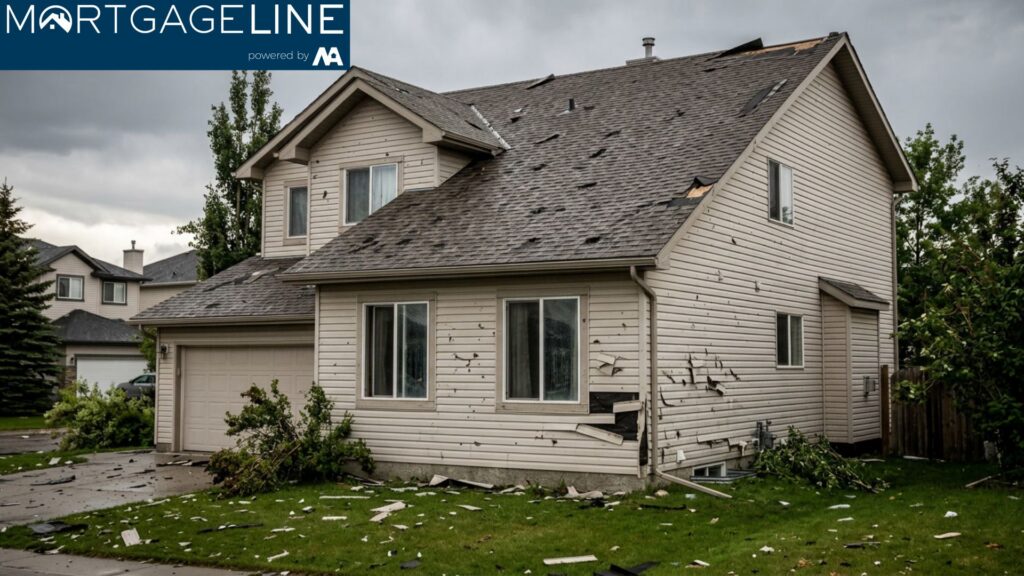
Securing subordinate financing is one of the most effective and rapid strategies for property owners to fund extensive exterior remediation following a severe catastrophic weather event. When insurance policies fall short due to high deductibles, depreciation clauses, or coverage caps, a secondary loan allows homeowners to access their accumulated property equity as liquid capital. This immediate influx of funding ensures that compromised roofs, shattered windows, and destroyed siding are repaired promptly, preventing secondary water ingress and preserving the structural integrity and market value of the home.
- Immediate Access to Capital: Subordinate loans offer faster funding timelines compared to refinancing, allowing you to secure contractors before waitlists grow.
- Bypassing Insurance Shortfalls: Equity financing bridges the gap between massive repair bills and restrictive insurance payouts based on depreciated actual cash value.
- Protecting Primary Mortgage Terms: You can fund remediation without breaking your first mortgage, thereby avoiding severe prepayment penalties and preserving historically low interest rates.
- Preventing Escalating Damage: Rapid repairs stop minor exterior breaches from evolving into catastrophic mold or foundation failures.
- Flexible Qualification: Equity-based lending focuses heavily on the asset’s residual value rather than solely on borrower credit scores, making it accessible during times of financial strain.
The 2026 Climate Landscape: Calgary’s Extreme Weather Reality
Calgary resides squarely in what meteorologists refer to as “Hail Alley,” a highly active geographical corridor stretching across Alberta. Over the past decade, the intensity and frequency of these convective storms have escalated dramatically, leaving billions of dollars in property destruction in their wake. According to data tracked by the Insurance Bureau of Canada, historical events like the devastating June 2020 hailstorm cost over $1.2 billion in insured damages, while subsequent summer storms—including the catastrophic August 2024 system—continue to shatter regional damage records.
As we navigate through 2026, the financial burden of these meteorological events is increasingly shifting onto the homeowner. Aaron Sutherland, Vice-President at the Insurance Bureau of Canada, has frequently emphasized that the frequency and severity of extreme weather events in Alberta require property owners to be financially and structurally prepared. Consequently, the local insurance landscape has fundamentally shifted. Homeowners now face significantly higher deductibles specifically tied to wind and hail, and many policies have transitioned from “Replacement Cost” to “Actual Cash Value” (ACV) for older roofs. This means an insurance payout in 2026 might only cover a fraction of what a modern, code-compliant exterior restoration actually costs.
Why Home Insurance Frequently Falls Short
Many property owners assume their comprehensive policy will completely insulate them from extreme weather costs. However, navigating a claim reveals several critical financial gaps that necessitate alternative funding strategies.
The Actual Cash Value (ACV) Depreciation Trap
If your asphalt shingle roof is more than ten years old, standard 2026 insurance policies will typically only pay out its depreciated value rather than the cost of a brand-new installation. For example, replacing a damaged roof might cost $15,000 in today’s labor and materials market. If the insurance adjuster determines the depreciated value is only $6,000, the homeowner is suddenly burdened with a $9,000 shortfall. To cover this gap without draining emergency savings, many families explore current borrowing rates for subordinate liens.
Escalating Hail Deductibles
Due to the sheer volume of claims in the region, insurance carriers have isolated wind and hail into distinct deductible categories. While your standard fire or theft deductible might be $1,000, it is not uncommon for a wind and hail deductible to be $5,000 or even a percentage of the dwelling’s total insured value. When a home suffers widespread destruction—requiring new siding, windows, eavestroughs, and roofing—the out-of-pocket requirement can easily exceed $10,000 before the insurance company issues a single check.
Understanding Subordinate Liens for Exterior Remediation
When external funding is required to bridge the gap between an insurance payout and a contractor’s final invoice, tapping into your property’s built-up equity is often the most logical path. A secondary mortgage is a financial instrument secured against your property that sits behind your primary mortgage in priority.
Because it operates entirely independently of your existing mortgage, you do not need to rewrite your current terms. This is vital in 2026, as breaking a primary mortgage locked in at a favorable rate to access extra cash would trigger enormous prepayment penalties and subject your entire balance to current market rates.
Loan-to-Value (LTV) Mechanics
In Canada, standard lending regulations generally permit homeowners to borrow up to 80% of their property’s appraised value, minus any outstanding debt. If your home is appraised at $700,000 and your primary mortgage balance is $400,000, 80% of your home’s value equates to $560,000. Subtracting your $400,000 existing debt leaves you with $160,000 of accessible equity. This substantial reserve is more than sufficient for funding extensive structural remediation, installing Class 4 impact-resistant roofing, or upgrading to highly durable fiber cement siding.
Comparing Financing Options for Property Restoration
When immediate capital is required to secure local tradespeople during the post-storm rush, homeowners must carefully evaluate their borrowing options. Depending on your financial profile, comparing equity products is a vital step in wealth preservation.
| Financing Method | Speed of Funding | Interest Rates | Borrowing Limits | Qualification Criteria |
|---|---|---|---|---|
| Second Mortgage | 1 to 3 Weeks | Fixed, slightly higher than primary | Up to 80% LTV | Asset-based; flexible credit limits |
| HELOC | 2 to 4 Weeks | Variable, tied to prime rate | Up to 65-80% LTV | Stringent income and credit checks |
| Unsecured Loan | Days | Very High (Fixed or Variable) | Usually capped under $50,000 | Requires excellent credit history |
| Credit Cards | Immediate | Extremely High (19.99%+) | Limited by existing credit limits | Pre-approved only |
While an unsecured loan might seem fast, the strict debt service ratios (GDS/TDS) enforced by standard banking institutions make them difficult to acquire if you already carry significant consumer debt. For an in-depth analysis of these equity lines, homeowners should look closely at comparing equity lines of credit versus structured term loans.

Step-by-Step Guide to Securing Repair Funds
Navigating the aftermath of severe weather requires a methodical approach. Ensuring you secure adequate funding before signing binding contracts with restoration companies is crucial to avoiding construction liens on your property.
- Document and Assess the Destruction: Immediately following the storm, safely document all visible damage. Take date-stamped photographs of shattered windows, dented fascia, torn shingles, and cracked siding.
- Obtain Comprehensive Contractor Quotes: Do not rely solely on the insurance adjuster’s estimate. Bring in certified, local exterior specialists to provide detailed quotes for the full scope of the restoration, ensuring they price in current 2026 material costs and municipal building code requirements.
- Finalize the Insurance Shortfall: Once your insurance company provides their statement of loss, subtract their payout (less your deductible and depreciation) from your actual contractor quotes. This figure represents your funding target.
- Calculate Accessible Equity: Work with an independent mortgage broker to assess your current property value against your outstanding primary mortgage. If traditional banking channels are too slow, explore lenders offering rapid processing who can expedite the underwriting process.
- Execute the Subordinate Loan and Commence Repairs: Once the funds are deposited into your account, disburse the initial deposits to your chosen contractors to lock in their schedule. Rapidly sealing the building envelope is critical to mitigating further losses.
Preventing Secondary Structural Devastation
The true danger of severe weather extends far beyond cosmetic blemishes on aluminum siding. When the exterior envelope of a house is compromised, the property is highly vulnerable to secondary deterioration. Water ingress from a battered roof will quickly infiltrate the attic insulation, leading to toxic black mold proliferation and extensive drywall damage on the upper floors.
Furthermore, shattered eavestroughs and dented downspouts fail to direct rainwater safely away from the property’s base. According to guidelines from the Canada Mortgage and Housing Corporation, proper drainage is vital to maintaining a dry basement. Unmanaged water pooling around the perimeter can lead to severe hydrostatic pressure, cracking the concrete. In these scenarios, homeowners find themselves not just replacing siding, but also addressing underlying foundation problems that threaten the habitability of the residence.
Financial Strategy: Upgrading Instead of Just Repairing
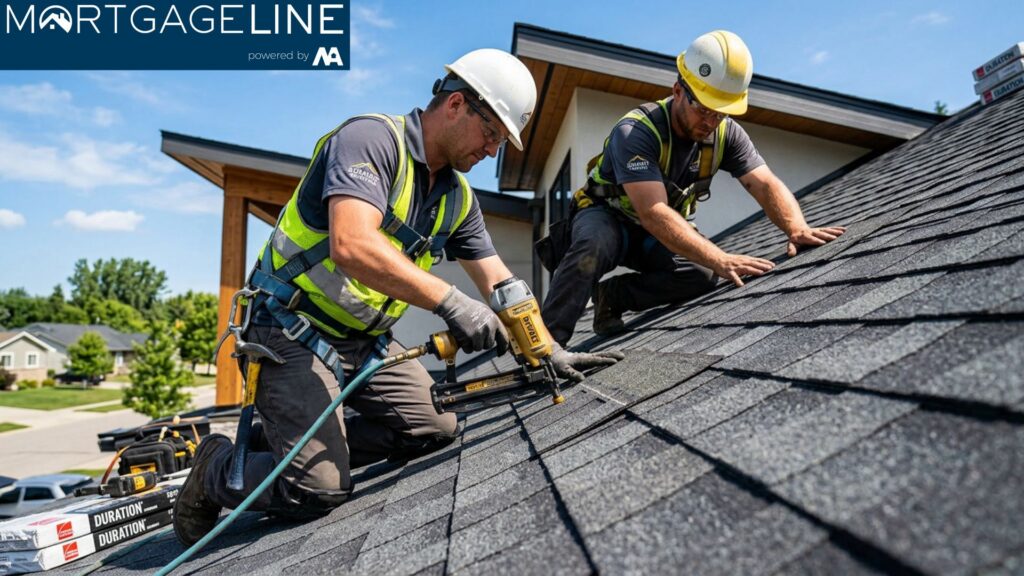
One distinct advantage of utilizing equity financing is the flexibility it provides regarding the choice of building materials. Insurance companies will only pay to replace like-for-like materials. If your home had basic, builder-grade vinyl siding that was shredded by ice, the insurance check will only cover new basic vinyl.
By leveraging your home’s intrinsic value, you can strategically use the supplemental cash to upgrade to highly resilient materials. Investing in Class 4 impact-resistant asphalt shingles, rubber roofing, or fiber-cement Hardie board siding adds immense protective value. Not only do these materials withstand future catastrophic weather far better, but they also significantly boost the curb appeal and resale valuation of the asset. Moreover, many insurance carriers offer substantial annual premium discounts for homes fortified with impact-resistant exterior finishes.
Navigating Local Regulations and Permits
When undertaking massive exterior renovations, strict adherence to local municipal guidelines is mandatory. Depending on the scope of the restoration, certain structural changes may require pulling specific building permits. Information on mandatory residential building permits can be cross-referenced via the City of Calgary municipal portal.
Failing to properly fund and execute repairs to code can lead to severe municipal infractions. Unpaid contractors who step in to do emergency work can file legal claims against the property title. If you are struggling with cash flow during this chaotic time, accessing equity can help clear out debts related to financing water damage restoration before they evolve into complex legal disputes or localized foreclosures.
Expert Insights on Preserving Wealth
Financial advisors and real estate experts unanimously agree that a primary residence is often a family’s most significant asset. Leaving that asset in a state of disrepair due to a lack of liquid cash is a high-risk gamble. The Financial Consumer Agency of Canada advises consumers to thoroughly understand the terms, interest rates, and fee structures of any collateralized loan before signing. However, they also recognize that leveraging property value to maintain the underlying asset is a standard and practical financial management strategy.
Furthermore, utilizing fixed-term secondary financing offers predictable monthly payments, unlike revolving credit lines which can fluctuate based on the monetary policy decisions of the Bank of Canada. This predictable amortization schedule ensures that families can budget accurately while living in a safe, fully restored home.
Frequently Asked Questions
Can I qualify for equity financing if my credit score dropped recently?
Yes. Subordinate lenders place far more weight on the residual equity in your property than on strict credit scores. If you possess at least 20% equity in the home, funding is highly probable even with recent credit blemishes.
How quickly can funds be released to pay my roofing contractor?
Private equity loans can often be appraised, approved, and funded within a window of 5 to 14 business days. This rapid turnaround is essential for locking in local contractors during the busy post-storm season.
Will taking out this loan affect my primary mortgage rate?
No. A secondary mortgage is registered entirely behind your primary loan. Your existing interest rate, amortization schedule, and terms with your first lender remain completely untouched and secure.
Can the funds be used for interior damage caused by roof leaks?
Absolutely. Once the capital is deposited into your bank account, there are zero restrictions on how it is spent. You can use it to fund new roofing, replace soaked drywall, remediate attic mold, or upgrade insulation.
Do I need a new property appraisal if the home is currently damaged?
Most lenders require an updated appraisal, but they frequently work with “as-completed” valuations. This means the appraiser factors in the value of the home once the proposed exterior restoration is finalized, ensuring you receive maximum borrowing capacity.
Conclusion
Facing massive exterior destruction after a localized disaster is an overwhelming experience, particularly when insurance settlements fall short of true replacement costs. In 2026, leveraging a subordinate loan to unlock your home’s equity is a highly effective, fast, and strategic method to fund comprehensive remediation. By acting quickly, you not only secure scarce local contractors but also protect your property from devastating secondary structural decay. Upgrading to impact-resistant materials using this capital ensures your home is fortified against the unpredictable climate of the future.
If you are dealing with catastrophic storm damage and need immediate capital to begin restoration, do not let an insurance shortfall put your greatest asset at risk. Contact our team today to explore your secondary financing options and secure the funds necessary to rebuild.
References
- Insurance Bureau of Canada. (2026). Facts and Figures on Extreme Weather and Hail Alley. Retrieved from https://www.ibc.ca
- City of Calgary. (2026). Residential Building Permits and Exterior Renovation Guidelines. Retrieved from https://www.calgary.ca
- Financial Consumer Agency of Canada. (2026). Borrowing Against Home Equity. Retrieved from https://www.canada.ca
- Bank of Canada. (2026). Interest Rates and Monetary Policy. Retrieved from https://www.bankofcanada.ca
- Canada Mortgage and Housing Corporation. (2026). Maintaining Your Home and Exterior Envelope. Retrieved from https://www.cmhc-schl.gc.ca