To successfully secure secondary financing in 2026, homeowners must prepare a comprehensive document package that includes two pieces of valid government identification, a current first mortgage statement, the latest municipal property tax bill, proof of active home insurance, and verified income documentation. Organizing these files digitally before submitting an application can reduce lender approval times from several weeks to just a few business days. Securing additional financing against your property can be a transformative financial strategy, whether you are looking to consolidate high-interest debt, fund a major home renovation, or access capital for a new business venture. However, the excitement of tapping into home equity is often overshadowed by the dread of the application process. The perception of endless paperwork, invasive financial questions, and bureaucratic hurdles can be highly discouraging for many borrowers.
Key Takeaways
- Preparation Equals Speed: Having your complete document package ready before applying cuts approval times drastically.
- Equity is the Anchor: Alternative lenders focus heavily on property value and Loan-to-Value (LTV) ratios rather than strict credit scores.
- Digital Organization Matters: Submitting clear, consolidated PDF files rather than scattered photos demonstrates professionalism and speeds up underwriting.
- Transparency is Crucial: Never attempt to hide tax arrears or credit issues; alternative lenders have solutions for almost every problem if disclosed upfront.
- Appraisals are Mandatory: In 2026, almost all secondary financing requires a full interior appraisal conducted by a certified professional.
The Foundation of Your Application: Personal Identification and AML Compliance
The foundation of any secure financial transaction is verifying your identity. While this seems straightforward, delays frequently occur because identification documents are expired, illegible, or mismatched. Under strict Canadian Anti-Money Laundering (AML) regulations monitored by the Financial Transactions and Reports Analysis Centre of Canada (FINTRAC), lenders are legally obligated to verify the identity of all borrowers.
Lenders universally require two forms of identification. The primary piece must be a government-issued photo ID, such as a valid Driver’s License or Canadian Passport. The secondary piece can be a major credit card, birth certificate, or Social Insurance Number (SIN) card. Ensure your ID has not expired. If you have recently moved, your Driver’s License should reflect your current address, which must match the address of the property you are leveraging.
According to 2026 data published by the Financial Consumer Agency of Canada (FCAC), nearly 42% of alternative lending delays are caused directly by incomplete or illegible application packages. When submitting files digitally, avoid taking blurry photos on your kitchen table. Use dedicated mobile scanning applications to create crisp, legible PDF documents.
Property Verification: Proving Your Collateral
Because secondary financing is secured directly against your real estate, the lender must meticulously verify the asset’s current status, legal standing, and available equity. This represents the most critical section of your application.
You must provide the most recent statement for your primary mortgage. This document is vital because it reveals your current outstanding balance, allowing the new lender to calculate your exact available equity. It also confirms your payment history. While private lenders can often overlook past consumer credit issues, they are highly cautious of borrowers who are currently in arrears on their primary mortgage.
Lenders also require your latest 2026 statement from the City of Calgary property tax department and proof of payment. Municipalities hold “super priority” over all mortgages, meaning the city can legally seize and sell the home for unpaid taxes before any lender recovers their funds. If you are currently in tax arrears, a private lender may still approve your application, but they will mandate that the unpaid taxes be deducted from the loan proceeds and paid directly to the city.
Finally, you must supply a copy of your current home insurance policy binder or certificate. The lender needs absolute certainty that their collateral is protected against fire, flood, and other catastrophic disasters. Upon funding, the new lender will require their institution to be officially added to your policy as a “loss payee.”

Income Verification Strategies for Salaried and Self-Employed Borrowers
Demonstrating your ability to service the new debt is paramount. However, the documentation required varies drastically depending on how you earn your living. For borrowers with a standard T4 job, proving income is a highly standardized process designed to show employment stability and calculate accurate Debt Service Ratios.
Salaried employees must provide a formal Letter of Employment (LOE) dated within the last 30 days on official company letterhead. It must explicitly state your job title, length of tenure, and guaranteed annual salary or hourly wage. Additionally, two of your most recent consecutive pay stubs are mandatory to confirm your year-to-date (YTD) earnings. Your official T4 slips from the last two tax years provide a historical baseline of your earnings, which is especially crucial if a portion of your income relies on variable commissions or bonuses.
For the robust community of entrepreneurs, contractors, and freelancers, proving income requires a more nuanced approach. Business owners legally write off expenses to minimize tax liability, which often makes their declared net income appear insufficient for traditional bank lending. Self-employed individuals typically need to provide complete T1 General Tax Returns for the previous two years, alongside the corresponding Notice of Assessment (NOA) from the Canada Revenue Agency (CRA) portal.
If your tax returns do not accurately reflect your true cash flow, equity lenders will often accept 6 to 12 months of business bank statements. They analyze your gross deposits to determine a “stated income” figure. Understanding the nuances of verifying self-employed revenue is essential for entrepreneurs seeking capital.
Traditional Banks vs. Alternative Equity Lenders
Understanding the difference between traditional and alternative lending requirements can save you immense frustration. Traditional banks have rigid criteria, while alternative lenders offer flexibility based on the strength of your real estate asset.
| Document / Requirement Type | Traditional Bank (A-Lender) | Private / Equity Lender |
|---|---|---|
| Income Proof | Strict 2-year average (T4s, NOAs) | Flexible (Bank statements, stated income) |
| Credit History | Minimum score of 680+, zero recent defaults | Focuses on equity; accepts bruised credit |
| Property Taxes | Must be paid in full prior to application | Can be paid out from the new loan proceeds |
| Processing Time | 3 to 6 weeks | 3 to 7 business days |
According to Sarah Jenkins, a local residential lending specialist: “In 2026, we are seeing a significant shift toward alternative income verification. However, the foundational property documents—specifically the municipal tax statement and first mortgage standing—remain entirely non-negotiable.” This highlights why securing secondary financing with lower taxable income is highly viable, provided the property documents are pristine.
The 2026 Property Appraisal Process and Loan-to-Value (LTV) Ratios
While an appraisal is not a document you inherently possess, it is a critical report you must facilitate. In 2026, almost every secondary financing transaction requires a comprehensive, full-interior appraisal conducted by a certified member of the Appraisal Institute of Canada (AIC).
The appraisal dictates your absolute maximum borrowing limit. Lenders calculate your Loan-to-Value (LTV) ratio by dividing your total mortgage debt by the appraised value of the home. In the current market, most private lenders cap their maximum LTV at 80% to 85% to mitigate risk.
As Marcus Thorne, Senior Underwriter at Alberta Equity Partners, explains: “A fully prepared document package reduces our adjudication time by up to 70%. However, the appraisal is the ultimate anchor. If the valuation comes in lower than the borrower’s estimate, the loan amount must be mathematically reduced to stay within our strict 80% LTV risk parameters.”

Navigating Credit Reports and Letters of Explanation
You do not need to supply your own credit report; your mortgage broker or lender will pull this directly from Equifax or TransUnion. However, you will be required to sign a formal Credit Consent Form. Private lenders utilize the credit bureau primarily to verify your total outstanding liabilities and to screen for active bankruptcies or legal judgments.
If your credit history has blemishes, context is everything. If you have missed payments due to a life event, writing a letter of explanation provides the underwriter with the human context behind the numbers, significantly improving your chances of approval. Knowing the nuances of drafting a perfect letter of explanation can be the deciding factor between an approval and a rejection.
Special Circumstances: Divorce, Spousal Buyouts, and Corporate Borrowers
Depending on your unique financial architecture, you may need to supplement your standard document checklist with specialized paperwork. If you are separated but not legally divorced, lenders will demand a finalized Separation Agreement. This document clarifies spousal support obligations and the legal division of assets. Furthermore, under provincial law, you must adhere to specific regulations regarding understanding spousal consent requirements if you are mortgaging a matrimonial home solely in your name.
If the loan’s purpose is paying out a partner, the lender will require the draft buyout agreement from your family lawyer. Navigating spousal buyouts and separation agreements requires meticulous legal documentation to ensure all parties are protected.
For properties registered under a corporate entity, you must provide the company’s Articles of Incorporation, a recent Corporate Search, and the corporate minute book. This proves to the lender that you are the authorized signing officer legally permitted to encumber the corporate asset.
Step-by-Step Guide: How to Organize Your Application Package
To ensure a frictionless approval process, follow these structured steps for organizing your application paperwork:
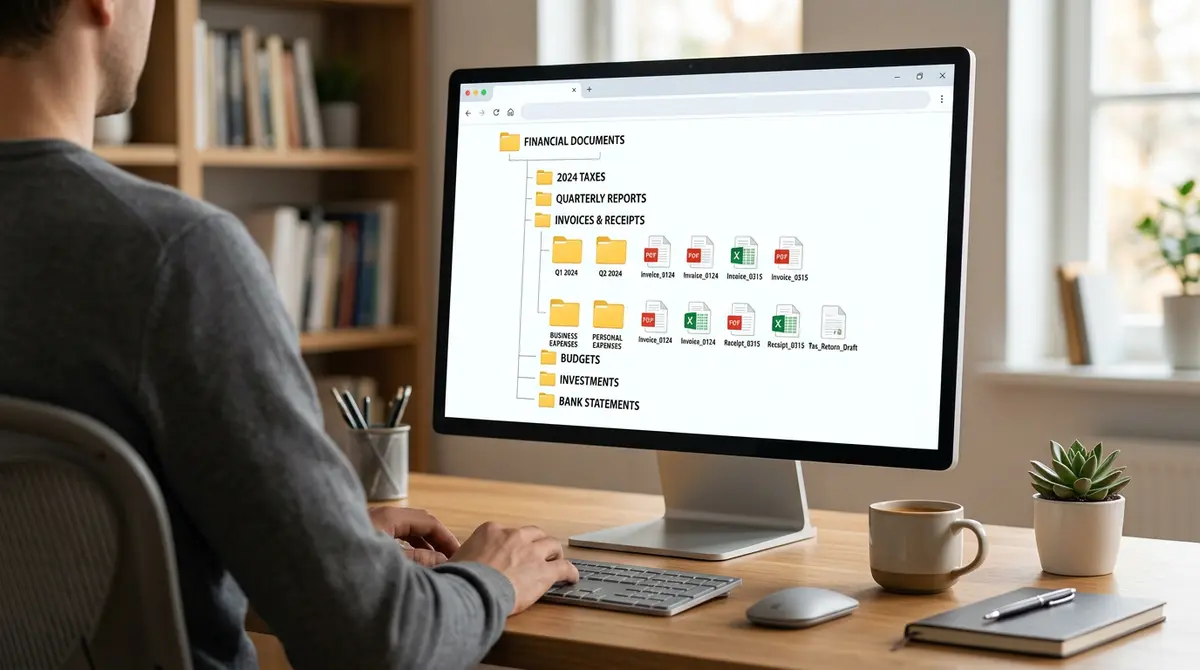
- Digitize Everything: Use a high-quality scanner or mobile app. Ensure all corners of the document are visible and the text is perfectly legible.
- Standardize File Names: Label your files clearly using a standard naming convention (e.g., “Smith_John_PayStub_Oct2026.pdf”). This demonstrates professionalism to the underwriter.
- Consolidate Your Submission: Never send 15 separate emails with individual attachments. Compile your documents into a single, organized ZIP file or a secure cloud-sharing folder.
- Address Gaps Proactively: If you are missing a document, include a brief note explaining why and when it will be available.
Once your loan is funded, practice good record-keeping by retaining your financial records securely for a minimum of seven years for tax and refinancing purposes.
Frequently Asked Questions (FAQ)
Do I need to provide the original paper copy of my land title?
No, you do not need the original paper title. Your mortgage broker or real estate lawyer will pull a certified digital copy of your land title directly from the provincial Land Titles office during the underwriting process.
Can I use screenshots from my mobile banking app as proof of income?
While some private lenders may accept screenshots in a pinch, official PDF statements downloaded from your online banking portal are strongly preferred. Screenshots frequently omit the account holder’s full name or account number, which lenders legally require to verify ownership.
What happens if I cannot locate my 2026 property tax bill?
If you have misplaced your physical bill, you can easily retrieve a digital copy. Simply log into your municipal online portal to download your current property tax assessment and statement of account.
Do private lenders strictly require T4s and NOAs?
Not always. If you possess substantial home equity (typically over 25%), many private lenders will utilize a “stated income” approach. They will rely on the property’s appraised value and alternative proofs of cash flow, such as business bank statements, rather than formal CRA tax documents.
Will the lender see my past consumer proposal or bankruptcy documents?
Yes, any formal insolvency proceedings will appear on your credit bureau report. It is highly advised to provide your discharge certificates upfront, as this demonstrates to the lender that your previous financial challenges have been legally and fully resolved.
How recent must my property appraisal be?
Given the dynamic nature of the 2026 real estate market, most lenders require a property appraisal to be no older than 30 to 60 days. David Chen, a certified appraiser, notes: “Property valuations in the current market require up-to-the-minute data. An appraisal older than 60 days simply cannot accurately reflect the dynamic shifts in local neighborhood equity.”
Conclusion
Navigating the documentation requirements for secondary financing does not have to be an overwhelming endeavor. By proactively gathering your identification, property verification, and income records, you position yourself as a highly qualified borrower. Understanding the distinct differences between traditional bank requirements and the more flexible criteria of alternative lenders empowers you to choose the right financial path for your unique situation. Whether you are a salaried employee or a self-employed entrepreneur, preparation is the ultimate key to unlocking your home’s equity swiftly and securely. If you are ready to explore your financing options or need assistance compiling your document package, get in touch with our team today for expert guidance.