The Alberta foreclosure court process is a formal judicial procedure initiated by lenders to recover unpaid mortgage balances after a borrower defaults on their payments. Unlike jurisdictions that allow non-judicial seizures, Alberta requires lenders to file a formal Statement of Claim through the Court of King’s Bench. This judicial oversight ensures that the property is sold at fair market value, typically culminating in a court-ordered sale or, less commonly, a direct transfer of title to the lender. By understanding the strict legal timelines and available defenses, homeowners can take strategic action to halt the proceedings and protect their equity.
Key Takeaways
- Judicial Oversight: Alberta is a judicial foreclosure province, meaning lenders must obtain court approval for every major step of the property seizure and sale.
- The 3-Payment Trigger: Formal legal action typically begins only after a homeowner has missed three consecutive mortgage payments.
- Redemption Period: The courts generally grant a 6-month redemption period, allowing borrowers time to refinance, sell, or pay off the arrears.
- Court-Ordered Sale Preference: Over 85% of residential foreclosure cases in Alberta result in a court-ordered sale rather than the lender taking direct ownership.
- Immediate Action is Required: Borrowers have exactly 20 days to respond after being served with a Statement of Claim in Alberta.
- Credit Impact: A foreclosure will remain on your credit report for up to 7 years and can drop your credit score by 200 to 300 points.
The Triggers: How Mortgage Default Leads to Legal Action in 2026
Mortgage defaults in Calgary and throughout the province occur when homeowners fail to meet the contractual obligations outlined in their lending agreements. While the most common trigger is missing monthly payments, defaults can also arise from failing to pay property taxes or letting home insurance lapse. According to a 2026 report by the Canadian Bankers Association, the mortgage arrears rate in Alberta sits at approximately 0.18%, highlighting that while default is relatively rare, it is a highly structured legal event when it occurs.
Lenders do not immediately rush to the courthouse after a single missed payment. The process follows a predictable escalation path designed to give the borrower an opportunity to cure the default. Understanding the difference between a Notice of Default vs. Statement of Claim is the first step in recognizing the severity of the situation.
The Standard Default Timeline
When a homeowner falls behind, the lender’s initial response is usually administrative rather than legal. However, if communication breaks down, the escalation is swift.
| Type of Default | Lender’s Initial Response | Borrower Action Required |
|---|---|---|
| First Missed Payment | Courtesy reminder via phone call, email, or standard written notice. | Make the payment immediately; late fees will apply. |
| Second Missed Payment | Formal demand letter outlining the severe consequences of continued non-payment. | Contact the lender to negotiate a forbearance or payment plan. |
| Three Months of Non-Payment | File sent to the lender’s legal counsel; initiation of formal court proceedings. | Retain legal counsel and prepare for a Statement of Claim. |
Step-by-Step Guide to the Alberta Foreclosure Court Process
Because Alberta operates under a judicial framework, the foreclosure procedure is highly regulated. The Court of King’s Bench oversees the entire timeline to ensure equitable treatment of both the financial institution and the homeowner. Here is the exact step-by-step process you can expect in 2026.
1. The Demand Letter and Initial Contact
Before any court documents are filed, the lender’s lawyer will send a formal Demand Letter. This document specifies the exact amount of arrears, including accumulated interest and initial legal fees. Borrowers are typically given a strict deadline—often 10 to 14 days—to pay the outstanding balance. If the borrower pays this amount, the mortgage is reinstated, and the legal threat is dissolved.
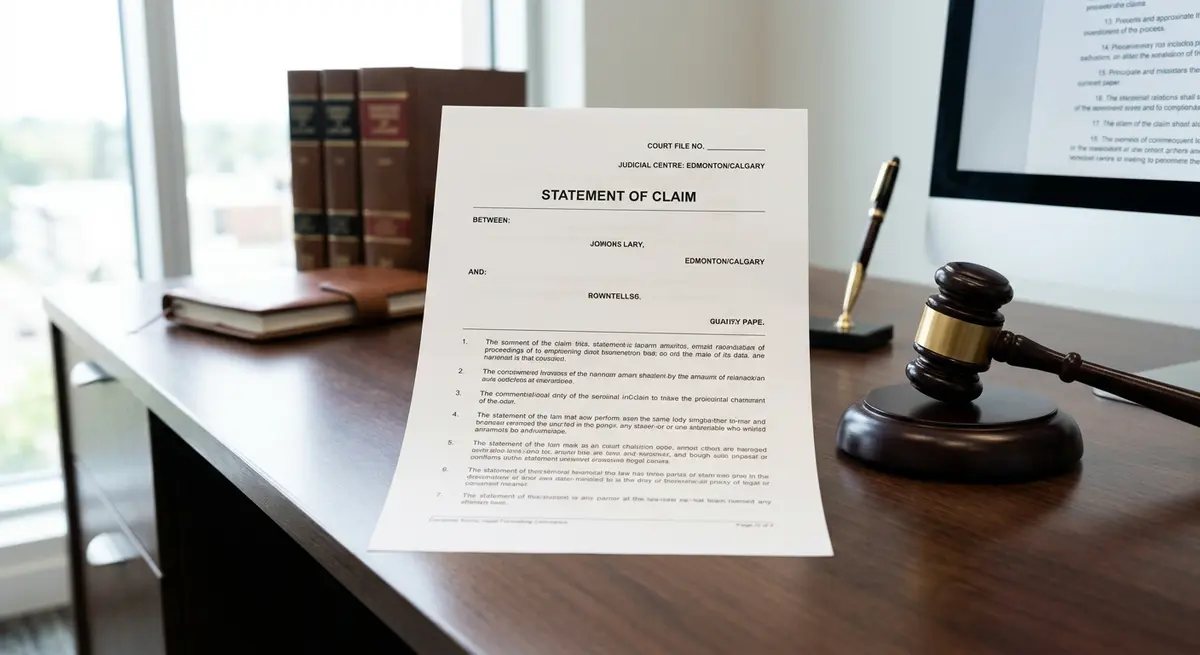
2. Filing the Statement of Claim
If the Demand Letter expires without resolution, the lender files a Statement of Claim with the Alberta Courts. This is the official commencement of the lawsuit. The borrower must be personally served with this document. Once served, the clock starts ticking: homeowners in Alberta have exactly 20 days to file a response. Knowing the proper procedures for responding to a foreclosure Statement of Claim is critical to preventing a default judgment.
3. The Redemption Period Explained
If the court validates the lender’s claim, it will issue a Redemption Order. This order establishes a specific timeframe during which the borrower can “redeem” the property by paying off the entire mortgage balance (not just the arrears). In Alberta, the standard redemption period is 6 months. However, lenders frequently petition the court to shorten this period to 1 day or 1 month if the property is abandoned, uninsured, or if there is little to no equity left in the home. Accurately calculating foreclosure redemption periods is essential for mapping out a survival strategy.
4. Court-Ordered Sale vs. Final Order of Foreclosure
Once the redemption period expires, the lender returns to court to seek a final resolution. There are two primary outcomes:
- Court-Ordered Sale: The property is listed on the open market with a real estate agent chosen by the lender but approved by the court. The goal is to sell the property at fair market value. If the sale proceeds exceed the debt, the surplus goes to the borrower (or subordinate creditors).
- Final Order of Foreclosure: The court transfers the property title directly to the lender. This usually happens when the property’s value is less than the outstanding mortgage debt.
“The court’s primary objective is to ensure a fair realization of the property’s value, which is why a court-ordered sale is heavily favored over a direct transfer of title,” explains Sarah Jenkins, Senior Real Estate Counsel at the Alberta Legal Institute. Understanding the final order of foreclosure timeline helps homeowners anticipate when they must vacate the premises.
Strategic Borrower Defenses and Legal Options
Receiving a Statement of Claim does not mean immediate eviction. The judicial system provides several mechanisms for borrowers to defend themselves, delay the proceedings, or negotiate a graceful exit.
Filing a Statement of Defence
If there are factual errors in the lender’s claim—such as incorrect accounting of payments, miscalculated interest rates, or breaches of the lending contract—the borrower can file a Statement of Defence. “Filing a Statement of Defence is not merely a delay tactic; it is a fundamental right that forces the lender to strictly prove their claims and accounting,” notes David Chen, a Calgary-based financial litigator. This action forces the matter into a trial or summary judgment application, significantly extending the timeline.
Filing a Demand of Notice
If the borrower does not have a valid legal defense against the default but wants to monitor the proceedings, they can file a Demand of Notice. This crucial document legally requires the lender to notify the borrower of any future court applications. Without a Demand of Notice, the lender can proceed “ex parte” (without the borrower present), obtaining orders behind closed doors.
Quit Claim and Consenting to Foreclosure
In cases where the borrower has negative equity and no means to repay the debt, they might opt for a Quit Claim deed or consent to the foreclosure. This involves voluntarily transferring the property title to the lender to save on accumulating legal fees and court costs. However, this should only be done after consulting a lawyer to ensure the lender waives their right to pursue future shortfalls.

Financial and Legal Ramifications for Calgary Homeowners
The consequences of losing a home to the courts extend far beyond the immediate loss of shelter. The financial shockwaves can impact a borrower’s economic stability for the better part of a decade.
Impact on Credit Scores and Future Borrowing
A completed foreclosure is one of the most severe derogatory marks that can appear on a credit profile. Data from the Financial Consumer Agency of Canada indicates that a foreclosure will remain on a credit report for 6 to 7 years. Borrowers typically see an immediate credit score drop of 200 to 300 points. “A foreclosure is a catastrophic credit event, but proactive communication with your lender can often restructure the debt before the courts ever get involved,” advises Dr. Emily Rostova, Professor of Economics at the University of Calgary.
The Threat of Deficiency Judgments
If the property is sold through a court-ordered sale and the proceeds do not cover the entire mortgage balance, legal fees, and real estate commissions, a shortfall occurs. In Alberta, conventional mortgages (uninsured mortgages with a 20%+ down payment) are generally non-recourse, meaning the lender cannot sue the borrower for the shortfall. However, if the mortgage is insured by the CMHC, Sagen, or Canada Guaranty, the lender absolutely can pursue the borrower for the difference. Navigating deficiency judgment calculations is vital for insured borrowers to understand their total liability.
Who Pays for the Legal Costs?
One of the harshest realities of the legal process is that the borrower ultimately pays the lender’s legal fees. These costs are added directly to the outstanding mortgage balance, rapidly eating away at any remaining home equity.
| Cost Category | Typical Amount in Alberta (2026) | Impact on Borrower |
|---|---|---|
| Lender’s Legal Fees | $2,500 – $5,000+ | Added to the total debt load, reducing equity. |
| Court Filing Costs | $1,000 – $3,000 | Mandatory fees for processing the Statement of Claim and Orders. |
| Property Appraisals | $400 – $800 | Required by the court to establish fair market value. |
| Property Management | $1,000 – $2,500/month | Applied if the home is vacant and requires winterization/security. |
Proven Alternatives to Foreclosure in Alberta
Homeowners facing imminent legal action have several viable pathways to protect their financial future. “Homeowners often freeze when served with a Statement of Claim, but the first 15 days are critical for preserving your equity and negotiating power,” states Marcus Thorne, Chief Risk Officer at the Canadian Mortgage Defense Council. Acting quickly opens up alternatives that disappear once the court issues a final order.
Working with Your Lender on Payment Arrangements
Banks are in the business of lending money, not managing real estate. Most lenders prefer to avoid the costs and delays of the court system. Borrowers can often negotiate a forbearance agreement, which temporarily suspends or reduces payments, or a loan modification that extends the amortization period to lower the monthly burden.
Selling Your Property Before the Courts Intervene
If you have equity in the home but cannot afford the payments, listing the property for sale immediately is often the best defense. Selling the home privately allows you to control the real estate agent, the listing price, and the closing date. In contrast, properties sold through a court-ordered sale often see their values drop by 10% to 15% due to the stigma of a forced sale. If there are disputes over who has the right to sell the property, exploring property dispute resolutions can clarify title issues before listing.

Seeking Professional Mortgage Assistance and Refinancing
For homeowners who wish to stay in their homes, alternative financing can be a lifeline. If you have sufficient equity, you may qualify for a second mortgage or a private loan to pay off the arrears and bring the primary mortgage back into good standing. Because traditional banks will not lend to someone currently in default, private equity lenders are usually required for this strategy. Furthermore, understanding foreclosure trustee responsibilities can help you navigate how funds are disbursed if you manage to secure refinancing during the redemption period.
Conclusion
Navigating the Alberta foreclosure court process requires a clear understanding of your legal rights, strict adherence to judicial timelines, and proactive communication. From the moment the first Demand Letter arrives to the expiration of the redemption period, homeowners have multiple opportunities to halt the proceedings. Whether through filing a Statement of Defence, negotiating a forbearance, or leveraging home equity to clear the arrears, losing your home is not a foregone conclusion. If you are facing mortgage default in Calgary or anywhere in Alberta, do not wait for the courts to decide your financial future. Contact our team today for a confidential consultation to explore your alternative financing options and stop the legal process in its tracks.
Frequently Asked Questions (FAQ)
What is the very first step in the Alberta foreclosure court process?
The process officially begins when the lender files a Statement of Claim with the Court of King’s Bench. Prior to this, the lender will send a Demand Letter giving the borrower a final opportunity to pay the arrears.
How long does the redemption period last in Alberta?
The standard redemption period granted by Alberta courts is 6 months. However, lenders can successfully petition to reduce this to 30 days or less if the property is vacant, damaged, or lacks sufficient equity to cover the growing debt.
Can I stop a foreclosure by filing a Statement of Defence?
Filing a Statement of Defence will not permanently stop the process if you are legitimately in default, but it will significantly delay the proceedings. It forces the lender to prove their accounting and legal standing in court, buying you valuable time to refinance or sell.
What happens during a court-ordered sale?
During a court-ordered sale, the property is listed with a real estate agent under the court’s supervision. The court must approve the final sale price to ensure it reflects fair market value, and any surplus funds after debts are paid are returned to the borrower.
Will I owe money after the bank takes my house?
If your mortgage is uninsured and you made a down payment of 20% or more, Alberta law generally protects you from deficiency judgments. However, if your mortgage is insured by the CMHC, the lender can and will sue you for any financial shortfall after the property is sold.
How badly does a foreclosure affect my credit score?
A foreclosure is a major derogatory event that typically drops a credit score by 200 to 300 points immediately. It will remain visible on your Canadian credit report for up to 7 years, making it extremely difficult to secure traditional loans or favorable interest rates during that time.
Can I reinstate my mortgage after the court process has started?
Yes, borrowers have the absolute right to reinstate their mortgage at any time before the final court order is granted. You must pay all missed payments, accumulated interest, late penalties, and the lender’s legal fees to bring the account back to good standing.