Yes, you can legally sell your home during the foreclosure process in Calgary, provided you act before the court issues a final order transferring the title to the lender. The most critical window for homeowners is the redemption period—typically lasting up to six months in Alberta—during which you retain the absolute right to list, market, and sell the property to satisfy your outstanding mortgage debt and preserve your remaining equity.
Key Takeaways
- Immediate Action is Required: Selling your property before the lender secures a final court order is the most effective way to prevent catastrophic credit damage.
- The Redemption Period is Your Shield: Alberta law generally grants homeowners a 6-month window after a Statement of Claim to resolve the debt or sell the home.
- Lender Communication Halts Escalation: Transparently sharing your listing agreement with your lender can often pause aggressive legal proceedings.
- Short Sales are a Viable Alternative: If your home’s market value is less than your mortgage balance, negotiating a short sale can mitigate long-term financial fallout.
- Professional Guidance is Non-Negotiable: Navigating judicial timelines requires specialized real estate agents and legal counsel familiar with Alberta’s 2026 foreclosure framework.
Understanding the 2026 Foreclosure Landscape in Alberta
When financial obligations become unmanageable, homeowners risk losing their most valuable asset. The economic climate in 2026 has introduced unique challenges for Calgary residents. With fluctuating interest rates managed by the Bank of Canada, many homeowners who secured variable-rate mortgages or short-term fixed rates are facing unprecedented renewal shocks. Data from the Alberta Real Estate Association in early 2026 indicates a 14% year-over-year increase in pre-foreclosure inquiries across the province.
Foreclosure is not a sudden event; it is a methodical legal process designed to help lenders recover their capital. In Alberta, lenders typically initiate legal action after three or more missed mortgage payments. However, other infractions, such as leaving annual property taxes unpaid for over 90 days or allowing home insurance coverage to lapse, can also trigger accelerated proceedings. Understanding these triggers is the first step in protecting your property and financial stability.

The Legal Timeline: From Missed Payments to Court Orders
Alberta operates under a judicial foreclosure system, meaning lenders must go through the provincial court system to seize your property. The timeline is strictly regulated, offering homeowners specific intervals to intervene.
The sequence begins when a lender issues a formal demand letter, usually after an account is 15 to 30 days overdue. If the arrears are not cleared, the lender files a Statement of Claim with the Court of King’s Bench. At this juncture, homeowners have a critical 20-day window for responding to court filings. Failing to file a Statement of Defence or a Demand for Notice allows the lender to proceed with a default judgment, drastically accelerating the loss of the property.
“A 24-hour delay in responding to initial court filings can shorten your legal runway by weeks,” warns David Chen, Senior Financial Analyst at the Canadian Mortgage and Housing Corporation (CMHC). “Homeowners must treat the Statement of Claim as a hard deadline to either secure alternative financing or list the property for sale.”
The Redemption Period: Your Window of Opportunity
The cornerstone of homeowner rights in Alberta is the redemption period. Once the court grants an Order Nisi (the initial foreclosure order), it establishes a timeframe for the homeowner to ‘redeem’ the mortgage by paying the arrears, principal, and legal costs. In 2026, standard Alberta foreclosure redemption periods typically last six months, though courts can reduce this to one day if the property is abandoned or has zero equity.
During this redemption window, you are still the legal owner of the home. This is the optimal time to execute a sale. By selling the property on the open market, you can often secure a higher price than what the home would fetch at a court-ordered judicial auction, allowing you to pay off the lender and potentially walk away with remaining equity.
Comparing Your Exit Strategies
Homeowners facing imminent legal action generally have three primary exit strategies involving the disposition of the property. Understanding the nuances of each is vital for minimizing financial damage.
| Strategy | Market Condition | Credit Impact | Lender Approval Required? |
|---|---|---|---|
| Traditional Sale | Home value exceeds mortgage balance | Minimal (only late payments recorded) | No (as long as debt is fully paid at closing) |
| Short Sale | Home value is less than mortgage balance | Moderate (reported as ‘settled for less’) | Yes (lender must agree to take a loss) |
| Judicial Sale / Foreclosure | Owner fails to sell or redeem | Severe (drops score by 200-300 points) | N/A (Court ordered) |
Step-by-Step Guide to Selling Your Property Before the Gavel Falls
Navigating a property transition under the shadow of a court order requires clarity, speed, and decisive action. Follow these structured steps to maximize your chances of a successful sale.
- Assess the Financial Damage and Property Value: Begin by objectively analyzing your residence’s current market position. Request a Comparative Market Analysis (CMA) from a licensed realtor. Simultaneously, request a payout statement from your lender to understand the exact figure required to clear the mortgage, including accrued legal fees and penalties.
- Open Communication with Your Lender: Transparency with financial institutions prevents unnecessary escalation. Share your selling timeline and listing agreement immediately. Most lenders prefer the certainty of a homeowner-led sale over the unpredictability of a judicial auction and may pause proceedings if they see active, documented progress.
- Hire Specialized Professionals: Do not rely on a generalist real estate agent. Partner with professionals experienced in distressed sales. They understand how to market the property aggressively, explain short sale requirements to potential buyers, and coordinate with your legal counsel regarding the Statement of Claim and subsequent court dates.
- Prepare the Home for a Rapid Sale: Time is your enemy. Focus on high-impact, low-cost improvements to attract competitive offers. Professional deep cleaning, decluttering, and minor cosmetic touch-ups can significantly reduce days on market.
- Negotiate Offers and Secure Lienholder Approvals: If you are executing a short sale, every offer must be vetted not just by you, but by your lender. Maintain organized records of all offers to prove to the court and the bank that you are making a good-faith effort to sell the property at fair market value.

Navigating Deficiency Judgments and Financial Fallout
Property owners often underestimate the cascading effects of a forced judicial sale. If your property ultimately goes to a court auction and sells for less than the outstanding mortgage balance, the nightmare does not necessarily end. In Alberta, if your mortgage is not CMHC-insured (a conventional mortgage), the lender may pursue a deficiency judgment against you for the remaining balance.
Understanding deficiency judgment calculations is critical. If the court grants this judgment, the lender can utilize aggressive collection tactics. This includes seizing other assets, freezing bank accounts, and initiating severe wage garnishment risks that can cripple your financial recovery for years.
“A foreclosure on your credit report is devastating, typically lowering your score by 200 to 300 points and remaining visible for up to seven years,” notes a 2026 consumer report from Equifax Canada. “However, a deficiency judgment compounds this trauma by actively draining your future income.” Selling the home yourself, even at a slight discount, is almost always preferable to allowing the court to dictate the final sale price.
Strategic Upgrades to Maximize Property Value Quickly
Enhancing property appeal becomes crucial when time constraints demand quick resolutions. Strategic upgrades and targeted marketing often bridge the gap between urgency and optimal returns. You do not have the luxury of a three-month renovation; you need improvements that yield immediate buyer confidence.
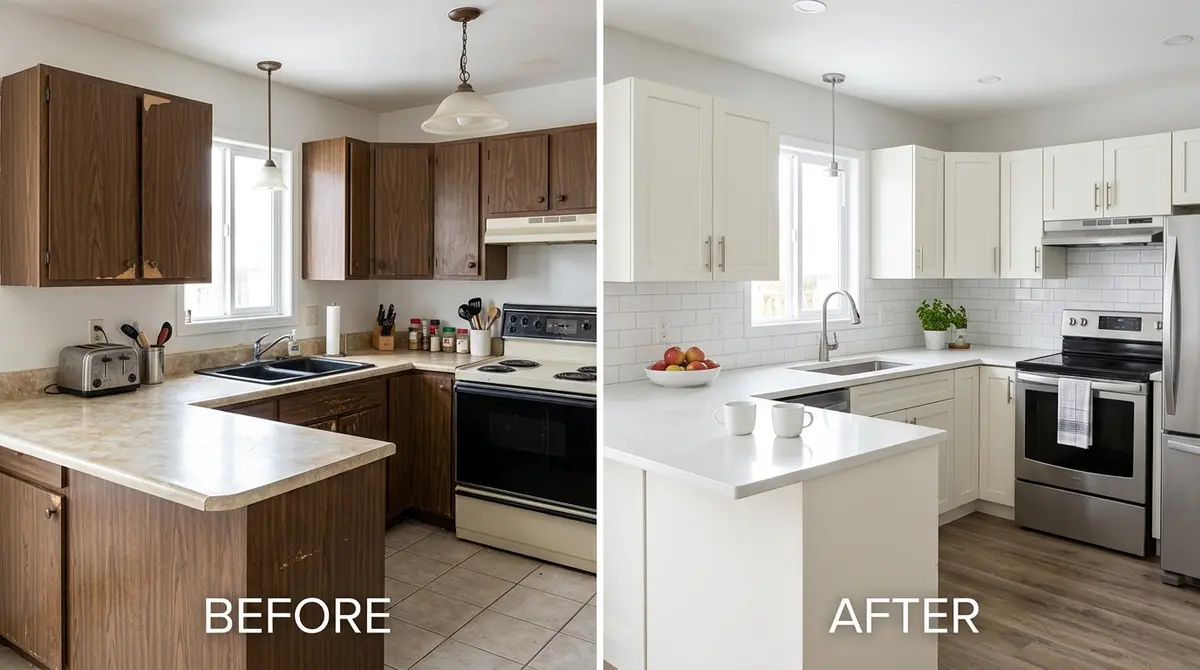
Focus on high-impact, low-cost improvements. A recent Calgary real estate case study demonstrated a 9% price increase after merely $1,800 was spent on targeted kitchen updates. Prioritize modern lighting fixtures in key rooms, neutral paint colors to broaden buyer appeal, and professional landscaping to enhance curb appeal.
Digital marketing plays a pivotal role in distressed sales. According to the National Association of Realtors, virtual tours reach 73% more potential buyers than static images alone. Ensure your agent utilizes geo-targeted ads to highlight the property to qualified investors and families looking to move into your specific Calgary quadrant.
How The Second Mortgage Store Can Intervene
Sometimes, selling the family home is a last resort, and homeowners simply need a bridge to stabilize their finances. The Second Mortgage Store specializes in helping Calgary homeowners navigate these complex scenarios. Acting quickly is critical—delays escalate legal fees and reduce your available options.
Before resigning yourself to a sale, it is worth exploring alternative financing options. If you have built up substantial equity in the property prior to your financial hardship, a secondary loan might provide the capital needed to pay off the mortgage arrears, halt the foreclosure proceedings, and give you breathing room to restructure your debt.
As Sarah Jenkins, Lead Foreclosure Advisor at The Second Mortgage Store, explains: “Many homeowners panic when they receive a Statement of Claim. Our goal is to assess the equity position immediately. If there is sufficient equity, we can often secure private financing to pay out the demanding lender, effectively stopping the final order of foreclosure in its tracks.”
Whether the solution is a strategic rapid sale or securing emergency equity financing, having an expert advocate ensures you are making decisions based on data and legal rights, rather than fear.
Conclusion
Facing foreclosure in Calgary is undoubtedly one of the most stressful financial events a homeowner can experience. However, receiving a notice of default or a Statement of Claim does not mean you have lost your home. By understanding Alberta’s 2026 legal timelines, leveraging your redemption period, and acting decisively to list your property, you can take control of the narrative. Selling your home on your own terms allows you to maximize your return, satisfy your lenders, and protect your long-term credit health from the devastating impact of a judicial sale and potential deficiency judgments.
You do not have to navigate this complex legal and real estate landscape alone. Expert assistance simplifies legal complexities and ensures optimal sale timing and pricing. If you are facing missed payments or active legal proceedings, contact our team today at +1 403-827-6630 for compassionate, solution-focused support tailored to your unique financial situation.
Frequently Asked Questions (FAQ)
What happens if a home doesn’t sell at a judicial sale in Alberta?
If a property fails to attract a sufficient bid at a court-ordered judicial sale, the lender may apply to the court to take direct ownership of the property, known as a final order of foreclosure. If the property’s value is less than the mortgage balance, the homeowner could still face a deficiency judgment for the remaining debt.
Can a homeowner stop foreclosure after missing payments in Calgary?
Yes, catching up on overdue payments (including accrued legal fees and penalties) or negotiating a forbearance agreement with the lender can halt the foreclosure process. Acting quickly before the lender files a formal Statement of Claim significantly improves your chances of resolving the default without losing the property.
How does a short sale affect credit compared to a full foreclosure?
A short sale typically impacts credit scores less severely than a full foreclosure, though both will lower your rating. Lenders often view short sales as a proactive, cooperative solution, and the credit penalty usually recovers faster than the seven-year stain of a formal foreclosure judgment.
What are redemption rights during foreclosure in Alberta?
Alberta’s redemption period allows homeowners to reclaim their property by paying the full mortgage debt plus associated legal fees before the court confirms a sale. This window varies based on equity and circumstances but generally lasts up to six months after the initial Order Nisi is granted.
Are there tax implications from selling a home in foreclosure?
Forgiven debt through a short sale may be scrutinized by the Canada Revenue Agency (CRA), though principal residences are typically exempt from capital gains taxes. It is highly recommended to consult a certified tax professional in Alberta to assess any specific liabilities or exemptions related to your property disposition.
How long does the foreclosure process typically take in Calgary in 2026?
The timeline varies significantly but often spans six to twelve months, heavily dependent on court schedules, the homeowner’s legal responses, and the length of the granted redemption period. Proactive communication and exploring alternatives like refinancing or listing the home can delay or entirely prevent the final court order.