Securing a second mortgage on a property with a legal suite in Calgary requires demonstrating strict municipal zoning compliance, providing a verified rental income history, and obtaining a specialized dual-valuation appraisal. Because these properties generate dual-income streams, lenders typically allow 50% to 75% of the secondary suite’s rental revenue to be added to your qualifying income. This unique underwriting mechanism significantly boosts your borrowing capacity, provided you work with lenders experienced in income-producing assets. However, navigating the strict building codes, specialized appraisal metrics, and varying lender appetites requires a strategic approach to ensure your application is approved at the most favorable interest rates.
Key Takeaways
- Compliance is Non-Negotiable: Traditional lenders require strict proof of municipal permits and Alberta Building Code adherence before they will consider any rental income for qualification.
- Income Boosts Borrowing Power: Expect A-tier lenders to use 50% to 75% of your rental income to offset Gross Debt Service (GDS) and Total Debt Service (TDS) ratios.
- Specialized Appraisals Add Value: Dual-valuation methods account for both the baseline residential value and the capitalized rental income, often resulting in significantly higher property appraisals.
- Alternative Lenders Offer Flexibility: If traditional banks decline your application due to rigid debt-service rules, private lenders can provide faster approvals by focusing on the property’s actual cash flow.
- Documentation is Critical: You must provide active lease agreements, T776 tax forms, and municipal registry stickers to satisfy 2026 underwriting standards.
The 2026 Landscape of Dual-Income Properties in Calgary
Properties with legal suites have become increasingly popular investment vehicles in Calgary’s dynamic 2026 real estate market. These dual-income properties offer homeowners the unique opportunity to generate passive rental income while simultaneously building long-term equity. As housing density becomes a priority for urban planners, legal suites—also known as secondary suites, accessory dwelling units (ADUs), or basement apartments—have transitioned from niche investments to mainstream financial assets.
However, when it comes to securing secondary financing on these properties, the lending landscape becomes significantly more complex than standard single-family home transactions. Traditional financial institutions often view income-producing primary residences through a lens of heightened risk. They scrutinize the stability of the rental income, the legality of the suite, and the potential for vacancy. Understanding these unique underwriting considerations is crucial for property owners seeking to extract equity for debt consolidation, renovations, or further investments.
Municipal Compliance: The Foundation of Your Application
Calgary’s secondary suite regulations are comprehensive and strictly enforced. This legal framework protects property owners and tenants while ensuring neighborhood infrastructure compatibility. Before considering any secondary financing, property owners must unequivocally verify that their suite meets all municipal and provincial requirements.
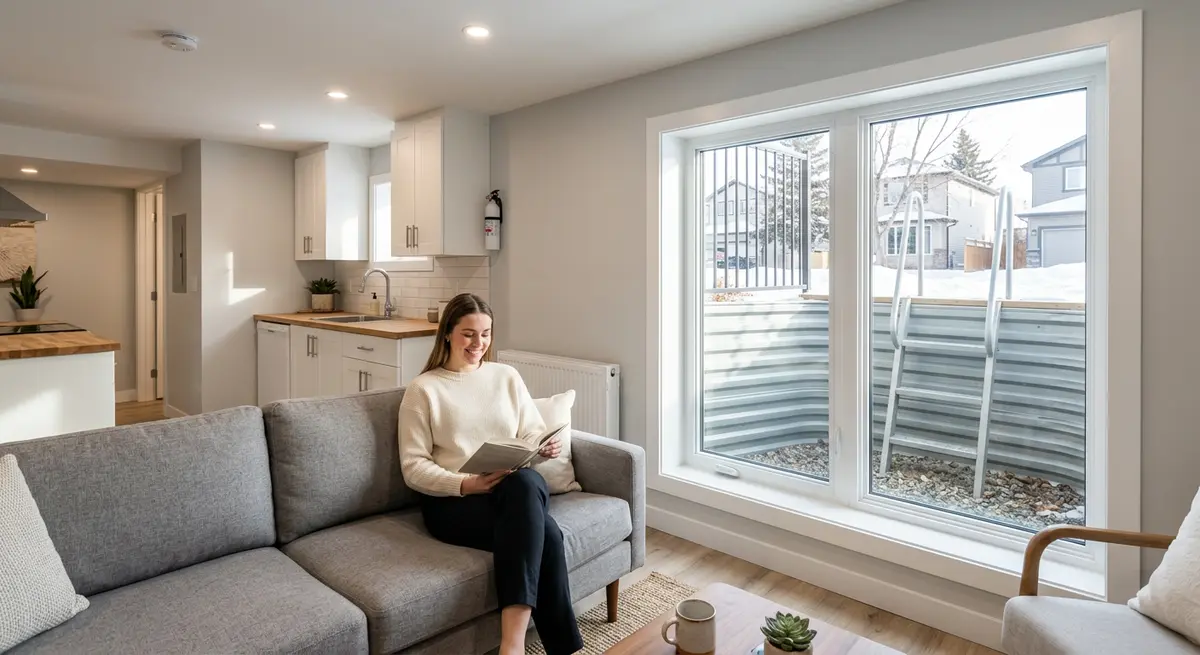
According to the City of Calgary Secondary Suite Registry, properties must obtain proper development and building permits to be legally recognized. Furthermore, the suite must comply with the Alberta Building Code, which mandates specific fire separations, egress windows of a minimum size, minimum ceiling heights, and independent heating and ventilation systems. These technical requirements ensure tenant safety and property insurability—two critical factors in any mortgage approval decision.
As Sarah Jenkins, Senior Underwriter at Alberta Financial Credit Union, explains: “Properties with verified legal suites represent a lower default risk because the dual-income stream provides a built-in safety net during economic downturns. However, if the suite isn’t legally registered with the city, we absolutely cannot use that income for qualification purposes.”
Data from municipal planning departments indicates that bringing an illegal, non-conforming suite up to 2026 building code standards costs an average of $15,000 to $30,000. Lenders will heavily scrutinize this legal compliance during the underwriting process, requiring undeniable proof such as recent safety inspections and zoning compliance certificates.
How Lenders Calculate Rental Income for Second Mortgages
One of the most significant advantages of owning a property with a legal suite is the ability to use the generated rental income to enhance your mortgage qualification. However, lenders approach rental income evaluation with highly specific, often conservative methodologies. The key to approval lies in demonstrating consistent, reliable income that can comfortably support additional debt service obligations.
Most traditional lenders will consider 50% to 75% of verified rental income when calculating your debt ratios. This conservative “add-back” approach accounts for potential vacancy periods, ongoing maintenance costs, and property management expenses. To qualify for the higher percentage ranges (75%), property owners must demonstrate a multi-year stable rental history and provide legally binding, long-term lease agreements.
According to a 2026 Canada Mortgage and Housing Corporation (CMHC) housing market report, Calgary’s rental vacancy rate sits at a historic low of 1.4%, with the average legal basement suite commanding $1,850 per month. This exceptionally strong rental market works heavily in favor of borrowers, provided they maintain meticulous documentation. If you operate your own business while managing multiple rental units, understanding the nuances of verifying self-employed income is essential to ensure your global cash flow is accurately represented to the underwriter.
The Dual-Valuation Appraisal Process Explained
Properties with legal suites require specialized appraisal approaches. Professional appraisers cannot simply compare your home to standard single-family dwellings; they must consider both the residential value of the main dwelling and the income-generating potential of the secondary unit. This dual-valuation methodology can significantly impact your final loan amount.
Appraisers evaluating these unique properties use two primary methods concurrently:
- Sales Comparison Approach: Comparing the subject home to recently sold properties in similar Calgary neighborhoods that also feature registered, legally compliant suites.
- Income Approach: Calculating the Capitalization Rate (Cap Rate) based on the suite’s annual net operating income (NOI), factoring in current market rents and standard operating expenses.
According to Marcus Thorne, Chief Appraiser at Calgary Valuation Services: “The income approach to valuation in 2026 heavily weights the capitalized value of the suite’s rent. In today’s market, a fully compliant suite often adds $80,000 to $120,000 to the baseline residential appraisal compared to a standard single-family home on the same street.”
Because of this analytical complexity, property owners should expect the appraisal process to take 3 to 5 days longer than a standard valuation. The resulting increase in property value, however, almost always justifies the wait, allowing homeowners to access substantially more equity.
Traditional Banks vs. Alternative Lenders
Choosing the right lending partner requires careful consideration of your financial goals and the specific status of your property. Not all lenders have the expertise or institutional appetite for income-producing residential properties. In 2026, approximately 60% of traditional “A-tier” banks reject applications involving non-conforming or grandfathered suites due to strict internal risk policies.
Alternative lenders and private Mortgage Investment Corporations (MICs) often specialize in these exact complex financing situations. Research shows that 82% of alternative lenders in Alberta will accept up to 100% of the suite’s rental income for qualification purposes, provided the property is well-maintained and cash-flowing positively.
| Lender Type | Rental Income Used | Approval Speed | Suite Requirements | Typical Interest Rates (2026) |
|---|---|---|---|---|
| Traditional Banks | 50% – 75% | 2-4 Weeks | Strictly Legal & Registered | Prime + 2% to 4% |
| Credit Unions | Up to 80% | 1-3 Weeks | Legal or Grandfathered | Prime + 3% to 5% |
| Alternative/Private Lenders | Up to 100% | 3-7 Days | Flexible (Focus on Cash Flow) | 8.5% to 12.9% |
David Chen, Director of Lending at Prairie Private Mortgages, states: “We look past the rigid debt-service ratios of big banks and focus on the actual cash flow the legal suite generates. This pragmatic approach is why alternative lending is booming in the secondary suite sector.” If you are weighing your options and trying to optimize your borrowing costs, you may want to compare a second mortgage vs cash out refinance to see which financial product best aligns with your long-term equity goals.
Step-by-Step Guide: Applying for Secondary Financing
Navigating the approval process requires a systematic, highly organized approach. Follow these precise steps to ensure a smooth transaction:
- Verify Municipal Compliance: Check the City of Calgary’s online registry to ensure your suite’s development permits and safety stickers are active, documented, and attached to your property’s title.
- Gather Rental Documentation: Compile the last 12 months of lease agreements, bank statements showing consistent rent deposits, and your most recent tax returns declaring the rental income.
- Prepare a Property Condition Report: Document any recent upgrades to the suite, particularly those related to safety, plumbing, electrical systems, and soundproofing.
- Consult a Specialized Mortgage Broker: Work with a licensed professional who understands the nuances of dual-income properties and can match your specific profile with the right institutional or private lender.
- Order a Dual-Valuation Appraisal: Ensure the appraiser selected by the lender is certified to perform both sales comparison and income approach valuations to maximize your property’s assessed worth.
Essential Document Checklist for 2026
Applications for income-producing properties require enhanced documentation standards. Beyond standard residential requirements, you must proactively address potential lender concerns regarding tenant stability and legal compliance. Your comprehensive second mortgage document checklist should include:
- City of Calgary Secondary Suite Registration sticker or formal development permit.
- Current, signed lease agreements with all active tenants.
- Proof of specialized landlord or rental property insurance (standard homeowner policies are insufficient).
- T776 Statement of Real Estate Rentals from your most recent Notice of Assessment.
- A detailed letter of explanation if there are any recent gaps in your rental history.
It is also vital to understand how long to keep second mortgage documents, as you will likely need to reference these specific municipal permits and dual-valuation appraisals for future renewals, refinancing, or eventual property sale.

Financial Planning and Risk Management
Extracting equity requires comprehensive financial planning that accounts for both the lucrative opportunities and the inherent risks associated with income-producing real estate. Property owners must carefully consider how rental income variability might impact their ability to service additional debt. Cash flow planning becomes critical when adding new monthly payments to your existing financial obligations.
Conservative financial planning dictates assuming a 5% to 8% vacancy rate and ensuring you hold adequate liquid reserves to cover all mortgage payments during unexpected tenant turnover or emergency repairs. If you are using the extracted funds to purchase another investment property, you must provide clear proof of down payment originating from the equity withdrawal to satisfy anti-money laundering (AML) regulations.
Insurance considerations for legal suite properties differ drastically from standard policies. Property owners need dedicated landlord insurance that includes additional liability coverage and loss-of-income protection. Furthermore, while rental income increases your gross taxable income, mortgage interest and property maintenance expenses provide valuable offsetting deductions. It is highly recommended to consult with a tax professional to ensure you are optimizing your strategy and understanding how compounding frequency on your new loan impacts your total cost of borrowing.
Real-World Case Study: Maximizing Equity in Brentwood
Consider the case of a Brentwood basement conversion completed in early 2026. A Calgary homeowner held a primary mortgage of $400,000 on a home valued at $650,000 as a standard single-family dwelling. After investing $35,000 to build a fully compliant, city-registered legal suite, the property’s appraised value jumped to $770,000, driven largely by the appraiser’s income valuation approach.
The new suite generated a reliable $1,900 monthly. By utilizing an alternative lender who accepted 80% of the rental income for qualification, the homeowner easily secured a $150,000 second mortgage. They strategically used these funds to consolidate high-interest unsecured debt and implement effective principal reduction strategies on their primary mortgage, ultimately improving their net monthly cash flow by $850.
As Dr. Elena Rostova, Real Estate Economist at the University of Calgary, notes: “The persistent urban housing shortage has fundamentally transformed the legal basement suite from a simple ‘mortgage helper’ into a primary wealth-building tool for savvy homeowners.”
Navigating Edge Cases and Common Pitfalls
While the financial benefits are substantial, borrowers must carefully navigate several edge cases that can derail an application. “Grandfathered” suites—those built before current zoning bylaws but legally allowed to exist—may face different, sometimes stricter lending criteria than newly constructed, fully modernized suites. Some conservative A-tier lenders prefer suites built to contemporary 2026 standards, viewing older grandfathered units as higher-risk investments prone to maintenance issues.
Another common pitfall is relying on short-term rental income, such as Airbnb or VRBO. The Bank of Canada‘s fluctuating interest rate environment has made lenders exceptionally wary of inconsistent, hospitality-based income streams. To successfully count rental revenue toward your qualification ratios, the vast majority of lenders require traditional, long-term residential leases with a minimum duration of 6 to 12 months.
Conclusion
Securing a second mortgage on a Calgary property with a legal suite is a powerful way to leverage your real estate assets, provided you approach the process with meticulous preparation. By ensuring strict municipal compliance, maintaining pristine rental documentation, and understanding the nuances of dual-valuation appraisals, you can unlock significant equity at competitive rates. Whether you choose a traditional bank or an alternative lender, the key is demonstrating stable, reliable cash flow that mitigates lender risk. If you are ready to explore your equity options and need expert guidance navigating the 2026 lending landscape, contact our team today to discuss your specific property and financial goals.
Frequently Asked Questions (FAQ)
Can I get a second mortgage if my Calgary basement suite is illegal?
Traditional banks will absolutely not use income from an illegal or unregistered suite for mortgage qualification, and the illegal status may jeopardize the entire approval. However, certain private equity lenders may approve the mortgage based solely on the property’s base residential equity, entirely ignoring the rental income.
How much of my rental income will lenders use to qualify me?
In 2026, most traditional Calgary lenders will use 50% to 75% of your verified rental income to calculate your Gross Debt Service (GDS) and Total Debt Service (TDS) ratios. Alternative and private lenders may use up to 100% of the income, depending heavily on the strength and duration of your lease agreements.
Does a legal suite increase my property’s appraised value for a second mortgage?
Yes, significantly. Appraisers use an income capitalization approach alongside the traditional sales comparison approach for legal suites. This dual-valuation methodology typically adds 15% to 25% to the property’s overall appraised value compared to a standard single-family home in the same neighborhood.
What documents do I need to prove my suite is legal to a lender?
You must provide the official City of Calgary Secondary Suite Registration sticker or the formal development permit. Additionally, lenders will frequently ask for recent municipal safety inspection reports and proof of ongoing compliance with the Alberta Building Code.
Will short-term rental income from my legal suite help me qualify?
Most traditional lenders hesitate to use short-term rental income (like Airbnb) due to its inherent unpredictability and seasonal fluctuations. To reliably use the income for qualification, you generally need a signed, traditional long-term lease agreement of at least six to twelve months.
How long does it take to get approved for a second mortgage on a legal suite property?
Approval typically takes 2 to 4 weeks with traditional banks due to the complex underwriting process and specialized dual-valuation appraisal requirements. Alternative lenders, who focus primarily on equity and cash flow, can often process, approve, and fund these applications in as little as 3 to 7 days.