Securing secondary financing on a manufactured property in Alberta depends entirely on the legal relationship between the structure and the land beneath it. If you own the land, the transaction proceeds like a standard real estate loan, allowing you to borrow up to 75% of the appraised value. However, if the home resides on a leased lot within a park, the structure is legally classified as personal property, requiring a specialized chattel loan with distinct underwriting criteria, landlord approvals, and alternative lending partners.
Key Takeaways for Calgary Homeowners
- Land Ownership Dictates Terms: Homes on owned land (freehold) qualify for traditional equity loans, while homes on leased land require specialized chattel financing.
- Strict Equity Limits: Alternative lenders typically cap Loan-to-Value (LTV) ratios at 65% to 75% for manufactured housing.
- The 1976 Age Threshold: Properties must meet the CSA Z240 MH national standard; homes built before 1976 face near-universal rejection from lenders due to outdated structural codes.
- Mandatory Park Approval: Borrowers living on leased land cannot secure financing without a signed landlord waiver from park management.
- Alternative Lenders are Essential: Traditional financial institutions rarely fund secondary loans on leased-land mobile homes, making private lenders and specialized credit unions the primary capital source.
The 2026 Manufactured Housing Market in Alberta
The manufactured housing sector in Western Canada has evolved dramatically over the past decade. Historically viewed as depreciating assets, modern modular and manufactured homes now demonstrate robust equity retention. According to recent data from Statistics Canada, manufactured home valuations in the Calgary metropolitan area increased by 14.2% between 2024 and 2026. This unprecedented appreciation has created a massive pool of untapped equity for local homeowners.
Despite this growth, accessing this capital requires navigating a highly specialized lending environment. Traditional financial institutions often misclassify modern manufactured homes, applying outdated risk models that penalize borrowers. As David Chen, Chief Economist at the Alberta Real Estate Research Institute, explains: “Manufactured housing equity is no longer a depreciating asset class. In 2026, well-maintained units on owned land appreciate at rates mirroring traditional single-family detached homes, yet big banks still hesitate to lend against them.”
This institutional hesitation has paved the way for specialized alternative lenders who understand the intrinsic value of Calgary’s mobile home communities. These private lenders focus on the structural integrity of the home, the stability of the park management, and the borrower’s verifiable ability to service the debt.
How Land Ownership Dictates Your Borrowing Power
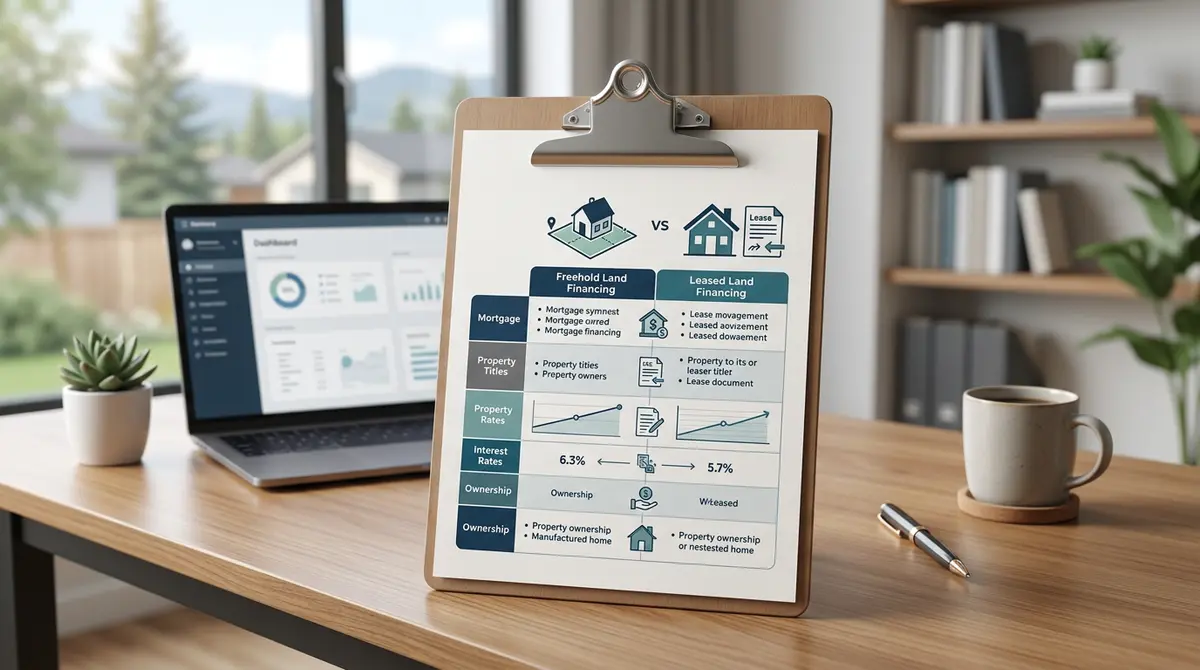
The legal classification of your property is the single most critical factor in your financing journey. Lenders categorize manufactured housing into two distinct legal classifications, which dictate your interest rates, amortization periods, and maximum borrowing limits.
Owned Land (Freehold Properties)
When you own both the manufactured structure and the land it sits on, the property is treated as standard real estate. The home is typically permanently affixed to a foundation, and the municipal title includes both the dwelling and the lot. In these scenarios, securing secondary financing is relatively straightforward. Borrowers benefit from lower interest rates, longer amortization periods (up to 25 years), and higher Loan-to-Value (LTV) limits, often reaching up to 80%.
Leased Land and Mobile Home Parks
If your home is located in a park where you pay a monthly pad rental fee, the structure is legally considered personal property rather than real estate. Financing in this scenario requires a chattel loan. Lenders face significantly higher risks with chattel financing because the underlying land cannot be seized in the event of a default. Furthermore, park management must approve the financing arrangement by signing a landlord waiver. This legal document guarantees the lender’s right to access the park, maintain the pad fee payments, or physically remove the home if foreclosure becomes necessary.
| Feature | Owned Land (Freehold) | Leased Land (Park) |
|---|---|---|
| Legal Classification | Real Estate | Personal Property (Chattel) |
| Maximum LTV | Up to 80% | Typically capped at 65-75% |
| Interest Rates | Standard alternative rates | Premium rates (+2% to +4%) |
| Amortization | Up to 25 years | 10 to 15 years maximum |
| Park Approval | Not Required | Mandatory (Landlord Waiver) |
Qualification Criteria for Manufactured Home Equity Loans
When applying for secondary financing on a manufactured property, lenders scrutinize specific metrics to mitigate their risk exposure. Because these properties carry unique depreciation curves and relocation risks, the underwriting process is notably more rigorous than standard residential lending.
First, underwriters evaluate your Debt Service Ratios. Your Gross Debt Service (GDS) ratio should ideally not exceed 39%, and your Total Debt Service (TDS) ratio must stay below 44%. For borrowers on leased land, these calculations must include your first mortgage, the proposed secondary loan, property taxes, heating costs, and the monthly pad rental fee. The inclusion of the pad fee often heavily impacts a borrower’s GDS ratio, requiring higher verifiable income to qualify.
Second, the physical condition and age of the home are paramount. According to guidelines from the Canada Mortgage and Housing Corporation (CMHC), homes must meet the CSA Z240 MH national standard to qualify for institutional or prime alternative lending. Properties built before 1976 rarely qualify for equity extraction due to outdated electrical systems (such as aluminum wiring) and obsolete structural codes.
Sarah Jenkins, Director of Manufactured Housing Policy at the Canadian Real Estate Association, notes: “The CSA Z240 MH standard is the absolute baseline for institutional capital. Properties built prior to 1976 simply carry too much structural and electrical risk for modern underwriting models.”
Finally, income verification remains critical. While traditional T4 employees provide standard pay stubs and NOAs, self-employed individuals can explore stated income alternative documentation, provided they have strong credit histories and substantial equity in the unit.
Step-by-Step Application Process in 2026
Securing an equity loan on a manufactured home requires methodical preparation. Follow these exact steps to ensure a smooth approval process and avoid common underwriting delays.
- Calculate Your Usable Equity: Determine the current market value of your unit and subtract your existing primary mortgage balance. Remember that specialized lenders will only allow you to borrow up to 75% of the total appraised value.
- Gather Property Documentation: You must provide the original bill of sale, the CSA certification number, the manufacturer’s make and model, and your current park lease agreement. Reviewing a comprehensive document checklist ensures your file is complete before submission.
- Obtain Park Management Approval: If you live on leased land, approach your park manager immediately to request a standard landlord waiver form. Without this signed document, no specialized lender will fund your loan.
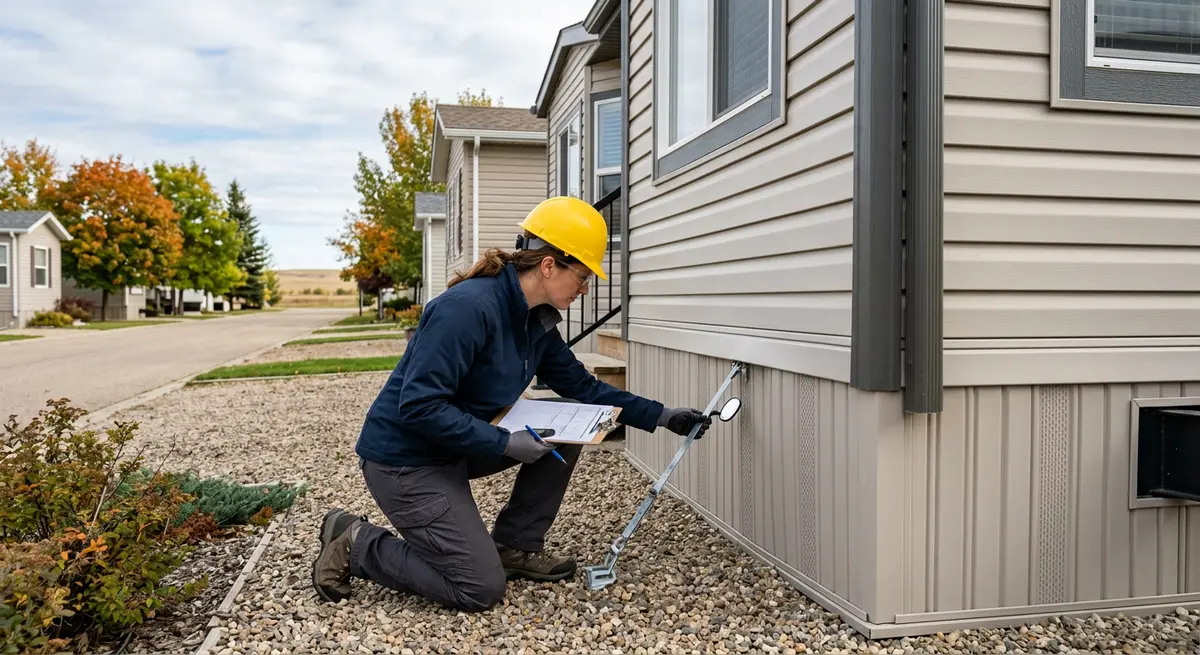
- Order a Specialized Appraisal: Do not use a standard residential appraiser. Hire an appraiser certified in manufactured housing valuation in the local area. They will assess the structural integrity, skirting, tie-downs, and local park comparables.
- Submit to an Alternative Lender: Work with a licensed mortgage broker who has direct relationships with private lenders specializing in chattel loans. Proper organization will speed up the underwriting process significantly.

Interest Rates, Fees, and Financial Terms
Borrowers must understand that specialized equity loans carry higher interest rates than conventional residential mortgages. In 2026, standard alternative secondary loans average between 8.5% and 11.5%. However, manufactured homes on leased land typically see an additional risk premium of 2% to 4% above these baseline rates.
Research from the Bank of Canada indicates that alternative lending in the manufactured housing sector grew by 12.4% in early 2026, driven largely by homeowners seeking debt consolidation. While the rates are higher, the blended rate (the combined interest of your low-rate primary mortgage and the higher-rate secondary loan) often remains lower than carrying high-interest credit card debt.
Marcus Thorne, Senior Underwriter at Calgary Alternative Lending, explains the pricing model: “We price mobile home secondary financing based on liquidity. If a borrower defaults in a rental park, we have to pay the monthly pad fees while trying to sell the unit. That carrying cost is directly reflected in the interest rate premium.”
Borrowers must also pay close attention to how interest is calculated. Understanding how compounding frequency impacts your total cost of borrowing is essential. Most private lenders compound interest monthly, which accelerates debt growth compared to the semi-annual compounding standard of Canadian primary mortgages.
Alternative Financing: Weighing Your Options
Before committing to a new loan, homeowners should evaluate all available financial instruments. Depending on your exact needs—whether consolidating debt or securing a down payment for another property—other products might offer better terms.
When comparing a secondary loan to a cash-out refinance, consider your current primary mortgage rate. A refinance replaces your entire existing mortgage with a new one. If you secured your first mortgage years ago at a rock-bottom rate, breaking that mortgage to refinance will trigger massive prepayment penalties and force your entire debt into today’s higher rates. A secondary loan prevents this by leaving the primary mortgage completely untouched.
Alternatively, you might consider leveraging home equity versus unsecured credit. Unsecured lines of credit require pristine credit scores (typically 720+) and high verifiable income. They do not use your home as collateral, which protects your property, but they offer much lower borrowing limits. If you need $50,000 for a major renovation, an equity loan is often the only viable route.
Common Pitfalls and Edge Cases
Navigating the manufactured home financing landscape comes with unique challenges. One major pitfall is failing to maintain proper insurance. Lenders require comprehensive coverage that includes specific clauses for transportation (if the home needs to be moved) and specialized fire coverage. If your policy lapses, the lender can force-place insurance at exorbitant rates, adding the cost directly to your loan balance.
Another common issue involves documentation retention. Many homeowners lose their original CSA certification stickers or foundational engineering reports. Knowing the rules for retaining your secondary financing documents and original property files is crucial. Replacing a lost CSA certification in Alberta requires hiring a specialized engineer to inspect the property, a process that can take months and cost thousands of dollars.
Frequently Asked Questions (FAQ)
Can I get an equity loan if I live in a rental park?
Yes, you can secure financing in a rental park, but it will be structured as a chattel loan rather than a traditional mortgage. You will need explicit written approval from the park management via a landlord waiver, and you can expect slightly higher interest rates due to the leased land structure.
What is the maximum amount of equity I can extract?
Most specialized alternative lenders will allow you to borrow up to 65% to 75% of your manufactured home’s appraised value. For example, if your home is appraised at $200,000 and your primary mortgage is $100,000, you could potentially borrow an additional $30,000 to $50,000.
Does the age of my manufactured home affect my approval?
Absolutely. Lenders strongly prefer homes manufactured after 1976, when the CSA Z240 MH national building standards were implemented. Homes older than this are generally considered structurally obsolete by lenders and are extremely difficult to finance.
How long does the approval process take?
The process typically takes between 2 to 4 weeks. The longest delay is usually securing a specialized appraiser who understands manufactured housing valuations and obtaining the necessary signature from your park management for the landlord waiver.
Will a traditional bank approve this type of loan?
If your home is on leased land in a park, traditional banks will almost certainly decline the application. You will need to work with a licensed mortgage broker who has access to private lenders and credit unions that specialize in chattel financing.
What happens if the park refuses to sign the landlord waiver?
If the park management refuses to sign the landlord waiver, specialized lenders will not fund the loan. The waiver is a mandatory legal requirement that protects the lender’s collateral in the event of a default.
Conclusion
Unlocking the equity in your manufactured home is a powerful financial strategy in 2026, provided you understand the unique legal and structural requirements involved. Whether your home rests on freehold land or a leased pad, specialized alternative lenders offer viable pathways to access up to 75% of your property’s value. By preparing your documentation, understanding the impact of park fees on your debt ratios, and securing the necessary landlord approvals, you can successfully navigate this specialized lending landscape.
If you are ready to explore your financing options or need help finding a specialized appraiser and lender in Alberta, get in touch with our team today. We can help you structure your application for the highest chance of approval.