Calgary homeowners facing foreclosure in 2026 can access critical legal aid through organizations like Calgary Legal Guidance, Pro Bono Law Alberta, and Student Legal Assistance. These community clinics offer free consultations, document review, and in some cases, court representation for income-qualifying individuals. By leveraging these resources early, borrowers can dispute lender claims, negotiate forbearance agreements, or structure repayment plans to halt legal proceedings and protect their home equity.
Key Takeaways
- Immediate Action is Required: Lenders can file a Statement of Claim just 45 days after a missed payment, making early legal intervention essential.
- Free Clinics are Available: Organizations like Calgary Legal Guidance provide pro bono advice for income-qualified residents facing housing disputes.
- You Have Legal Rights: Alberta’s Law of Property Act allows homeowners to challenge inaccurate lender balances and request modified terms.
- Representation Matters: Self-represented borrowers are statistically more likely to lose their homes compared to those who secure legal counsel.
- Alternatives Exist: Legal advisors can help negotiate out-of-court settlements, such as forbearance agreements or strategic refinancing.
- Deadlines are Strict: Failing to respond to court documents within the mandated 20-day window can result in an accelerated property seizure.
Understanding the Foreclosure Landscape in Calgary
When financial strains hit, homeowners often find themselves navigating a complex and intimidating legal landscape. Missing even a single mortgage payment can activate contractual acceleration clauses, granting lenders the right to initiate recovery actions. In 2026, economic shifts have made understanding these legal frameworks more critical than ever for Calgary residents.
Foreclosure in Alberta is governed primarily by the Law of Property Act. This legislation outlines the specific steps lenders must take to reclaim collateral, but it also enshrines vital protections for borrowers. Homeowners retain the absolute right to dispute claims, request mediation, or seek modified terms before a judge grants a final order.
According to recent data from the Canada Mortgage and Housing Corporation (CMHC), proactive engagement with legal and financial advisors reduces the likelihood of absolute property loss by nearly 40%. The key is understanding that a notice from the bank is the beginning of a legal negotiation, not the end of your homeownership journey.
Free and Low-Cost Legal Aid Clinics in Calgary
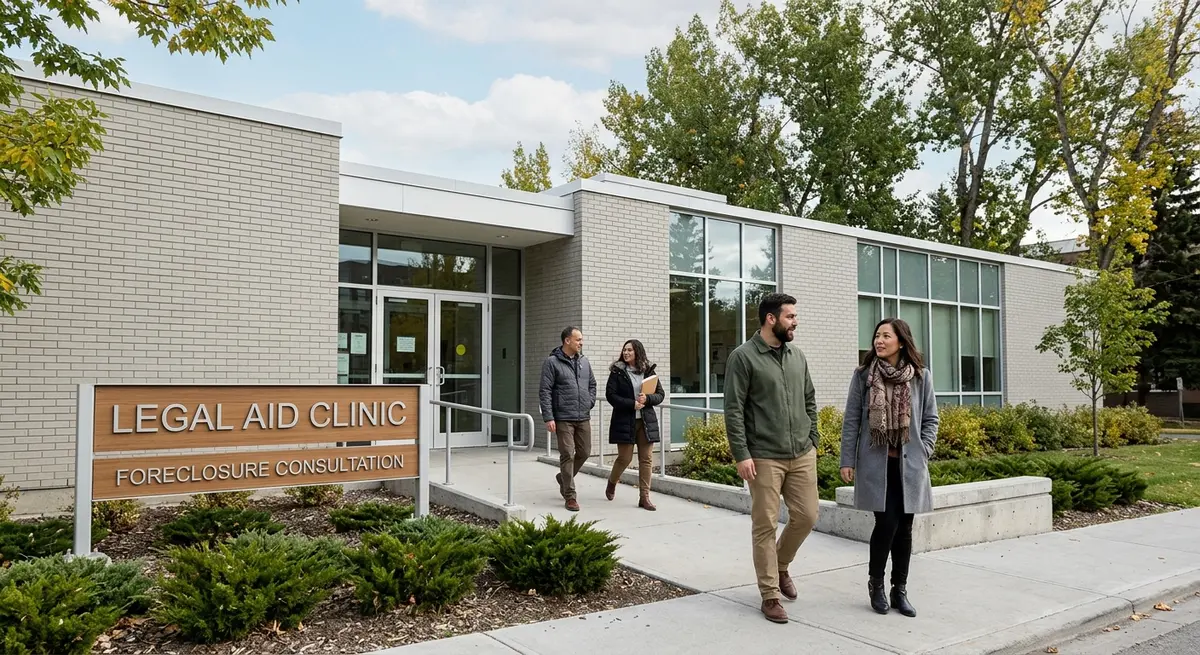
Local organizations bridge the justice gap for individuals unable to afford private counsel. These community legal clinics are staffed by volunteer lawyers, law students, and housing specialists dedicated to protecting tenant and homeowner rights.
Calgary Legal Guidance (CLG)
Calgary Legal Guidance is a cornerstone of pro bono support in the city. They offer free, confidential legal advice to low-income residents who do not qualify for traditional Legal Aid Alberta services but still cannot afford a private lawyer. Their volunteer lawyers can explain court procedures, review mortgage contracts, and help draft a Statement of Defence.
Pro Bono Law Alberta (PBLA)
PBLA operates several specialized programs, including the Civil Claims Duty Counsel project at the Calgary Courts Centre. While they primarily assist with civil matters, their volunteers can provide crucial guidance on navigating the procedural aspects of the Court of King’s Bench, where foreclosure matters are heard.
Student Legal Assistance (SLA)
Operating out of the University of Calgary, Student Legal Assistance pairs law students with supervising lawyers to provide free legal information and representation. They are particularly effective at document preparation and helping borrowers understand the dense legal jargon found in lender demands.
| Organization | Primary Services | Access Method |
|---|---|---|
| Calgary Legal Guidance | Foreclosure defense, contract review, legal advice | Application via phone/website |
| Pro Bono Law Alberta | Courtroom guidance, procedural assistance | Duty Counsel at Courts Centre |
| Student Legal Assistance | Document preparation, legal information | Intake appointment required |
The Alberta Foreclosure Timeline: When to Seek Legal Help
Property owners facing mortgage challenges often feel trapped by unfamiliar procedures. The Alberta legal framework follows specific, chronological steps. Understanding these phases helps borrowers act decisively and know exactly when to deploy legal aid resources.
- The Missed Payment (Day 1-15): Lenders typically send informal reminders. No legal action is taken yet, but late fees begin to accrue.
- Formal Demand Letter (Day 15-30): The lender’s legal counsel issues a formal demand for payment. This is the optimal time to contact a legal aid clinic to negotiate a repayment plan before court costs are added to your debt.
- Statement of Claim (Day 45+): The lender files a formal lawsuit at the Court of King’s Bench. You now have exactly 20 days to file a response. Understanding the Notice of Default versus a Statement of Claim is critical at this juncture.
- The Redemption Period: If the court rules in favor of the lender, they will issue an Order Nisi, which includes a redemption period (typically 6 months). During this time, you can halt the process by paying the arrears. Legal aid can help you understand Alberta foreclosure redemption periods and petition the court for an extension if you have equity.
- Final Order: If the redemption period expires without resolution, the property is transferred to the lender or sold. Familiarizing yourself with the final order of foreclosure timeline ensures you are not caught off guard by eviction notices.
Strategic Defenses and Borrower Rights
A common misconception is that once a lender files a lawsuit, the loss of the property is inevitable. In reality, skilled legal advocates can deploy numerous strategic defenses to protect your assets. Legal aid lawyers meticulously review loan agreements to identify procedural errors, incorrect interest calculations, or violations of provincial lending laws.
As Marcus Thorne, a senior litigator and volunteer with the Canadian Bar Association, explains: “Lenders are not infallible. We frequently find discrepancies in how arrears are calculated or instances where mandatory notices were improperly served. These errors can be leveraged to pause proceedings and force the bank back to the negotiating table.”
If you receive court documents, responding to a Statement of Claim promptly is your most powerful defense. Filing a Statement of Defence or a Demand for Notice prevents the lender from obtaining a default judgment, buying you valuable time to secure alternative financing or sell the property on your own terms.

How to Apply for Pro Bono Representation in 2026
Accessing community resources can make a critical difference, but the application process requires organization. Clinics experience high demand, so presenting a clear, well-documented case increases your chances of receiving comprehensive representation.
- Gather Your Documents: Compile your original mortgage contract, all recent correspondence from your lender, the Statement of Claim (if served), and proof of your current income and expenses.
- Complete the Intake Assessment: Contact Calgary Legal Guidance or a similar organization to complete their initial financial screening. In 2026, the income thresholds for free legal aid have been adjusted to account for inflation, meaning more middle-income families may qualify for partial assistance.
- Prepare a Timeline: Write down a chronological summary of your financial hardship, missed payments, and any verbal agreements you made with bank representatives.
- Attend the Consultation: Use your initial meeting to ask specific questions about your legal exposure. Ask the lawyer to explain the worst-case scenario and the most realistic path to resolution.
Financial Alternatives to Court Proceedings
While legal aid provides a shield in the courtroom, resolving the underlying debt requires a financial strategy. Lawyers often work in tandem with mortgage brokers and financial advisors to explore alternatives to a court-ordered sale.
If you have substantial equity in your home, you might qualify for alternative financing to pay off the arrears. Exploring second mortgages and cash-out refinancing can provide the capital needed to satisfy the demanding lender. Private lenders, such as The Second Mortgage Store, specialize in analyzing complex individual circumstances to find practical solutions that traditional banks will not consider.
In cases where retaining the property is financially impossible, legal counsel can facilitate a voluntary sale or a short sale. These options minimize the devastating impact on your credit score and help you avoid the severe consequences of deficiency judgment calculations, where the lender sues you for the remaining balance if the home sells for less than what you owe.
The Cost of Inaction: Court Fees and Equity Loss
Ignoring legal notices is the most expensive mistake a homeowner can make. When you fail to respond, the court process accelerates, and the lender’s legal costs are added directly to your mortgage balance. In Alberta, these legal expenses typically range from $2,500 to $5,500, rapidly depleting whatever equity you have left in the property.
Furthermore, self-represented borrowers risk overlooking critical defenses. A 2026 report analyzing property dispute resolutions found that homeowners who engaged legal counsel—even through free community clinics—retained an average of 22% more of their home’s equity compared to those who ignored the proceedings or attempted to navigate the courts alone.
The Law Society of Alberta strongly encourages anyone facing property litigation to seek qualified advice immediately. Timely expert input helps avoid prolonged court processes, reduces financial exposure, and provides clarity during an incredibly stressful period.

Conclusion
Navigating financial hurdles and the threat of property loss requires both knowledge and immediate action. The legal process in Alberta involves strict timelines, complex paperwork, and severe financial consequences for inaction. However, Calgary residents benefit from a robust network of legal aid clinics, pro bono lawyers, and community resources designed to protect homeowner rights.
Whether you need help reviewing a Statement of Claim, negotiating a forbearance agreement, or understanding your options for refinancing, professional support transforms a terrifying ordeal into a series of manageable steps. Do not wait until the redemption period expires to seek help. Early intervention is the key to preserving your equity and your peace of mind.
If you are facing mortgage arrears and need to explore alternative financing solutions to halt legal action, get in touch with our team at The Second Mortgage Store today. We provide tailored strategies to address your financial challenges and help you keep your home.
Frequently Asked Questions (FAQ)
Can I stop a foreclosure once court proceedings start in Alberta?
Yes, you can halt proceedings even after a Statement of Claim is filed. Borrowers can negotiate payment plans, file a Statement of Defence to dispute claims, or secure alternative financing to pay the arrears before the final order is granted.
Are free legal services accessible for all foreclosure cases in Calgary?
Free legal services are primarily income-tested. Organizations like Calgary Legal Guidance offer pro bono assistance to low-income residents, while others may offer sliding-scale fees or limited duty counsel services regardless of income.
What happens if I simply ignore a foreclosure notice?
Ignoring notices allows the lender to obtain a default judgment against you. The court process will accelerate, lender legal fees will be added to your debt, and you will lose the opportunity to defend your property or negotiate an extended redemption period.
How long does Alberta’s redemption period last in 2026?
The standard redemption period in Alberta is six months from the date the Order Nisi is granted. However, courts can shorten this to a single day if there is no equity in the property, or extend it if the homeowner proves they are actively securing financing.
Do I really need legal representation at a foreclosure hearing?
While self-representation is legally permitted, it is highly discouraged. Legal advocates can identify procedural errors, challenge unfair bank fees, and present hardship arguments that self-represented borrowers typically overlook.
Can a consumer proposal or bankruptcy stop a foreclosure?
Filing for a consumer proposal or bankruptcy triggers an automatic stay of proceedings, which temporarily halts all collection actions, including foreclosure. However, secured creditors (like mortgage lenders) ultimately retain the right to realize their security if the mortgage remains in default.
How do I find reputable foreclosure specialists in Calgary?
You can find vetted real estate litigators through the Law Society of Alberta’s Lawyer Referral Service. Additionally, consulting with specialized alternative lenders can provide financial solutions that work alongside your legal strategy.