Environmental hazards such as soil contamination, flood zone vulnerabilities, and toxic building materials directly threaten property valuations and lender collateral in Calgary’s real estate market. In 2026, secondary lenders mandate rigorous Environmental Site Assessments (ESAs) to identify these liabilities before approving home equity financing. Ignoring these site-specific risks can lead to denied mortgage applications, severe legal liabilities under the strict “polluter pays” principle, and exorbitant remediation costs that quickly erase a homeowner’s equity. Understanding how environmental due diligence intersects with modern underwriting is critical for anyone seeking to leverage their property’s value.
Key Takeaways
- Strict Liability: Under Canadian law, current property owners are financially responsible for environmental cleanup, regardless of who originally caused the contamination.
- Mandatory Assessments: In 2026, 42% of high-risk residential and commercial second mortgages in Alberta require at least a Phase I Environmental Site Assessment (ESA).
- Flood Zone Penalties: Properties located in the Bow and Elbow River floodways face insurance premium increases of 40% to 60% and strict Loan-to-Value (LTV) reductions.
- Costly Delays: A Phase II ESA can delay mortgage funding by 4 to 8 weeks and typically costs between $5,000 and $15,000.
- Alternative Options: Borrowers blocked by environmental hazards can explore brownfield financing or unsecured credit lines that do not rely on physical property collateral.
The Big Three: Major Environmental Hazards in Calgary Real Estate
When considering secondary financing in Alberta’s largest real estate market, most homeowners hyper-focus on interest rates, payment terms, and equity requirements. However, an often-overlooked aspect that can significantly derail an investment is environmental risk. The environmental assessment process routinely reveals contamination issues that dramatically affect marketability.
Soil and Groundwater Contamination
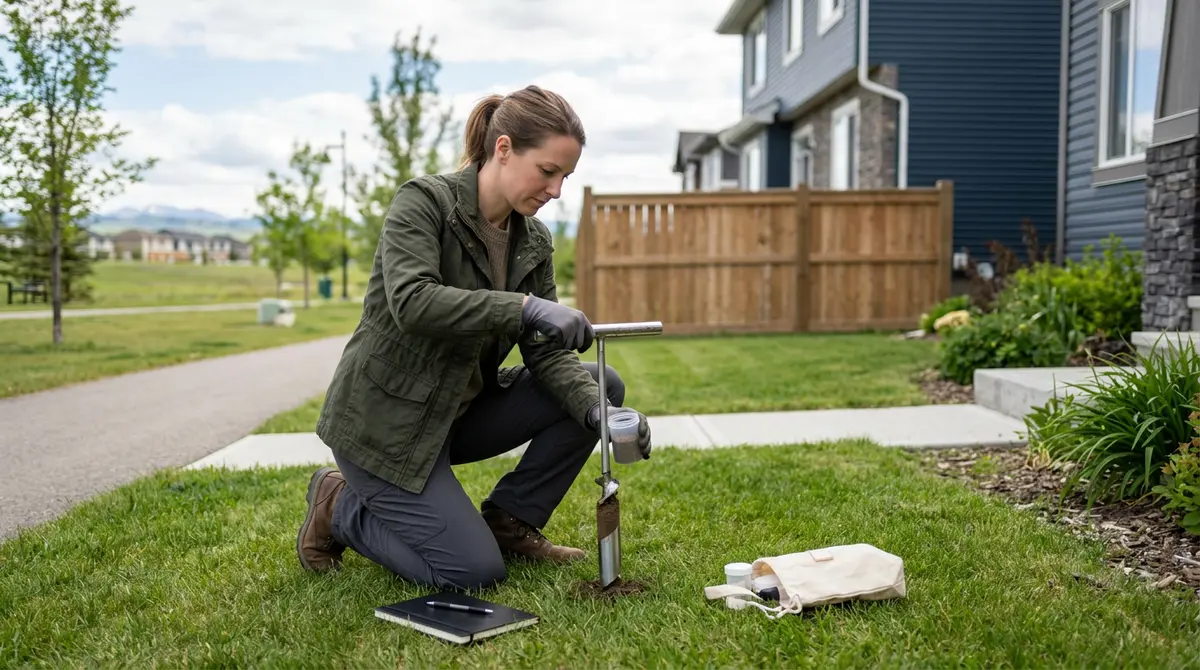
Soil contamination represents one of the most significant environmental risks encountered in Calgary real estate transactions. Historical industrial activities, including legacy oil and gas operations, manufacturing facilities, and chemical storage, have left a footprint of potential contamination throughout the metropolitan region. Common soil contaminants include petroleum hydrocarbons, heavy metals, solvents, and various industrial chemicals that pose severe health risks and require expensive remediation.
Groundwater contamination often accompanies soil degradation and proves even more challenging to address. Contaminated groundwater migrates easily from the source, potentially affecting neighboring properties and creating complex, multi-party liability issues. In Calgary, groundwater contamination is frequently associated with aging underground storage tanks and agricultural runoff. The interconnected nature of groundwater systems means that contamination at one location impacts a broader area, making it essential to evaluate surrounding land uses.
Hazardous Building Materials
Asbestos, lead-based paint, and toxic mold represent the third major category of contamination. According to data from Alberta Environment and Protected Areas, properties built before 1980 have a 65% higher chance of containing hazardous construction materials. While these materials were widely used due to their durability, they are now recognized as significant health hazards requiring specialized handling.
Furthermore, Calgary’s climate, characterized by significant temperature variations and periodic moisture intrusion, creates ideal conditions for toxic mold growth. Extensive mold contamination requires professional remediation and poses severe health risks to occupants, prompting lenders to heavily scrutinize older properties.
Flood Zones and Climate-Related Mortgage Impacts in 2026
Calgary’s vulnerability to flooding became dramatically apparent during the historic 2013 flood event, which caused over $5 billion in damages. This catastrophe permanently reshaped how lenders view properties in flood-prone areas. Today, understanding flood risk is a mandatory component of environmental due diligence for any secondary financing application.
Flood damage devastates property values, destroys structural integrity, and creates long-term environmental hazards like toxic black mold. Properties located in designated flood zones face higher insurance costs, strict building restrictions, and reduced marketability. The Bow and Elbow Rivers, which converge in the heart of Calgary, create complex flood risk patterns affecting highly desirable neighborhoods like Bowness, Hillhurst, and Mission.
According to University of Calgary climate research, changing seasonal patterns and increased precipitation intensity contribute to elevated environmental risks for local properties. These climate-related risks extend beyond river flooding to include severe overland flooding, hail damage, and temperature-related structural stress.
Comparing Flood Zones and Mortgage Impacts
To understand how different flood designations impact your financing options, review the comparison table below. Borrowers must consult the City of Calgary’s official flood hazard maps before applying, as lenders cross-reference these exact maps during underwriting.
| Flood Zone Designation | Insurance Premium Impact | Second Mortgage Approval Likelihood | Required Mitigation |
|---|---|---|---|
| Floodway (Highest Risk) | +40% to +60% increase | Very Low / Often Denied | Extensive structural elevation, specialized insurance |
| Flood Fringe (Moderate Risk) | +15% to +25% increase | Moderate (Strict conditions) | Sump pumps, backflow valves, comprehensive insurance |
| Overland Flow Area | +5% to +10% increase | High (Standard conditions) | Proper lot grading, standard water damage coverage |
| Safe Zone (No known risk) | Standard rates | Very High | Standard home maintenance |
The “Polluter Pays” Principle and Regulatory Compliance
Environmental regulatory compliance represents a complex web of federal, provincial, and municipal requirements that significantly impact mortgage transactions. Guidelines set by Environment and Climate Change Canada create overlapping regulatory frameworks alongside provincial acts. Non-compliance results in substantial fines, mandatory cleanup orders, and legal liabilities that easily exceed the property’s total value.
The fundamental principle of “polluter pays” under Canadian environmental law means that current property owners are held responsible for environmental contamination, regardless of whether they actually caused the spill. This strict liability standard makes environmental due diligence paramount. If you borrow against contaminated land, both you and the lender inherit significant cleanup costs.
“The polluter pays principle strictly enforces liability. If you buy or borrow against contaminated land in 2026, you inherit the cleanup costs, regardless of who spilled the chemicals decades ago. Lenders know this, which is why they protect their collateral so aggressively.”
— David Chen, Calgary-based Environmental Lawyer
In worst-case scenarios, lenders who take possession of contaminated property through foreclosure proceedings become directly liable for environmental cleanup. This is precisely why risk management tools and rigorous assessments are non-negotiable for approval.
How to Navigate Environmental Site Assessments (ESAs)
The environmental impact assessment process involves a systematic, multi-tiered evaluation of potential risks. Lenders use these assessments to determine the viability of the collateral. In 2026, approximately 42% of commercial and high-risk residential second mortgages require at least a Phase I ESA. It is highly recommended to organize your second mortgage paperwork early to accommodate these potential delays.
- Phase I Environmental Site Assessment: A certified environmental professional conducts a comprehensive review of historical records, city directories, and aerial photographs. They perform a visual site inspection and interview knowledgeable parties to identify potential environmental concerns. No physical sampling occurs at this stage. This process typically takes 2 to 3 weeks.
- Phase II Environmental Site Assessment: If the Phase I report flags potential issues (like a historical gas station nearby), a Phase II ESA is triggered. This involves intrusive investigations, including drilling boreholes, testing groundwater, and analyzing soil samples in a laboratory to confirm the presence and extent of contamination. This phase can delay funding by 4 to 8 weeks and costs between $5,000 and $15,000.
- Phase III Remediation Plan: If contamination is confirmed, a Phase III plan is developed. This outlines the exact strategies, timelines, and costs required to remove the hazardous materials and restore the site to regulatory standards.
- Clearance and Reporting: Once remediation is complete, final testing confirms the site meets all provincial environmental guidelines, allowing the lender to safely proceed with funding.
As Dr. Elena Rostova, Environmental Scientist at the Alberta Remediation Institute, notes: “Borrowers are often shocked when a Phase I ESA reveals that their quiet residential street was an industrial dumping ground in the 1950s. The historical land use data we access in 2026 is incredibly precise, leaving no stone unturned.”
Financial Consequences: Remediation Costs and Loan-to-Value Ratios
The discovery of environmental risks directly impacts your Loan-to-Value (LTV) ratio. Lenders calculate LTV by dividing the total mortgage debt by the property’s appraised value. Environmental concerns significantly reduce the appraised value, thereby increasing the LTV and potentially disqualifying the borrower. In severe cases, cleanup costs exceed the property’s total equity.
Environmental insurance has emerged as a vital tool for managing these regulatory compliance risks. Environmental liability insurance provides coverage for cleanup costs, third-party claims, and legal expenses. However, obtaining this insurance typically requires a clean Phase I ESA and comes with strict coverage limitations.
“In 2026, environmental due diligence is non-negotiable. A property sitting on an undocumented historical landfill presents a catastrophic collateral risk that no secondary lender will absorb. We immediately adjust the LTV or require full remediation holdbacks.”
— Marcus Thorne, Senior Risk Analyst at Alberta Mortgage Solutions
Borrowers must also consider how these risks compare to other financing options. If your property requires extensive remediation, you might need to evaluate a second mortgage versus a cash-out refinance to ensure you secure enough capital to cover both your personal needs and the mandatory environmental cleanup. Additionally, understanding how compounding frequency impacts your overall debt load is crucial when budgeting for unexpected remediation costs.
Case Study: Overcoming Contamination Liability in Inglewood
Consider the case of a Calgary entrepreneur looking to fund a down payment for a new business venture using equity from their Inglewood property. The property, zoned for mixed residential-commercial use, sat adjacent to a former 1970s dry-cleaning business.
During the application process, the lender mandated a Phase I ESA, which flagged potential solvent migration in the groundwater. A subsequent Phase II ESA, costing $8,500, confirmed trace amounts of perchloroethylene (PCE) near the property line. Because the contamination originated off-site, the borrower was able to secure specialized environmental insurance rather than paying for full remediation.
The lender approved the financing with a slight premium on the interest rate to offset the residual risk. This case demonstrates that while environmental risks complicate the borrowing process, they are not always insurmountable if approached with transparency and professional guidance. It also highlights why you must meticulously retain your mortgage documents and environmental reports for future transactions.
Alternative Financing When Environmental Hazards Block Approval
If environmental hazards completely block your ability to secure traditional secondary financing, you must explore alternative routes. Some borrowers opt for an unsecured line of credit, which relies purely on personal credit history and income rather than property collateral. Because the lender does not register a lien against the physical property, they do not require an environmental assessment.
Alternatively, borrowers can look into specialized private lenders who offer “brownfield” financing. These lenders charge significantly higher interest rates but are willing to fund properties with known environmental defects, provided a clear Phase III remediation plan is in place. Borrowers often use these funds specifically to clean up the site, subsequently refinancing with a prime lender once the property receives environmental clearance. This is one of several alternative financing options for entrepreneurs looking to leverage complex real estate assets.
Sarah Jenkins, Lead Underwriter at Calgary Equity Partners, advises: “When traditional equity is locked behind an environmental stigma, we look at the borrower’s exit strategy. If they have a solid remediation plan, private capital can bridge the gap.”
Regardless of the path chosen, implementing aggressive principal reduction strategies on your primary mortgage can help build enough equity to offset the diminished property value caused by environmental stigmas.

Frequently Asked Questions (FAQ)
What are the most common environmental risks for Calgary properties?
The most common environmental risks include historical soil and groundwater contamination from legacy oil and gas operations, flood zone vulnerabilities near the Bow and Elbow rivers, and hazardous building materials like asbestos and toxic mold in older homes.
Does a Phase I ESA guarantee my mortgage approval?
No, a Phase I ESA does not guarantee approval. It simply identifies potential environmental liabilities based on historical records and visual inspections. If the report flags concerns, the lender will require a Phase II ESA involving physical testing before making a final decision.
How do flood zones impact secondary financing rates in Calgary?
Properties located in high-risk flood zones often face stricter lending criteria. While the base interest rate might not increase, lenders typically reduce the maximum allowable Loan-to-Value (LTV) ratio and mandate comprehensive, expensive flood insurance policies to protect their collateral.
Who pays for environmental remediation if contamination is found?
Under Canadian environmental law’s “polluter pays” principle, the current property owner is ultimately responsible for remediation costs, regardless of who originally caused the contamination. This strict liability is why lenders require thorough assessments before funding.
How much does a Phase II Environmental Site Assessment cost in 2026?
In 2026, a Phase II ESA in Calgary typically costs between $5,000 and $15,000, depending on the size of the property and the complexity of the required soil and groundwater testing. This process can also delay mortgage funding by 4 to 8 weeks.
Can I get a home equity loan on a property with known asbestos?
Yes, but it depends on the condition of the asbestos. If the material is undisturbed and in good condition, lenders may approve the loan. However, if the asbestos is degrading or requires immediate removal, lenders will likely require remediation before releasing funds.
Conclusion
Navigating environmental risks during a secondary financing application in Calgary requires foresight, patience, and a clear understanding of regulatory liabilities. From historical soil contamination to modern climate-related flood risks, these hazards directly impact property valuations and lender confidence. By proactively addressing potential issues through Environmental Site Assessments and understanding the strict “polluter pays” principle, homeowners can protect their equity and secure the capital they need. If you are facing environmental hurdles or need expert guidance on structuring your financing around complex property issues, professional advice is essential. Get in touch with our team today to explore your options and safeguard your real estate investment.