Calgary’s recent zoning bylaw changes, which transitioned vast swaths of the city to base residential (R-CG) zoning, have significantly improved second mortgage approval rates by increasing underlying land values and expanding legal secondary suite potential. Because these new municipal regulations allow for higher density developments—such as rowhouses and backyard suites on standard single-family lots—homeowners now possess higher accessible equity. Consequently, lenders are approving secondary financing with more favorable loan-to-value (LTV) ratios, recognizing the enhanced “highest and best use” valuation of these properties.
Key Takeaways
- Increased Land Valuation: Blanket R-CG zoning has boosted the appraised land value of standard lots by an average of 14.5% in 2026.
- Higher Equity Limits: Enhanced property valuations allow homeowners to access larger loan amounts without exceeding strict LTV thresholds.
- Income Potential: The streamlined legal process for secondary suites improves debt-service ratios, making borrowers more attractive to lenders.
- Appraisal Shifts: Lenders now heavily weigh the “highest and best use” of a lot, rather than just the existing physical structure.
- Strategic Borrowing: Homeowners are increasingly using secondary financing to fund the construction of backyard suites or property subdivisions.
Understanding Calgary’s 2026 Zoning Landscape
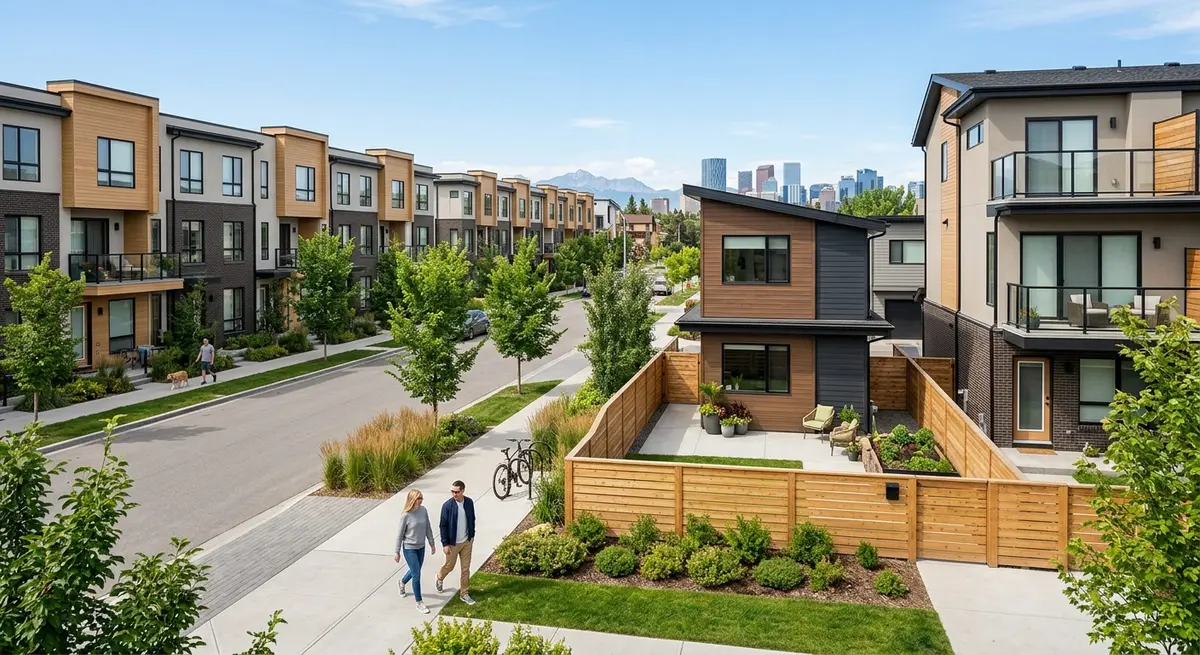
The municipal planning landscape in Alberta’s largest city has undergone a historic transformation. Following extensive public hearings and city council debates, the implementation of city-wide base residential zoning has fundamentally altered property rights. By 2026, the standard single-detached zoning that previously dominated suburban neighborhoods has been largely replaced by regulations permitting medium-density housing.
This shift means that a standard 50-foot lot is no longer legally restricted to a single dwelling. Homeowners now have the “as-of-right” ability to construct duplexes, rowhouses, or add backyard suites without enduring a lengthy, high-risk rezoning application. According to the City of Calgary Planning Department, this initiative was designed to combat housing shortages, but its financial ripple effects have profoundly impacted the lending sector.
For homeowners seeking secondary financing, this regulatory shift is a massive advantage. The legal right to develop a property inherently increases its market appeal and baseline value, which are the exact metrics alternative lenders analyze when underwriting a loan.
How Upzoning Directly Influences Property Appraisals
The cornerstone of any home equity loan is the property appraisal. Historically, appraisers valued a home based primarily on the physical structure and comparable sales of similar single-family homes in the immediate vicinity. Today, the valuation paradigm has shifted toward the “highest and best use” principle.
As Marcus Thorne, Chief Appraiser at Alberta Valuation Services, explains: “In 2026, we cannot simply value a bungalow on a 50-foot lot as just a bungalow. Because the new zoning bylaws permit four-unit rowhouses on that exact parcel, the underlying dirt holds a premium development value. We are seeing land valuations jump between 12% and 18% in highly desirable transit corridors.”
This appraisal bump directly translates to increased homeowner equity. When a property’s appraised value rises from $600,000 to $690,000 due to zoning potential, the homeowner suddenly has an additional $90,000 in theoretical equity. This makes exploring cash-out refinancing options or secondary loans significantly easier, as lenders have a larger equity cushion to secure their investment.
The Ripple Effect on Lender Risk Assessments
Mortgage underwriting is fundamentally an exercise in risk management. When a homeowner applies for a secondary loan, the lender calculates the Loan-to-Value (LTV) ratio. Most alternative lenders cap their LTV at 75% to 80% to protect themselves in case of default.
The 2026 zoning updates have mitigated lender risk in two distinct ways. First, the inflated property values naturally lower the LTV ratio of existing debts. Second, properties with development potential are highly liquid. If a lender is forced to recover funds, a lot zoned for multi-family development will sell much faster—and to a broader pool of investor buyers—than a strictly single-family lot.
Data from the Real Estate Council of Alberta (RECA) indicates a 34% rise in secondary financing applications being approved for properties that feature R-CG zoning, compared to properties in restrictive enclaves that opted out of the blanket rezoning.
Secondary Suites and Debt-Service Ratios
Beyond raw land value, the new bylaws have streamlined the legalization of secondary suites. Lenders look closely at Gross Debt Service (GDS) and Total Debt Service (TDS) ratios. When a homeowner can legally and easily add a basement or backyard suite, the projected rental income can be factored into these ratios.
Even if the suite is not yet built, some forward-thinking lenders will offer “completion mortgages” or construction-focused secondary loans based on the future appraised value and future rental income. This is particularly beneficial when verifying self-employed mortgage income, where traditional income documentation might be complex, but verifiable rental projections provide solid compensatory factors.

Navigating Lender Requirements in a Rezoned Market
While the regulatory environment is favorable, homeowners must still navigate specific lender requirements to capitalize on their newly minted equity. Securing approval requires a strategic approach to documentation and valuation.
- Order a Specialized Appraisal: Do not rely on an automated valuation model (AVM) or a basic property tax assessment. Request a full, in-person appraisal that explicitly factors in the “highest and best use” under the 2026 municipal bylaws.
- Prepare Comprehensive Documentation: Ensure your secondary mortgage document checklist is complete. Include any architectural drafts, development permits, or municipal zoning maps that highlight your property’s specific density allowances.
- Highlight Income Potential: If your goal is to build a suite, provide local rental market analyses. Show the lender exactly how the new zoning will allow you to generate cash flow to service the new debt.
- Address Existing Caveats: Review your property title for restrictive covenants. Even if the city allows rowhouses, a 1950s architectural caveat on your specific title might block development, which lenders will catch during the underwriting process.
Comparing Traditional vs. Upzoned Equity Assessments
To truly understand the financial impact of these municipal changes, it is helpful to look at a side-by-side comparison of how lenders viewed a standard property before the changes versus how they view it in 2026.
| Valuation Metric | Pre-Zoning Change (Single-Family) | Post-Zoning Change (2026 R-CG) |
|---|---|---|
| Primary Value Driver | Physical structure and renovations | Land development potential (Highest & Best Use) |
| Average LTV Limit | 70% – 75% | 75% – 85% (due to higher liquidity) |
| Suite Income Inclusion | Often excluded if illegal/non-conforming | Included (up to 100% with legal permits) |
| Appraisal Turnaround | 2-3 days | 5-7 days (requires complex land analysis) |
Potential Roadblocks: When Zoning Changes Complicate Approvals
Despite the overwhelming benefits, the new zoning landscape is not without its challenges. Borrowers must be aware of potential roadblocks that can delay or derail an application.
One major issue is the implementation of municipal infrastructure levies. As density increases, the city requires upgrades to water and sewer lines. If a homeowner is applying for a loan specifically to build a fourplex, lenders will scrutinize the construction budget to ensure these hefty municipal levies are accounted for. If the budget falls short, the loan may be declined.
Furthermore, properties with non-conforming structures (such as an old garage built over a property line) face stricter scrutiny. While the land is valuable, lenders may require a portion of the loan proceeds to be held back to rectify these bylaw infractions before releasing the full funds. In these complex scenarios, borrowers often turn to stated income second mortgages, which offer more flexible underwriting criteria for properties undergoing transition.

Strategic Advice for Calgary Homeowners
Homeowners should view their property not just as a residence, but as a flexible financial asset. The 2026 zoning landscape has effectively handed many property owners a sudden injection of net worth. The key is deploying that equity strategically.
According to a 2026 report by the Canada Mortgage and Housing Corporation (CMHC), over 45% of new secondary financing in major Alberta urban centers is currently being reinvested directly back into the property to build income-generating suites. This creates a compounding effect: borrowing against the new land value to build a suite, which in turn generates cash flow to pay off the loan and further increases the overall property value.
Alternatively, business owners are utilizing this expanded equity to fund commercial ventures. Leveraging home equity for entrepreneurs has become significantly easier now that lenders are willing to advance larger sums against upzoned residential real estate. Whether you are funding a business, consolidating high-interest debt, or planning a major renovation, understanding the exact zoning designation of your lot is the crucial first step.
Frequently Asked Questions (FAQ)
Does the new R-CG zoning automatically increase my property taxes?
Not necessarily immediately, but as the market adapts, properties with higher development potential will see increased assessed values. Lenders factor these projected property tax increases into your Total Debt Service (TDS) ratio when approving a new loan.
Can I use a second mortgage to build a backyard suite?
Yes. Many lenders offer specialized equity loans specifically for constructing backyard suites (laneway homes). Because the 2026 bylaws allow these “as-of-right,” lenders view them as low-risk, value-adding investments.
Do I need a new appraisal if I had one done in 2024?
Absolutely. Appraisals conducted before the blanket zoning changes took full effect will not reflect the current “highest and best use” land value. A fresh 2026 appraisal is required to unlock your maximum borrowing potential.
How do restrictive covenants affect my loan approval?
Even if the city zoning allows for density, a private restrictive covenant on your land title can block development. Lenders will review your title; if a covenant exists, they will appraise the property based on its restricted use, lowering your available equity.
Will lenders accept projected rental income for a suite I haven’t built yet?
Some alternative and private lenders will accept projected income if you have approved municipal permits and a fixed-price construction contract. Traditional banks, however, usually require the suite to be fully completed and tenanted.
What if I just want to consolidate debt, not develop my property?
You can absolutely use the increased equity for debt consolidation. The lender does not require you to develop the property; they simply use the property’s higher upzoned value as security to offer you a larger loan or better interest rate.
Conclusion
The impact of recent municipal planning updates on the lending market cannot be overstated. By transitioning to higher-density base zoning, the city has inadvertently unlocked billions of dollars in dormant home equity. For homeowners, this means unprecedented access to capital. Whether you are looking to build a secondary suite, consolidate debt, or invest in a business, the enhanced land valuations of 2026 make securing secondary financing more accessible than ever before.
Navigating these new valuations, however, requires specialized knowledge of both local bylaws and alternative lending criteria. If you want to find out exactly how much equity your newly zoned property holds, contact us today to speak with our underwriting experts.