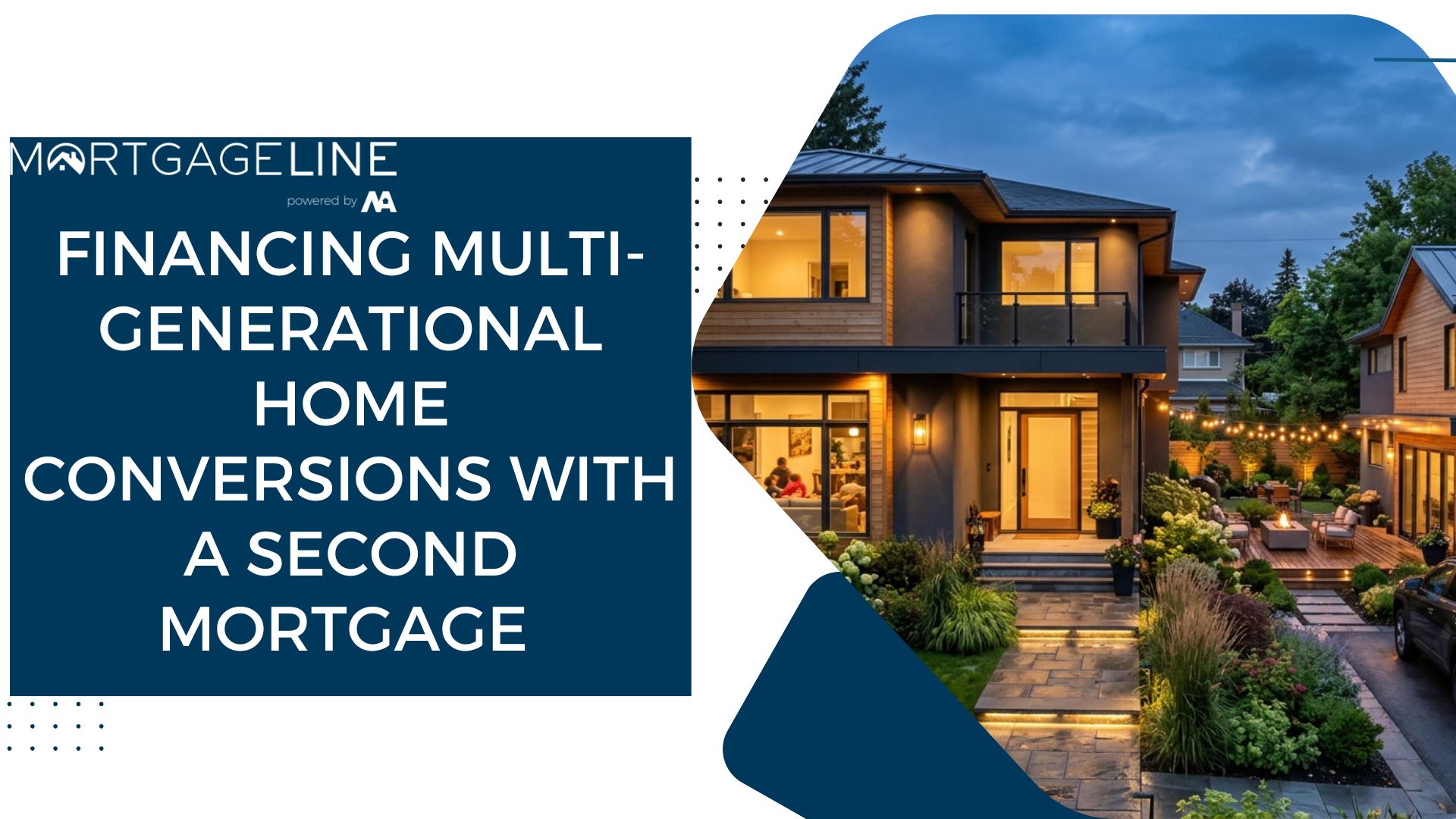
Securing immediate funding for barrier-free home modifications after a life-altering medical event is a critical challenge for many property owners. By leveraging existing property value through a subordinate loan, homeowners can efficiently finance essential structural adjustments—such as wheelchair ramps, stairlifts, or main-floor wet rooms—without disrupting their primary lending agreement or incurring penalties for breaking a favorable first-term rate.
Key Takeaways
- Subordinate financing allows homeowners to extract equity for medical retrofits without losing their current primary loan terms.
- Private lenders often accept non-traditional income sources, such as Long-Term Disability (LTD) or Assured Income for the Severely Handicapped (AISH), when qualifying applicants.
- Essential retrofits like residential elevators or exterior ramping can exceed $30,000, making equity extraction a practical solution when provincial grants fall short.
- Homeowners must carefully factor in municipal zoning laws and condominium board approvals before utilizing borrowed funds for exterior structural changes.
- Combining borrowed equity with federal tax credits and provincial programs ensures comprehensive funding for barrier-free living.
Understanding the Need for Accessible Housing
Adapting a residential property to meet sudden mobility or cognitive requirements is a complex undertaking. According to data from Statistics Canada, approximately 27% of Canadians aged 15 and older report having at least one disability. As the population demographics shift and medical survivability rates improve in 2026, the demand for aging-in-place and barrier-free housing solutions has increased substantially.
Standard residential architecture is rarely designed with universal accessibility in mind. Narrow hallways, steep entry steps, and standard bathtub configurations become immediate hazards for individuals navigating a new physical impairment. The Rick Hansen Foundation advocates that an accessible built environment benefits everyone and is fundamental to independent living. When a sudden diagnosis necessitates immediate environmental changes, waiting years to save for these renovations is not a viable option.
The Financial Reality of Barrier-Free Retrofits
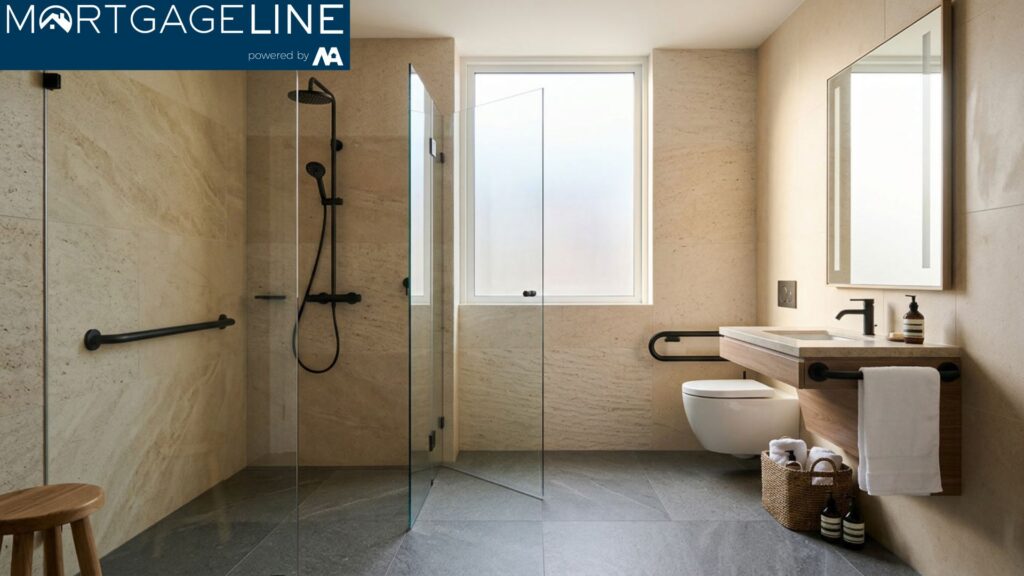
The cost of transforming a standard property into a fully accessible environment can be staggering. While minor adaptations like grab bars or lever-style door handles cost a few hundred dollars, fundamental structural changes require significant capital. Often, structural repair equity financing becomes necessary to handle load-bearing changes associated with wider doorways or ceiling track lifts.
Provincial assistance programs, such as the Residential Access Modification Program (RAMP) administered by the Government of Alberta, provide crucial assistance. However, RAMP funding is capped at $7,500 per person per year. For a family needing to install a $25,000 exterior lift and remodel a $15,000 main-floor bathroom, this grant leaves a massive financial shortfall. This gap is precisely where equity borrowing becomes an essential financial tool.
Equity Extraction Strategies
When capital is required quickly, breaking a primary loan to refinance the entire property often triggers thousands of dollars in Interest Rate Differential (IRD) penalties. Instead, a secondary loan secured against the property’s remaining equity provides targeted funds. For homeowners exploring the Calgary second mortgage rates 2026 guide, understanding the distinction between fixed-term subordinate loans and revolving credit facilities is critical for long-term financial stability.
Comparing Subordinate Borrowing to Home Equity Lines of Credit
Choosing the correct financial instrument depends heavily on the predictability of the renovation costs and the borrower’s income profile following a medical diagnosis. For a deeper analysis, property owners should review the nuances of a second mortgage vs HELOC structure.
| Feature | Fixed Second Mortgage | HELOC (Home Equity Line of Credit) |
|---|---|---|
| Interest Rate | Typically fixed for the term, providing predictable payments. | Variable, tied to the prime rate. Payments fluctuate. |
| Fund Disbursement | Lump-sum upfront, ideal for contractor deposits. | Revolving, drawn upon as needed. |
| Income Qualification | Flexible. Alternative lenders focus heavily on property equity rather than strict income ratios. | Highly stringent. Requires standard GDS/TDS stress testing by primary banks. |
| Best Use Case | Major, defined-cost renovations (e.g., elevators, wet rooms). | Ongoing, unpredictable, or phased minor upgrades. |
Typical Modification Costs in 2026
Before securing financing, it is imperative to have a highly accurate estimate of the required structural changes. The Canada Mortgage and Housing Corporation (CMHC) emphasizes that seniors and persons with disabilities should have the option to live independently in their own homes, but achieving this requires careful budget planning. Here is a breakdown of common retrofit expenses in the current market:
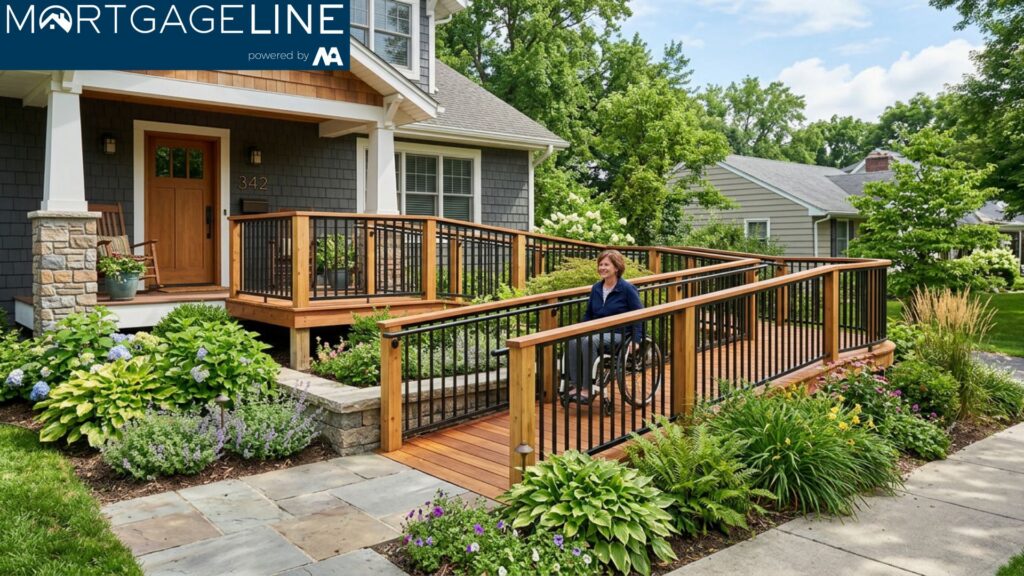
- Exterior Ramping systems: $3,000 to $12,000 depending on materials (aluminum vs. poured concrete) and slope requirements.
- Stairlifts and Residential Elevators: Straight stairlifts average $4,000, while custom curved systems or through-floor elevators can exceed $25,000.
- Accessible Bathrooms (Wet Rooms): Converting a standard bathroom to a zero-threshold roll-in shower with reinforced structural blocking typically ranges from $15,000 to $35,000.
- Doorway Widening: $800 to $1,500 per doorway, factoring in drywall repair, trim, and structural header adjustments.
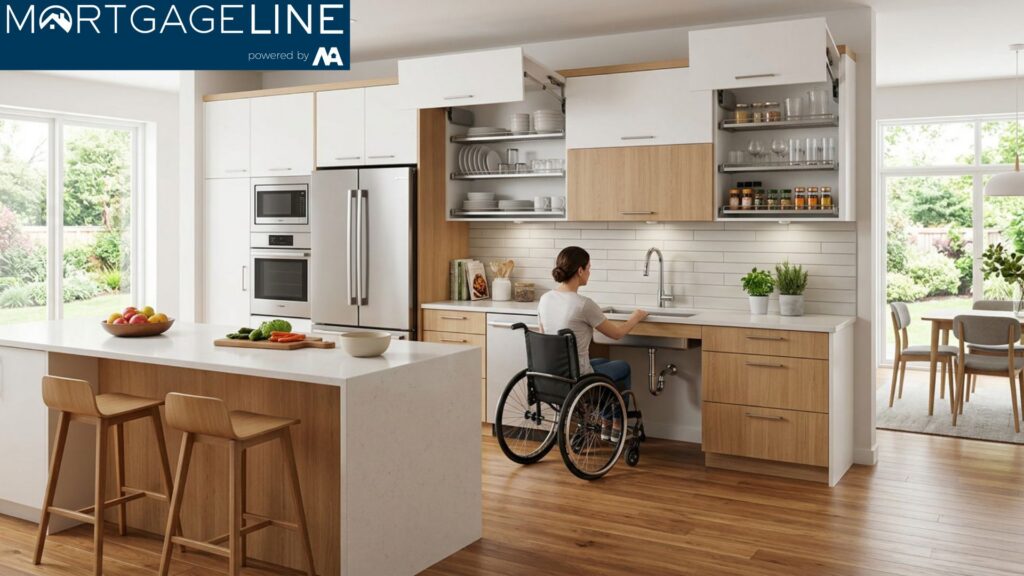
- Kitchen Lowering: Adapting countertops, sinks, and cabinetry for wheelchair clearance generally costs between $10,000 and $25,000.
Navigating Alternative Lending with Disability Income
A primary hurdle families face following a severe diagnosis is a sudden shift in employment status. Moving from a standard T4 salary to Long-Term Disability (LTD) benefits, Canada Pension Plan Disability (CPP-D), or AISH fundamentally alters traditional borrowing capacity. Standard banking institutions rigidly adhere to standard debt-servicing metrics, often denying new credit lines even if the property holds substantial equity.
Alternative and private lending institutions approach underwriting differently. Rather than focusing exclusively on employment tenure, they prioritize the Loan-to-Value (LTV) ratio of the asset. Furthermore, specialized lenders often “gross up” non-taxable disability income when calculating affordability, recognizing that a dollar of tax-free AISH provides more net cash flow than a dollar of taxable employment income.
If the interior requires extensive modification prior to an appraisal, homeowners should explore private lenders with flexible appraisal requirements, ensuring that funds can be accessed based on the home’s baseline equity rather than its current state of construction.
Step-by-Step Process for Funding Accessible Renovations
Transitioning from a diagnosis to a fully modified living space requires a methodical approach to ensure capital is utilized efficiently and modifications meet proper building codes.
- Obtain an Occupational Therapist Assessment: Before hiring contractors, consult an occupational therapist (OT). An OT will assess the individual’s specific mobility limitations and provide a detailed report outlining necessary environmental adaptations.
- Gather Specialized Contractor Quotes: Source minimum three quotes from contractors who specialize specifically in barrier-free design. Standard renovators may lack knowledge regarding proper turning radiuses or reinforced blocking.
- Apply for Grants and Tax Credits: Maximize “free” money first. Apply for RAMP and ensure you understand the federal Home Accessibility Tax Credit (HATC), which allows homeowners to claim up to $20,000 in eligible expenses for a non-refundable tax credit.
- Secure Equity Financing: Calculate the funding shortfall and apply for a subordinate loan. Legal representation will ensure the new lien is properly registered on the title. Understanding the process of subordinating a mortgage is crucial to protect all parties.
- Execute and Inspect: Disburse funds to contractors in tranches based on project milestones. Ensure all structural changes pass municipal safety inspections.
Potential Pitfalls and Edge Cases
While utilizing built-up property wealth solves the immediate liquidity problem, homeowners must be aware of specific legal and property constraints in the local market.
Condominium Board Regulations
For individuals residing in multi-family units or townhouses, exterior modifications (such as ramps or widened exterior doors) require strict approval from the condominium corporation. Before committing funds, secure written consent from the board. Furthermore, borrowers must ensure they are in good financial standing with their condo association; falling behind on dues can trigger severe legal consequences. If existing fees are an issue, learn how paying arrears can prevent property complications before applying for new financing.
Zoning and Setback Requirements
Exterior lifts and extensive ramp systems can occasionally violate municipal property line setback regulations. While the city often grants variances for medical necessity, the permitting process takes time. Disbursing non-refundable contractor deposits prior to securing a municipal variance is a high-risk scenario.
Conclusion
Adapting to a new physical reality following a medical diagnosis is inherently stressful, but financing the necessary residential modifications does not have to be an insurmountable hurdle. By utilizing a subordinate lending strategy, homeowners can extract vital capital from their property’s equity, bypass the rigid income constraints of traditional banks, and create a safe, barrier-free living environment. If you are navigating the complexities of equity extraction for medical adaptations, professional guidance is essential to ensure you secure the best possible terms without jeopardizing your primary financial stability. Contact our team today to discuss your specific funding requirements and property valuation.
Frequently Asked Questions
Can I qualify for equity borrowing if I am solely on long-term disability income?
Yes. Private and alternative lenders focus heavily on the equity in the home rather than traditional employment metrics. Non-taxable disability income, such as AISH or CPP-D, is frequently accepted and often grossed up during the qualification process.
Will my primary bank penalize me for taking out a subordinate loan?
No, provided the new loan is placed in the secondary position on the property title. Your first mortgage remains completely untouched, allowing you to maintain your current interest rate and amortization schedule without triggering breakage penalties.
Can I use the borrowed funds to pay for medical equipment alongside home modifications?
Absolutely. Once the funds from an equity loan are disbursed into your account, there are no restrictions on how the capital is utilized. It can cover structural changes, specialized vehicles, or in-home medical equipment.
How fast can capital be accessed for emergency renovations?
Because alternative lending requires less bureaucratic underwriting than major banks, funds can often be secured and deposited within 10 to 14 business days, depending on the speed of property appraisal and title registration.
Do home accessibility modifications increase property value?
It depends on the modification. High-quality, aesthetically pleasing retrofits like main-floor wet rooms or residential elevators can increase value. However, highly customized or industrial-looking medical adaptations may appeal to a smaller segment of future buyers.
Are these financing costs tax-deductible?
The interest on a personal residential loan is generally not tax-deductible in Canada unless the funds are used for investment purposes. However, the renovation costs themselves may qualify for the federal Home Accessibility Tax Credit (HATC).
References
- Statistics Canada. (2023). Canadian Survey on Disability. Retrieved from https://www.statcan.gc.ca
- Canada Mortgage and Housing Corporation (CMHC). Accessible and Adaptable Housing Guidelines. Retrieved from https://www.cmhc-schl.gc.ca
- Government of Alberta. Residential Access Modification Program (RAMP). Retrieved from https://www.alberta.ca
- Rick Hansen Foundation. Universal Design and Built Environments. Retrieved from https://www.rickhansen.com