Utilizing the accumulated value of a property provides seniors with immediate, tax-free capital to finance daily nursing assistance, essential accessibility modifications, and specialized medical treatments. By securing a loan against their real estate, aging individuals in Alberta can comfortably remain in their primary residences and receive comprehensive medical assistance without depleting fixed-income resources or prematurely liquidating their retirement portfolios.
Key Takeaways
- Immediate Liquidity: Property wealth can be converted into accessible funds to cover high monthly nursing and support costs.
- Aging in Place: Financing allows for structural home modifications, enabling seniors to maintain independence safely.
- Tax-Free Capital: Borrowed funds are not classified as taxable income, protecting Old Age Security (OAS) and Guaranteed Income Supplement (GIS) benefits.
- Flexible Disbursement: Borrowers can choose between lump-sum disbursements or revolving credit lines based on their ongoing medical expenses.
- Asset Retention: Seniors retain full ownership and title of their residence while accessing the necessary capital for their care.
The Rising Cost of Senior Support Services in Alberta
As the demographic landscape shifts dramatically in 2026, the financial requirements for maintaining a high quality of life during one’s twilight years have escalated. According to demographic projections from Statistics Canada, individuals aged 65 and older represent a rapidly growing segment of the population, placing unprecedented demand on localized healthcare infrastructure. This surge in demand has naturally influenced the economics of specialized care, particularly in urban centers where specialized personnel are in high demand.
Currently, private in-home personal support workers and registered nurses command hourly rates that can swiftly accumulate into substantial monthly liabilities. For an individual requiring comprehensive daily assistance, specialized dementia care, or palliative support, out-of-pocket expenses can easily range between $4,000 and $8,000 per month. Without adequate financial preparation, these recurring costs can rapidly erode fixed pensions and liquid retirement savings. Consequently, tapping into real estate assets has transitioned from a last-resort measure to a strategic financial planning tool for families.

Mechanisms of Property-Backed Borrowing
A property-backed loan allows a homeowner to borrow money by leveraging the difference between the current market value of their residence and any outstanding mortgage balance. In financial terminology, this available margin is referred to as equity. Financial institutions calculate the maximum borrowing limit using a Loan-to-Value (LTV) ratio. Typically, traditional and alternative lenders permit homeowners to access up to 80% of their property’s appraised value, minus any existing encumbrances.
Because the debt is secured by a tangible asset, lenders face reduced risk, which often translates to more favorable interest rates compared to unsecured personal loans or credit cards. For aging populations, this mechanism is particularly advantageous because qualification often relies heavily on the asset’s robust value rather than stringent employment income verification, which fixed-income seniors may struggle to provide. Understanding the nuances of current borrowing rates is essential for mapping out a sustainable long-term budget.
Distinguishing Between Lump-Sum Loans and Revolving Credit
When engineering a financial strategy for medical support, homeowners generally choose between two primary instruments: a fixed-term loan or a revolving line of credit. A traditional equity loan dispurses the approved principal in a single lump sum. This structure features a fixed amortization schedule, predictable monthly payments, and a locked-in interest rate. It is ideal for covering large, one-time expenses, such as comprehensive accessibility renovations or purchasing specialized medical equipment.
Conversely, a revolving line of credit provides flexibility. Borrowers are approved for a maximum credit limit but only draw funds as needed, paying interest exclusively on the withdrawn amount. This dynamic approach perfectly accommodates the variable nature of ongoing nursing care, where monthly hours may fluctuate based on the patient’s immediate health status. For a deeper technical comparison, reviewing the differences between a secondary mortgage instrument and a line of credit can help determine the most efficient vehicle for specific medical needs.
Why Aging in Place is the Preferred Strategy
The institutionalization of aging individuals into long-term care facilities is increasingly viewed as an option of absolute necessity rather than preference. Retaining autonomy within a familiar environment significantly contributes to positive cognitive and emotional health outcomes. As Dr. Samir Sinha, Director of Geriatrics at Sinai Health System, explains: “The vast majority of older Canadians want to do everything they can to age in place.” Familiar surroundings mitigate the disorientation and stress often associated with relocating to an assisted living facility.
Furthermore, maintaining the primary residence allows the property to continue appreciating in the local market. By strategically deploying a fraction of the home’s value to pay for specialized support, seniors protect their principal asset. This approach aligns with broader economic observations; as Tiff Macklem, Governor of the Bank of Canada, has emphasized during various economic briefings, household debt levels and asset management remain critical considerations for Canadians navigating fluctuating economic environments. Strategic borrowing against appreciating assets ensures long-term stability.
Types of Medical and Domestic Support Funded
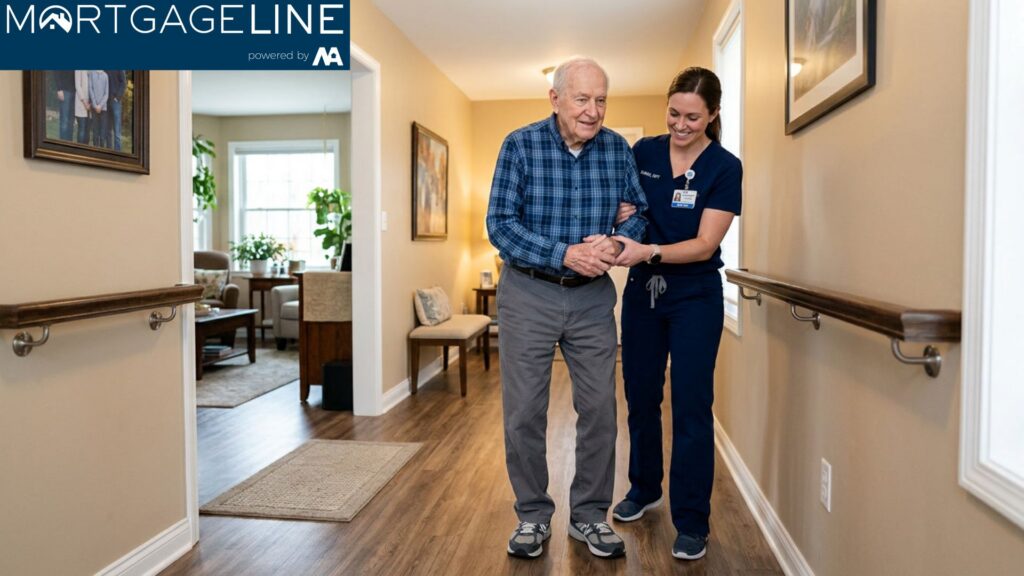
The liquidity generated from property wealth can be allocated across a broad spectrum of services designed to ensure comfort, safety, and medical stability. These allocations generally fall into three distinct categories: specialized medical care, daily living assistance, and physical property modifications.
1. Specialized Medical and Nursing Care
Many seniors require consistent monitoring for chronic conditions, medication administration, or post-surgical rehabilitation. Property-backed funds can be used to hire Registered Nurses (RNs) or Licensed Practical Nurses (LPNs) for in-house visits. This ensures clinical-level oversight without the institutional constraints of a hospital ward. It also covers out-of-pocket expenses for specialized therapies, such as mobility rehabilitation or cognitive behavioral therapy.
2. Activities of Daily Living (ADL) Assistance
Beyond clinical requirements, the deterioration of mobility often necessitates help with basic daily functions. Capital can be directed toward Personal Support Workers (PSWs) who assist with bathing, dressing, meal preparation, and light housekeeping. This level of support prevents physical strain and drastically reduces the likelihood of residential accidents, which are a leading cause of emergency hospitalizations among the elderly.
3. Structural and Accessibility Modifications
To safely accommodate declining mobility, homes frequently require immediate physical adjustments. Common renovations include the installation of stairlifts, walk-in therapeutic tubs, widened doorways for wheelchair access, and external wheelchair ramps. Financing these large-scale adjustments is one of the most common uses for a lump-sum disbursement. Sometimes, older properties require foundational updates to safely support new medical equipment, making structural repair financing a prerequisite for comprehensive accessibility conversions.
Comparing Financial Instruments for Seniors
Navigating the financial ecosystem requires a clear understanding of how different lending products operate, particularly concerning repayment obligations and risk profiles. Below is a comparison of the three most utilized instruments for funding senior care.
| Feature | Standard Equity Loan | Revolving Line of Credit | Reverse Mortgage |
|---|---|---|---|
| Disbursement | Single lump-sum | Draw as needed up to a limit | Lump-sum, scheduled, or revolving |
| Repayment Structure | Fixed monthly principal and interest | Interest-only on drawn funds | No monthly payments required |
| Interest Rate Risk | Typically fixed rate | Typically variable rate | Fixed or variable options available |
| Best Use Case | Major accessibility renovations | Ongoing, variable hourly care costs | Seniors with limited cash flow |
While reverse products offer the distinct advantage of requiring no immediate monthly payments, they rapidly compound interest, which can significantly erode estate value over time. It is crucial for families to understand the legal and financial ramifications of these products. Seeking independent legal counsel is highly recommended, and resources regarding legal protections for seniors should be carefully reviewed before execution.
Step-by-Step Guide to Securing Care Funding
Implementing a property-backed financial strategy involves a systematic process to ensure compliance, secure the most favorable terms, and protect the homeowner’s long-term interests.
- Comprehensive Medical Assessment: Begin by consulting with a geriatric care manager or a representative from Alberta Health Services to determine the exact level of support required. This creates a baseline for budgeting.
- Financial Audit and Budgeting: Calculate the projected monthly costs of the required care over a three-to-five-year horizon. Factor in potential increases in care intensity as the individual ages.
- Property Valuation: Engage an independent, certified appraiser to determine the current fair market value of the residence. The total available borrowing power will be heavily dictated by this localized valuation.
- Lender Selection and Application: Approach specialized brokers who understand the unique income profiles of pensioners. Alternative lenders are often more accommodating to fixed-income applicants than Tier-1 banking institutions. Residents in surrounding municipalities may also explore localized options, such as regional alternative lending partners.
- Legal Review and Disbursement: Retain a real estate attorney to review the borrowing terms, ensuring no predatory clauses exist regarding default triggers or penalty fees. Once finalized, funds are disbursed and can be immediately allocated to care providers.

Risks and Strategic Estate Planning
While unlocking property wealth is a powerful mechanism for maintaining quality of life, it inherently involves encumbering a major asset with debt. As David O’Toole, former President and CEO at the Canadian Institute for Health Information (CIHI), has noted in institutional reports, health systems and individuals alike must adapt sustainably to the shifting demographics of an aging population. This adaptation requires prudent risk management.
The primary risk involves the accumulation of debt that outpaces the property’s appreciation, particularly in a volatile housing market. If a variable-rate instrument is utilized, rising prime rates can increase monthly carrying costs, potentially straining fixed pension incomes. Homeowners must stress-test their budget against potential interest rate hikes.
Impact on Estate Transfer
Fiduciary responsibility dictates that seniors discuss these financial maneuvers with their beneficiaries. Borrowing against the home reduces the net equity that will eventually be transferred to heirs. When the estate is settled, the outstanding loan balance must be cleared before the remaining proceeds are distributed. Proper documentation and a clearly articulated will are essential to prevent familial disputes and ensure a smooth transition of assets. For families managing complex inheritances, understanding how to clear outstanding estate liabilities is a critical component of end-of-life financial planning.
Frequently Asked Questions
Does tapping into my property value affect my government pensions?
No. Funds acquired through property-backed lending are classified as debt disbursement, not taxable income. Therefore, they do not trigger clawbacks on Old Age Security (OAS) or the Guaranteed Income Supplement (GIS).
Can I use the funds to pay a family member for caregiving?
Yes. Once the capital is disbursed into your personal accounts, you maintain complete autonomy over its allocation. You can formally employ and compensate family members who leave their careers to provide full-time assistance.
What happens if the property value drops after I secure the loan?
If you have a fixed loan, a drop in market value does not impact your current terms or require immediate repayment. However, if you attempt to refinance or sell the property, the reduced equity margin could present financial challenges.
Are there age restrictions for securing this type of financing?
Traditional property loans and lines of credit do not have strict age limits, provided you meet the equity and debt-service requirements. Reverse products, however, typically require the youngest borrower to be at least 55 years old.
Can I lose my home if I use it to fund my care?
Any debt secured against real estate carries the inherent risk of enforcement if the borrower defaults on the agreed-upon terms. Maintaining consistent payments on traditional loans, property taxes, and insurance is mandatory to prevent the lender from initiating recovery proceedings.
Conclusion
Navigating the intersection of declining health and financial sustainability is one of the most complex challenges facing older generations today. Utilizing property wealth to fund elder care provides a dignified, viable pathway for seniors to receive critical medical support while remaining in the comfort of their own homes. By strategically leveraging real estate, families can bridge the gap between fixed pension incomes and the escalating costs of specialized nursing and accessibility modifications. Whether opting for a lump-sum disbursement for major renovations or a revolving credit line for ongoing hourly care, professional guidance is essential to architect a plan that protects both the patient’s well-being and their financial legacy.
If you or a loved one are evaluating options to finance essential care and wish to explore how your property can facilitate this transition securely, we are here to help you navigate the complexities of alternative lending. Contact us today for a confidential consultation to discuss your specific needs and safeguard your future.
References
- Statistics Canada. Demographic Projections and Aging Population Data. https://www.statcan.gc.ca
- Canadian Institute for Health Information (CIHI). Reports on Health Expenditures and Aging. https://www.cihi.ca
- Alberta Health Services. Senior Care Guidelines and Resources. https://www.albertahealthservices.ca
- Financial Consumer Agency of Canada. Understanding Borrowing and Equity. https://www.canada.ca
- Canadian Mortgage and Housing Corporation (CMHC). Housing Wealth and Affordability Research. https://www.cmhc-schl.gc.ca