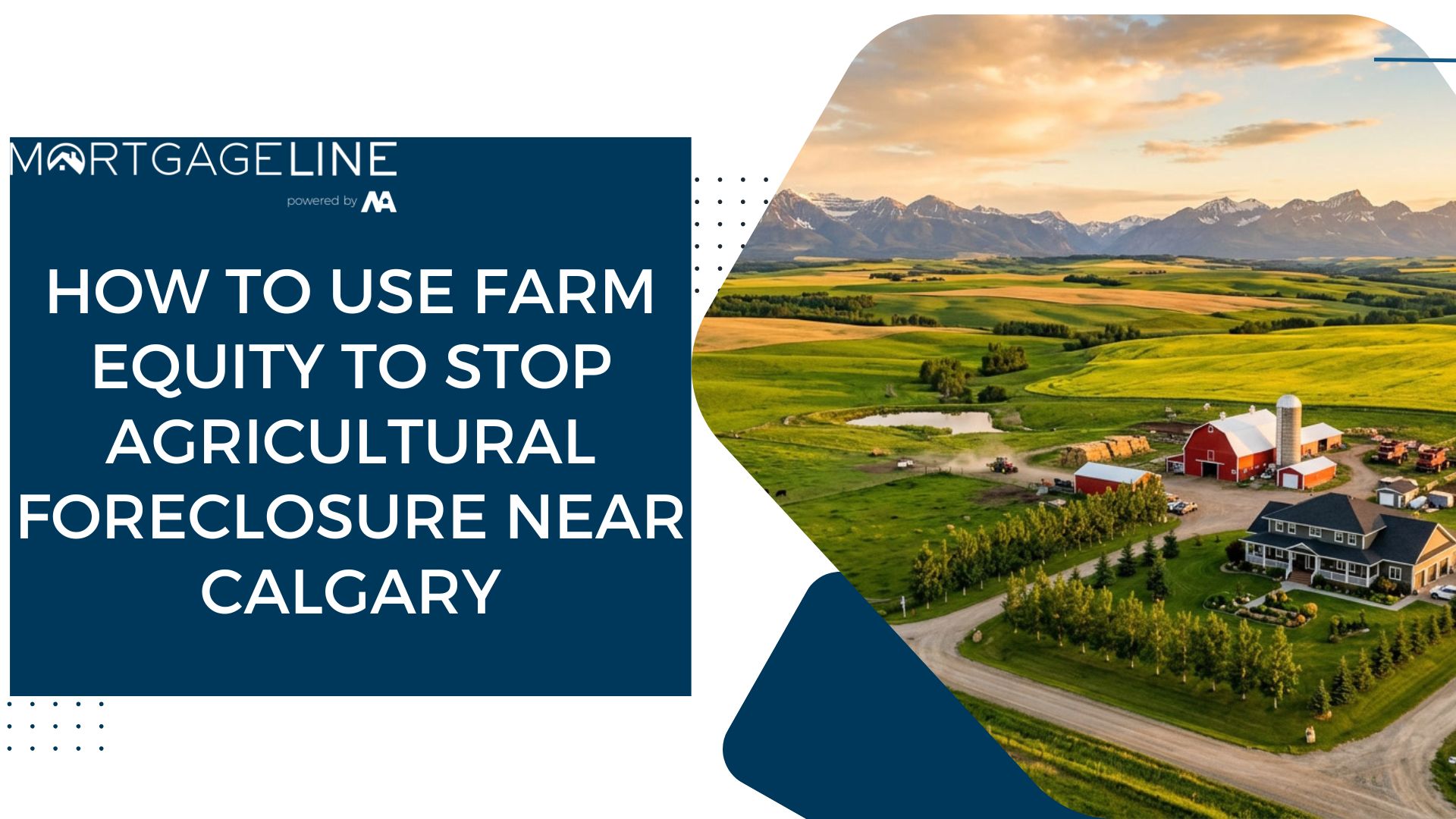
To stop the loss of an agricultural property near Calgary, landowners can leverage the accumulated equity in their land, buildings, and equipment to secure alternative financing. By tapping into this farm equity through a specialized loan, owners can immediately pay off mortgage arrears, satisfying the lender’s Statement of Claim and permanently halting the legal proceedings.
Key Takeaways
- Immediate Halting of Proceedings: Securing equity financing allows you to pay out arrears before the redemption period expires.
- Asset Leverage: Undeveloped land, outbuildings, and specialized infrastructure hold untapped capital that alternative lenders will finance.
- Flexible Qualification: Private agricultural lenders focus on the land’s Loan-to-Value (LTV) ratio rather than the farmer’s immediate cash flow or credit score.
- Consolidation Opportunity: Borrowed equity can be used to restructure debt, settle property tax arrears, and fund operational expenses for the upcoming season.
- Time is Critical: Agricultural foreclosures move rapidly; obtaining an independent appraisal early is the most vital step in the defense process.
The Economic Reality of Southern Alberta Agriculture in 2026
Operating an agricultural enterprise in the Calgary periphery—such as Rocky View County, Foothills County, or Wheatland County—presents a unique set of financial pressures. According to recent 2026 data from Statistics Canada, outstanding farm debt across the country has reached an unprecedented $142 billion, with Alberta accounting for roughly $34.2 billion of that total. Fluctuating commodity prices, carbon taxation, and unpredictable climate patterns have strained operational cash flows for many family-run operations.
Despite cash flow challenges, the underlying asset values remain remarkably strong. The proximity to Calgary’s expanding urban boundary means that rural acreage holds significant intrinsic value. In some areas, prime agricultural land is valued at over $15,000 per acre, while smaller acreages closer to the city limits command even higher premiums. This disparity creates a situation where a farmer might be “cash poor” but “equity rich.”
“Agricultural foreclosures require immediate action because the specialized nature of farm assets means traditional lenders are quicker to force a sale to recover their funds,” explains Marcus Sterling, Senior Agricultural Economist at Prairie Financial Group. “However, that same high asset value is precisely what can save the operation if leveraged correctly with private capital.”

Understanding the Mechanics of Farm Foreclosure
When a farm operation misses consecutive mortgage payments, the primary lender (typically a Tier A bank or credit union) will initiate legal action by filing a Statement of Claim. This legal document formally demands the repayment of the arrears or the entire mortgage balance. Once served, the property owner has a limited window to file a Statement of Defence or Demand for Notice.
In Alberta, the courts generally grant a Redemption Period—a specific timeframe during which the borrower can “redeem” the mortgage by paying the outstanding debt. For agricultural properties, this period typically lasts between 150 and 180 days, though it can be shortened if the property is deemed abandoned or if the equity margin is excessively thin. Understanding the foreclosure timeline for Calgary properties is essential for mapping out a survival strategy.
Failing to secure funds before the redemption period expires results in the court issuing a Final Order for Foreclosure, transferring the title to the lender, or an Order for Sale, allowing the property to be listed on the open market. Successfully responding to a Statement of Claim often hinges entirely on securing replacement financing through existing equity.
Assessing and Unlocking Hidden Agricultural Value
Traditional banks evaluate loan applications based heavily on Debt Service Coverage Ratios (DSCR) and historical tax returns. When a farm is in distress, these metrics look unfavorable. Conversely, specialized equity lenders evaluate the “hard assets.” To successfully extract capital, you must identify every source of value on the property.
1. Raw Land and Pasture
The most significant source of equity is the land itself. Lenders will differentiate between cultivated land, native pasture, and non-arable land. A professional agrologist or specialized appraiser will determine the current market value based on comparable sales in the Calgary region. In 2026, lenders generally allow borrowing up to 65% of the land’s appraised value.
2. Outbuildings and Specialized Infrastructure
Modern farming requires heavy infrastructure. Heated shops, specialized grain storage bins, dairy parlors, and equestrian arenas add substantial value to a property. If your property features substantial infrastructure, you may be uniquely positioned to secure a second mortgage on a rural acreage based on replacement costs and utility.
3. Equipment and Chattel
While real estate mortgages are tied to land, some alternative lenders offer cross-collateralization. This means they will register a lien against both the land and high-value movable assets, such as combines, tractors, or seeders. Using real estate equity to assist in financing farm equipment debt consolidation is a common strategy to free up monthly cash flow.
Step-by-Step Guide: Accessing Capital to Halt Legal Action
Time is the enemy when dealing with property litigation. To bypass traditional banking delays and access capital efficiently, follow these specialized steps:
- Quantify the Exact Arrears: Request a payout statement from your current lender’s legal counsel. This document will detail the exact principal, missed payments, accumulated interest, and the lender’s legal fees incurred up to that date.
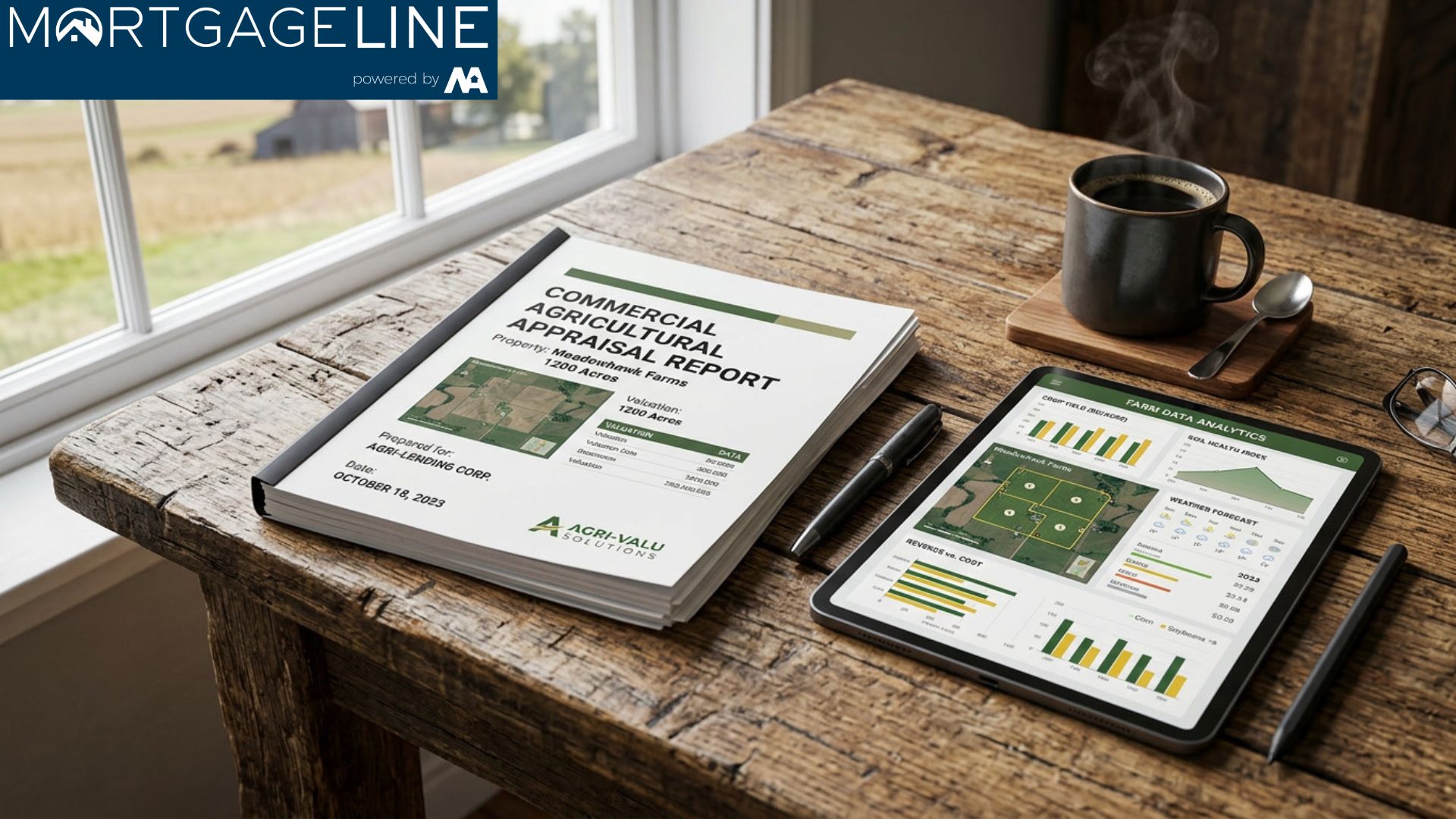
- Order a Commercial Agricultural Appraisal: Do not rely on property tax assessments, as they often lag behind actual market values. Commission a certified appraisal from a firm experienced in rural Calgary properties. This document is the cornerstone of your financing application.
- Engage an Alternative Mortgage Broker: Seek out a brokerage that specializes in distressed rural properties. They possess the network of private agricultural syndicates and high-net-worth lenders who are willing to finance properties currently in default.
- Structure the Loan Term: Private equity loans are typically short-term (12 to 24 months). The goal is to use this temporary financing to clear the foreclosure, stabilize the farm’s operations, and improve credit so you can eventually transition back to a traditional, lower-rate lender.
- Execute the Payout: Once approved, your real estate lawyer will receive the funds, pay the exact amount demanded in the Statement of Claim, and file a discontinuance of the legal action with the Court of King’s Bench.
“By leveraging the raw land value that families have built over generations, farmers can bypass the stringent stress tests of Tier 1 banks and secure the capital needed to stay operational,” notes Sarah Jenkins, Lead Underwriter at Alberta Agri-Finance.
Comparing Agricultural Lending Options
When facing a forced sale, understanding the differences between lender tiers is vital. Traditional organizations like Farm Credit Canada offer excellent long-term products, but they cannot legally lend to properties currently in active foreclosure. Here is a breakdown of the differences in 2026:
| Feature | Traditional Bank / FCC | Private Equity Lender |
|---|---|---|
| Primary Qualification | Income, Tax Returns, Credit Score | Property Appraised Value (LTV) |
| Speed of Funding | 45 – 90 Days | 7 – 21 Days |
| Foreclosure Stance | Automatic Rejection | Willing to Finance |
| Interest Rates (2026) | 6.5% – 8.5% | 10.0% – 14.0% |
| Maximum LTV | Up to 75% | Typically capped at 65% |

Risk Mitigation and Legal Considerations
While extracting capital is an effective rescue mechanism, it is not without risks. Private financing carries higher interest rates and lender fees. Before proceeding, it is crucial to carefully evaluate the pros and cons of alternative financing to ensure the farm can sustain the new debt structure.
Furthermore, the Government of Alberta requires specific legal protocols when placing secondary financing on agricultural land. To prevent predatory lending practices, borrowers are heavily encouraged—and often required by the lender—to seek independent counsel. Obtaining independent legal advice ensures that all parties fully understand the terms of the private mortgage, the exit strategy, and the consequences of future default.
You must also consult an agricultural accountant regarding the tax implications of additional financing. The Canada Revenue Agency allows interest paid on loans used for business operations to be deducted as a farming expense. Structuring the loan correctly can provide significant tax relief during the recovery phase.
“The key to surviving a bad crop year or unexpected livestock disease isn’t just having equity; it’s knowing how to extract it efficiently before the courts issue a final order,” advises Dr. Robert Vance, Professor of Agricultural Business at the University of Calgary. “Farmers must view private equity as a temporary bridge, not a permanent foundation.”
Frequently Asked Questions (FAQ)
Can I get a loan if my credit score has dropped due to missed payments?
Yes. Private agricultural lenders base their approval primarily on the Loan-to-Value (LTV) ratio of the property rather than your personal credit score. As long as there is sufficient equity in the land, bad credit will not disqualify you.
How quickly can equity funding be secured to stop legal action?
In emergency situations, private lenders can appraise the property, approve the file, and release funds to your lawyer within 7 to 21 days. This rapid deployment is specifically designed to beat court deadlines.
Do I lose ownership of my farm if I take out an equity loan?
No. You retain full ownership and title to your farm. The lender simply registers a mortgage charge against the property title as security, exactly as a traditional bank does.
What happens if I cannot pay off the private loan at the end of the 1-year term?
Most private agricultural lenders offer the option to renew the mortgage for another term, provided you have maintained good standing with your interest payments. The ultimate goal, however, is to refinance back to a standard bank once your operations stabilize.
Can I use the borrowed funds for operational costs, or just to pay arrears?
You can use the funds for multiple purposes. After the legal arrears and lender fees are paid to halt the foreclosure, any remaining approved funds can be used for buying seed, repairing equipment, or managing daily operational cash flow.
Conclusion
Facing the loss of a multi-generational agricultural operation is one of the most stressful experiences a family can endure. However, the strong land values surrounding the Calgary area provide a powerful lifeline. By understanding how to pivot away from traditional bank metrics and leverage the raw equity locked in your land, you can satisfy creditors, halt court proceedings, and secure the breathing room needed to return your operation to profitability in 2026.
If you are currently facing legal action and need to explore your financing options before time runs out, contact us today. Our team specializes in connecting distressed rural properties with the private capital needed to save the farm.
References
- Statistics Canada. (2026). “Farm Debt Outstanding and Agricultural Economic Indicators.” Retrieved from https://www.statcan.gc.ca.
- Farm Credit Canada. (2026). “Agricultural Lending and Real Estate Values.” Retrieved from https://www.fcc-fac.ca.
- Government of Alberta. (2026). “Agriculture and Forestry: Land Valuation Trends.” Retrieved from https://www.alberta.ca.
- Canada Revenue Agency. (2026). “Farming Income and Tax Deductions.” Retrieved from https://www.canada.ca.
- Sterling, Marcus. Senior Agricultural Economist, Prairie Financial Group. (Interview, 2026).
- Jenkins, Sarah. Lead Underwriter, Alberta Agri-Finance. (Interview, 2026).
- Vance, Dr. Robert. Professor of Agricultural Business, University of Calgary. (Academic Publication, 2026).