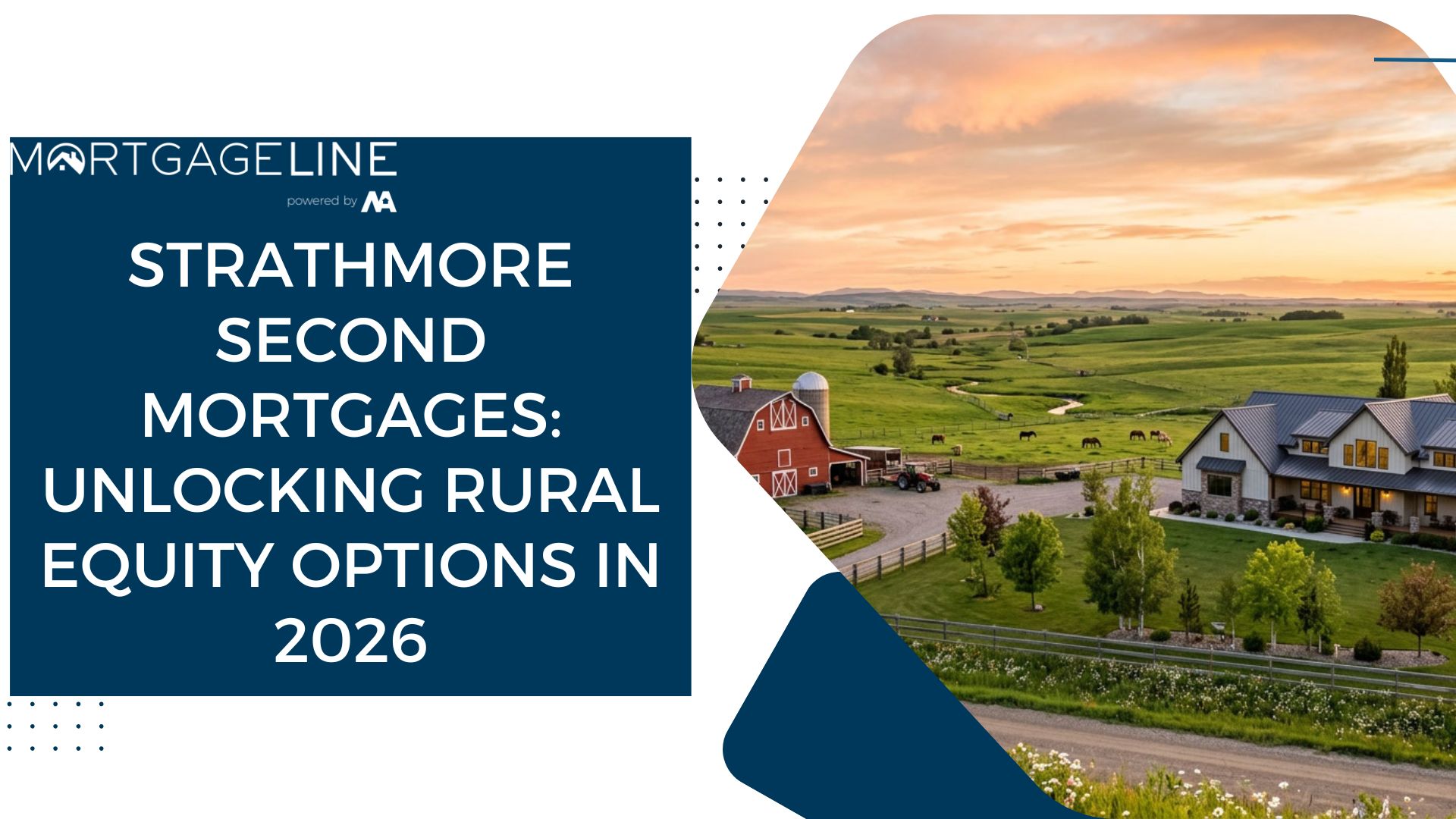
Homeowners and landowners in Strathmore, Alberta, possess a unique financial asset: rural and semi-rural property equity. Leveraging this equity through a secondary charge allows property owners to access substantial capital without disturbing their existing, low-interest first mortgages. Whether you own a multi-acre hobby farm in Wheatland County or a residential property within Strathmore town limits, understanding how to navigate the specialized landscape of rural secondary financing is essential for securing competitive terms and protecting your real estate investment.
- Rural Equity Accessibility: Strathmore property owners can access up to 75% of their property’s appraised value through specialized secondary financing.
- LTV Variations: Loan-to-Value (LTV) limits are highly dependent on property type, ranging from 55% for raw land to 75% for fully serviced residential acreages.
- Essential Documentation: Successful approvals require potable water certificates, septic system inspections, and specialized rural appraisals.
- Flexible Capital Uses: Common applications include infrastructure upgrades, debt consolidation, and financing agricultural operations.
- Lender Landscape: Private lenders dominate the rural secondary market due to traditional banks’ strict regulatory constraints on non-urban properties.
Understanding Rural Equity in the Strathmore Real Estate Market
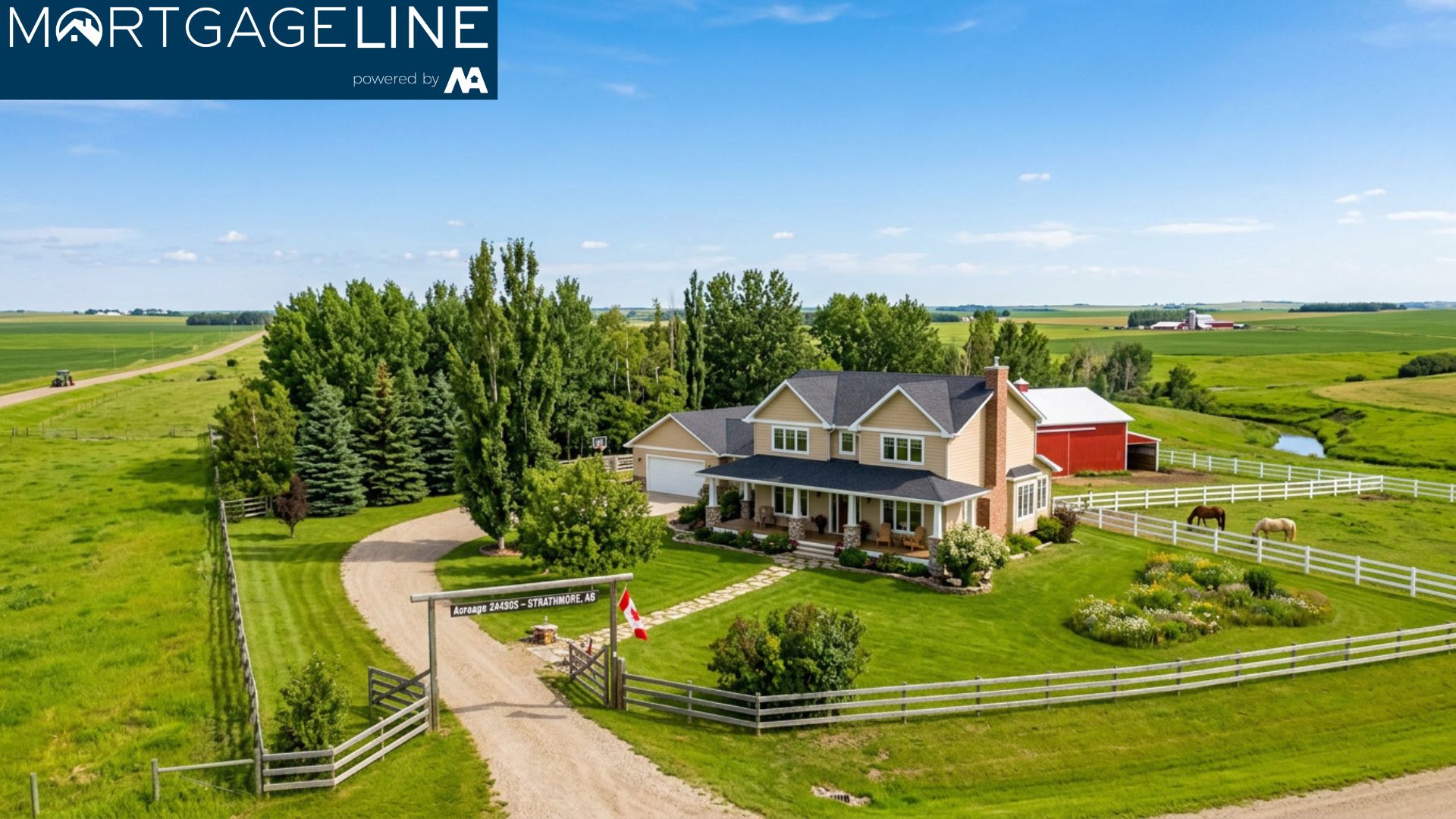
Strathmore, located approximately 40 kilometers east of Calgary along the Trans-Canada Highway, has experienced steady growth. According to demographic data from Statistics Canada, the region’s expansion has driven a diverse real estate market that blends traditional suburban neighborhoods with expansive agricultural tracts and country residential acreages. This diversity means that “equity” looks very different from one property to the next.
For a standard suburban home in Strathmore, determining equity is relatively straightforward. However, for rural properties in Wheatland County, equity calculations must account for land acreage, outbuildings, zoning bylaws, and servicing. Traditional financial institutions often view rural properties as higher-risk assets due to longer exposure times on the market and subjective valuations. Consequently, securing a secondary loan on a rural acreage financing setup requires working with lenders who specialize in agricultural and country residential valuations.
As Sarah Jenkins, Senior Underwriter at Alberta Rural Capital, explains: “Valuing rural properties in Strathmore requires looking beyond standard suburban metrics. Lenders must evaluate water potability, septic system integrity, and zoning restrictions before approving secondary financing. A 10-acre parcel with a functional well is viewed entirely differently than a dry parcel, even if they are adjacent.”
How Second Mortgages Work for Rural Properties
A second mortgage is a subordinate loan secured against your property. In the event of default, the primary mortgage holder is paid first, while the secondary lender is compensated from the remaining equity. Because of this subordinate position, lenders charge higher interest rates to compensate for the increased risk. In 2026, typical interest rates for private secondary financing on rural properties range between 9.5% and 13.0%, depending on the property’s location, condition, and overall Loan-to-Value (LTV) ratio.
For rural properties, LTV limits are generally more conservative than those applied to urban homes. While an urban property might qualify for up to 80% LTV, rural properties in Strathmore typically max out at 65% to 75% LTV. This buffer protects the lender against potential market fluctuations and the higher costs associated with liquidating rural real estate. If your Strathmore acreage is valued at $900,000 and your primary mortgage is $400,000, a lender operating at a 70% LTV limit would allow you to access up to $230,000 in additional equity, calculated as ($900,000 × 0.70) – $400,000.
Common Uses for Strathmore Rural Equity
Rural property owners face unique expenses that urban homeowners rarely encounter. Accessing secondary financing provides a lump sum of capital that can be deployed to enhance property value, stabilize cash flow, or address urgent financial obligations. Below are the most common ways Strathmore residents utilize their rural equity.
Upgrading Rural Infrastructure and Repairs
Maintaining a rural property requires significant capital. From drilling a new water well to replacing aging septic fields, infrastructure repairs cannot be delayed. Homeowners frequently use secondary loans to fund these critical upgrades, ensuring the property remains habitable and compliant with environmental regulations. Additionally, many owners use these funds to install solar arrays or energy-efficient heating systems, taking advantage of rural sustainability initiatives.
Financing Farm Operations and Equipment
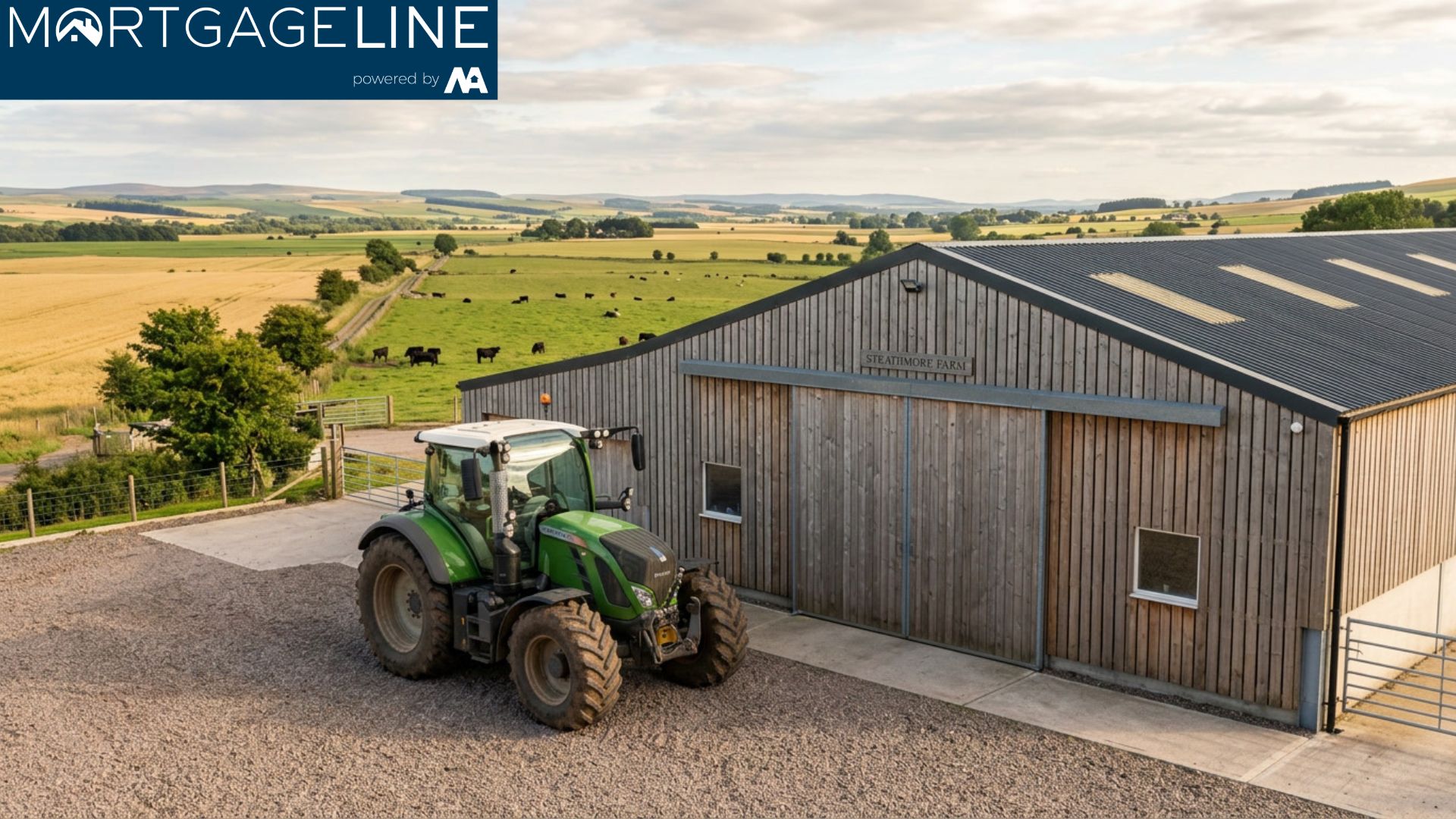
For hobby farmers and agricultural producers in Wheatland County, cash flow can be highly seasonal. Utilizing equity for financing farm equipment, purchasing seed, or upgrading livestock facilities is a common practice. This injection of capital allows operators to maintain productivity without relying on high-interest commercial operating lines or equipment dealership financing programs.
Consolidating High-Interest Debt
With the rising cost of living, many households carry high-interest credit card debt or unsecured personal lines of credit. By consolidating these debts into a single, lower-interest secondary mortgage, Strathmore homeowners can significantly reduce their monthly debt service payments. This strategy improves overall household cash flow while simplifying monthly financial management.
Key Challenges in Securing Secondary Financing on Acreages
Securing secondary financing on a rural property involves navigating hurdles that do not exist in urban centers. Lenders must perform extensive due diligence to ensure the collateral is viable and marketable. Understanding these challenges beforehand can dramatically increase your chances of approval.
According to Marcus Vance, Director of Risk Assessment at Prairie Equity Partners: “Second mortgages on acreages offer incredible flexibility for business owners or farmers needing quick capital, but borrowers must understand that LTV thresholds are strictly enforced due to market liquidity differences. A property that takes six months to sell requires a larger equity cushion than one that sells in three weeks.”
- Water and Septic Verification: Lenders require proof of a reliable, potable water source. This typically involves a recent water flow test (showing adequate gallons per minute) and a chemical/bacteriological analysis. Similarly, the septic system must be certified as functional by a licensed technician.
- Zoning and Permitting: Properties must comply with Wheatland County zoning bylaws. Unpermitted outbuildings, secondary suites, or unauthorized commercial activities can stall the underwriting process.
- Access and Road Maintenance: The property must have year-round, dedicated public road access. Properties accessed via unregistered easements or unmaintained seasonal roads are generally excluded from traditional and private lending programs.
- Mobile and Manufactured Homes: If the primary residence is a mobile home, lenders will scrutinize how it is affixed to the land. Financing for mobile and manufactured homes requires the unit to be permanently anchored to a concrete foundation and registered as real property rather than chattel.
Step-by-Step Guide to Securing a Strathmore Second Mortgage
Navigating the application process for a rural secondary loan requires a systematic approach. Following these steps ensures you gather the necessary documentation and secure the most favorable terms available in the 2026 market.
- Determine Your Current Equity: Review your current primary mortgage statement to find your outstanding balance. Estimate your property’s current market value based on recent sales of similar acreages in Strathmore and Wheatland County.
- Gather Property Documentation: Collect your Real Property Report (RPR) with municipal compliance, your property tax assessment, water well drilling reports, recent water potability test results, and septic inspection certificates.
- Engage a Specialized Appraiser: Hire an appraiser certified by the Alberta Real Estate Association who has specific expertise in rural and agricultural properties. The appraisal must detail the value of the land, the primary dwelling, and any qualifying outbuildings.
- Compare Lender Options: Work with a specialized mortgage broker to compare offers from private lenders and boutique investment firms. Pay close attention to lender fees, broker fees, interest rates, and prepayment privileges.
- Obtain Independent Legal Advice: Before signing, consult with an Alberta real estate lawyer to review the mortgage commitment. This step is crucial for understanding your obligations and the consequences of default.
- Funding and Disbursement: Once approved and legally processed, the funds are disbursed directly to your bank account or used to pay off designated creditors directly.
Comparing Traditional vs. Private Second Mortgages in Rural Alberta
Understanding the differences between institutional lenders (like major banks) and private equity lenders is critical when seeking secondary financing in rural areas. The table below outlines the key distinctions in the 2026 lending environment.
| Feature | Traditional Banks & Credit Unions | Private Equity Lenders |
|---|---|---|
| Maximum LTV | Up to 65% (rarely approved for second charges) | Up to 75% (highly flexible) |
| Credit Score Requirements | Strict (typically 680+ required) | Flexible (equity-based, credit score is secondary) |
| Income Verification | Rigorous (T4s, tax returns, debt-service ratios) | Stated income or bank statement programs |
| Approval Timelines | 3 to 6 weeks | 3 to 7 business days |
| Property Types | Primarily urban or suburban residential | Acreages, hobby farms, raw land, and unique properties |
As the table demonstrates, while traditional institutions offer lower interest rates, their strict underwriting criteria make them highly restrictive for rural properties. Private lenders fill this gap by focusing primarily on the property’s equity and overall marketability rather than the borrower’s debt-to-income ratios. This makes private secondary financing an ideal option for self-employed individuals, agricultural operators, and those with non-traditional income streams.

Risks and Mitigation Strategies for Rural Borrowers
While accessing equity provides powerful financial opportunities, secondary financing carries inherent risks. Because these loans are secured against your primary residence or land, failure to make payments can result in foreclosure proceedings. Borrowers must implement robust risk-mitigation strategies to safeguard their property.
First, always establish a realistic exit strategy. Private second mortgages are typically short-term solutions, with terms ranging from 12 to 36 months. Before committing, you must have a clear plan for how you will pay off or refinance the loan. This might involve selling the property, refinancing the primary mortgage when it matures, or utilizing anticipated business or agricultural revenues.
Second, carefully evaluate the pros and cons of second mortgages relative to your specific financial situation. Avoid borrowing the absolute maximum amount allowed by your lender. Maintaining an equity cushion protects you against localized real estate downturns and ensures you can successfully refinance if market conditions shift.
Finally, ensure you obtain comprehensive legal counsel. As David Thorne, a Strathmore-based real estate lawyer, notes: “Independent legal advice is not just a formality in rural secondary financing; it is a critical safeguard to ensure the borrower understands the implications of cross-collateralization on agricultural land. In Wheatland County, where properties often consist of multiple parcels, understanding exactly what land is encumbered by the mortgage is paramount to preventing catastrophic asset loss.” Seeking independent legal advice before finalizing your mortgage commitment is the best way to protect your long-term interests.
Understanding Tax Implications
Depending on how the borrowed funds are deployed, the interest on your secondary mortgage may be tax-deductible. According to guidelines from the Canada Revenue Agency, if the equity is used for investment purposes—such as expanding an income-generating agricultural business or purchasing investment real estate—the interest paid on the loan can generally be deducted against that income. Conversely, if the funds are used for personal expenses, like home renovations or debt consolidation, the interest is not deductible. Consult with a qualified accountant to understand the specific tax implications of your loan.
Frequently Asked Questions
Can I get a second mortgage on a Strathmore acreage with bad credit?
Yes. Private lenders in Strathmore focus primarily on the equity available in your property and its overall marketability rather than your credit score. If you have sufficient equity (typically at least 30% to 35% clear equity) and a viable exit strategy, you can qualify for secondary financing regardless of your credit history.
What is the maximum Loan-to-Value (LTV) for rural properties in Wheatland County?
For fully serviced country residential acreages, lenders will typically go up to 70% or 75% LTV. For raw land, agricultural parcels, or properties with unserviced utilities, the maximum LTV is generally lower, ranging from 50% to 60% to mitigate the lender’s risk.
How long does the approval process take for a rural second mortgage?
While traditional bank approvals can take several weeks, private secondary financing is significantly faster. Private lenders can issue an initial approval within 24 to 48 hours. The entire process, including the appraisal and legal work, typically takes between 10 to 15 business days. For more details on timelines, see our guide on approval timelines.
Do I need a water potability test to get approved?
Yes, most lenders require a water potability certificate and a well flow test for rural properties that rely on well water. This ensures the property has a safe, reliable water supply, which is critical for maintaining the property’s market value and habitability.
Can I use a second mortgage to buy farm equipment?
Absolutely. Many Strathmore and Wheatland County landowners use their home or land equity to purchase machinery, tractors, or other specialized agricultural equipment. This can be a highly cost-effective alternative to dealership financing.
Conclusion
Unlocking the equity in your Strathmore or Wheatland County property offers a powerful pathway to achieving your financial goals, whether you are upgrading rural infrastructure, consolidating debt, or expanding agricultural operations. While rural secondary financing involves unique challenges—such as specialized appraisals, water certifications, and stricter LTV limits—partnering with the right experts can streamline the process and secure highly competitive terms. To explore your personalized rural equity options and find a solution tailored to your property, contact our team today to speak with a specialist.