If you are unmarried in Alberta, the titled owner of your shared home can legally take out a second mortgage without your consent. Because the Dower Act exclusively protects legally married spouses, common-law partners lack an automatic veto over property financing. However, under the Alberta Family Property Act, qualifying Adult Interdependent Partners (AIPs) still retain a 50/50 claim to the home’s equity growth upon separation, creating a complex legal landscape where a partner can extract equity today but may owe half of it tomorrow.
Key Takeaways for Calgary Homeowners
- The Dower Act is for Marriage Only: This legislation exclusively protects legally married spouses, offering no automatic veto power to common-law partners regarding property financing.
- Titled Owners Have Legal Authority: A titled owner in an Adult Interdependent Relationship can legally secure secondary financing without their partner’s signature.
- Equity Division Remains Protected: The Alberta Family Property Act grants qualifying unmarried partners a 50% claim to the relationship’s equity growth upon separation.
- Secret Mortgages Threaten Settlements: Extracting equity without disclosure directly depletes the pool of assets available for future property division.
- Lenders Still Demand Consent: Despite the lack of a legal mandate, 78% of private lenders require a partner’s consent to avoid complex constructive trust litigation.
- Proactive Protection is Essential: Non-titled partners can safeguard their financial interests through Cohabitation Agreements or by registering a Certificate of Lis Pendens during severe disputes.
The Legal Divide: Dower Rights vs. Common Law in Alberta
To navigate property disputes effectively, you must understand the specific legal frameworks governing relationships in Alberta. The distinction between a legal marriage and an Adult Interdependent Relationship dictates exactly who controls the equity in a home. In the fast-paced 2026 Calgary real estate market, assumptions about property rights can be devastatingly expensive. Many couples living together assume that sharing a life, a bed, and household bills automatically grants them the same legal protections as married couples. When it comes to real estate financing, this assumption is fundamentally incorrect.
The Dower Act: A Shield for Married Couples
The Dower Act is a powerful piece of Alberta legislation designed to prevent a spouse from being evicted or losing their financial interest in the family home (the homestead). It grants two primary rights: the right to reside in the home and the right to prevent the disposition of the property. In legal terms, “disposition” includes selling, leasing for more than three years, or encumbering the property with a mortgage.
If you are legally married and your name is not on the property title, your spouse cannot secure secondary financing without your explicit, signed consent. You hold absolute veto power. Attempting to bypass this requirement carries severe legal penalties, and the fraudulent transaction can be entirely voided by the courts. For more details on these strict requirements, review our guide on spousal consent requirements.
Adult Interdependent Partners (AIP): The 2026 Legal Landscape
If you are in a common-law relationship, the Dower Act simply does not apply to you. There is no such thing as “Common Law Dower” in Alberta. Consequently, under this specific legislation, you cannot stop the titled owner from taking on new debt against the property. However, unmarried partners are not entirely without legal standing.
Since the sweeping updates on January 1, 2020, the Alberta Family Property Act treats Adult Interdependent Partners (AIPs) similarly to married couples regarding property division upon separation. According to the legislation, you are considered an AIP if you have lived together in a relationship of interdependence for three continuous years, or if you live together and share a child. This creates a massive legal paradox in 2026. The titled owner can mortgage the home today because there are no Dower rights to stop them. Yet, they may owe you half of that extracted equity tomorrow under the Family Property Act.

The Financial Risks of Unilateral Equity Extraction
The intersection of rising home values and high living costs has made equity extraction highly sought after. Statistics Canada reports that common-law couples represent over 22.7% of all census families in Alberta as of 2026. This means hundreds of thousands of Albertans are navigating this exact financial vulnerability.
How the Family Property Act Impacts Equity Division
When an AIP relationship dissolves, the growth in the home’s equity during the relationship is generally divisible 50/50. If the home was worth $500,000 when you moved in together and is now worth $700,000, that $200,000 gain is shared family property. If the titled partner secretly takes out a $100,000 mortgage against that equity, the net value drops significantly.
While the courts will attempt to account for this dissipated asset during the final settlement, collecting half of an empty pot is incredibly difficult. As Elena Rostova, a Calgary-based family litigation attorney, notes: “The Family Property Act gives you a claim to the value, but it doesn’t freeze the asset. If your partner drains the equity through secondary financing, you might win a judgment but have no actual assets left to collect.” In these scenarios, couples often need to explore using equity to pay out a partner to formally sever financial ties.
Constructive Trust: Protecting Your Unregistered Interest
Even if you do not meet the strict three-year threshold to be an AIP, you may still have rights through a legal concept known as “constructive trust.” If you are not on the title but have been paying half the mortgage, buying groceries so your partner can pay the mortgage, or funding major renovations, you have established a beneficial interest in the property.
You have contributed “sweat equity” or direct financial equity. If the relationship sours, you can sue for your rightful share. However, legal fees for litigating a constructive trust claim in Calgary currently average between $15,000 and $35,000 in 2026. This high cost of litigation makes proactive financial agreements essential. If a dispute escalates to the courts, a lawyer may place a lien on the home, which you can learn more about in our guide to discharging a Lis Pendens.
Legal Protections Comparison
| Legal Right / Protection | Legally Married Spouses | Common Law Partners (AIP) |
|---|---|---|
| Dower Act Protection | Yes – Automatic veto power | No – Zero Dower rights |
| Consent Required for Mortgage | Yes – Mandatory by law | No – But lenders may request it |
| Property Division on Separation | 50/50 split of marital equity | 50/50 split of relationship equity |
| Protection from Eviction | Yes – Homestead rights apply | No – Requires a specific court order |
Why Calgary Lenders Still Demand Spousal Consent
If the law does not strictly require a common-law partner’s consent for a mortgage, why do so many lenders demand it? The answer lies in risk mitigation and protecting the lender’s security interest. Financial institutions are highly risk-averse, and domestic disputes introduce unpredictable variables into the underwriting process.
Protecting the Lender’s Security Interest
A 2026 survey by the Canadian Bankers Association found that 78% of private lenders require a signed waiver from a non-titled cohabitating partner. Lenders absolutely despise getting caught in the crossfire of a domestic dispute. If a lender issues secondary financing, and the non-titled partner later sues claiming they own 50% of the house via constructive trust, the lender’s position in the title hierarchy could be threatened.
According to Marcus Thorne, Senior Underwriter at Alberta Equity Trust: “We never fund secondary financing on a primary residence without a Postponement of Interest from the cohabitating partner. The risk of a constructive trust lawsuit superseding our mortgage registration is simply too high in today’s litigious environment.”
Postponement of Interest Waivers Explained
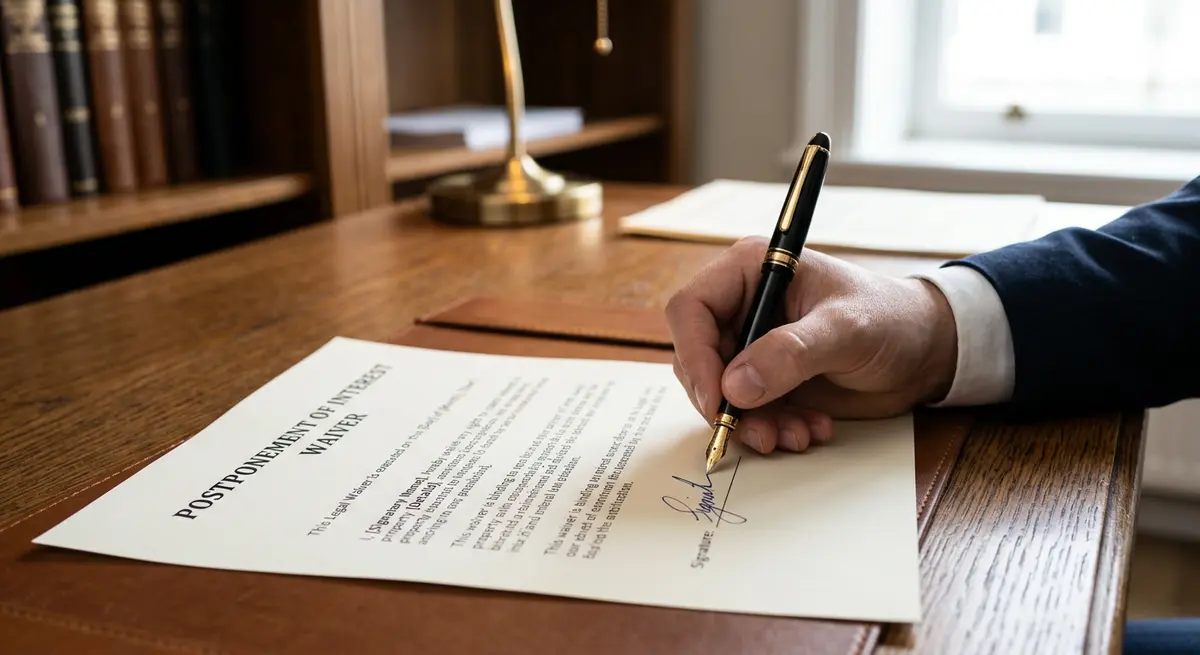
To protect their capital, banks and private lenders will ask the common-law partner to sign a “Postponement of Interest” or an Independent Legal Advice (ILA) waiver. By signing this document, you formally acknowledge the new debt and agree that the lender’s claim takes priority over any future equitable claim you might make against the property.
Never sign this document blindly. Doing so effectively subordinates your financial interest in the home to the new lender. If you are unsure about the documentation required by financial institutions, review our second mortgage document checklist to understand what underwriters typically demand.
Step-by-Step Guide: How to Protect Your Financial Future
Whether you are the titled owner or the contributing partner, establishing clear financial boundaries is critical. Data from the Alberta Real Estate Association indicates that 41% of property financing disputes involve unmarried cohabitants. Here is how to protect yourself proactively.
How Non-Titled Partners Can Secure Their Equity
- Draft a Cohabitation Agreement: The strongest protection is a legally binding contract drawn up before issues arise. This agreement can explicitly state that no new debt will be secured against the home without mutual, written consent.
- Maintain Open Financial Communication: If you contribute to household costs, demand transparency. Ask to see mortgage statements quarterly to ensure the principal balance is decreasing, not increasing.
- Document All Contributions: Keep meticulous records of any money you spend on renovations, property taxes, or direct mortgage payments. This paper trail is vital for a constructive trust claim.
- Register a Certificate of Lis Pendens (CLP): In severe litigation scenarios during a breakup, your lawyer can register a CLP on the title. This acts as a massive red flag to potential lenders, warning them the property is subject to an active lawsuit.
How Titled Owners Can Borrow Transparently
If you own the home and need to leverage your equity for business or debt consolidation, transparency is your best defense against future litigation. If you mortgage the home secretly, the courts will view the depletion of assets highly negatively during a separation.
- Communicate the Purpose of the Loan: Explain exactly why you need the funds. If the money is used for “family purposes” (like a kitchen renovation or consolidating joint credit cards), the debt is generally shared.
- Use Funds Responsibly: If you use the equity for personal benefit (like a solo vacation or gambling), you will likely be held solely responsible for the debt while still owing your partner half the original equity value.
- Consider a Spousal Buyout: If the relationship is ending, use the equity to formally sever financial ties. You can learn more about this process in our guide to spousal buyouts and separation mortgages.
Expert Insights on Navigating Property Disputes in 2026
The legal landscape surrounding common law property rights in Calgary has evolved rapidly. Property values in Calgary have seen a 12.4% equity increase over the last three years, making equity extraction a primary financial strategy for many households.
As Dr. Sarah Jenkins, Professor of Family Law at the University of Calgary Faculty of Law, explains: “The assumption that common-law status mirrors marriage is the single most expensive mistake unmarried homeowners make in Alberta. Without the Dower Act, you are relying entirely on trust and post-separation litigation to protect your life savings.”
David Chen, Chief Economist at the Canadian Housing Institute, adds: “In 2026, the intersection of rising home equity and high living costs has driven a 40% surge in secondary financing. Approximately 30% of these loans in Alberta are used for debt consolidation, directly impacting shared household finances. Partner consent protocols are more critical than ever.”
If you find yourself in a complex situation where property ownership and relationship breakdowns intersect, understanding the nuances of understanding an Alberta property dispute is essential to protecting your assets.

Frequently Asked Questions (FAQ)
Can my common-law partner kick me out if I am not on the title?
Unlike married spouses who have absolute Dower rights to reside in the matrimonial home, common-law partners have fewer automatic protections against immediate eviction. However, if you qualify as an Adult Interdependent Partner, you can apply to the Alberta courts for an order of exclusive possession, though this requires formal legal action.
Do I need my partner’s consent for a mortgage if we are common law?
Legally, under the Dower Act, you do not need their consent. However, the vast majority of reputable lenders in 2026 will require their signature on a Postponement of Interest waiver to protect the lender from future constructive trust litigation regarding property division. If you are considering adding a spouse to a second mortgage, their formal consent and credit profile will be required.
What if I contributed to the down payment but I am not on the title?
You likely have a strong constructive trust claim, meaning you hold an unregistered beneficial interest in the property. You must document this financial contribution meticulously, as it forms the basis of your legal right to a portion of the home’s equity upon separation.
Can I stop my partner from selling our shared house?
Not automatically. Because you lack Dower rights, you cannot simply refuse to sign the transfer documents to block a sale. You would need to initiate immediate legal action and register a Certificate of Lis Pendens (CLP) on the property title to halt the transaction.
Does new property debt reduce the amount I receive in a separation?
Potentially, yes. If your partner borrows $50,000 of equity and spends it on personal expenses, the net equity of the home decreases, leaving less value to split. The courts will attempt to account for this dissipated asset, but recovering the funds can be practically difficult.
Are borrowed equity funds considered “family property”?
Usually, yes. If the debt was incurred during the course of the Adult Interdependent Relationship, both the debt and the underlying asset (the home) are typically factored into the final 50/50 division of property under the Family Property Act.
How do I legally prove I am an Adult Interdependent Partner in Alberta?
You must demonstrate that you have lived together in a relationship of interdependence for three continuous years. Alternatively, the time requirement is waived if you live together and share a child by birth or adoption, or if you have signed a formal Adult Interdependent Partner agreement.
Can we sign an agreement to opt out of these default property rules?
Absolutely. You can sign a legally binding Cohabitation Agreement (the common-law equivalent of a prenuptial agreement) that dictates exactly how property, equity, and new debt will be handled, completely superseding the default provincial laws.
Conclusion
Understanding your property rights as an unmarried cohabitant in Calgary is absolutely critical in today’s complex real estate environment. While the Dower Act does not protect common-law partners from unilateral equity extraction by a titled owner, the Alberta Family Property Act provides substantial avenues for reclaiming your share of the relationship’s wealth upon separation. Whether you are a titled owner looking to leverage your home’s value responsibly, or a non-titled partner seeking to protect your sweat equity, proactive legal and financial communication is your best defense against costly litigation.
If you are navigating the complexities of property equity, relationship changes, or need to understand your financing options in Alberta, professional guidance is essential. Contact us today to discuss your unique situation and explore the best strategies to protect your financial future.