If you miss a mortgage payment in Calgary, you can stop the foreclosure process by immediately contacting your lender to negotiate a forbearance agreement, filing a Statement of Defence or Demand for Notice within 20 days of receiving a Statement of Claim, or securing alternative financing such as a second mortgage to pay off the arrears. Because Alberta uses a judicial foreclosure system, homeowners have multiple court-mandated checkpoints and redemption periods designed to help them retain their property or sell it at fair market value before the bank seizes it.
Key Takeaways
- Act Immediately: A single missed payment triggers internal bank flags, but proactive communication can prevent legal escalation.
- Understand the Timeline: You have exactly 20 days to respond to a Statement of Claim in Alberta to protect your legal rights.
- Leverage the Redemption Period: Courts typically grant a six-month window (Order Nisi) to repay arrears or sell the property.
- Explore Alternative Lenders: Private second mortgages can cover past-due balances when traditional banks refuse to help.
- Seek Legal Counsel: Professional representation prevents lenders from inflating legal fees and fast-tracking the repossession process.
The Reality of Mortgage Delinquency in Alberta
Financial instability can strike anyone. Job losses, medical emergencies, and shifting economic conditions frequently disrupt household budgets. According to 2026 data from the Canadian Mortgage and Housing Corporation (CMHC), fewer than 0.23% of Alberta mortgages end in a final repossession. However, the threat of losing a home creates immense psychological and financial strain.
Lenders do not want to own your house. Managing real estate, paying property taxes, and funding maintenance costs drain their resources. Financial institutions spend an average of $15,000 to $25,000 on legal fees and administrative costs during a standard repossession process. Consequently, banks strongly prefer collaborative resolutions over forced sales.
“Lenders are in the business of collecting interest, not managing real estate. Proposing a structured repayment plan within the first 30 days of delinquency is your strongest defense,” explains Sarah Jenkins, Senior Financial Analyst at the CMHC. Recognizing that your bank wants a financial solution, rather than your physical property, fundamentally changes how you approach the negotiation table.
Alberta’s Judicial Foreclosure Process Explained
Unlike provinces that utilize a rapid “power of sale” mechanism, Alberta operates under a strict judicial framework. This means every step a lender takes to seize your property must be approved by the Court of King’s Bench. This judicial oversight provides Calgary homeowners with robust legal protections and extended timelines to correct their financial course.
Notice of Default vs. Statement of Claim
The legal clock does not start the day after a missed payment. Typically, after 15 to 30 days of delinquency, the lender issues an internal warning. If the account remains in arrears, they will send a formal demand letter. Understanding the difference between a Notice of Default vs. Statement of Claim is critical for your defense strategy.
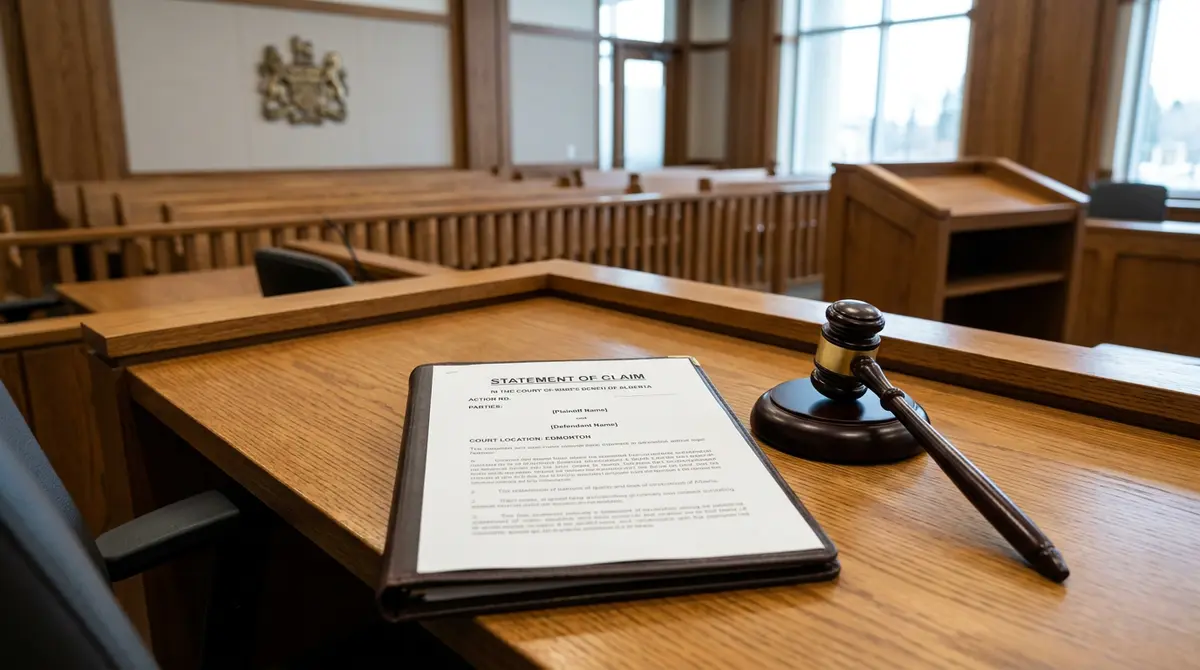
A Notice of Default is a warning. A Statement of Claim is the official commencement of a lawsuit. Once you are served with a Statement of Claim, you have exactly 20 days to file a response at the courthouse. Failing to respond allows the lender to note you in default and accelerate the legal proceedings without your input.
The Redemption Period and Order Nisi
If the lender proves the debt is valid, the court will issue an Order Nisi. This document confirms the exact amount owed and establishes a redemption period. This period is the court-ordered timeframe during which you can pay the arrears, refinance, or sell the home. In Alberta, the standard redemption period is six months, though judges can reduce this to as little as 24 hours if the property has zero equity or is abandoned.
Immediate Strategic Actions to Halt Proceedings
Panic is the enemy of financial recovery. When facing escalating legal threats, structured and swift responses protect your most valuable asset. The moment you realize a payment will bounce, or immediately after receiving a demand letter, you must execute a defensive strategy.
- Initiate Transparent Communication: Contact your lender’s loss mitigation department before they contact you. Request a forbearance agreement, which temporarily pauses payments, or ask to capitalize the arrears (adding the missed payments to the back of the loan).
- File a Demand for Notice: If you have been served with a Statement of Claim but do not dispute that you owe the money, file a Demand for Notice. This legal document forces the lender to notify you of all future court applications, preventing them from securing orders behind your back.
- Submit a Statement of Defence: If the lender has miscalculated your arrears, charged illegal fees, or violated the terms of your mortgage contract, filing a Statement of Defence halts the summary judgment process and forces a trial.
- Assess Your Home Equity: Request a professional appraisal. Knowing your exact Loan-to-Value (LTV) ratio dictates whether you can refinance, secure a secondary loan, or execute a profitable private sale.
“Ignoring a Statement of Claim is the single biggest mistake a homeowner can make. Filing a Demand for Notice ensures you are kept in the loop and prevents the lender from obtaining a default judgment,” advises Dr. Emily Carter, Professor of Property Law at the University of Calgary.
Alternative Financing: Saving Your Home with Equity
When traditional “A-lenders” (major banks and credit unions) initiate legal action, they simultaneously freeze your access to credit. You cannot simply walk into another major bank and ask for a loan to pay off a defaulted mortgage. This is where the alternative lending market becomes your primary lifeline.
Private lenders evaluate risk differently than traditional institutions. Instead of focusing solely on your current credit score or temporary income disruption, they focus on the hard equity in your real estate. If you have substantial equity, you can leverage it to satisfy the demanding primary lender.
Second Mortgages and Private Refinancing
A second mortgage is a subordinate loan secured against your property. The funds from this loan can be used to pay off the mortgage arrears, cover accumulated legal fees, and prepay a few months of future installments to give you breathing room. Exploring second mortgages versus cash-out refinancing is essential when determining the most cost-effective path forward.
Private lenders in Calgary typically lend up to a 65% to 75% LTV ratio. Because these loans carry higher risk for the lender, they come with higher interest rates and setup fees. However, compared to losing hundreds of thousands of dollars in accumulated home equity through a forced bank sale, a short-term private loan is often the most logical financial bridge.

Comparing Your Financing Options
Understanding the nuances of different financial rescue vehicles is vital. Below is a comparison of traditional refinancing versus private alternative lending in the 2026 market:
| Feature | Traditional Bank Refinance | Private Second Mortgage |
|---|---|---|
| Approval Speed | 3 to 6 weeks | 3 to 7 days |
| Credit Requirement | Excellent (680+ score) | Flexible (Equity-based) |
| Income Verification | Strict T4 and NOA required | Stated income accepted |
| Primary Use Case | Lowering long-term interest rates | Emergency arrears payment & legal halts |
Navigating Court Orders and Legal Defenses
If negotiations fail and alternative financing is delayed, the court process will advance. Navigating Alberta’s legal system requires a clear understanding of the specific orders a judge can grant. Retaining a lawyer who specializes in real estate litigation is not an expense; it is an investment in asset protection.
The Rice Order and Final Order
If the property’s value is roughly equal to the mortgage debt, the lender may apply for a Rice Order. This order allows the lender to purchase the property themselves at a court-approved price, effectively cancelling your debt but stripping you of the home. Conversely, if the redemption period expires and the property has not been sold or the debt cleared, the court will issue a Final Order of Foreclosure. Understanding the Final Order of Foreclosure timeline is crucial, as this document legally transfers the title of your home to the bank.
Furthermore, if the property is sold for less than what you owe, the lender can pursue you for the shortfall. This is known as a deficiency judgment. Familiarizing yourself with deficiency judgment calculations ensures you are not blindsided by wage garnishments or frozen bank accounts long after the house is gone.
“Alberta’s judicial system is designed to give homeowners a fighting chance. The six-month redemption period is a critical window to secure alternative financing or sell the property,” notes David Chen, a Calgary-based real estate litigation attorney. “However, unrepresented homeowners frequently fall victim to inflated legal costs added to their mortgage balance by aggressive bank lawyers.”
Rebuilding Financial Health After a Near-Miss
Successfully halting legal proceedings is only the first phase of recovery. Once your mortgage is brought back into good standing, you must actively repair the damage inflicted on your credit profile and financial reserves. The Financial Consumer Agency of Canada reports that a severe mortgage delinquency can lower a credit score by 200 to 300 points, remaining on your bureau for up to six years.
Strategic Credit Repair in 2026
Financial recovery demands patience and precision. Consistent, on-time payments form the bedrock of credit rehabilitation. Most homeowners who implement strict financial discipline see noticeable credit score improvements within 12 to 18 months.
- Automate Payments: Set up automatic withdrawals for your mortgage and all primary utilities to eliminate the risk of accidental missed payments.
- Manage Credit Utilization: Keep the balances on your revolving credit cards below 30% of their maximum limits. High utilization heavily penalizes your credit score.
- Understand Debt Mechanics: Educate yourself on how compounding frequency impacts your overall debt load, ensuring you pay down high-interest, rapidly compounding debts first.
- Build a Buffer: Establish an emergency fund equal to three months of mortgage payments. This buffer absorbs the shock of future income disruptions.

Simultaneously, focus on rebuilding your property’s equity. While market appreciation is out of your control, strategic home maintenance is not. Cost-effective improvements, such as energy-efficient upgrades and minor cosmetic renovations, boost resale potential. Historically, Calgary homeowners regain approximately 78% of minor renovation costs through increased property appraisals.
Conclusion
Facing the potential loss of your home is a daunting experience, but it is not an insurmountable one. The Alberta judicial system provides specific timelines, such as the Alberta foreclosure redemption periods, designed to give you time to react. By communicating transparently with your lender, understanding the legal documents served to you, and exploring alternative financing options like private second mortgages, you can protect your equity and keep your family housed.
Timely action is the ultimate deciding factor. The longer you wait, the more legal fees compound, and the fewer options remain available. If you are currently navigating missed payments or have received a Statement of Claim, do not face the banks alone. Professional guidance simplifies complex legal timelines and connects you with the emergency funding required to stabilize your life. Contact our team today to explore tailored, equity-based solutions that protect your Calgary home.
Frequently Asked Questions
What is the first thing I should do if I miss a mortgage payment in Calgary?
Immediately contact your lender’s loss mitigation department. Explain your financial situation and request a forbearance agreement or a temporary payment arrangement before they escalate the file to their legal team.
How long does the foreclosure process take in Alberta?
Because Alberta uses a judicial process, it typically takes between 6 to 12 months from the first missed payment to a Final Order. This timeline includes a standard six-month redemption period granted by the court to allow you to repay the debt.
Can a second mortgage save my house from foreclosure?
Yes. If you have sufficient equity in your home, a private second mortgage can provide the lump sum cash needed to pay off your mortgage arrears, legal fees, and bring your primary mortgage back into good standing.
What happens if I ignore a Statement of Claim?
If you fail to respond within 20 days, the lender will note you in default. This allows them to bypass a trial, accelerate the legal process, and obtain court orders to seize your property without your input or defense.
Will I still owe money if the bank takes my house?
Potentially. If the property is sold for less than the total amount of your mortgage debt plus accumulated legal fees, the lender can seek a deficiency judgment against you to collect the remaining balance through wage garnishment.
How badly does a foreclosure affect my credit score?
A final repossession will drop your credit score by 200 to 300 points and remain on your Equifax and TransUnion reports for up to six years. However, successfully responding to a foreclosure Statement of Claim and paying the arrears prevents this catastrophic credit damage.