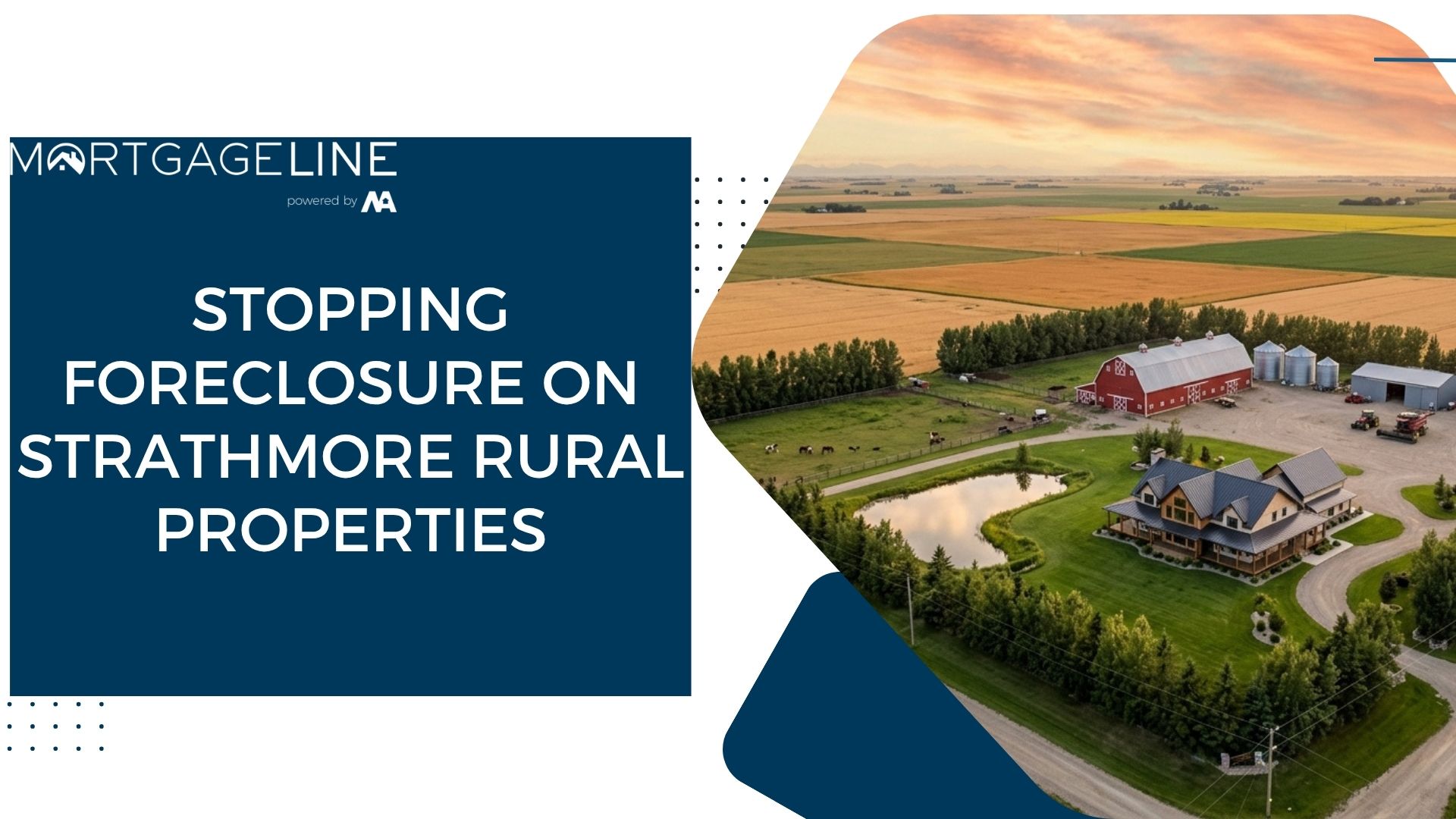
Home equity financing in Foothills County allows property owners to borrow against the accumulated value of their residential homes, acreages, or agricultural properties. This financial mechanism is typically accessed through home equity lines of credit (HELOCs), second mortgages, or cash-out refinancing. By leveraging the difference between the property’s current market value and the outstanding mortgage balance, homeowners can secure substantial capital for debt consolidation, property improvements, or emergency financial relief without selling their real estate.
Key Takeaways
- Property Type Dictates Options: Rural acreages and agricultural properties face stricter loan-to-value (LTV) maximums from traditional banks compared to municipal residential homes in Okotoks or High River.
- Three Main Financing Avenues: Homeowners can access funds via HELOCs, second mortgages, or by breaking and refinancing their primary mortgage.
- Appraisal Complexities: Outbuildings, unpermitted structures, and environmental factors (like well water quality) significantly impact how lenders calculate usable equity in Foothills County.
- Alternative Lending Value: When major banks decline rural properties due to strict debt-servicing ratios, private lenders offer flexible equity solutions based primarily on asset value.
- Strategic Debt Relief: Equity can be strategically deployed to halt foreclosure proceedings, clear provincial tax arrears, or facilitate a spousal buyout during a separation.
Understanding the Foothills County Real Estate Landscape
Foothills County represents a unique intersection of urban-adjacent convenience and rural agricultural expanse. Encompassing thriving municipalities like Okotoks, High River, and Diamond Valley, alongside vast stretches of rural acreages, the region’s property values vary significantly. As we navigate 2026, the region continues to experience sustained demand due to its proximity to Calgary and the high quality of life it offers. However, the diverse nature of these properties complicates the equity borrowing process.
According to historical data maintained by the Calgary Real Estate Board, benchmark home prices in areas surrounding Calgary have demonstrated notable resilience. This steady appreciation means that many long-term residents in Foothills County sit on substantial unrealized equity. Unlocking this wealth, however, requires navigating stringent federal stress tests and localized appraisal guidelines that heavily scrutinize rural land.
Primary Methods to Access Property Equity
Property owners have several distinct financial instruments available to them. Choosing the right path depends heavily on the borrower’s credit profile, the type of property owned, and the urgency of the capital requirement.
| Financing Option | Best Suited For | Approval Difficulty | Interest Structure |
|---|---|---|---|
| HELOC | Ongoing expenses, renovations | High (Requires excellent credit/income) | Variable (tied to Prime) |
| Second Mortgage | Debt consolidation, emergency funds, tax arrears | Low to Medium (Asset-based lending) | Fixed, typically interest-only |
| Cash-Out Refinance | Lowering overall blended rate, large lump sums | High (Must requalify under current stress test) | Fixed or Variable amortized |
For residents in specific municipalities, securing localized lending expertise is highly advantageous. Working with private lenders specializing in Okotoks and the broader Foothills area ensures that the lender understands the precise market dynamics of your local neighborhood, rather than applying a blanket urban formula to a rural asset.
Step-by-Step Process for Securing Equity Funds
Acquiring a loan against your home’s equity is a formalized legal process. Following these steps ensures a smoother transaction and reduces the likelihood of delays.
- Determine Available Equity: Calculate your estimated property value minus all current mortgages and liens. The result is your gross equity.
- Assess LTV Limits: In Canada, traditional lenders max out at 80% Loan-to-Value for refinancing. For rural acreages over 10 acres, traditional banks may only lend up to 50% or 65% of the land’s value.
- Gather Financial Documentation: Compile recent mortgage statements, property tax assessments, income verification (Notice of Assessment), and valid government ID.
- Order a Professional Appraisal: An independent, certified appraiser must evaluate the property. For acreages, they will assess the primary residence, land value, outbuildings, and essential services (water/septic).
- Compare Lending Offers: Evaluate the terms between A-lenders (banks) and alternative lenders. Look closely at interest rates, administrative fees, and prepayment penalties.
- Legal Review and Disbursement: Once approved, independent legal counsel will review the mortgage contract, register the new charge on the property title, and disburse the funds to your account or directly to creditors.
It is crucial to understand the difference between mortgage products. For a deep dive into the nuances of these structures, many borrowers find it helpful to compare a second mortgage versus a HELOC to determine which financial instrument aligns best with their repayment capabilities.
Distinct Requirements for Rural and Acreage Properties
Financing a home in a municipal center differs drastically from financing a rural acreage in Foothills County. The Canada Mortgage and Housing Corporation (CMHC) and major financial institutions classify rural properties as higher risk due to liquidity issues—simply put, rural homes take longer to sell in the event of default.
When applying for equity financing on an acreage, lenders scrutinize several unique factors. First, water potability is mandatory; a recent well water certificate showing safe limits of bacteria and nitrates must be provided. Second, the septic system must be verified as fully operational and compliant with provincial regulations. Finally, there is the issue of outbuildings. Large shops, barns, and quonsets add significant market value to a property, but conservative A-lenders often heavily discount or entirely ignore the value of outbuildings when calculating maximum loan amounts.
Because traditional banks are highly restrictive with rural zoning, many acreage owners turn to rural equity lending options that cater specifically to large parcels of land. These specialized private lenders evaluate the true market value of the entire property, including functional outbuildings, providing a much higher borrowing capacity for the homeowner.
Strategic Uses for Equity Capital in 2026
Accessing built-up wealth is rarely a frivolous decision. In 2026, homeowners in Alberta are leveraging their real estate assets to solve pressing financial challenges or to capitalize on wealth-building opportunities.
Consolidating High-Interest Debt
With household debt remaining a critical economic factor, rolling unsecured credit card debt and personal loans into a single mortgage payment can save thousands in interest. The Bank of Canada frequently monitors household debt vulnerabilities. As Tiff Macklem, Governor of the Bank of Canada, has noted in public addresses, high levels of household debt remain a central vulnerability for the Canadian financial system. Transitioning expensive unsecured debt into a secured, lower-interest property loan is a mathematically sound strategy for financial stabilization.
Clearing Provincial and Municipal Arrears
Falling behind on property taxes or provincial income tax can lead to aggressive collection actions, including caveats placed on your property title by the government. Using your home’s equity to clear provincial tax arrears immediately halts these punitive measures, protecting your home from tax forfeiture or forced sale.
Facilitating Spousal Buyouts
During a divorce or marital separation, one party often wishes to remain in the marital home. However, removing the departing spouse from the mortgage title requires a financial buyout of their half of the equity. Refinancing or utilizing a second mortgage allows the remaining spouse to access the necessary cash to complete a spousal equity buyout efficiently, without triggering the immediate sale of the property.
Saving Agricultural and Family Farm Operations
For generational farmers in Foothills County, unpredictable crop yields or livestock market fluctuations can result in severe cash flow shortages. When traditional agricultural lenders pull back, families can utilize the equity in their land to bridge the gap. Specialized equity loans can provide the vital operational capital needed to protect family farm equity and keep the agricultural business solvent through tough seasons.
Navigating Appraisal Challenges and Lender Restrictions
The foundation of any equity financing agreement is the property appraisal. In Foothills County, securing an accurate valuation requires an appraiser who specializes in rural and agricultural properties. A standard residential appraiser may lack the data to accurately value a 20-acre parcel with equestrian facilities and secondary suites.
If a property requires significant structural repairs or lacks basic municipal services, traditional banks will generally refuse to lend against it until the issues are rectified. This creates a paradox: the homeowner needs the equity loan to fund the repairs, but the bank demands the repairs be finished before releasing the loan. In these scenarios, homeowners must look outside the traditional banking system. Borrowers can often bypass stringent bank appraisals by utilizing alternative lenders offering flexible appraisal requirements, who base their lending decisions on the “as-is” value of the property or the projected “as-complete” value.
The Role of Alternative and Private Lenders
The regulatory framework governing traditional Canadian banks, enforced by the Statistics Canada data on lending alongside federal OSFI regulations, requires strict adherence to Gross Debt Service (GDS) and Total Debt Service (TDS) ratios. If a borrower’s income is non-traditional—such as self-employed agricultural income, seasonal oil and gas contracting, or gig economy earnings—banks will often decline the application regardless of how much equity the borrower has in the home.
Private lenders fill this critical void in the Foothills County market. A private equity lender is primarily concerned with the equity position of the property rather than the borrower’s credit score or traditional T4 income. They will typically fund up to 75% of a property’s value, providing a temporary (usually 1- to 2-year) interest-only loan that gives the borrower time to repair their credit, finish renovations, or transition back to a traditional bank when their financial situation stabilizes.
Frequently Asked Questions
How much equity do I need to qualify for a second mortgage in Foothills County?
Most alternative and private lenders require you to retain at least 20% to 25% equity in your property. This means they will lend up to a maximum Loan-to-Value (LTV) of 75% to 80%, depending on whether it is a standard residential home or a rural acreage.
Do I have to switch my first mortgage to access my equity?
No. You can leave your existing first mortgage completely untouched. By securing a second mortgage or a HELOC, the new loan sits in second position on your property title, allowing you to keep your potentially lower interest rate on your primary mortgage.
How do outbuildings affect my acreage appraisal for financing?
While outbuildings like barns and workshops add to the overall market value of a property, traditional banks often heavily discount their value for lending purposes. Private lenders, however, generally consider the full market value of functional outbuildings when calculating your maximum loan amount.
Can I get an equity loan if I am currently unemployed or self-employed?
Yes. Because private equity lenders focus on the asset value rather than traditional income verification, self-employed individuals, seasonal workers, and even those temporarily unemployed can secure financing based on the strength of the property’s equity.
How long does it take to secure home equity funds?
While a traditional bank refinance can take 3 to 6 weeks, private equity financing is much faster. Once an appraisal is completed, funds can often be advanced by a real estate lawyer within 5 to 10 business days.
Conclusion
Home equity financing in Foothills County provides a powerful financial tool for homeowners, acreage owners, and farmers alike. Whether you are aiming to consolidate high-interest debts, clear provincial tax arrears, finalize a spousal buyout, or save your family farm from financial distress, unlocking the wealth tied up in your real estate can provide the crucial runway you need. While traditional banks offer the lowest rates, their stringent stress tests and conservative views on rural land often pose significant barriers. Understanding the vital role of alternative lenders ensures that you can access your capital when you need it most. If you are exploring your financing options and need expert guidance tailored to the Alberta market, contact us today to discuss the best strategy for your unique property and financial goals.