A secondary mortgage is an additional loan secured against a property that already has a primary mortgage, allowing homeowners to borrow money by leveraging their accumulated home equity. In the 2026 financial landscape, these equity-backed loans sit in a subordinate position to the primary mortgage, meaning borrowers can access substantial capital without altering the favorable interest rates or terms of their original lending contract.
Key Takeaways
- Equity Access: Homeowners can typically borrow up to 80% of their property’s appraised value.
- Contract Preservation: Subordinate financing allows you to keep your primary mortgage intact, avoiding costly prepayment penalties.
- Flexible Formats: Available as lump-sum term loans or revolving Home Equity Lines of Credit (HELOCs).
- Strategic Utility: Highly effective for high-interest debt consolidation, property renovations, and business capital.
- Alternative Approvals: Private lending institutions offer flexible qualification criteria for self-employed individuals and those with complex credit histories.
Understanding Subordinate Financing in Alberta
Navigating the real estate financing market requires a solid understanding of how property-backed lending functions. When you purchase a home, your primary lender holds the first lien on the property. If you require additional funds later, you can apply for subordinate financing. Because this new loan ranks behind the first one in the event of a default, it carries a slightly higher risk for the lender, which is reflected in the interest rates.
According to a 2026 report by the Canada Mortgage and Housing Corporation (CMHC), approximately 22% of homeowners in Western Canada utilize some form of equity extraction to manage their finances. The foundation of this financial tool is home equity—the current market value of your property minus any outstanding loan balances.
As David Thompson, Senior Underwriter at Alberta Equity Partners, explains: “Home equity is the most powerful, yet underutilized, financial asset for the average Canadian. In 2026, strategically accessing this capital is less about emergency borrowing and more about intelligent wealth management.”
Types of Equity Loans Available
Homeowners exploring their options will generally encounter two primary structures for accessing their property’s value. Choosing the right vehicle depends entirely on your specific capital requirements and repayment capabilities.
1. Traditional Home Equity Loans (Lump Sum)
This structure provides a single, upfront disbursement of funds. Borrowers repay the principal and interest over a fixed amortization period, typically ranging from one to five years. This is ideal for singular, large-scale expenses where the exact cost is known upfront.
2. Home Equity Lines of Credit (HELOCs)
A HELOC functions similarly to a high-limit credit card secured by your house. The Financial Consumer Agency of Canada notes that HELOCs offer revolving credit, meaning you only pay interest on the funds you actively withdraw. This flexibility makes it perfect for ongoing construction projects or variable business expenses.
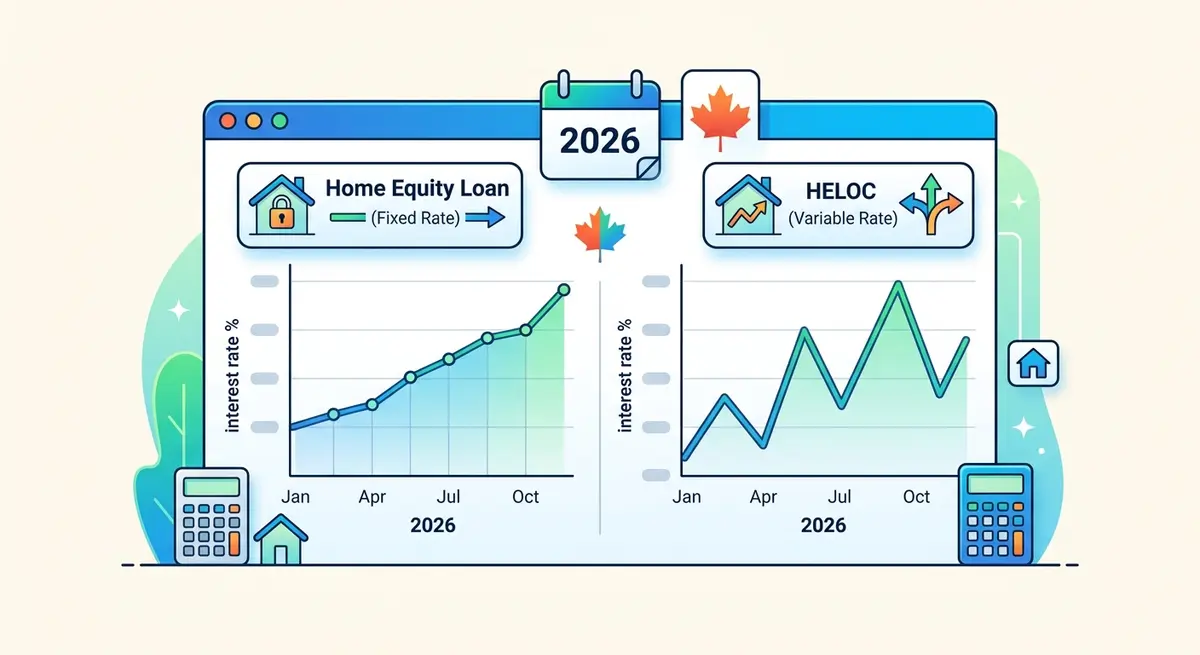
| Feature | Lump-Sum Equity Loan | HELOC |
|---|---|---|
| Fund Disbursement | Single upfront payment | Revolving access as needed |
| Interest Rate Type | Typically fixed | Typically variable (Prime + margin) |
| Best Used For | Debt consolidation, single purchases | Ongoing renovations, emergency funds |
| Repayment Structure | Blended principal and interest | Interest-only minimums available |
Current 2026 Interest Rates and Associated Costs
Interest rates for subordinate financing are intrinsically linked to the Bank of Canada overnight rate, alongside the borrower’s individual risk profile. In 2026, borrowers can expect rates to vary significantly based on the lending institution.
Traditional banks offering HELOCs generally charge Prime plus 0.5% to 1.5%. However, private lending institutions, which cater to borrowers who may not pass the federal stress test, typically offer rates between 6.99% and 12.99%. While these rates are higher than primary mortgages, they remain vastly superior to the 20% to 24% rates commonly seen on unsecured credit cards.
Beyond the interest rate, applicants must budget for closing costs. Establishing a new lien on a property involves administrative and legal work. Typical 2026 fees include:
- Property Appraisal: $350 – $600
- Legal and Title Fees: $1,000 – $1,600
- Lender/Broker Fees: 1% to 3% of the loan amount
- Title Search: $250 – $500
When comparing equity loans to cash-out refinancing, these closing costs are often lower than the penalties associated with breaking a fixed-rate primary mortgage prematurely.
Qualification Requirements for Borrowers
Securing approval requires meeting specific criteria. While traditional banks have stringent guidelines, the alternative lending market offers more flexibility. The core pillars of qualification include:
Loan-to-Value (LTV) Ratio
LTV is the most critical metric. Lenders calculate this by dividing your total desired debt by the property’s appraised value. In Alberta, the maximum allowable LTV for subordinate financing is generally 80%. For example, if your home is valued at $600,000, your total allowable debt (primary plus secondary) cannot exceed $480,000.
Credit History and Income Verification
Traditional lenders typically require a minimum credit score of 650 and strict proof of income via T4 slips and Notices of Assessment. However, a significant portion of the workforce is self-employed. For these individuals, verifying self-employed income for mortgage applications often involves alternative documentation, such as bank statements and business contracts, which private lenders are well-equipped to evaluate.

The Strategic Role of Private Lenders
Not all borrowers fit the rigid criteria of major financial institutions. Private lending corporations and mortgage investment corporations (MICs) fill a vital gap in the local market. These institutions focus primarily on the equity remaining in the property rather than the borrower’s credit score.
Private lenders are particularly beneficial for:
- Entrepreneurs seeking alternative financing options for local entrepreneurs without diluting business equity.
- Individuals with recent credit blemishes who need immediate capital to consolidate high-interest debt.
- Homeowners requiring rapid funding, as private approvals can often be secured in as little as 48 hours.
Strategic Uses for Your Home Equity
Accessing your property’s value should be a calculated move designed to improve your overall financial health or increase your net worth.
High-Interest Debt Consolidation
According to Statistics Canada, the household debt-to-income ratio remains a significant challenge for many families. Leveraging home equity instead of unsecured credit allows borrowers to roll multiple high-interest debts (credit cards, auto loans, personal lines) into a single, lower-interest monthly payment. This strategy can instantly improve cash flow and accelerate the journey to becoming debt-free.
Value-Add Property Renovations
Reinvesting in your primary residence is one of the most popular uses for equity capital. Strategic renovations, such as kitchen modernizations or the addition of a legal basement suite, not only improve your quality of life but can yield a return on investment (ROI) of 70% to 85% upon resale.
Step-by-Step Application Process
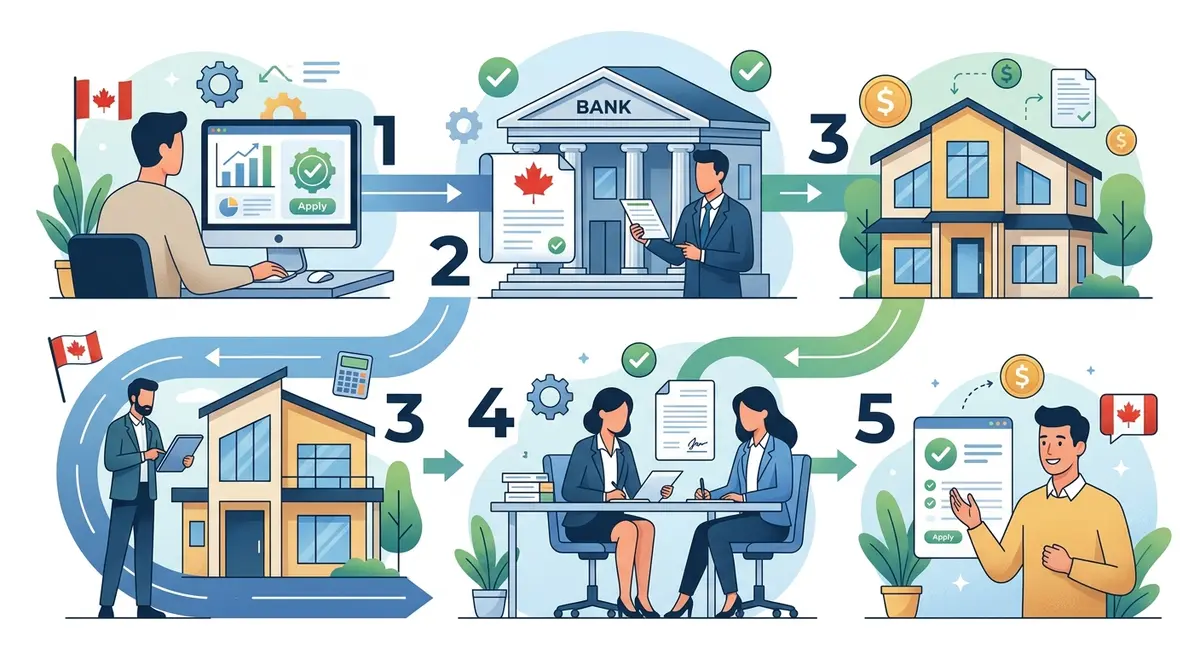
Understanding the procedural workflow can significantly reduce the stress of applying for large-scale financing. Here is the standard progression for 2026:
- Initial Consultation and Equity Assessment: A licensed broker evaluates your property’s estimated value and your current mortgage balance to determine your available borrowing power.
- Document Compilation: You will need to gather identification, property tax statements, primary mortgage statements, and income verification. Utilizing a comprehensive document checklist for secondary financing ensures no delays occur.
- Formal Property Appraisal: An independent, certified appraiser visits the property to establish its current fair market value.
- Lender Submission and Underwriting: The broker submits your file to the lender whose criteria best match your profile. The lender’s underwriting team reviews the risk and issues a commitment letter.
- Legal Review and Funding: Your real estate lawyer reviews the terms, registers the new lien on your property title, and disburses the funds to your account.
Risks and Important Considerations
While equity extraction is a powerful tool, it is not without inherent risks. Borrowers must exercise financial discipline. Increasing your debt load means higher monthly obligations. If a borrower defaults on these payments, the lender has the legal right to initiate power of sale or foreclosure proceedings.
It is crucial to understand understanding foreclosure redemption periods in Alberta, which dictate the timeline homeowners have to rectify arrears before losing their property. Furthermore, borrowers should be acutely aware of how compounding frequency impacts your overall debt. Loans that compound monthly rather than semi-annually will accumulate interest at a faster rate, increasing the total cost of borrowing over the term.
Frequently Asked Questions
Can I get approved with bad credit?
Yes. Private lenders focus primarily on the amount of equity in your home rather than your credit score. If you have at least 20% to 25% equity remaining, approval is highly likely regardless of past credit issues.
How long does the approval process take?
Through traditional banks, the process can take 3 to 5 weeks. However, alternative and private lenders can often provide approvals within 24 to 48 hours, with full funding completed in under two weeks.
Will this affect my primary mortgage?
No. Subordinate financing is an entirely separate contract. Your primary mortgage’s interest rate, amortization schedule, and terms remain completely unchanged.
Are the interest payments tax-deductible?
In Canada, interest payments may be tax-deductible if the borrowed funds are used strictly for investment purposes (such as buying dividend-paying stocks or a rental property) or for business operations. Funds used for personal renovations or debt consolidation are not tax-deductible.
What happens at the end of the loan term?
Most equity loans have terms of 1 to 3 years. At the end of the term, you can either pay off the remaining principal balance, renew the loan with the current lender at prevailing market rates, or refinance the property to absorb the debt into a new primary mortgage.
Conclusion
Understanding how to effectively leverage your property’s value is a cornerstone of modern financial planning. Whether your goal is to consolidate burdensome high-interest debt, fund a major home renovation, or inject capital into a growing business, subordinate financing offers a flexible and powerful solution. By carefully evaluating your Loan-to-Value ratio, comparing traditional versus alternative lenders, and understanding the associated costs, you can make an informed decision that aligns with your long-term wealth objectives.
If you are ready to explore your equity options or need professional guidance navigating the 2026 lending landscape, our team of experts is here to help. Contact our team today for a confidential, no-obligation assessment of your borrowing power.