Securing a second mortgage on a leasehold property in Calgary requires navigating unique lending criteria, primarily because you own the physical structure but lease the underlying land. In 2026, homeowners typically need a remaining lease term of at least 40 years, a minimum credit score of 650, and sufficient equity to meet a maximum 70% to 75% Loan-to-Value (LTV) ratio. Because traditional banks view the diminishing lease term and ongoing ground rent obligations as high-risk, borrowers must generally rely on specialized alternative lenders who understand complex land tenure arrangements and ground rent capitalization.
Key Takeaways
- Minimum Lease Term: Lenders require at least 40 years remaining on the land lease to approve secondary financing.
- Equity Requirements: Maximum LTV ratios are capped at 70% to 75%, meaning you must retain 25% to 30% equity in the property.
- Borrowing Capacity: Ground rent payments are factored into your Debt Service Ratios, directly reducing your maximum loan amount.
- Specialized Appraisals: Valuations require complex ground rent capitalization models to account for the diminishing asset curve.
- Lender Selection: Strict federal regulations cause traditional banks to decline these loans, making private lenders the primary funding source in 2026.
Understanding Leasehold Property Ownership in Calgary
Leasehold properties represent approximately 4.2% of Calgary’s housing stock in 2026. These homes are particularly concentrated in established neighborhoods, university districts, and areas with premium land values, such as lands owned by municipalities or First Nations. These properties operate under a bifurcated ownership structure, which fundamentally changes how financial institutions view the asset.
Buyers purchase the building or unit outright while entering into a long-term, legally binding lease agreement for the land beneath it. This arrangement drastically alters the long-term value appreciation of the property. While the physical structure may appreciate due to market conditions or renovations, the value of the leasehold interest naturally diminishes as the lease approaches its expiration date. This phenomenon, known as the “diminishing asset curve,” is the primary reason traditional financial institutions hesitate to approve subordinate liens on these properties.
As Dr. Marcus Thorne, Real Estate Economist at the University of Calgary, explains: “The diminishing value curve of a leasehold asset creates a ticking clock for lenders. Once a lease drops below the 40-year mark, the perceived risk of default and illiquidity increases exponentially, forcing lenders to demand higher equity buffers.”
2026 Qualification Criteria for Leasehold Equity Loans
Qualifying for secondary financing on a leasehold property requires meeting stringent criteria that go well beyond standard freehold mortgage requirements. Lenders must evaluate multiple layers of risk, starting with the lease agreement itself.
First and foremost is the remaining lease term. Most alternative and private lenders require a minimum of 40 years remaining on the lease to even consider an application. If the remaining term is shorter, the amortization period of the loan must be significantly compressed. This compression drives up monthly payments and heavily impacts debt-service ratios.
Credit score requirements also tend to be stricter. While some private lenders offer flexibility, a credit score of 650 or higher is generally required to secure favorable interest rates, which currently average between 8.5% and 12.9% for leasehold seconds in 2026. Furthermore, lenders typically cap the Loan-to-Value (LTV) ratio at 70% to 75%, requiring borrowers to maintain 25% to 30% equity in the property. This higher equity requirement acts as a critical buffer against the depreciating nature of the leasehold interest.
For entrepreneurs and self-employed individuals, proving income to support these payments can be challenging. Exploring stated income options for business owners can provide a viable pathway when traditional tax returns do not reflect true cash flow. Additionally, understanding the nuances of verifying self-employed income is crucial for meeting strict lender debt-service guidelines.

The Impact of Ground Rent on Borrowing Capacity
One of the most overlooked factors in leasehold financing is the impact of ground rent on your borrowing capacity. Ground rent is the regular payment made to the landowner, and lenders must factor this ongoing obligation into your Gross Debt Service (GDS) and Total Debt Service (TDS) ratios.
According to stress-testing guidelines set by the Bank of Canada, all recurring housing liabilities must be evaluated rigorously. If your lease agreement includes ground rent increases of 2% to 4% annually, lenders will calculate your debt ratios based on the escalated future payments, not just the current amount. This calculation directly reduces the maximum principal amount you can borrow, as a larger portion of your income is legally committed to the landowner.
Freehold vs. Leasehold Secondary Financing
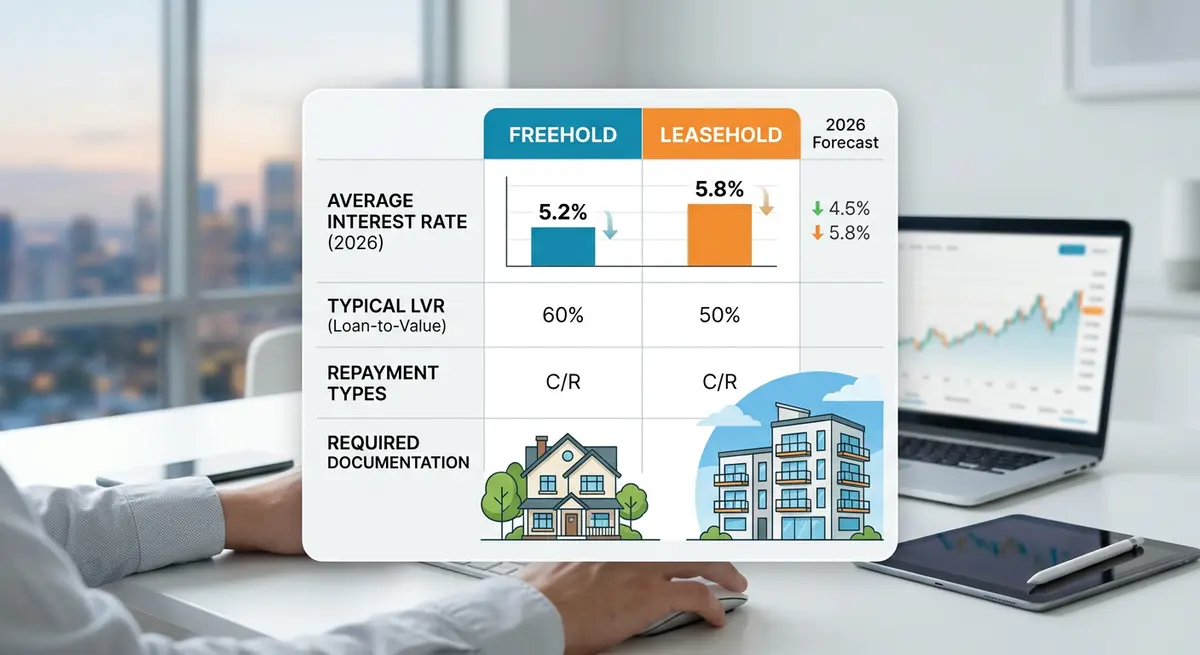
To illustrate the stark differences in financing parameters, review the comparison table below detailing standard 2026 lending criteria for Calgary properties:
| Financing Feature | Freehold Second Mortgage | Leasehold Second Mortgage |
|---|---|---|
| Maximum LTV Ratio | Up to 80% – 85% | Maximum 70% – 75% |
| Minimum Equity Required | 15% – 20% | 25% – 30% |
| Ground Rent Factored in TDS? | No (Not Applicable) | Yes (Mandatory) |
| Appraisal Complexity | Standard Market Value | Complex (Capitalization Models) |
| Average Interest Rates | 7.9% – 11.5% | 8.5% – 12.9% |
Step-by-Step Application Process
Navigating the application process for secondary financing on these properties requires meticulous preparation. Follow these specific steps to ensure a smooth approval process in 2026:
- Review Your Lease Agreement: Obtain a complete copy of your head lease from the Alberta Land Titles registry. Identify the exact expiration date, renewal clauses, and any restrictions on secondary financing.
- Calculate Your True Equity: Subtract your current first mortgage balance from the estimated market value of your leasehold interest. Remember that lenders will cap your borrowing at 75% LTV.
- Gather Financial Documentation: Compile your income statements, NOAs, property tax assessments, and a flawless record of ground rent payments. Proper preparation is essential for organizing your mortgage paperwork effectively.
- Consult a Specialized Broker: Do not apply at a traditional bank. Work with a mortgage broker who has direct access to private lenders specializing in Calgary’s unique land tenure arrangements.
- Order a Specialized Appraisal: The lender will commission an appraisal from a professional experienced in leasehold valuations. You will be responsible for this upfront cost, which is typically higher than a standard appraisal.
- Review the Commitment Letter: Carefully examine the interest rate, lender fees, and terms. Pay special attention to how compounding frequency impacts your total debt over the life of the loan.
Valuation Challenges and Appraisal Methods
Property valuation for leasehold properties presents unique challenges that significantly impact financing decisions. Traditional appraisal methods must be adapted to account for the diminishing lease term, which creates a depreciation factor not present in freehold properties. Appraisers must possess specific expertise in these valuations to provide accurate assessments that lenders can rely upon.
According to the Appraisal Institute of Canada, valuing a leasehold property requires the use of ground rent capitalization methods. Higher ground rents or escalating rent structures negatively impact property values, while favorable, fixed ground rent terms support higher valuations.
As David Chen, Chief Appraiser at Calgary Property Valuations Ltd., notes: “Capitalizing ground rent is the most critical step in leasehold appraisals. We must project the future value trends based on remaining lease terms and market conditions. A property with 80 years remaining is appraised vastly differently than one with 45 years, even if the physical structures are identical.”
Limited comparable sales data in some Calgary markets can make accurate valuations challenging. Appraisers must identify similar properties with comparable lease terms, ground rent structures, and renewal provisions to satisfy strict lender underwriting guidelines.
How Lease Renewal Clauses Dictate Lender Decisions
The specific terms outlined in leasehold agreements significantly influence your financing options. Renewal clauses within lease agreements can literally make or break your application. Automatic renewal provisions or predetermined renewal terms provide lenders with confidence regarding long-term property security.
Conversely, leases requiring landlord approval for renewals, or those with uncertain renewal prospects, face severe financing challenges. Lenders view these scenarios as high-risk because if the lease is not renewed, the property reverts to the landowner, entirely wiping out the lender’s collateral.
Furthermore, transfer and assignment restrictions within lease agreements affect property marketability. Leases requiring landlord approval for property transfers may complicate foreclosure proceedings, making lenders highly cautious. If you are weighing your options due to strict lease terms, you might also consider comparing a second mortgage vs cash-out refinancing options to see which product better accommodates your specific restrictions.
Alternative Lenders vs. Traditional Banks
Traditional banking institutions, governed by strict federal regulations enforced by agencies like the Financial Consumer Agency of Canada, often struggle to accommodate the complexities of leasehold property financing. Their automated underwriting systems are designed for standard freehold properties and frequently reject leasehold applications outright if the remaining term is under 50 years.
This regulatory rigidity creates opportunities for alternative and private lenders who specialize in these unique situations. Alternative lending approaches involve flexible underwriting criteria that consider the full context of the asset. Private lenders focus primarily on property values and equity positions rather than relying solely on standardized income qualification metrics.
Sarah Jenkins, Senior Underwriter at the Alberta Alternative Lending Association, explains: “Leasehold properties require a specialized risk assessment. Private lenders are willing to fund these loans because we manually underwrite the lease agreement. If the equity is strong and the exit strategy is clear, we can fund deals that major banks automatically decline.”
Private lending options provide faster approval processes, with an average processing time of 14 to 21 days in 2026. However, borrowers must be prepared for higher interest rates and lender fees. For some homeowners, exploring unsecured credit alternatives might be necessary if the leasehold equity is insufficient to secure a subordinate mortgage.
Essential Document Checklist for 2026
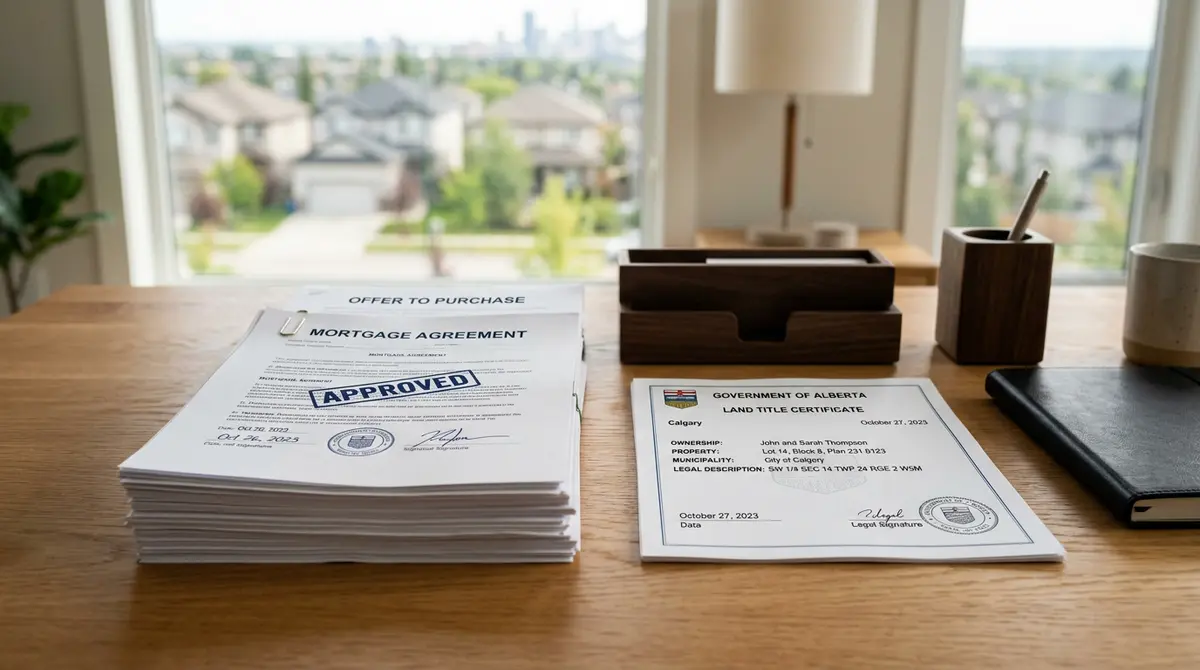
Documentation requirements are significantly more extensive for leasehold financing compared to standard loans. Missing a single document can delay your funding by weeks. Ensure you have the following items prepared:
- The Complete Head Lease: Including all amendments, schedules, and renewal clauses.
- Ground Rent Payment History: Proof of consistent, on-time payments for the last 12 to 24 months.
- Estoppel Certificate: A document from the landlord confirming the lease is in good standing and outlining current ground rent amounts.
- First Mortgage Statement: An up-to-date statement showing your current balance, interest rate, and payment history.
- Property Tax Assessment: The most recent 2026 municipal property tax bill.
- Proof of Income: T4s, NOAs, or alternative documentation for self-employed borrowers.
Once your loan is funded, it is critical to maintain impeccable records. Be sure to understand the legal guidelines for retaining your mortgage documents to protect yourself in future financial transactions.
Frequently Asked Questions (FAQ)
Can I get secondary financing if my lease has less than 30 years remaining?
It is highly unlikely. Most lenders in Calgary require a minimum of 40 years remaining on the lease to consider secondary financing. If your lease drops below 30 years, the depreciating value of the asset makes it too risky for lenders to secure a subordinate lien.
How does ground rent affect my mortgage approval?
Ground rent is treated as a mandatory recurring liability. Lenders add your monthly or annual ground rent payments to your Gross Debt Service (GDS) and Total Debt Service (TDS) ratios. This calculation lowers the amount of disposable income you have available to service the new loan, thereby reducing your maximum borrowing amount.
Are interest rates higher for leasehold properties?
Yes. Because leasehold properties carry additional risks—such as diminishing asset value and potential lease renewal disputes—lenders charge a premium. In 2026, average private lender rates for these loans range from 8.5% to 12.9%, which is generally 1% to 2% higher than freehold equivalents.
Do I need the landlord’s permission to borrow against my equity?
It depends entirely on the specific terms of your lease agreement. Many long-term leases require you to obtain written consent from the landowner before registering any new financial encumbrances against the property title. Always review your lease clauses carefully.
What happens to my loan if the lease expires?
If a lease expires and is not renewed, the property ownership reverts to the landowner. To prevent losing their collateral, lenders structure the amortization period of the loan to ensure it is fully paid off at least 5 to 10 years before the lease expiration date.
Why do traditional banks decline these applications?
Traditional banks operate under strict federal guidelines that favor highly liquid, appreciating assets. The complex nature of leasehold valuations, combined with the risk of lease termination and ground rent escalations, causes these properties to fail standard automated underwriting stress tests.
Conclusion
Securing secondary financing on a leasehold property in Calgary requires a deep understanding of land tenure agreements, ground rent capitalization, and specialized lending criteria. While the diminishing asset curve and strict 40-year minimum lease requirements present hurdles, alternative lenders provide viable pathways for homeowners to access their equity in 2026. By meticulously preparing your documentation, understanding the impact of your ground rent on debt ratios, and working with specialized professionals, you can successfully navigate this complex financial landscape.
If you are struggling to find a lender who understands your unique property structure, contact us today. Our team specializes in connecting Calgary homeowners with private lenders who excel in complex equity financing.