When facing insurmountable mortgage debt in Alberta, homeowners must eventually choose between voluntarily surrendering their property through a quit claim deed or enduring a court-ordered foreclosure. The primary difference lies in control, cost, and timeline. A quit claim deed represents a voluntary agreement to transfer ownership back to the lender, which immediately halts legal action and minimizes administrative fees. Conversely, a contested court process is lengthy, involuntary, severely damages credit profiles, and incurs substantial court costs. Understanding which path best serves your financial future is critical in 2026’s shifting economic landscape.
Key Takeaways
- A quit claim deed is a voluntary transfer of property ownership that stops ongoing legal proceedings and reduces court fees.
- Alberta court actions can take between 6 to 12 months, whereas a voluntary surrender can be executed in under 30 days.
- Depending on whether your mortgage is CMHC-insured or conventional, you may still be liable for a deficiency judgment even after relinquishing the property.
- Voluntary surrender looks slightly better on a credit report than a forceful eviction, though both carry a 7-year penalty.
- Exploring equity-based alternatives before defaulting can help you avoid losing the property entirely.
Understanding Property Seizure in Alberta (2026 Context)
The economic environment of 2026 has introduced unique challenges for property owners across the province. According to recent data published by Statistics Canada, the regional mortgage arrears rate has fluctuated near 1.3%, driven by shifting employment sectors and consecutive policy adjustments from the Bank of Canada. When property owners fall behind, lenders are legally obligated to mitigate their losses, typically initiating legal recovery after three missed payments.
However, lenders do not actually want to own real estate. They are in the business of lending capital. Managing a seized asset costs institutions thousands of dollars in maintenance, property taxes, and real estate commissions. Consequently, many lenders are highly receptive to homeowners who proactively offer a deed in lieu of enduring a protracted legal battle.
As David Chen, Senior Real Estate Counsel at Alberta Legal Advocates, explains: “A quit claim deed is essentially handing over the keys voluntarily. In 2026, with the current backlog in our provincial courts, taking this route can significantly mitigate the legal fees and drawn-out stress associated with contested proceedings.”
What is a Quit Claim Deed in Real Estate?
A quit claim deed is a legal instrument used to quickly transfer whatever interest or title a person holds in a property to another party, without making any guarantees or warranties about the title’s absolute clarity. In the context of mortgage default, it is often referred to as a “deed in lieu of foreclosure.” By signing this document, you are telling the bank, “I cannot pay the debt, so I am returning the collateral to satisfy the loan.”
How the Surrender Process Works
To initiate a voluntary surrender, the borrower and the lender must come to a mutual agreement. The process involves several distinct steps:
- Financial Disclosure: The homeowner must prove they lack the financial means to cure the arrears.
- Title Search: The lender conducts a search to ensure there are no secondary encumbrances, such as tax liens or builder’s liens, attached to the property.
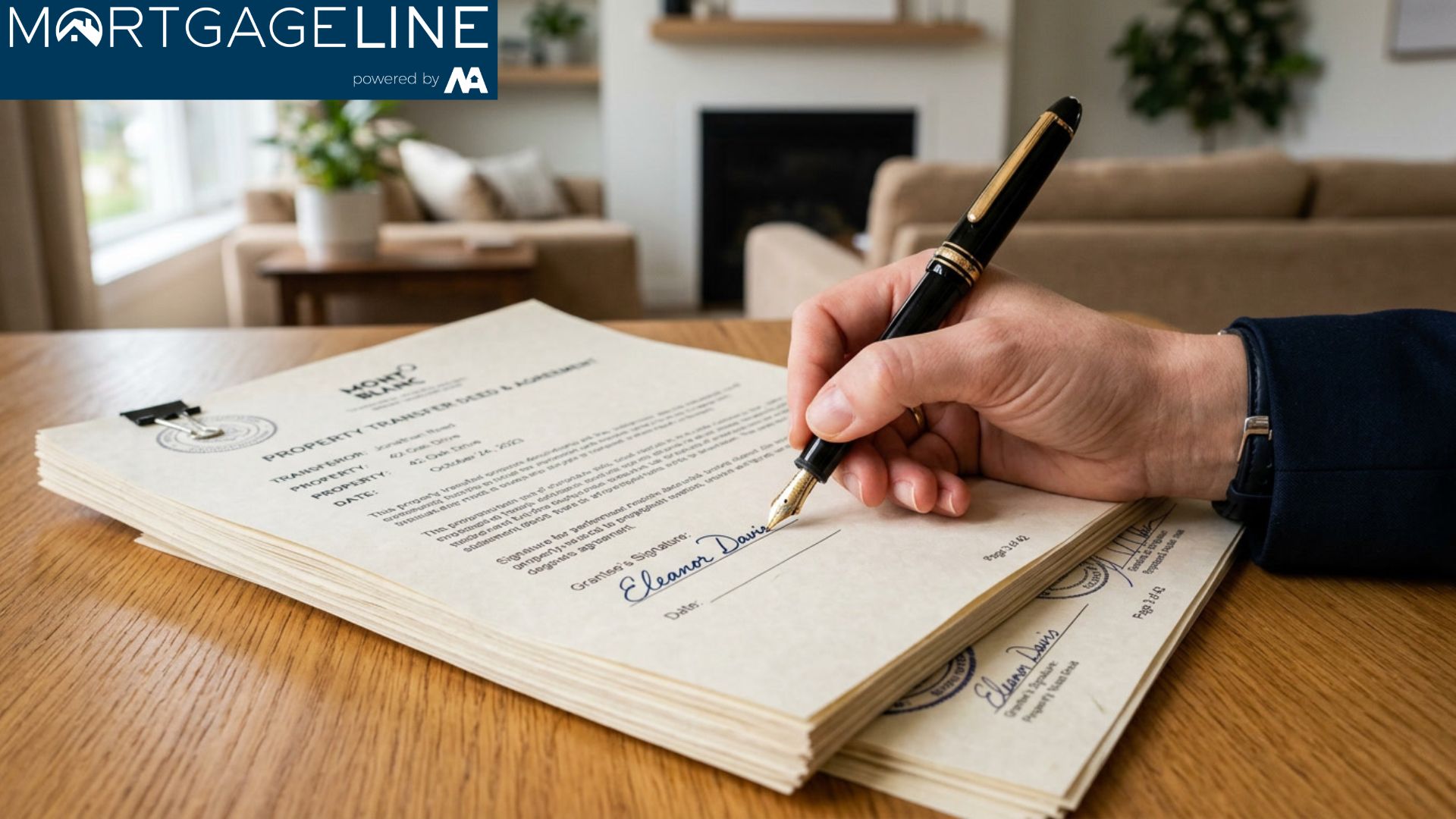
- Document Execution: The owner signs the quit claim document, legally transferring the title.
- Vacating the Property: The former owner hands over the keys and leaves the premises in a “broom-swept” condition.
It is highly recommended to seek independent legal counsel before signing any documents that relinquish your property rights, ensuring you are completely released from future liabilities.
Pros and Cons for Alberta Homeowners
Research from the Canadian Institute of Property Studies shows that utilizing a voluntary transfer reduces the overall timeline by roughly 35%. Homeowners routinely save between $5,000 and $15,000 in compounded legal and administrative fees that would otherwise be added to their debt. However, you completely lose the right to any future equity if the market rebounds, and your credit report will still show a “settlement” or “deed in lieu” status.

The Foreclosure Process in Alberta
Unlike a voluntary handover, the court-mandated seizure process is adversarial. It is governed primarily by the provincial Law of Property Act. Understanding the intricacies of this legislation is crucial when evaluating your options.
The Legal Steps Involved
The journey from missed payment to eviction is strictly regulated:
- Demand Letter: Following missed payments, the lender issues a formal demand for the outstanding balance.
- Statement of Claim: If the demand is ignored, a lawsuit is filed. Proper knowledge of responding to a statement of claim is vital at this juncture.
- Redemption Period: The court typically grants an “Order Nisi,” giving the borrower a set timeframe—usually six months—to pay the debt, known as the redemption period.
- Final Order: If the debt remains unpaid, the court grants an absolute order, transferring the title to the lender and authorizing eviction.
For those managing specific institutional actions, such as managing BMO mortgage arrears or resolving an RBC legal action, the internal timelines of the bank may vary, but the court requirements remain uniform across the province.
Impact on Credit and Financial Future
A finalized court order is one of the most damaging entries possible on a credit bureau. It delays any potential credit recovery for at least 120 days post-resolution and remains as a severe derogatory mark for seven years. This makes future borrowing, renting, and sometimes even securing employment in the financial sector exceedingly difficult.
Comparing the Two: A Side-by-Side Analysis
To clarify the differences, here is a direct comparison of how the two paths diverge in practical application.
| Feature | Quit Claim Deed (Voluntary) | Court-Ordered Foreclosure |
|---|---|---|
| Timeline | Typically 30 to 60 days. | 6 to 12 months (or more). |
| Legal Costs | Minimal; borrower may only pay for independent advice. | Extensive; bank’s legal fees are added to borrower’s debt. |
| Credit Impact | Severe, but noted as a “settlement.” | Maximum severity; noted as involuntary seizure. |
| Control | Borrower negotiates move-out date. | Court dictates the move-out timeline via bailiff. |
When to Choose Surrender over Legal Action
Opting for a voluntary transfer is not a one-size-fits-all solution. It requires a strategic look at your property’s current value versus the outstanding loan balance, as well as the specific classification of your mortgage under Alberta law.
The Role of Property Equity
If you possess significant equity in your home, walking away via a quit claim is a massive financial mistake. Surrendering the deed means you forfeit all built-up equity to the lender. Conversely, if the property is “underwater”—meaning you owe more than the home is worth on the open market—a voluntary transfer can act as a financial tourniquet, stopping the bleeding of accumulating interest and legal fees.
Dealing with Deficiency Judgments
A critical nuance in Alberta real estate law involves deficiency judgments. If a property is sold for less than the outstanding debt, the remaining balance is the deficiency. Under the Law of Property Act, if you hold a conventional (uninsured) mortgage in Alberta, lenders are generally barred from suing you for this shortfall. They are restricted to taking the land itself.
However, if your mortgage is insured by the Canada Mortgage and Housing Corporation (CMHC), Sagen, or Canada Guaranty, this protection is waived. The insurer can and will pursue you for the deficiency. Statistics indicate that nearly 25% of all property seizures in Alberta result in some form of deficiency judgment action against the borrower. Negotiating a quit claim deed might allow you to establish a structured repayment plan for the shortfall without the added pressure of litigation.
Exploring Alternatives Before Relinquishing Your Home
Before making the final decision to sign away your property rights, it is imperative to exhaust all alternative measures. Many homeowners panic at the sight of a demand letter and prematurely surrender their keys.
“Homeowners often wait too long to act. Once the statement of claim is filed, your options narrow rapidly. Taking proactive control of the situation protects your long-term borrowing capacity,” says Sarah Jenkins, Chief Credit Analyst at Financial Forethought. For instance, understanding the court timeline for homeowners can reveal that you have months to secure alternative funding or list the property on the open market.
How Secondary Financing Can Halt the Proceedings
If you have equity in your home but are suffering from a temporary cash flow crisis, secondary financing can be a lifeline. A secondary lender can provide a lump sum secured against your home equity, which is then used to pay off the arrears and reinstate the primary mortgage into good standing.
“Exploring equity-based lending options before default can entirely circumvent the need to surrender property,” adds Elena Rostova, Director of Mortgage Underwriting at Prairie Equity Group. This is especially relevant when assessing the benefits and drawbacks of secondary financing. While the interest rates are higher than primary bank rates, it preserves your ownership, protects your primary credit rating, and prevents a devastating total loss of the asset. This strategy is also frequently utilized when finding options for new permanent residents who might lack extensive Canadian credit histories but have acquired property equity.

Expert Advice: Real-World Scenarios
To contextualize these concepts, consider a verified 2026 scenario reviewed by the Law Society of Alberta regarding dispute resolution. A family faced severe income reduction and fell five months behind on a $450,000 mortgage. Their home’s market value had dipped slightly below the loan balance. By choosing to combat the bank in court, they accumulated an additional $12,000 in legal fees, which ultimately forced them into bankruptcy.
In contrast, a neighbouring couple in an identical financial position proactively engaged their lender with a deed in lieu proposal. They successfully negotiated a move-out date 45 days in the future, bypassed the $12,000 legal penalty, and avoided formal bankruptcy, allowing them to begin rebuilding their credit profile almost immediately.
Frequently Asked Questions
Does a quit claim deed erase my mortgage debt?
Not necessarily. While it transfers the property back to the lender, if the home’s value is lower than your mortgage balance (and the loan is CMHC-insured), you may still be legally responsible for paying the remaining deficiency shortfall.
How long does a voluntary surrender stay on my credit report?
A deed in lieu of foreclosure will remain on your Canadian credit report for seven years from the date of the settlement, heavily impacting your ability to secure traditional financing during that time.
Can a lender refuse my offer of a quit claim deed?
Yes. If the property has secondary liens, tax arrears, or extensive physical damage, the lender may refuse the deed and proceed with formal court action to ensure a clean transfer of title through a judge’s order.
Will I have to move out immediately after signing?
No, the move-out date is negotiated between you and the lender. This is one of the primary benefits, as it provides you with a predictable, agreed-upon timeline to secure alternative housing.
Should I stop paying property taxes if I plan to surrender the home?
You should never intentionally stop paying municipal taxes, as unpaid property taxes become a priority lien. This will complicate the title transfer and give the lender a strong reason to reject your voluntary surrender offer.
Conclusion
Navigating the turbulent waters of real estate debt in 2026 requires clear, pragmatic decision-making. The choice between a quit claim deed and a court-ordered foreclosure in Alberta ultimately boils down to taking control of an unfortunate situation versus letting a judge and bailiff dictate the outcome. While both avenues will undeniably impact your financial standing, a voluntary surrender frequently mitigates legal expenses and offers a dignified exit strategy. However, if you possess home equity, neither option should be your first choice. Exploring alternative equity financing can save your home entirely.
If you are feeling overwhelmed by demand letters and impending legal action, you do not have to face the banks alone. Contact our expert team today to review your equity options and halt the seizure process before it’s too late.
References
- Statistics Canada. (2026). Residential Mortgage Arrears and Debt Ratios in Western Canada.
- Bank of Canada. (2026). Monetary Policy Report and Household Debt Vulnerabilities.
- Canada Mortgage and Housing Corporation (CMHC). (2026). Insured Mortgage Guidelines and Deficiency Judgment Statistics.
- Law Society of Alberta. (2026). The Law of Property Act: Understanding Real Estate Litigation.
- Canadian Institute of Property Studies. (2026). Dispute Resolution Timelines in Provincial Real Estate Markets.
>