A foreclosure hearing before a Master in Chambers (now officially designated as an Applications Judge) in Calgary is a formal legal proceeding where a judicial officer reviews a lender’s application to enforce a defaulted mortgage. During this hearing, the judge evaluates the homeowner’s property equity, examines submitted affidavits, and determines the appropriate legal remedy, such as granting a redemption period or issuing an order for property sale.
Key Takeaways:
- The title “Master in Chambers” was officially updated to “Applications Judge” in Alberta, though both terms remain in active use regarding foreclosure proceedings.
- Hearings typically last between 15 and 45 minutes and focus heavily on documentary evidence, specifically the Affidavit of Value and Affidavit of Default.
- Most initial hearings result in an Order Nisi, which grants the homeowner a redemption period (usually up to 6 months) to pay the arrears and halt the foreclosure.
- Homeowners have a significantly higher chance of retaining their property if they attend the hearing, ideally with legal representation, to negotiate a realistic repayment plan.
- Accessing alternative home equity solutions before the court grants a Final Order for Foreclosure is a vital strategy for paying off arrears and associated legal costs.
Understanding the Role of the Applications Judge
In Alberta’s legal system, foreclosure actions do not immediately go before a trial judge. Instead, they are managed by an Applications Judge, a role historically referred to as a Master in Chambers. These judicial officers handle pre-trial matters, builders’ liens, bankruptcy proceedings, and, most notably, corporate and residential foreclosures in the Court of King’s Bench. According to guidelines set by the Alberta Courts, their primary function in a foreclosure is not to conduct a full trial, but to assess whether there is a genuine dispute of facts and to enforce the contractual rights of the mortgage agreement while ensuring the homeowner’s equity is protected where applicable.
“An Applications Judge is not there to punish you, but to apply the law equitably,” explains Sarah Jenkins, a prominent Calgary Real Estate Lawyer. “Presenting a realistic financial plan and cooperating with the process is your best defense when standing before the court.” By the time a homeowner is scheduled for a hearing in 2026, they have typically missed mortgage payments by at least 90 days, prompting the lender to initiate formal legal action.
The 2026 Foreclosure Timeline: Leading Up to the Hearing
The journey to the courtroom begins long before the hearing date. Lenders follow a strict procedural timeline mandated by provincial law. Understanding these steps is crucial for formulating a defense.
- The Demand Letter: After missing initial payments, the lender issues a formal demand for payment. This outlines the arrears and gives a short window (often 10 to 15 days) to rectify the default.
- Statement of Claim: If the demand is ignored, the lender files a Statement of Claim. The homeowner has 20 days (if served in Alberta) to file a Statement of Defense or Demand for Notice. For a detailed breakdown of this critical phase, review this guide on responding to a Statement of Claim.
- Affidavit of Default and Value: The lender files sworn affidavits proving the debt amount and the current appraised value of the property. Typically, obtaining an Affidavit of Value adds $300 to $500 to the total legal costs.
- Application for an Order: The lender’s legal counsel files an application for a hearing before the Applications Judge to seek a remedy, usually an Order Nisi.
What Happens Inside the Courtroom?
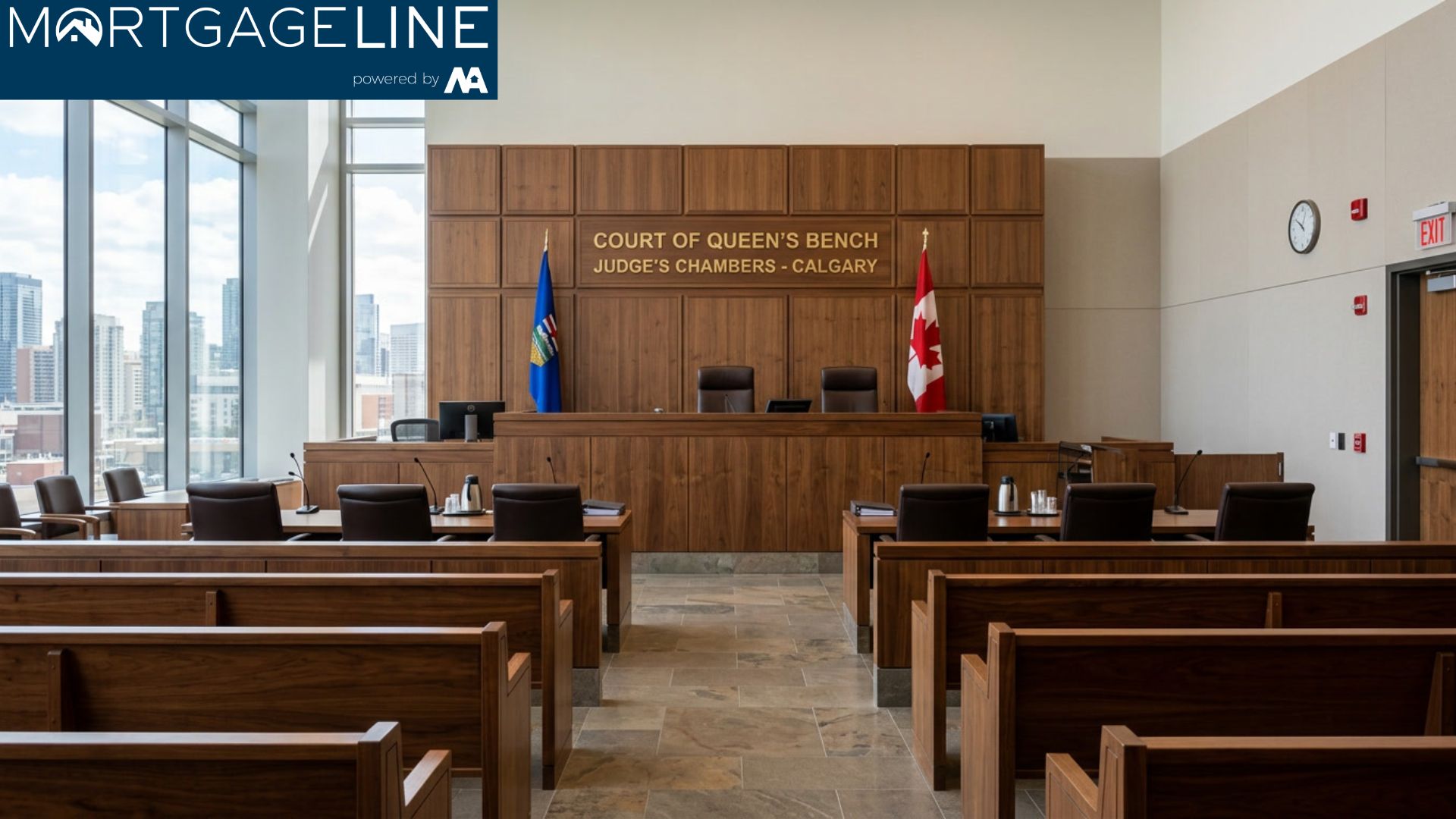
Foreclosure hearings in Calgary are generally open to the public and take place at the Calgary Courts Centre. In 2026, many procedural applications still utilize hybrid or virtual courtroom technology, but the legal gravity remains identical. During the hearing, the lender’s lawyer presents their case, stating the amount owed and the property’s estimated market value. The average Calgary home value hovering around $615,000 in 2026 means that substantial equity is often at stake.
The Applications Judge will ask the homeowner (or their legal counsel) if they dispute the amount owed or the property valuation. If there is no dispute, the judge will determine the length of the redemption period. David Chen, a Senior Mortgage Strategist, notes: “Homeowners who understand the procedural steps in a Calgary foreclosure hearing have a significantly higher chance of negotiating a forbearance or an extended redemption period compared to those who ignore the summons.” Data suggests that over 60% of represented homeowners who present a clear financial remedy successfully secure an extended timeline from the judge.
Common Court Orders Issued During Foreclosure Hearings
When the Applications Judge makes a ruling, it is formalized into a court order. The type of order dictates the homeowner’s next steps and the lender’s rights. Below is a comparison table of the most common orders.
| Type of Order | Description | Typical Timeline |
|---|---|---|
| Order Nisi | Confirms the debt and grants a Redemption Period for the homeowner to pay the arrears or the full mortgage balance. | Usually up to 6 months, but can be reduced to 1 day if there is zero equity in the home. |
| Order for Sale | Allows the property to be listed on the open market through a real estate agent chosen by the court. | Initiated immediately after the Redemption Period expires. |
| Rice Order | Permits the lender to purchase the property directly, usually when the home’s value is less than the mortgage debt. | Requires a new appraisal and judicial approval; transfers title to lender. |
| Final Order for Foreclosure | Transfers the property title to the lender, extinguishing the homeowner’s rights. | Granted if the property doesn’t sell or if no action is taken. See the timeline for final orders. |
Defending Against Different Institutional Lenders
The approach to a foreclosure hearing can vary slightly depending on the financial institution holding the mortgage. Major banks adhere strictly to the guidelines set by the Canadian Bankers Association, which reported a national default rate of approximately 0.18% in recent data. However, their internal policies on forbearance and legal aggression differ.
For instance, understanding the specific procedures used by TD Bank can help you anticipate their legal arguments. Similarly, if your mortgage is held by the Royal Bank, exploring options for halting an RBC foreclosure involves acting swiftly during the redemption period to either refinance or list the property for sale. Homeowners dealing with BMO should consult specialized resources on managing BMO-specific proceedings. Regardless of the lender, legal costs associated with drafting affidavits and court appearances routinely add $3,000 to $5,000 to the homeowner’s total debt balance.

Strategies to Resolve the Default Before the Final Order
The primary goal of attending your hearing is to secure enough time to implement a financial solution. The Equity of Redemption is a fundamental legal principle in Canada that protects a borrower’s right to reclaim their property by paying off the defaulted amount before a final judgment is rendered.
1. Seeking Independent Legal Counsel
Appearing before an Applications Judge without representation can be daunting. Engaging a lawyer who specializes in real estate and debt defense is highly recommended. The Law Society of Alberta provides directories to find qualified professionals. Proper representation ensures your affidavits are correctly filed and your rights are advocated for effectively. Furthermore, if you plan to refinance, obtaining independent legal advice is often a mandatory step.
2. Leveraging Existing Home Equity
If you have substantial equity in your home but are facing a cash flow crisis, borrowing against that equity is a viable strategy to pay off the arrears and legal fees. “In 2026, leveraging existing home equity before the final order is granted remains the most effective way to retain property ownership,” states Michael Robertson, an Alberta Financial Consultant. By securing alternative financing, you can satisfy the lender’s demands and have the foreclosure action dismissed. It is vital to weigh the pros and cons of utilizing equity-based lending to ensure it aligns with your long-term financial recovery plan.
3. Requesting a Judicial Listing
If refinancing is not possible, you can request that the Applications Judge order a judicial sale of the property. This allows the home to be sold on the open real estate market rather than being surrendered directly to the bank. A market sale generally yields a higher purchase price, maximizing the chances that any leftover equity is returned to you after the mortgage and legal debts are settled.

Financial Realities and Macro Context in 2026
The economic landscape heavily influences foreclosure rates and court leniency. According to historical trends and current labor data from Statistics Canada, shifts in the local energy sector and broader inflation metrics directly correlate with mortgage stress. In 2026, with average stress test rates sitting near 5.5%, many homeowners who secured hyper-low rates years prior are finding renewals challenging. Applications Judges are acutely aware of these macroeconomic factors. While they must strictly enforce the law, demonstrating to the court that your default is the result of temporary, verifiable economic hardship (and that you have a concrete plan to resolve it) often results in a more favorable redemption timeline. Approximately 90% of uncontested hearings lead to a standard Order Nisi rather than immediate repossession, providing a critical window for homeowners to act.
Frequently Asked Questions
Do I need to attend the foreclosure hearing in Calgary?
Yes, attending your hearing is highly recommended. Failing to appear allows the lender’s lawyer to proceed uncontested, which often results in the court granting the exact legal remedies the bank is asking for, minimizing your redemption timeline.
What is the difference between a Master in Chambers and an Applications Judge?
There is no functional difference. In 2022, the Alberta government officially changed the title of “Master in Chambers” to “Applications Judge” to modernize the court’s terminology, though both terms are still widely used in legal circles and by the public.
How long is the typical redemption period granted by the court?
An Applications Judge typically grants a redemption period of up to 6 months. However, if the lender proves there is little to no equity in the property, the judge may reduce this period to as little as one day.
Can the bank take my house immediately at the first hearing?
No, an immediate transfer of title at the first hearing is exceedingly rare. The court generally issues an Order Nisi first, which gives you a specific timeframe to pay the arrears and keep your home.
Who pays the legal fees for the foreclosure proceedings?
Unfortunately, standard mortgage contracts stipulate that the borrower is responsible for the lender’s legal costs in the event of a default. These costs are added to your total outstanding mortgage balance.
Can I sell my home privately after an Order Nisi is granted?
Yes, during the redemption period, you still own the home and have the right to sell it. If the sale covers the full mortgage balance and legal fees, the foreclosure action is halted upon payout.
Conclusion
Facing a legal proceeding before an Applications Judge in Calgary is undoubtedly a stressful experience, but it is not the end of the road. By understanding the judicial process, arriving at your hearing prepared, and proactively exploring alternative financing or real estate solutions during your redemption period, you can take back control of your financial future. Time is the most critical factor in foreclosure defense; ignoring a Statement of Claim only limits your options and increases your legal liabilities.
If you are currently facing a foreclosure hearing or need to access equity to satisfy a lender’s demands, do not wait until a Final Order is imminent. Get in touch with our team today to explore strategic financing options tailored to Alberta homeowners.