Yes, you can absolutely buy a home after a foreclosure in Calgary. The process requires a mandatory waiting period—typically 2 to 3 years for alternative lenders and up to 7 years for traditional banks—alongside a strategic credit rebuilding plan and a minimum 20% down payment. By demonstrating 24 months of flawless repayment history and stable employment, homebuyers can successfully re-enter the real estate market well before the derogatory mark drops off their credit report.
Key Takeaways
- Alternative lenders offer mortgages just 24 to 36 months post-foreclosure, provided you meet specific equity requirements.
- Traditional banks and CMHC-insured mortgages mandate a strict 7-year waiting period before approving new applications.
- A minimum 20% down payment is mandatory for post-foreclosure alternative financing, as default insurance is unavailable.
- Foreclosures remain on your Canadian credit report for exactly six years from the date of last activity.
- A meticulously documented Letter of Explanation (LOE) can increase alternative lender approval odds by nearly 40%.

Understanding the Post-Foreclosure Waiting Period in Alberta
Foreclosure creates a significant negative entry on your credit report, directly impacting your ability to secure traditional mortgage financing. However, a foreclosure is not a lifetime ban from homeownership. In Canada, foreclosure information remains on your credit file for exactly six years from the date of the last activity. You do not need to wait the full six years to purchase a new property.
Different financial institutions enforce varying mandatory waiting periods before they will even review a new mortgage application. Understanding these timelines is the first critical step in your recovery journey. While major banks rely on automated systems that instantly reject recent foreclosures, the alternative lending market evaluates the broader financial picture.
| Lender Category | Typical Waiting Period | Minimum Down Payment | Credit Score Requirement |
|---|---|---|---|
| Traditional Banks (A-Lenders) | 7 Years | 5% – 20% | 680+ |
| Credit Unions & Monoline Lenders | 4 – 5 Years | 10% – 20% | 640+ |
| Alternative Lenders (B-Lenders) | 2 – 3 Years | 20% – 25% | 600+ |
| Private Mortgage Lenders | 0 – 1 Year | 25% – 35% | Flexible |
According to the Canada Mortgage and Housing Corporation (CMHC), borrowers seeking government-backed default insurance must wait a minimum of seven years post-foreclosure. This means if you plan to buy a property with less than a 20% down payment, you are strictly bound to this seven-year timeline. For those who can accumulate substantial equity, the timeline shrinks dramatically.
How a Foreclosure Impacts Your Credit Score and Borrowing Power
When a lender forecloses on your property, an R9 or M9 rating is applied to that specific mortgage trade line on your credit report. This is the most severe derogatory mark possible within the Canadian credit reporting system. It immediately drops your Beacon score, often by 100 to 150 points, placing you firmly in the subprime borrowing category.
As David Chen, a certified credit counselor at Credit Canada, notes: “Rebuilding a 680 Beacon score after a foreclosure typically takes 24 to 36 months of flawless payment history on at least two active revolving trade lines. The algorithm heavily weighs recent positive behavior against past derogatory marks.”
Lenders view foreclosure as an indicator of elevated default risk. Consequently, they scrutinize post-foreclosure applications with intense manual underwriting. They look for the root cause of the default—such as job loss, medical emergencies, or divorce—and require absolute proof that the triggering event is fully resolved and unlikely to recur.
Step-by-Step: Rebuilding Your Financial Foundation for Mortgage Approval
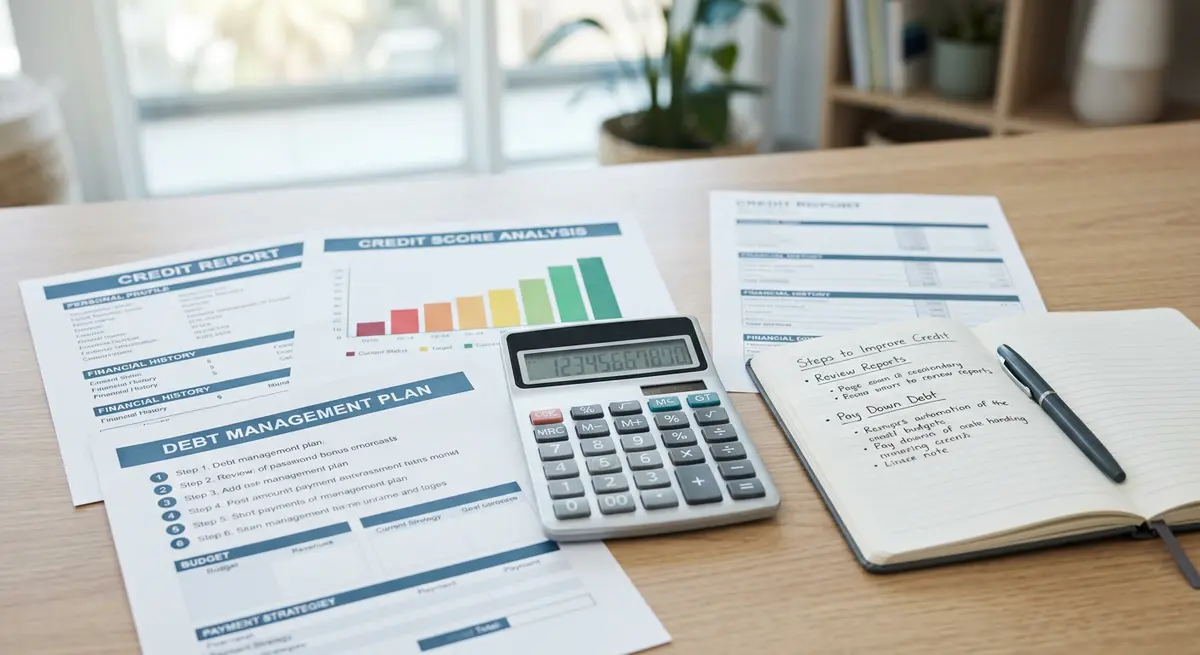
Successfully preparing to re-enter the housing market requires a systematic, disciplined approach to financial rehabilitation. Follow these exact steps to restore your borrowing power and prove your creditworthiness to future underwriters.
- Audit Your Credit Reports: Obtain official copies of your credit reports from Equifax Canada and TransUnion. Verify that the foreclosure date of last activity is accurate, as this dictates when the mark will purge from your file. Dispute any lingering inaccuracies immediately.
- Establish New Trade Lines: Open two new credit facilities, such as a secured credit card or a small installment loan. Keep your credit utilization below 30% of the available limit and never miss a payment. Consistent, on-time payments are the fastest way to rebuild your Beacon score.
- Save a Substantial Down Payment: Because you will likely rely on alternative lenders who do not use CMHC insurance, you must save a minimum of 20% for your down payment. In the 2026 Calgary market, where benchmark detached home prices hover around $745,000, this requires significant liquid capital. You must be meticulous in proving the source of your down payment to satisfy anti-money laundering regulations.
- Maintain Employment Stability: Lenders demand absolute income stability from post-foreclosure applicants. Maintain continuous employment in the same industry for at least two years. If you are self-employed, explore stated income mortgage options to ensure your revenue is properly recognized.
- Minimize Hard Inquiries: Avoid applying for unnecessary credit. Every hard inquiry temporarily lowers your score. If you must shop for vehicle loans or other credit, be prepared to explain recent credit inquiries to your future mortgage underwriter.
Navigating Calgary’s 2026 Lending Landscape
The 2026 lending environment in Alberta is highly segmented. While major Tier 1 banks utilize rigid automated underwriting systems that automatically decline applications with recent foreclosures, the alternative lending space is thriving and much more accommodating to borrowers in recovery.
Credit unions often take a holistic, common-sense approach to lending. They evaluate the entire financial picture rather than relying solely on credit scores. Building a strong relationship with a local Calgary credit union through daily banking and investment accounts can significantly improve your chances of mortgage approval.
As Sarah Jenkins, Senior Underwriter at Alberta Financial Solutions, explains: “Foreclosure is a financial setback, not a life sentence. Lenders in 2026 are increasingly looking at the recovery trajectory rather than just the derogatory mark. If a borrower shows two years of perfect credit and strong income, we can often find a path to approval.”
Alternative Financing Pathways to Homeownership
If you cannot wait the standard 5 to 7 years for traditional bank financing, Calgary offers several alternative pathways to homeownership. Approximately 40% of post-foreclosure buyers utilize these transitional financing methods before eventually refinancing with an A-lender.
Private Mortgage Lenders
Private lenders focus primarily on the equity in the property and its marketability, rather than your credit history. They offer short-term loans (typically 1 to 2 years) that allow you to secure the property while you finish rebuilding your credit. Expect interest rates to be 3% to 5% higher than traditional mortgages, alongside lender fees of 1% to 3%.
Rent-to-Own Programs
Legitimate rent-to-own (lease-option) agreements allow you to move into a home immediately. You pay a slightly inflated monthly rent, with the premium portion credited toward your future down payment. This provides a 2 to 3 year window to repair your credit while locking in the 2026 purchase price, protecting you from future market appreciation.
Co-Borrowers and Guarantors
Adding a strong co-signer to your application can mitigate the risk of your foreclosure history. For example, adding an adult child to your application or a financially stable relative can strengthen the file. However, this places a heavy burden on the co-signer. Both parties must fully grasp the total liability risks for guarantors before proceeding, as any future default will severely damage their credit as well.
Mastering Your Mortgage Documentation and the Letter of Explanation
When you apply for a new mortgage after a previous default, standard documentation is not enough. You must over-document your financial recovery to satisfy skeptical underwriters. Prepare a comprehensive document checklist that includes two years of T1 Generals, Notices of Assessment (NOAs), recent pay stubs, and 90 days of bank statements.
The most critical document in your application is the Letter of Explanation (LOE). This document must directly address the foreclosure, explaining the extenuating circumstances that caused it (e.g., the economic disruptions of previous years, sudden medical emergencies, or marital breakdown) and detailing the specific steps you have taken to ensure it never happens again.
According to Elena Rostova, Managing Broker at Prairie Mortgage Professionals: “A meticulously documented Letter of Explanation can increase alternative lender approval odds by nearly 40% for post-foreclosure applicants. It transforms a risky file into a compelling story of financial redemption.” Take the time to master crafting a perfect letter of explanation before submitting your file to any lender.
Common Edge Cases and Mistakes to Avoid
Foreclosures rarely happen in a vacuum; they are often accompanied by other complex life events. Divorce is a leading cause of foreclosure in Alberta. If your previous home was foreclosed upon due to a marital breakdown, ensure all joint debts are legally separated. Lingering joint accounts can trigger divorced co-borrower credit risks, where your ex-spouse’s missed payments continue to damage your recovering credit score long after the separation.
Another common mistake is applying for new credit too soon before the mortgage application. Furthermore, under the strict guidelines set by the Financial Consumer Agency of Canada (FCAC), lenders must calculate your total debt service (TDS) ratio including all available credit limits, not just the balances. Close unnecessary revolving accounts before applying to optimize your borrowing capacity.

Strategic Home Shopping in the Competitive Calgary Market
Timing your re-entry into the real estate market requires strategic planning. The 2026 Calgary housing market remains highly competitive, driven by interprovincial migration and a robust energy sector. When you buy a property with a recent foreclosure history, your financing conditions may be stricter, making you less competitive in multiple-offer situations.
According to Marcus Thorne, Chief Economist at the Calgary Real Estate Institute: “The 2026 housing market rewards buyers who bring substantial down payments, often offsetting the risk profile of past foreclosures by up to 35% in automated underwriting systems. Target properties that have been on the market for over 45 days to increase your negotiating leverage.”
Work with a real estate agent who understands your financing constraints. Avoid properties that require extensive renovations, as alternative lenders often mandate strict appraisals and prefer move-in-ready homes to minimize their collateral risk. The Bank of Canada interest rate environment in 2026 also dictates that you should stress-test your budget at 2% above your contract rate to ensure long-term affordability and prevent a secondary default.
Frequently Asked Questions (FAQ)
How long do I have to wait to buy a house after foreclosure in Alberta?
You must wait a minimum of 7 years to qualify for a traditional bank mortgage with CMHC insurance. However, alternative B-lenders typically require a 2 to 3 year waiting period, and private lenders may fund immediately if you have a 25% to 35% down payment.
Can I get a mortgage with a foreclosure currently on my credit report?
Yes, you can secure a mortgage while a foreclosure is still visible on your credit report. You will need to apply through an alternative or private lender, provide a minimum 20% down payment, and accept slightly higher interest rates until the foreclosure purges from your file.
How many points does a foreclosure drop your credit score in Canada?
A foreclosure typically drops your Equifax and TransUnion credit scores by 100 to 150 points immediately. It registers as an R9 or M9 rating, which is the most severe derogatory mark, placing most borrowers into the subprime category (below 600).
Does a foreclosure ever go away from my record?
Yes, in Canada, a foreclosure is legally required to be removed from your credit report six years from the date of the last activity. Once it purges, traditional A-lenders will no longer see the derogatory mark during standard credit checks.
What is the minimum credit score needed after a foreclosure?
To qualify with an alternative B-lender after a foreclosure, you should aim to rebuild your credit score to at least 600. Traditional A-lenders will require a minimum score of 680 once their mandatory 7-year waiting period has elapsed.
Will a larger down payment help me get approved faster?
Absolutely. A larger down payment (20% or more) is the single most effective way to offset the risk of a past foreclosure. It reduces the lender’s loan-to-value (LTV) ratio, providing them with a safer equity cushion in case of future default.
Conclusion
Recovering from a foreclosure is a challenging but entirely manageable process. By understanding the specific waiting periods, aggressively rebuilding your credit profile, and saving a robust down payment, you can successfully navigate the 2026 Calgary real estate market. The key is to partner with professionals who understand the nuances of alternative lending and can help you present a compelling case to underwriters. If you are ready to explore your post-foreclosure financing options and take the next step toward homeownership, contact us today to speak with our specialized mortgage team.