Foreclosure mediation in Alberta is a structured, voluntary dispute resolution process where homeowners and lenders collaborate with a neutral third-party facilitator to negotiate alternatives to property seizure. By focusing on practical financial restructuring rather than adversarial courtroom litigation, this framework helps distressed borrowers modify loan terms, establish forbearance agreements, or arrange voluntary sales while protecting their legal rights and preserving their financial future.
Key Takeaways
- Structured negotiation offers a collaborative, private alternative to public courtroom battles.
- The mediation process typically involves three phases: financial assessment, joint exploration, and formalization of terms.
- Alberta residents can access free or low-cost legal guidance through provincial programs and community clinics based on income eligibility.
- Successful mediation can help homeowners avoid severe credit damage and public legal records.
- Understanding technical legal documents is critical before entering any binding mediation agreement.
- Alternative financing strategies can often be integrated into mediation settlements to satisfy lender requirements.
The 2026 Landscape of Property Disputes in Alberta
Navigating financial hurdles requires a clear understanding of the structured options available through provincial legal systems. In 2026, data from the Bank of Canada indicates that approximately 1 in 12 Canadian homeowners experiences significant friction with mortgage payments during periods of economic volatility. While this statistic spans nationwide, Alberta’s unique legal framework offers specific, localized pathways to address these challenges before they escalate into irreversible property loss.
When facing property-related difficulties, collaborative solutions consistently provide better outcomes than protracted court battles. According to research from the University of Calgary’s Faculty of Law, mediation success rates hover around 68% when both parties engage in good faith. Provincial law provides these structured options to help resolve disputes efficiently. Many residents qualify for free or low-cost support through local organizations, connecting distressed borrowers with professionals who can explain their rights, outline their responsibilities, and halt immediate legal action.

Core Mechanics of Structured Negotiation
Unlike formal judicial hearings, structured negotiation focuses on practical, forward-looking solutions rather than assigning blame. This voluntary process connects you with impartial facilitators whose primary goal is to review your financial realities and bridge the communication gap with your lender. The process is highly systematic, ensuring that all parties have a transparent view of the economic variables at play.
The resolution journey typically unfolds across three distinct phases:
- Evidence-Based Assessment: Facilitators conduct a thorough review of your income, household obligations, and mortgage terms. This phase requires complete financial transparency to establish a baseline for negotiations.
- Joint Exploration of Alternatives: Both parties brainstorm realistic arrangements. This might include temporary payment reductions, extending the amortization period, or capitalizing arrears into the principal balance.
- Formalization of Terms: Once a mutually acceptable path is identified, the mediator drafts a binding agreement that supersedes previous collection efforts, provided the homeowner adheres to the new terms.
As Sarah Jenkins, Senior Legal Counsel at the Alberta Housing Initiative, explains: “Mediation transforms a combative legal proceeding into a collaborative financial rescue plan. It gives the homeowner a voice and the lender a pragmatic path to recovering their funds without the deadweight loss of legal fees.”
Mediation vs. Traditional Litigation
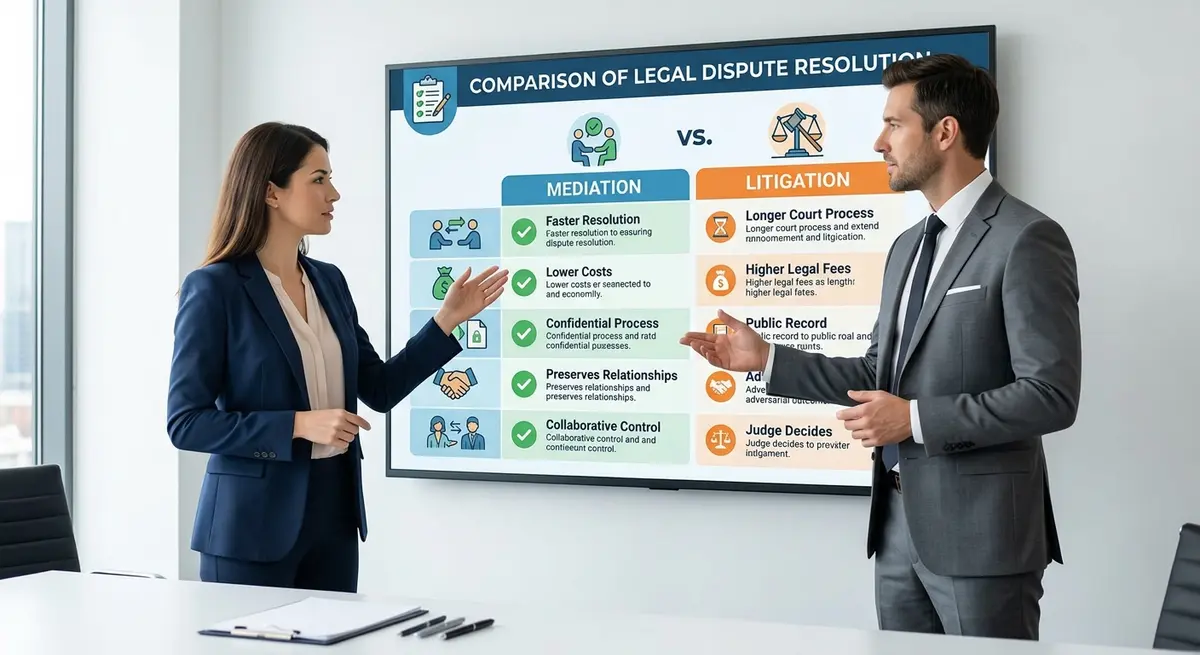
Understanding the stark differences between collaborative dialogue and courtroom litigation is essential for any homeowner responding to formal court filings. Courtroom processes often leave limited room for creative problem-solving, binding the judge to strict statutory interpretations. Through collaborative discussions, you retain significantly more influence over the final agreement.
| Feature | Mediation / Structured Negotiation | Traditional Litigation |
|---|---|---|
| Cost | Low to moderate; often subsidized by provincial programs. | High; involves extensive legal and administrative fees. |
| Timeline | Typically resolved in 30 to 90 days. | Can drag on for 6 to 18 months. |
| Privacy | Completely confidential; no public record of the negotiation details. | Matters become part of the public court record. |
| Control | High; parties mutually agree on the outcome. | Low; a judge imposes the final ruling. |
Leveraging Provincial Legal Resources
Your rights remain central throughout all discussions. You can consult independent legal advice at any stage or pause proceedings if solutions stall. To navigate this effectively, Alberta offers a robust network of accessible learning tools that transform complex legal concepts into practical knowledge.
The Centre for Public Legal Education Alberta (CPLEA) leads efforts to demystify provincial laws. Their platforms offer plain-language guides covering housing rights, financial obligations, and dispute resolution. In 2026, these resources include interactive checklists for evaluating financial agreements, video explainers breaking down legal processes, and printable templates for formal communications.
Furthermore, understanding the timeline is critical. For instance, knowing how to approach calculating your redemption period can give you the necessary leverage during mediation to propose a realistic timeline for refinancing or selling the property.
Community Clinics and Pro Bono Support
Finding the right legal help in Alberta doesn’t require endless searches or deep pockets. Local clinics complement provincial programs by offering personalized assistance tailored to your specific jurisdiction. For example, Calgary Legal Guidance provides free evening consultations four nights weekly for income-qualified residents. Similar organizations operate in Lethbridge, Red Deer, and Edmonton with specialized housing expertise.
These community services focus on urgent needs first. They help prioritize actions like negotiating payment plans, requesting documentation reviews, or preparing for the foreclosure questioning process. Volunteer initiatives are also vital; Pro Bono Students Canada partners with law schools at the University of Calgary and the University of Alberta to let supervised students assist with civil claims.
If you require private representation, the Law Society of Alberta maintains an online directory listing over 7,500 private practitioners. Many lawyers now offer limited-scope services for specific tasks, such as document review or targeted court appearances, which helps maximize outcomes while managing costs effectively.
Financial Alternatives to Resolve Disputes
Mediation often reveals that the core issue isn’t an unwillingness to pay, but a temporary liquidity crisis. During structured negotiations, facilitators will ask if you have explored alternative financing to satisfy the lender’s demands. This is where understanding your equity position becomes paramount.
If you have built up equity in your property, you might negotiate a pause in legal proceedings to secure alternative funding. Exploring cash-out refinancing alternatives can provide the lump sum needed to clear arrears and reinstate the original mortgage. Lenders are often highly receptive to this during mediation, as it guarantees they receive their owed funds without the hassle of a forced property sale.
It is also crucial to address any encumbrances on your property title that might complicate refinancing. If a legal action has already commenced, you will need a strategy for discharging a lis pendens (a notice of pending litigation) as part of your mediation settlement agreement, ensuring your title is clear for new financing.

Step-by-Step Guide: Preparing for Your Mediation Session
Preparation is the single biggest determinant of success in structured negotiations. Lenders appreciate borrowers who come to the table organized and realistic. Follow these steps to prepare for your session in 2026:
- Gather Financial Documentation: Compile your last three months of bank statements, recent pay stubs, tax notices of assessment, and a detailed household budget.
- Understand the Legal Status: Determine exactly where you are in the legal process. There is a significant difference between receiving a warning letter and receiving a statement of claim.
- Define Your Maximum Capacity: Calculate the absolute maximum monthly payment you can sustainably afford without defaulting on other essential living expenses.
- Draft a Hardship Letter: Write a concise, factual explanation of why you fell behind (e.g., job loss, medical emergency) and what has changed to ensure future payments will be made.
- Consult an Expert: Before signing any proposed forbearance agreement, have a legal or mortgage professional review it to ensure you aren’t inadvertently exposing yourself to potential deficiency judgments if the agreement fails.
Conclusion
Resolving property challenges requires combining legal knowledge with practical, actionable support. Alberta’s legal system offers robust tools, from court-assisted programs to community legal clinics, designed to address housing issues effectively without overwhelming costs. Structured negotiation and mediation empower homeowners to take control of their financial narratives, preserving relationships with lenders and avoiding the severe consequences of public litigation.
The Second Mortgage Store team brings extensive, localized expertise to these complex situations. We simplify provincial regulations by explaining procedural requirements and connecting you with the right local services to protect your assets. If you are facing property-related financial distress, do not wait for the situation to escalate into the courtroom. Get in touch with our team today at +1 403-827-6630 to start navigating your situation with confidence and explore sustainable financial strategies.
Frequently Asked Questions
What is foreclosure mediation in Alberta?
Foreclosure mediation is a structured, voluntary process where homeowners and lenders work with a neutral third-party facilitator to explore alternatives to losing a property. It aims to find mutually agreeable solutions, such as payment adjustments or loan modifications, while respecting provincial laws.
How can public legal education help with housing issues?
Public legal education initiatives provide free resources, interactive checklists, and guides to help you understand your rights and options. Organizations like the Centre for Public Legal Education Alberta (CPLEA) offer plain-language materials on debt management and property disputes.
Where can I find low-cost legal assistance in Alberta?
Pro bono clinics, legal aid services, and community organizations like Calgary Legal Guidance offer reduced-fee or free help for income-qualified residents. Online directories from the Law Society of Alberta also connect you with professionals offering limited-scope services.
What rights do homeowners have during mediation proceedings?
Homeowners have the right to receive formal notices, negotiate repayment plans in good faith, and seek independent legal counsel at any time. Mediation programs allow you to present your financial situation confidentially and explore alternatives like refinancing without immediate court action.
How do I access self-help legal resources in Alberta?
Websites like the Alberta Courts portal provide step-by-step guides, official forms, and instructional videos. Additionally, public libraries and courthouse libraries host physical copies of legal toolkits for civil claims and property matters.
Does mediation stop the legal foreclosure process?
Entering mediation does not automatically erase existing legal filings, but lenders will typically agree to pause active litigation (a forbearance) while negotiations are ongoing. If a successful agreement is reached and adhered to, the lender will formally halt the foreclosure process.