When facing a conservative property valuation during a secondary financing application in Alberta, homeowners must immediately request the full appraisal report, audit the document for factual errors, and submit a formal Reconsideration of Value (ROV) backed by superior comparable sales. If traditional financial institutions refuse to adjust the valuation, pivoting to alternative lenders who utilize flexible Loan-to-Value (LTV) metrics provides the most effective and immediate solution to secure necessary funding.
Key Takeaways
- Demand the Data: Always request the comprehensive PDF appraisal report to audit for objective errors in square footage, zoning, or property features.
- Challenge with Evidence: Submit a formal Reconsideration of Value (ROV) using superior, hyper-local comparables sold within the last 90 days.
- Document Improvements: Provide appraisers with a detailed ledger and receipts for all capital improvements made to the property over the last five years.
- Leverage Alternative Lenders: Private and B-lenders offer flexible LTV ratios up to 85%, effectively neutralizing the impact of a conservative bank assessment.
- Work with Specialists: Engage a specialized broker who understands 2026 market volatility and has established relationships with flexible underwriting departments.
Understanding the 2026 Calgary Real Estate Appraisal Landscape
The local real estate market operates on unique economic drivers, heavily influenced by the energy sector, inter-provincial migration, and shifting interest rate environments. In 2026, these factors have created unprecedented micro-market volatility. Appraisers frequently adopt highly conservative approaches during periods of economic transition, resulting in valuations that often disappoint homeowners who remember peak market pricing.
According to comprehensive market data published by the Calgary Real Estate Board (CREB), property values in specific quadrants fluctuated by up to 4.5% within a single six-month period in early 2026. This rapid movement makes Automated Valuation Models (AVMs) and traditional comparative market analyses highly unreliable for subordinate financing. Appraisers relying on 90-day-old comparable sales (comps) often undervalue properties in rapidly appreciating neighborhoods.
As Dr. Elena Rostova, Real Estate Economist at the University of Calgary, explains:
“The energy sector’s stabilization in 2026 has created a two-tiered housing market. Standardized appraisal algorithms fail to account for hyper-local demand surges, making manual, detailed appraisal reviews essential for accurate secondary financing valuations.”
The Financial Impact of a Low Valuation on Borrowing Power
The primary consequence of a conservative assessment is a direct reduction in your available home equity. Traditional A-lenders calculate your maximum borrowing limit based on a strict Loan-to-Value (LTV) ratio, typically capped at 80%. When the appraised value drops, the mathematical ceiling on your subordinate loan drops with it.
Consider the mathematical reality of a $50,000 appraisal shortfall. If you owe $300,000 on your primary mortgage, the difference between an expected $500,000 valuation and a $450,000 actual assessment drastically alters your financial options.
| Valuation Scenario | Property Value | Max LTV (80%) | Existing 1st Mortgage | Available Secondary Funds |
|---|---|---|---|---|
| Expected Appraisal | $500,000 | $400,000 | $300,000 | $100,000 |
| Low Appraisal | $450,000 | $360,000 | $300,000 | $60,000 |
| Total Shortfall | -$50,000 | -$40,000 | N/A | -$40,000 |
This $40,000 reduction in available funds often forces borrowers to reconsider their entire financial strategy. In these scenarios, exploring an unsecured line of credit comparison or specialized equity loans becomes critical to achieving the original funding goal.

Step-by-Step Guide: How to Dispute a Conservative Property Assessment
Successfully challenging a conservative valuation requires empirical evidence, not emotional arguments. The Appraisal Institute of Canada maintains strict guidelines for valuation disputes. Homeowners must follow a structured, data-first approach to trigger a Reconsideration of Value (ROV).
- Request the Full Appraisal Report: Never accept a verbal rejection. Demand the comprehensive PDF report from your lender. You have a legal right to review the document if you paid for the assessment.
- Audit for Factual Inaccuracies: Scrutinize the report for objective errors. Check the square footage, lot size, bedroom count, and zoning classification. A missed bathroom or incorrect basement development status instantly invalidates the valuation.
- Analyze the Selected Comparables: Appraisers typically use three to four recent sales. Verify that these comps are within a 1-kilometer radius and sold within the last 90 days. If the appraiser used a distressed sale or a foreclosure property as a comp, flag it immediately.
- Provide Superior Comparables: Work with a real estate professional to find better comps that the appraiser missed. Ensure these properties share similar architectural styles, upgrade levels, and proximity to amenities.
- Draft a Formal Reconsideration of Value (ROV): Compile your findings into a professional document. Submitting a well-structured dispute significantly increases your chances of a revision.
Industry statistics show that 63% of successful appraisal challenges include a comprehensive, professionally formatted dispute document. Learning how to write a compelling letter of explanation and organizing your evidence is the cornerstone of overturning a bad valuation.
Alternative Financing Solutions When Traditional Banks Say No
When a formal dispute fails, traditional banks will rigidly adhere to the low valuation. However, the secondary mortgage market offers robust alternatives. Private lenders and B-lenders evaluate risk differently, focusing heavily on the property’s marketability and the borrower’s exit strategy rather than strict AVM outputs.
As Marcus Thorne, Director of Lending at Western Private Capital, notes:
“When traditional banks reject a file due to a $20,000 appraisal gap, private lenders look at the borrower’s overall equity position. We frequently approve up to 85% LTV, offering a pragmatic path forward for Alberta homeowners.”
Private mortgage lenders often bypass traditional Appraisal Management Companies (AMCs) entirely. Instead, they rely on internal desk reviews or trusted local appraisers who understand neighborhood nuances. Furthermore, 89% of private lenders do not require a traditional AVM, allowing for more aggressive valuations based on future potential rather than past sales.
For entrepreneurs and self-employed individuals, a low appraisal compounded by strict income verification can be devastating. In these cases, pivoting to stated income options for entrepreneurs through alternative lenders solves both the valuation and the underwriting hurdles simultaneously.

Expert Strategies for Maximizing Your Next Property Valuation
Prevention is the most effective strategy against a low assessment. Preparing your property and your documentation before the appraiser arrives directly influences the final number. Appraisers are objective professionals, but they are also human; deferred maintenance and missing information create a subconscious bias toward lower valuations.
Create a comprehensive “Brag Sheet” for the appraiser. This document should itemize every upgrade completed in the last five years, including the date of completion and total cost. Include permits for basement developments, receipts for HVAC upgrades, and warranties for roof replacements. Documented renovations increase revised appraisal values by an average of $15,000 in the local market.
According to Sarah Jenkins, Senior Underwriter at Alberta Financial Solutions:
“A low appraisal isn’t a hard no; it’s a request for better data. Providing recent, hyper-local comparables and a detailed ledger of capital improvements is the most effective way to secure a top-tier valuation from the outset.”
Properly organizing your secondary financing paperwork ensures the appraiser has all the necessary data to justify a higher value to the lender’s underwriting department.
Navigating Co-Borrower and Spousal Complexities During Appraisals
Appraisal challenges become exponentially more complex when multiple parties are on the property title. In Alberta, specific legislative frameworks dictate how equity can be accessed, regardless of the assessed value. If the appraisal comes in low, the remaining equity must be carefully managed to satisfy all legal requirements.
For instance, navigating spousal consent requirements under the Dower Act is mandatory, even if only one spouse is on the title. A low appraisal might reduce the available funds to a point where a spousal buyout or debt consolidation becomes mathematically impossible under traditional lending guidelines.
If a low appraisal restricts your borrowing power, you may need to evaluate alternative strategies. Adding a strong co-borrower can sometimes convince a B-lender to stretch their LTV limits, compensating for the conservative property valuation. Additionally, borrowers must understand how compounding frequency impacts your debt when taking on higher-interest alternative loans to bridge an appraisal gap.
Real-World Case Study: Overcoming a $50,000 Appraisal Shortfall
In February 2026, a homeowner in the Mahogany community applied for a $75,000 subordinate loan to fund a business expansion. Based on recent neighborhood sales, the expected property value was $680,000. However, the bank’s appraiser returned a valuation of $630,000, citing a lack of immediate winter sales data and utilizing comps from a less desirable adjacent neighborhood.
The $50,000 shortfall reduced the available funds to just $35,000—insufficient for the business needs. Instead of accepting the rejection, the homeowner partnered with a specialized mortgage broker to execute a targeted ROV.
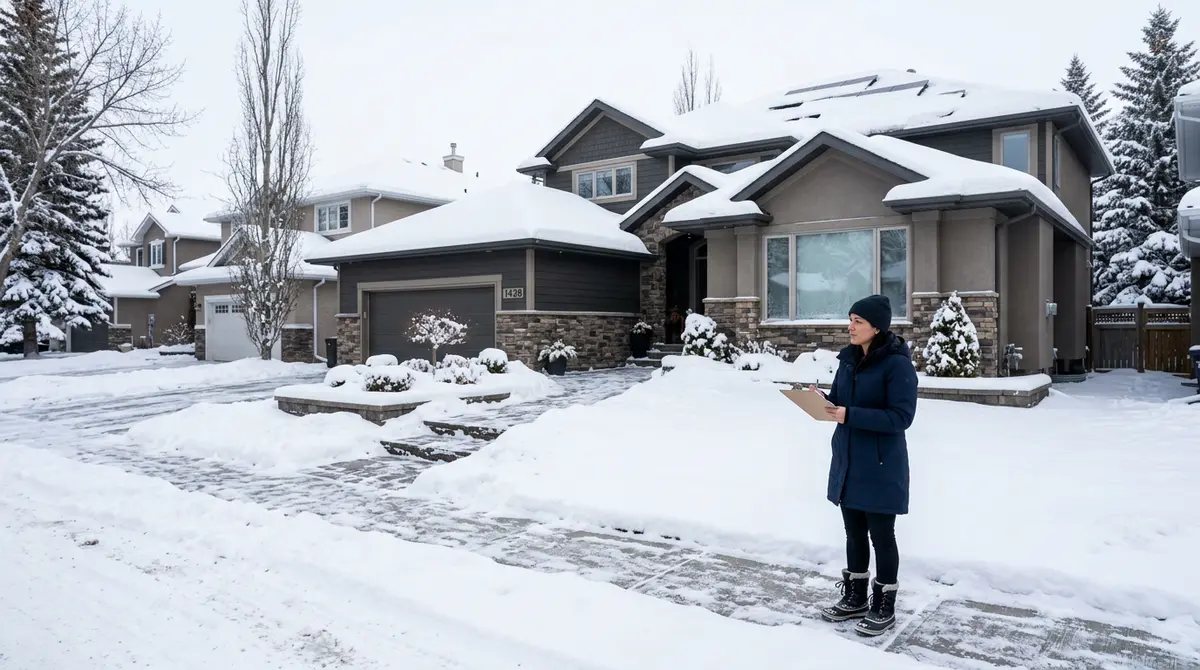
The broker provided three superior comps from within Mahogany that had sold privately and were not immediately visible on the standard MLS feed. Additionally, they provided receipts for a $25,000 composite deck and landscaping project completed the previous summer, which was buried under snow during the appraiser’s visit. The appraisal was successfully revised to $675,000, allowing the full $75,000 transaction to proceed.
The Role of Specialized Mortgage Brokers in Valuation Disputes
Attempting to navigate a conservative valuation situation alone is a strategic error. Specialized mortgage brokers possess direct lines of communication with lender underwriting departments and AMC dispute resolution teams. They understand the specific formatting required for an ROV and know exactly which alternative lenders will accept a transferred appraisal.
Furthermore, the Financial Consumer Agency of Canada (FCAC) advises borrowers to thoroughly understand all fees associated with alternative lending. A skilled broker will run a cost-benefit analysis, comparing the expense of ordering a completely new appraisal versus accepting a slightly higher interest rate from a private lender who will utilize the existing, albeit low, valuation.
In 2026, alternative lenders process low-appraisal loans 40% faster than traditional banks attempting to push through a complex ROV. A broker ensures you choose the path that aligns with your timeline and financial constraints.
Conclusion
A conservative property valuation does not have to derail your financial goals. By understanding the 2026 real estate landscape, demanding transparency through the ROV process, and knowing when to pivot to alternative lending solutions, homeowners can successfully access the equity they deserve. Whether you are funding a business expansion, consolidating debt, or managing a spousal buyout, data-driven strategies and expert guidance are your best defense against a low appraisal. If you are currently facing a valuation shortfall and need immediate alternative financing options, contact us today to speak with a specialized equity lending expert.