To clear a collection agency encumbrance from your Calgary real estate, you must negotiate a final settlement with the judgment creditor, secure a formal payout statement, remit the agreed-upon funds, and ensure the agency registers a Discharge of Writ with the Alberta Land Titles Office. Resolving this legal claim immediately restores your clear property title, granting you the unrestricted ability to sell, transfer ownership, or access your home equity without creditor interference.
Key Takeaways
- A lien placed by a collection agency in Alberta is legally known as a Writ of Enforcement.
- You cannot sell or refinance your home until the writ is officially discharged from your property title.
- In 2026, creditors often accept negotiated lump-sum settlements ranging from 65% to 85% of the original debt balance.
- Once the debt is paid, the creditor is legally obligated to file a Discharge of Writ with the Alberta Land Titles Office within a reasonable timeframe (typically 10 to 15 business days).
- Homeowners can leverage secondary financing to pay off high-interest collection liens and protect their property from forced sales.
Understanding the Mechanics of a Writ of Enforcement in Alberta
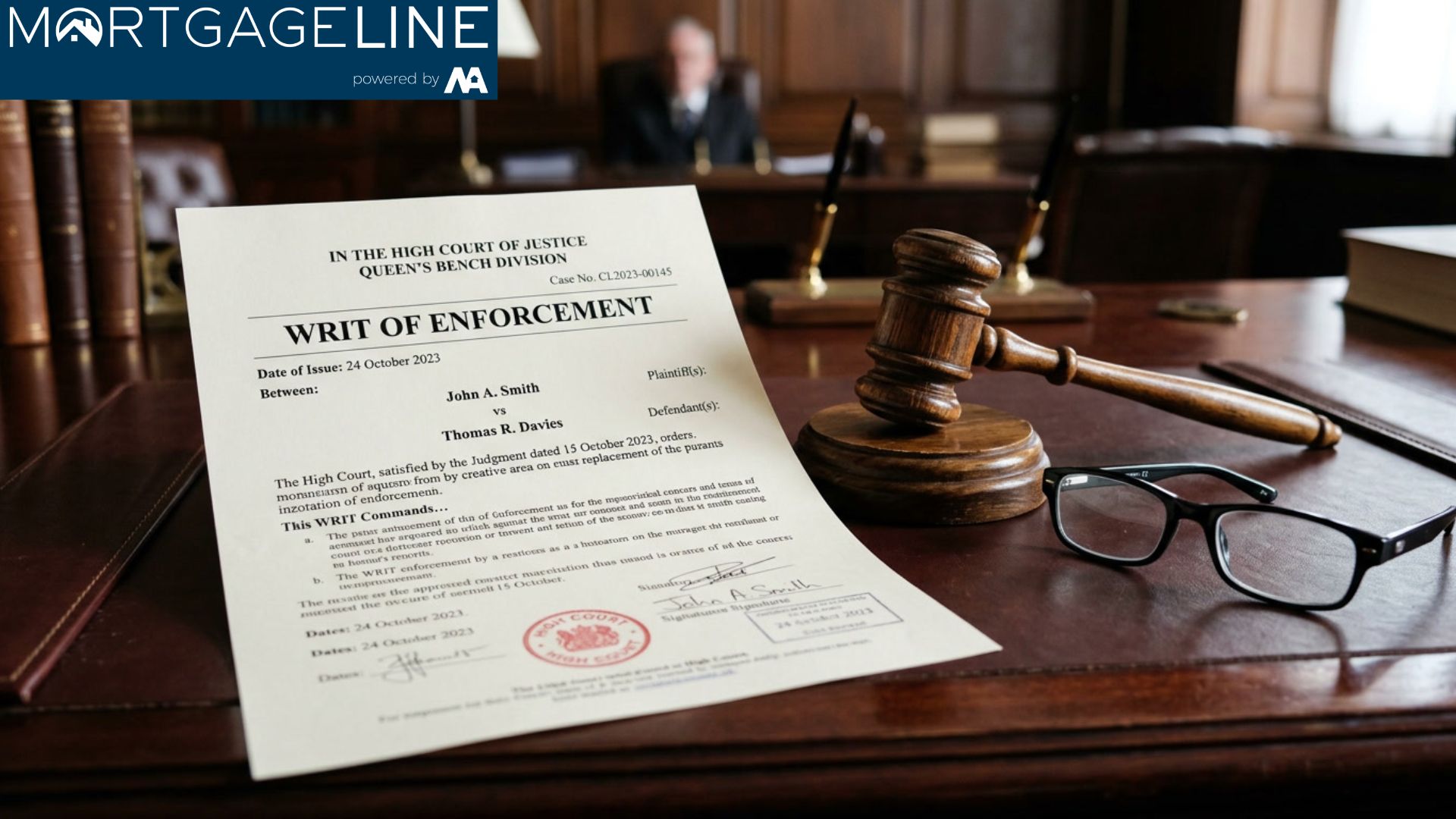
When a collection agency takes legal action against a debtor and wins a judgment in court, they gain the right to register that judgment against the debtor’s assets. In Alberta, this is executed through a legal instrument known as a Writ of Enforcement. When registered at the Alberta Land Titles Office, this writ acts as a financial encumbrance—commonly referred to as a lien—on any real estate you own in the province.
According to regulations outlined by the Government of Alberta, a registered writ binds all your current and future land holdings in the designated registration district. This means if you own a home in Calgary, the collection agency’s claim attaches directly to your property title. You are effectively paralyzed from liquidating or borrowing against the asset until the creditor’s demands are satisfied.
How Unresolved Debt Transitions to Property Liens
Collection agencies do not have the power to arbitrarily place a lien on your house just because you missed a credit card payment. The process requires judicial oversight. The creditor must file a Statement of Claim, win a default or summary judgment in the Alberta Court of King’s Bench, and then file the resulting Writ of Enforcement with the Personal Property Registry (PPR) and Land Titles.
Data from Statistics Canada indicates that household debt-to-income ratios remain near historic highs in 2026, sitting at approximately 181%. Consequently, aggressive debt recovery tactics, including property liens, have become a standard procedure for recovery firms dealing with unsecured debts exceeding $10,000.
5 Steps to Resolving a Collection Agency Lien on Your Property
If you have discovered a writ on your property title, taking swift, methodical action is essential. Ignoring the encumbrance can lead to a forced sale of your home under the Civil Enforcement Act. Follow these steps to systematically resolve the issue:
- Verify the Debt and the Writ: Obtain a current copy of your property title from the Alberta Land Titles Office. Identify the exact name of the judgment creditor, the date of registration, and the original amount claimed.
- Request a Payout Statement: Contact the collection agency or their legal counsel to request a binding payout statement. This document will outline the exact amount required to settle the debt, including the principal, accrued interest, and legal costs as of a specific date.
- Negotiate a Settlement (Optional but Recommended): Collection agencies purchase debt at a discount. Because of this, they are often willing to accept a lump-sum payment that is lower than the total amount owed. Negotiating can save you thousands of dollars.
- Remit the Funds Securely: Once an agreement is reached, ensure the terms are provided in writing. Send the payment via certified funds, bank draft, or wire transfer through your legal representative.
- Confirm the Discharge: After receiving payment, the agency must file a Discharge of Writ. You or your lawyer should pull a fresh property title 15 to 30 days later to confirm the encumbrance has been legally removed.
Negotiating Settlements: What to Expect in 2026
Paying off a collection agency lien on your Calgary property rarely means paying the exact face value of the judgment, provided you have access to a lump sum of cash. Creditors understand that forcing the sale of a property is a long, expensive, and legally complex process. They heavily favor immediate liquidity.
As David Chen, Director of Credit Recovery at Calgary Debt Solutions, notes: “Collection agencies in 2026 are increasingly willing to negotiate lump-sum settlements. A bird in the hand is worth two in the bush. If a homeowner can offer 70 to 80 cents on the dollar immediately, most agencies will authorize the discharge rather than waiting years for the home to naturally sell.”
It is crucial to have any settlement offer drafted in writing. The agreement must explicitly state that the agreed-upon payment constitutes a full and final settlement of the judgment and that the creditor will immediately execute and register a Discharge of Writ at their own expense.
Comparing Lien Resolution Strategies
| Resolution Strategy | Financial Impact | Timeline to Title Clearance | Best Suited For |
|---|---|---|---|
| Full Payout | Highest cost (100% of debt + legal fees + interest) | Fast (7-10 business days) | Homeowners needing immediate refinancing or sale |
| Negotiated Settlement | Moderate cost (Typically 65% – 85% of total balance) | Moderate (15-30 business days due to negotiation) | Homeowners with access to lump-sum cash reserves |
| Payment Plan | High cost (Interest continues to accrue) | Slow (Months or years) | Homeowners without equity or cash reserves |

Leveraging Home Equity to Clear Judgments
One of the most common hurdles Calgary homeowners face is a lack of liquid cash to satisfy the judgment. If your money is tied up in your property, you cannot sell the property to pay the debt because the lien blocks the sale. This catch-22 is highly stressful.
Fortunately, if you have sufficient equity in your home, you can secure secondary financing to pay off the collection agency. Mortgage lenders evaluate your Loan-to-Value (LTV) ratio. If your current mortgage balance is well below the appraised value of your home, you can borrow against that spread. By exploring the benefits and drawbacks of secondary financing, homeowners can strategically access capital to clear restrictive legal encumbrances.
A second mortgage acts as a bridge. The alternative lender provides the funds directly to the collection agency, satisfying the debt and triggering the Discharge of Writ. Because these loans bypass traditional banking constraints, they are incredibly effective for dealing with urgent legal matters, much like settling government tax debts or handling a statement of claim from a primary bank.
According to Marcus Thorne, a Calgary-based mortgage broker: “Clearing an encumbrance immediately opens the door to better lending rates in the future. A short-term equity loan to wipe out a 19% interest collection judgment is one of the smartest financial maneuvers a distressed homeowner can make.” For those wondering about the timeframe, standard approval timelines for equity loans can be as short as 48 hours.
The Legal Discharge Process at Alberta Land Titles
Remitting the funds is only the financial side of the equation; the legal side requires formal registration. Under the Alberta Land Titles Act, a writ is not considered removed until a specific document—the Discharge of Writ of Enforcement—is submitted and processed by the registry.
Sarah Jenkins, Senior Counsel at Alberta Real Estate Legal Partners, explains the nuance: “A writ of enforcement paralyzes your ability to refinance or sell. Even if your bank account shows the money left, the Land Titles Office relies strictly on registered documents. You must relentlessly follow up with the collection agency to ensure they file the discharge form. Failure to do so leaves a ghost encumbrance on your title.”
Homeowners should always involve a lawyer when paying out significant legal claims. By obtaining independent counsel, you ensure that funds are held in trust and only released upon the strict condition that the discharge is provided. This protects you from rogue agencies that might take your money and delay the necessary paperwork.

Long-Term Impact on Credit and Borrowing
Resolving a property lien is a massive step toward financial rehabilitation, but it is important to understand how the event impacts your overall credit profile. A judgment filed in the Court of King’s Bench is public record. Credit reporting bureaus, such as Equifax Canada, actively scrape public records to update consumer credit files.
In 2026, a paid public judgment will remain on your credit report for up to six years from the date it was filed, not the date it was paid. However, the status will be updated from “Unpaid” to “Satisfied” or “Settled.” While the historical record of the judgment will slightly depress your credit score, a “Satisfied” status drastically improves your credibility in the eyes of future lenders.
Traditional banks (A-lenders) generally require all judgments and writs to be paid in full before they will even consider a mortgage application. By proactively clearing the title, you accelerate your journey back to prime lending rates. For more insights on navigating complex home equity scenarios, browse our latest financing articles.
Frequently Asked Questions
Can a collection agency force the sale of my house in Calgary?
Yes, but it is rare. Under the Alberta Civil Enforcement Act, a creditor with a registered Writ of Enforcement can technically instruct a bailiff to seize and sell the property. However, this is a costly and lengthy process, and the creditor only gets paid after the primary mortgage and homeowner exemptions are covered. They vastly prefer voluntary settlements.
How long does a Writ of Enforcement last in Alberta?
A Writ of Enforcement is initially valid for two years at the Personal Property Registry and can remain on a land title indefinitely as long as the creditor continues to renew the writ before it expires. The underlying judgment itself is generally valid for 10 years and can be renewed by the courts.
Does paying the collection agency automatically remove the lien?
No. Paying the debt satisfies the financial obligation, but the legal encumbrance remains until the creditor manually drafts, signs, and registers a formal Discharge of Writ at the Alberta Land Titles Office.
Will a settled judgment hurt my chances of getting a mortgage?
While an active, unpaid judgment is an automatic disqualifier for traditional mortgages, a settled judgment shows financial responsibility. You may need to rely on B-lenders or alternative financing for a few years, but clearing the debt is the mandatory first step to accessing prime mortgage products again.
Can I sell my house with a lien on it?
You can list the house, but you cannot successfully close the sale and transfer the title to the buyer without addressing the lien. The real estate lawyer handling your sale will use a portion of the buyer’s purchase funds to pay off the collection agency and secure the discharge on closing day.
Should I pay the collection agency or the original creditor?
If the debt has escalated to the point of a registered writ, the original creditor has likely sold the debt or assigned it fully to the collection agency’s legal counsel. You must negotiate with and pay the entity listed on the legal judgment, which is typically the collection agency.
Conclusion
Clearing a legal encumbrance from your property title can feel daunting, but it is a highly structured process. By understanding how a Writ of Enforcement works in Alberta, actively negotiating a settlement, and ensuring the proper discharge paperwork is filed, you can successfully untangle your real estate from past debts. If you lack the liquid capital to pay the collection agency directly, tapping into your home’s equity through a secondary loan is often the most efficient way to protect your asset and restore your financial freedom. If you are facing a property lien and need to explore equity financing options, get in touch with our team to discuss how we can help secure the funds you need.
References
- Government of Alberta. (2026). Land Titles and Surveys. Retrieved from https://www.alberta.ca
- Statistics Canada. (2026). Household Debt and Financial Stability Reports. Retrieved from https://www.statcan.gc.ca
- Equifax Canada. (2026). Understanding Public Records and Credit Scores. Retrieved from https://www.equifax.ca
- Law Society of Alberta. (2026). Real Estate Legal Standards and Trust Funds. Retrieved from https://www.lawsociety.ab.ca