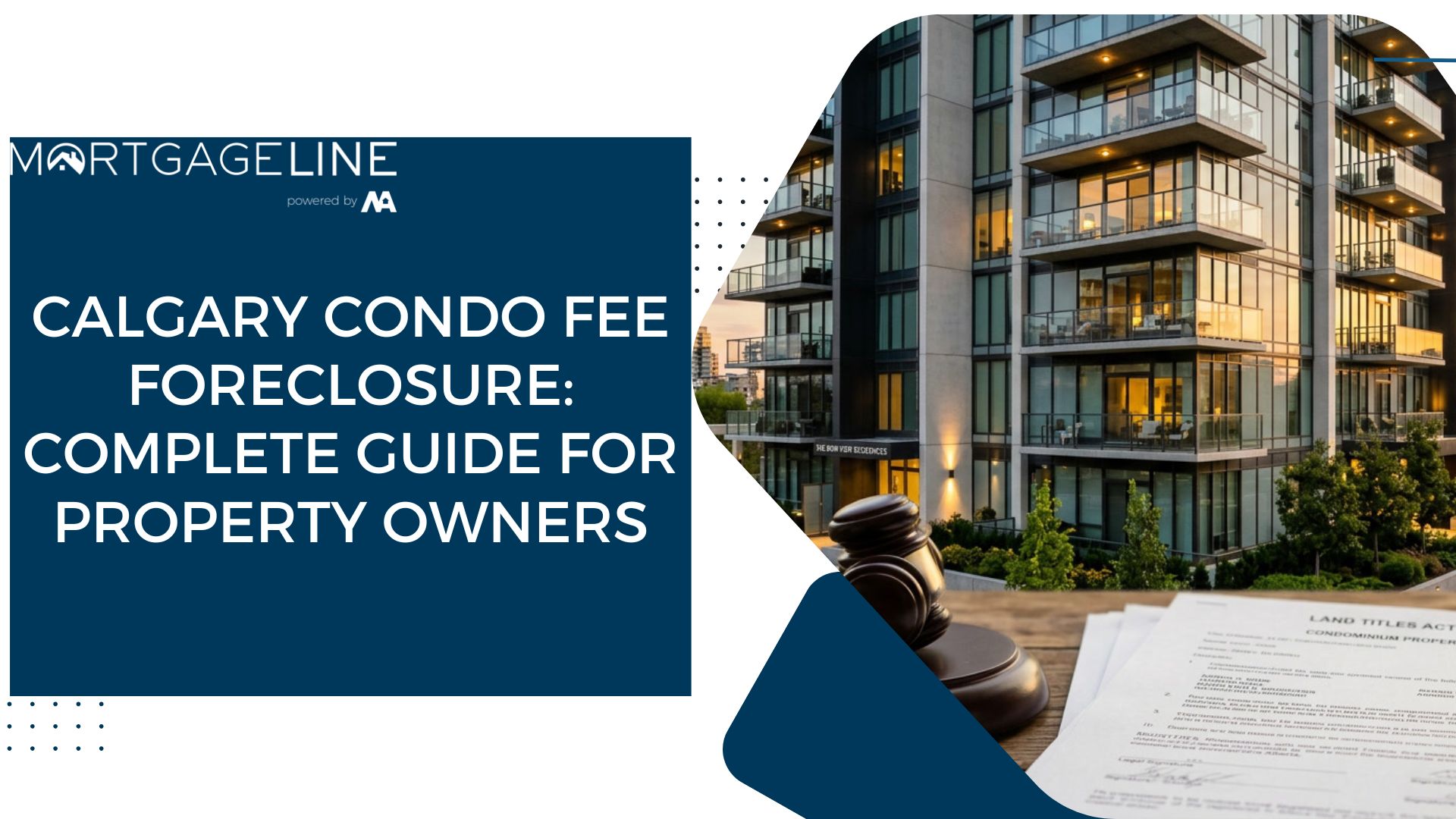
When a Calgary condominium owner fails to pay monthly contributions, the condo corporation possesses significant legal authority to initiate foreclosure proceedings against the property. Understanding this process is essential for any condo owner facing financial difficulties, as Alberta law grants these associations substantial powers to recover unpaid fees through court-supervised foreclosure actions.
- Alberta’s Condominium Property Act allows condo boards to register liens and pursue foreclosure for unpaid fees
- Owners receive multiple notices and opportunities to resolve the debt before a final order
- Calgary courts typically require strict adherence to procedural requirements
- Alternative solutions like payment plans can prevent foreclosure
- Second mortgage financing may help owners catch up on arrears
- Legal advice is strongly recommended before any foreclosure action progresses
Understanding Condominium Fee Obligations in Calgary
Every condominium owner in Calgary enters into a contractual relationship with their condo corporation upon purchase. This relationship obligates the owner to pay monthly contribution fees, which fund essential services including building maintenance, insurance premiums, reserve fund contributions, and common area management. These fees represent the financial foundation that keeps Calgary’s thousands of condo complexes operational and well-maintained.
According to the Canada Mortgage and Housing Corporation, Calgary has one of the highest concentrations of condominium properties in Alberta, with over 180,000 registered condo units across the metropolitan area. When owners fail to meet these obligations, the consequences extend beyond individual financial hardship—they affect the entire building community and can destabilize the corporation’s ability to maintain common areas and meet its financial commitments.
The Legal Framework Governing Calgary Condo Foreclosures
Alberta’s Condominium Property Act establishes the legal foundation for how condominium corporations can enforce payment of unpaid fees. This legislation grants condo boards the authority to register a lien against the property when fees remain outstanding, and subsequently pursue foreclosure proceedings through the courts when the lien cannot be satisfied through other means.
The process differs significantly from traditional bank-initiated foreclosures. While financial institutions foreclose based on mortgage default, condo board foreclosures stem from the owner’s failure to pay the mandatory contributions that maintain the property’s shared infrastructure. This distinction is crucial because it means even owners who are current on their mortgage payments can face foreclosure action if they neglect their condo fee obligations.
Research from the Alberta Law Review indicates that condo fee foreclosures represent approximately 8% of all residential foreclosure proceedings in Calgary, a figure that has remained relatively stable over the past five years despite fluctuations in the broader real estate market.
Key Legislative Provisions
The Condominium Property Act specifies several critical requirements that condo boards must follow:
- Written notice must be provided to the owner at least 30 days before any lien registration
- The lien amount must include all outstanding fees, applicable interest, and reasonable collection costs
- Owners have the right to dispute the amount claimed through established dispute resolution mechanisms
- Foreclosure proceedings must be initiated within 12 months of lien registration or the lien expires
The Step-by-Step Foreclosure Process
Calgary condo board foreclosures follow a structured legal process designed to protect both the corporation’s interests and the owner’s rights. Understanding each stage helps property owners identify opportunities to resolve the matter before losing their home.
Stage 1: Notice and Assessment
The process begins when an owner fails to pay condo fees for typically 30 to 90 days, depending on the corporation’s policies. The board sends formal written notice specifying the amount owed, including any accumulated interest and late fees. This notice provides the owner with a window—usually 14 to 30 days—to either pay the full amount or contact the board to discuss payment arrangements.
Stage 2: Lien Registration
If the debt remains unpaid, the condo corporation registers a lien against the property at the Alberta Land Titles Office. This lien encumbers the property and creates a legal claim that takes priority over most other interests except existing mortgages. Registration typically costs a few hundred dollars and formally puts third parties—including potential buyers and mortgage lenders—on notice of the corporation’s claim.
Stage 3: Demand and Opportunity to Redeem
Following lien registration, the corporation sends a formal demand letter requiring payment within a specified period, usually 30 to 60 days. Alberta law requires that owners receive at least one opportunity to redeem the property before foreclosure proceedings can advance to court. During this period, owners can pay the full arrears plus costs and halt the process entirely.
Stage 4: Court Proceedings
If redemption does not occur, the corporation files a foreclosure application with the Court of King’s Bench in Calgary. The court then issues a final order of foreclosure after reviewing the documentation and ensuring proper procedures were followed. This order transfers ownership of the property to the highest bidder at a court-ordered sale.
Owner Rights and Protections Under Alberta Law
Alberta law provides significant protections for condo owners facing foreclosure. These safeguards ensure that corporations cannot arbitrarily take properties and that owners have meaningful opportunities to resolve their debts.
As noted by the Alberta Real Estate Association, owners have the right to challenge the amount claimed as unreasonable, dispute fees they believe were improperly assessed, and request payment arrangements that allow them to retain ownership while catching up on arrears. Courts scrutinize foreclosure proceedings carefully and have dismissed cases where corporations failed to follow required procedures.
Owners facing financial hardship should consider consulting legal professionals who specialize in foreclosure prevention strategies. Early intervention dramatically improves outcomes, as options become more limited once the process advances to court.
Alternatives to Foreclosure for Calgary Condo Owners
Before accepting foreclosure as inevitable, Calgary condo owners should explore several alternatives that may allow them to retain their property while satisfying the corporation’s legitimate claims.
Payment Plans and Negotiated Arrangements
Many condo boards prefer to negotiate payment arrangements rather than pursue lengthy and costly foreclosure proceedings. Owners who approach the board proactively often find boards willing to establish structured payment plans that spread arrears over several months while the owner continues paying regular monthly fees. This approach benefits both parties—the owner retains their home and the corporation avoids litigation expenses.
Second Mortgage Financing
Owners with sufficient equity in their condo may qualify for second mortgage financing to pay off the arrears in full. This approach allows the owner to consolidate the debt into a single payment with potentially more favorable terms than the accumulated interest and late fees charged by the corporation. Lenders offering these products understand Calgary’s condo market and can often approve applications within days.
Special Assessment Funding
In cases where the debt stems from a special assessment—a one-time charge for major repairs or improvements—owners may be able to finance the payment through home equity products specifically designed for this purpose. These financing options recognize that special assessments are often beyond the owner’s control and provide structured repayment solutions.
Common Mistakes That Accelerate Foreclosure
Understanding common pitfalls helps owners avoid actions that inadvertently speed up the foreclosure process.
| Mistake | Consequence | Better Approach |
|---|---|---|
| Ignoring notices from the board | Misses redemption opportunities | Respond immediately to all correspondence |
| Disputing fees without proper documentation | Weak legal position | Document all communications in writing |
| Attempting to sell without addressing the lien | Transaction fails at closing | Negotiate payoff as part of sale terms |
| Delaying legal consultation | Limited options by court stage | Seek advice during notice period |
How Calgary Courts Handle Condo Foreclosures
Calgary’s Court of King’s Bench applies rigorous standards when reviewing condo board foreclosure applications. Judges examine whether the corporation followed all procedural requirements, whether the amount claimed is accurate, and whether the owner received proper notice at each stage.
According to legal experts at the Calgary Bar Association, courts have set aside foreclosure orders where corporations failed to provide adequate notice, miscalculated the amount owed, or neglected to give owners meaningful redemption opportunities. This judicial oversight provides an important safety valve for owners who may have been unaware of the proceedings or who have legitimate disputes about the fees claimed.
Owners who receive a foreclosure statement of claim should treat it as an urgent matter requiring immediate legal attention. The response deadlines are strict, and failure to respond typically results in a default judgment favoring the corporation.

Preventing Condo Foreclosure: Action Steps
Calgary condo owners who recognize financial difficulties early can take concrete steps to avoid foreclosure.
- Review your condo corporation’s policies: Understand the specific notice requirements, late fee schedules, and board contact procedures outlined in your condo’s bylaws.
- Contact the property manager immediately: Proactive communication demonstrates good faith and opens the door to negotiation before formal proceedings begin.
- Document all communications: Keep records of every notice received, payment made, and conversation held with the board or property management.
- Explore financing options: Contact lenders about home equity financing products that could help consolidate the debt.
- Seek legal advice: An attorney specializing in condo law can identify defenses, negotiating strategies, and procedural issues that may benefit your case.
- <nAttend board meetings: Some owners have successfully negotiated favorable arrangements by appearing before the board directly and explaining their circumstances.
Frequently Asked Questions
How long does a Calgary condo board foreclosure typically take?
The timeline varies depending on whether the owner responds and negotiates, but a straightforward case from initial notice to final order typically takes six to twelve months. Contested cases or those involving procedural challenges can extend to two years or longer.
Can a condo board foreclose if I have an existing mortgage?
Yes. The condo corporation’s lien typically ranks behind the first mortgage holder’s interest, but the corporation can still pursue foreclosure. If the property sells at court-ordered sale, the mortgage lender receives payment first from the proceeds, with any remainder going to satisfy the condo lien.
What happens to my credit if the condo board forecloses?
A foreclosure action appears on your credit report and significantly impacts your credit score. This can affect your ability to obtain future financing, rent apartments, or secure employment in some fields. The impact remains on your report for seven years from the date of discharge.
Can I sell my condo during a foreclosure proceeding?
Technically yes, but the lien must be satisfied at closing, which means you would need to negotiate the payoff amount with the corporation as part of the sale. Most buyers require clear title, making it difficult to complete a sale while a lien is registered against the property.
Are there any government programs to help condo owners facing foreclosure?
While Alberta does not have specific condo foreclosure assistance programs, owners may qualify for general financial counseling services or emergency assistance programs administered through local social services agencies. The Canada Mortgage and Housing Corporation also offers resources for homeowners facing financial difficulties.
What interest rate can the condo board charge on unpaid fees?
The interest rate is typically specified in the condo corporation’s bylaws and must comply with Alberta’s Condominium Property Act. Most Calgary condos charge between 10% and 18% annually on outstanding balances, though some use the prime rate plus a spread. Owners should review their specific bylaws to determine the applicable rate.
Can I dispute the amount the condo board claims I owe?
Yes. Alberta law provides mechanisms for owners to dispute fee assessments they believe are incorrect or improperly calculated. Owners should submit their dispute in writing to the board and request documentation supporting the claimed amount. If the dispute cannot be resolved directly, owners may have access to the corporation’s internal dispute resolution process or ultimately seek judicial review.
Conclusion
Calgary condo board foreclosures for unpaid fees represent a serious legal process with significant consequences for property owners. However, the structured nature of Alberta’s Condominium Property Act provides multiple opportunities for owners to resolve their debts before losing their homes. The key to successful navigation lies in early action—contacting the board, exploring financing options, and obtaining qualified legal advice before the process advances beyond the notice stage.
Whether you are currently facing unpaid fee notices or simply want to understand your rights as a Calgary condo owner, the most important step you can take is to act promptly. The options available to you decrease significantly as foreclosure proceedings progress through the court system.
If you are a Calgary condo owner facing unpaid fee issues or foreclosure proceedings, our team specializes in helping property owners explore every available option. We understand both the legal framework governing Calgary condos and the financing solutions that can help you retain your property while satisfying legitimate debts. Contact us today to discuss your situation and develop a strategy tailored to your specific circumstances.
References
- Canada Mortgage and Housing Corporation – Housing market data and homeowner resources
- Alberta Government – Condominium Property Act and provincial legislation
- CanLII – Canadian legal information database for case law
- Law Society of Alberta – Lawyer referral services
- Calgary Real Estate Board – Local market statistics and professional resources