Homeowners in Alberta can leverage the built-up equity in their primary residence through secondary financing to fund the down payment or outright purchase of a recreational property. By registering an additional loan against their main home, buyers can access substantial capital without breaking their existing low-rate primary mortgage. This strategy bypasses the stringent stress tests of traditional lenders, allowing purchasers to secure cabins in competitive markets rapidly, provided they maintain sufficient equity and demonstrate the ability to service the new debt.
Key Takeaways
- Equity Utilization: You can typically borrow up to 80% of your primary home’s appraised value to fund a recreational property purchase.
- Property Classifications: Lenders categorize cabins as Type A (year-round access, winterized) or Type B (seasonal), which directly impacts financing terms.
- Speed of Execution: Alternative equity financing often closes in 14 to 21 days, providing a competitive edge in fast-moving real estate markets.
- Income Flexibility: Equity-based lenders focus heavily on the asset’s value rather than relying solely on traditional debt-service ratios.
- Strategic Capital: Using equity prevents the need to liquidate high-performing investments or trigger capital gains taxes to generate a down payment.
The 2026 Landscape of Alberta Recreational Real Estate
The demand for recreational real estate across Alberta has evolved significantly. While historically concentrated in the Bow Valley, modern buyers are increasingly looking toward regions like Sylvan Lake, the Crowsnest Pass, and Lac La Biche. According to recent data from the Canadian Real Estate Association (CREA), the average price for a winterized cabin in Alberta reached $650,000 in early 2026, representing a steady climb driven by remote work flexibility and interprovincial migration.
For many prospective buyers, the challenge is not a lack of wealth, but rather a lack of liquid cash. Statistics Canada reports that the average Alberta homeowner currently holds over $320,000 in untapped home equity. Unlocking this dormant wealth has become the primary mechanism for acquiring secondary real estate. “Leveraging primary home equity remains the most efficient vehicle for acquiring recreational real estate in today’s market,” says Sarah Jenkins, Senior Economist at the Canadian Real Estate Association. “It allows buyers to act decisively without disrupting their primary investment portfolios.”
By utilizing the equity in a primary residence, buyers can generate a substantial down payment—or even purchase a rural property outright in cash. This is particularly advantageous when dealing with unique rural properties that traditional banks hesitate to finance directly.
Mechanics of Equity Extraction for Vacation Homes
When you apply for secondary financing on your primary residence, the lender registers a new charge against your property title, sitting behind your first mortgage. The funds from this new loan are provided to you as a lump sum, which you then deploy toward your cabin purchase.
This approach is fundamentally different from trying to get a mortgage directly on the cabin itself. Traditional banks are notoriously strict when financing rural or recreational properties. They categorize these assets into two distinct groups:
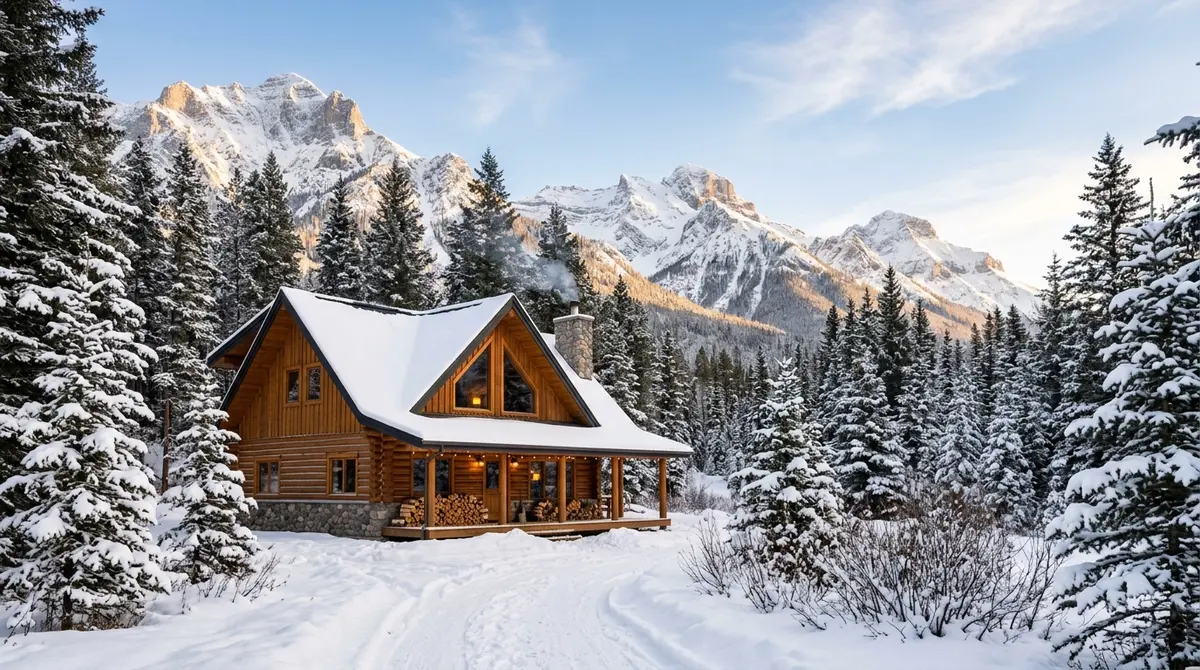
- Type A Properties: These are essentially second homes. They must have a permanent foundation, year-round road access, winterized insulation, and a permanent heat source. Traditional lenders may finance these, but they still require a pristine credit profile and strict debt-to-income ratios.
- Type B Properties: These are seasonal cabins. They might lack a permanent heat source, rely on a cistern for water, or sit on roads that are not plowed in the winter. Banks often refuse to finance Type B properties entirely, or they demand down payments exceeding 50%.
By extracting equity from your urban primary residence—a highly liquid, easily appraised asset—you bypass the bank’s scrutiny of the cabin’s foundation or water source. You act as a cash buyer for the recreational property. If you are looking to understand how this capital can be structured specifically for the initial purchase phase, reviewing how to use equity for a down payment provides essential context on tracking the source of funds.
Step-by-Step Guide to Securing Your Cabin Financing
Acquiring capital through your existing real estate portfolio requires a systematic approach. The 2026 lending environment prioritizes clear documentation and accurate property valuations. Here is the exact process to secure your funds:
- Calculate Your Loan-to-Value (LTV) Ratio: Determine the current market value of your primary home. Most alternative lenders will allow you to borrow up to 80% (and occasionally 85%) of this value, minus your outstanding first mortgage balance.
- Gather Required Documentation: While equity lenders are more flexible than prime banks, they still require proof of identity, property tax statements, and existing mortgage statements. Preparing a comprehensive document checklist for secondary loans accelerates the underwriting process.
- Complete the Property Appraisal: The lender will order a full appraisal of your primary residence. In 2026, residential appraisals in Alberta typically cost between $400 and $600 and take approximately three to five days to complete.
- Underwriting and Approval: The lender assesses the appraisal and your ability to carry the new loan. Because the loan is secured by your primary home, the focus is heavily on the asset’s equity rather than stringent stress-testing.
- Legal Registration and Funding: Your real estate lawyer will register the new mortgage charge on your title and disburse the funds to your account. You are now ready to make a competitive, cash-heavy offer on your vacation property.
Comparing Capital Sources: Which is Right for You?
Homeowners have several mechanisms to tap into their equity. Choosing the right vehicle depends on your timeline, credit profile, and the specific nature of the cabin you intend to buy. The table below outlines the three primary methods used in 2026.
| Financing Method | Approval Speed | Income Verification | Best Use Case |
|---|---|---|---|
| Secondary Mortgage | Fast (1-3 weeks) | Flexible / Asset-Based | Self-employed buyers or those needing fast execution for seasonal properties. |
| HELOC | Slow (4-8 weeks) | Strict (Bank Stress Test) | W-2 employees with excellent credit buying Type A winterized properties. |
| Cash-Out Refinance | Moderate (3-5 weeks) | Strict | Buyers whose first mortgage is up for renewal and want a single blended payment. |
Many buyers hesitate to break their first mortgage due to the high prepayment penalties associated with fixed-rate terms. In these scenarios, layering a new loan on top of the existing one is mathematically superior. For a deeper analysis of this comparison, reviewing the differences between secondary loans and cash-out refinancing can help clarify the long-term cost implications.
Navigating Lending Criteria and Income Verification
The regulatory environment established by the Bank of Canada and federal banking authorities requires traditional lenders to apply a stress test to all new borrowing. This means you must qualify at a rate roughly 2% higher than your contract rate. When you are trying to carry a primary mortgage, a new loan for the down payment, and potentially a third mortgage on the cabin itself, your Gross Debt Service (GDS) and Total Debt Service (TDS) ratios will likely exceed the bank’s maximum allowable limits (typically 39% and 44%, respectively).
This is where alternative equity lenders provide immense value. “Alternative lenders look at the holistic equity picture rather than just the stress-tested income,” notes David Chen, Director of Mortgage Analytics at the Alberta Financial Institute. “If the primary residence is in a highly marketable urban center like Edmonton or Calgary, the lender’s risk is mitigated by the real estate asset itself, allowing for much more pragmatic income verification.”
For entrepreneurs and business owners, traditional income verification is notoriously difficult due to corporate tax write-offs that minimize personal taxable income. Alternative lenders utilize a reasonability test to verify self-employed income, looking at business bank statements and corporate revenue rather than just the personal Notice of Assessment. In some cases, borrowers can access stated income options, which drastically simplifies the paperwork required to secure the cabin funds.
Tax Implications and Financial Considerations
Acquiring a second property introduces new tax variables. The Canada Revenue Agency (CRA) requires homeowners to designate one property as their principal residence for tax exemption purposes. When you eventually sell the cabin, it will likely be subject to capital gains tax on the appreciation in value.
Furthermore, if you intend to rent out the cabin on platforms like Airbnb or VRBO when you are not using it, the interest paid on the borrowed equity may be tax-deductible. Because the funds were borrowed specifically to invest in an income-producing asset, the carrying costs can often be written off against the rental revenue. However, this requires meticulous tracing of the funds. Consulting a guide on the tax implications of secondary financing is highly recommended before finalizing your purchase structure.
“Buyers must account for the carrying costs of two properties, including the often-overlooked rural utility premiums,” warns Elena Rostova, Lead Financial Planner at Wealth Strategy Partners. “Insurance for a seasonal property that remains vacant for months at a time carries a significant premium compared to an urban primary residence.”

Co-Borrowing and Strategic Structuring
In some instances, families choose to purchase recreational properties together to share the financial burden and maintenance responsibilities. If your individual equity or income is insufficient to secure the required capital, adding a family member to the financing application can bridge the gap.
Structuring a loan with multiple parties requires clear legal agreements regarding usage, maintenance costs, and eventual exit strategies. If a sibling or parent is helping to secure the financing but will not live at the property, they are considered a non-occupant co-borrower. Understanding how to add a non-occupant co-borrower effectively can boost your borrowing power while ensuring all parties are legally protected under Alberta real estate law.
Additionally, buyers must be aware of municipal regulations. The Alberta Government and local municipalities have specific property tax mill rates for non-primary residences. In tourist-heavy zones like Canmore, local bylaws strictly regulate short-term rentals. Ensuring your cabin is zoned correctly for your intended use is a critical step before deploying your hard-earned home equity.
Common Pitfalls to Avoid
While leveraging equity is a powerful tool, it requires disciplined financial management. Avoid these common mistakes when financing your Alberta vacation home:
- Underestimating Renovation Costs: Older cabins often require immediate capital for roof repairs, septic tank replacements, or well maintenance. Ensure you borrow slightly more than the purchase price to create a contingency fund.
- Ignoring Title Insurance: Rural properties frequently have boundary encroachments or unpermitted structures. Title insurance is non-negotiable when purchasing recreational real estate.
- Failing to Plan an Exit Strategy: Alternative equity loans typically have one-to-two-year terms. You must have a clear plan to pay off or renew the loan, either through the sale of another asset, an expected bonus, or eventual refinancing with a prime lender once the cabin is winterized and upgraded to a Type A property.
Conclusion
Purchasing a vacation home or cabin in Alberta is a lifelong dream for many families. By strategically leveraging the equity in your primary residence, you can bypass the rigid constraints of traditional bank financing, act quickly in competitive markets, and secure the perfect recreational retreat. Whether you are eyeing a winterized chalet in the Rockies or a seasonal fishing cabin in the northern lakes, understanding your financing options is the first step toward ownership. If you are ready to explore how much equity you can unlock for your cabin purchase, contact us today to speak with an expert about your specific scenario.
Frequently Asked Questions
Can I use the equity in my home to buy a cabin outright?
Yes. If you have sufficient equity in your primary residence, you can borrow enough capital to purchase the recreational property in cash. This makes your offer highly competitive and eliminates the need to secure a mortgage on the cabin itself.
Do lenders care if the cabin is seasonal or unheated?
If you are getting a mortgage directly on the cabin, lenders care immensely and may decline the loan if it lacks a permanent heat source (Type B property). However, if you are using a secondary loan secured against your urban primary residence, the lender is primarily concerned with your main home’s value, not the cabin’s condition.
How long does it take to get approved for equity financing?
Alternative equity financing is significantly faster than traditional bank loans. In 2026, the process from application to funding typically takes between 14 and 21 days, assuming all documentation and appraisals are completed promptly.
Is the interest on the loan tax-deductible?
If the recreational property is used strictly for personal enjoyment, the interest is not tax-deductible. However, if you rent the cabin out to generate income, a portion or all of the interest paid on the borrowed equity may be deductible against that rental income. Always consult a tax professional.
What credit score is required to leverage my home equity?
While traditional banks require excellent credit (typically 680+), alternative equity lenders focus primarily on the Loan-to-Value (LTV) ratio of your property. Borrowers with lower credit scores can still qualify, provided there is substantial equity in the primary residence.
Can I rent out the cabin on Airbnb to pay for the new loan?
Yes, many homeowners use short-term rental income to service the debt of their equity loan. However, you must verify that the local municipality’s zoning bylaws permit short-term rentals, as many Alberta communities have implemented strict regulations in 2026.