Calgary homeowners can successfully fund solar panels and comprehensive energy-efficient upgrades by securing a second mortgage against their property’s existing equity. This financing strategy provides a substantial lump sum to cover high upfront installation costs without breaking the terms or losing the low interest rate of a primary mortgage. By leveraging secondary financing, homeowners can immediately install green technology, significantly reduce their monthly utility bills, and use those ongoing energy savings to offset the new loan payments.
Key Takeaways
- Preserve Primary Rates: Secondary financing allows you to access equity for green upgrades without refinancing your first mortgage.
- Immediate ROI: The monthly savings generated by solar photovoltaic (PV) arrays and heat pumps can directly offset your new loan payments.
- Bridge Financing: Home equity loans act as excellent bridge capital while waiting for federal and provincial energy rebates to be processed.
- Property Value Increase: Energy-efficient retrofits typically increase a Calgary home’s appraisal value, effectively protecting your equity investment.
- Flexible Qualification: Alternative lenders offer flexible income verification, making it easier for self-employed Calgarians to fund home improvements.
The 2026 Landscape for Green Home Upgrades in Calgary
As utility rates and carbon pricing continue to fluctuate in 2026, Calgary homeowners are increasingly motivated to achieve energy independence. Transitioning to a net-zero or highly efficient home is no longer just an environmental choice; it is a critical financial strategy. However, the barrier to entry remains the initial capital required for these comprehensive retrofits.
According to the Canadian Renewable Energy Association (CanREA), Alberta has accounted for over 90% of Canada’s new solar capacity growth in recent years. This surge is driven by abundant sunshine—Calgary is one of Canada’s sunniest cities, boasting an average of 333 sunny days per year. Despite this ideal environment, the upfront cost of residential solar arrays and high-efficiency HVAC systems requires strategic capital allocation.
A 2026 report by the Alberta Energy System Operator (AESO) highlights that residential grid demand peaks during extreme winter cold snaps and summer heatwaves. Homeowners who install micro-generation systems and advanced insulation are insulating themselves from volatile peak pricing.
Why Use Secondary Financing for Energy-Efficient Renovations?
When planning a $20,000 to $40,000 green renovation, homeowners generally weigh three options: unsecured personal loans, cash-out refinancing, or a second mortgage. Unsecured loans and credit cards carry exorbitant interest rates that quickly erode any energy savings you might achieve. Conversely, breaking your current mortgage to access equity can trigger massive prepayment penalties.
Financial strategist Elena Rostova states: “In 2026, preserving a low-interest primary mortgage while using secondary financing for green upgrades is the most mathematically sound approach for homeowners. It isolates the renovation debt and allows the primary mortgage to amortize undisturbed.”
By comparing secondary financing to cash-out refinancing, it becomes clear that a home equity loan offers targeted capital. You borrow exactly what the solar installer or HVAC contractor requires, leveraging the property’s appraised value up to a typical Loan-to-Value (LTV) ratio of 75% to 80%.
Top Energy-Efficient Upgrades to Finance in Calgary
Not all green upgrades yield the same return on investment (ROI). When utilizing home equity, it is vital to deploy capital toward systems that offer the highest monthly savings and property value appreciation.
1. Solar Photovoltaic (PV) Arrays
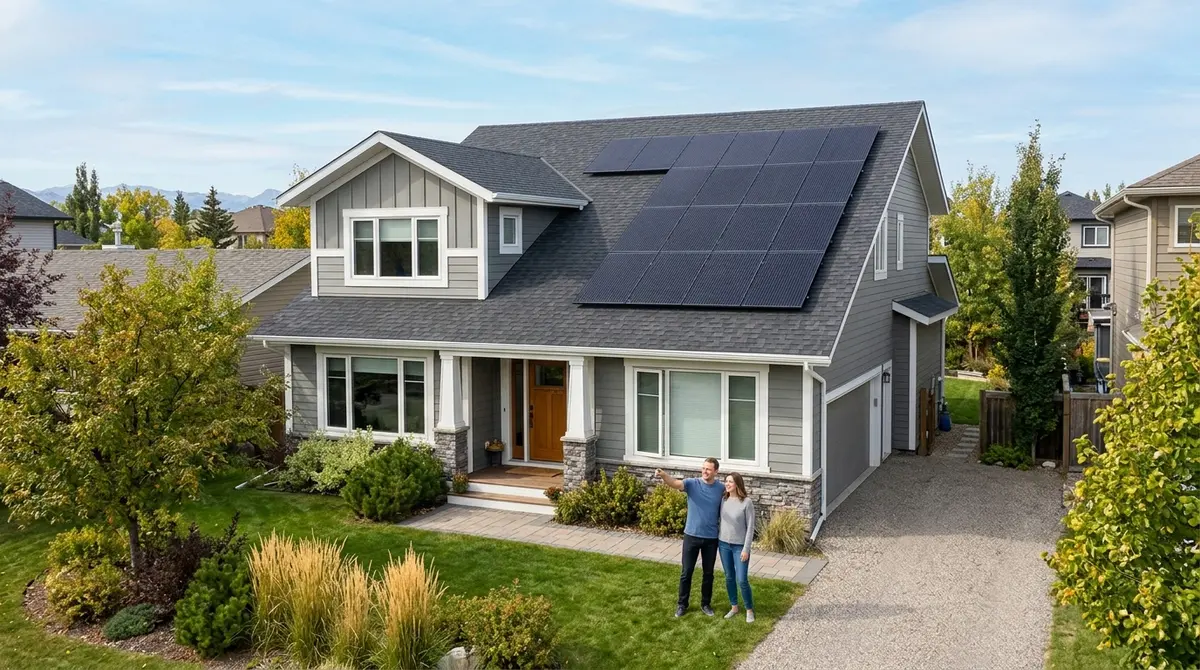
Solar panels are the cornerstone of modern energy retrofits. A standard 6kW to 10kW system in Calgary costs between $15,000 and $25,000 before rebates. Through Alberta’s micro-generation regulation, homeowners can sell excess power back to the grid, generating credits that drastically reduce or eliminate summer electricity bills.
2. Cold-Climate Heat Pumps
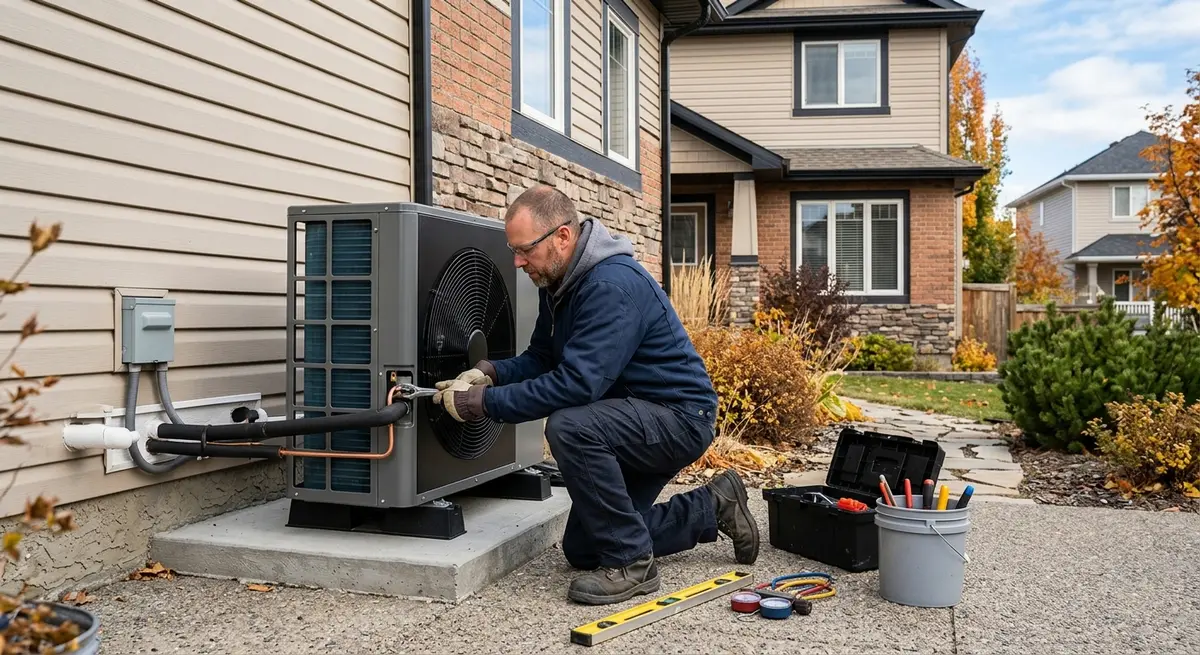
Data from Natural Resources Canada (NRCan) indicates that space and water heating account for over 80% of residential energy use. Modern cold-climate heat pumps, rated for temperatures as low as -25°C, are replacing traditional natural gas furnaces.
Marcus Thorne, a certified Calgary energy auditor, notes: “Upgrading to a cold-climate heat pump alongside solar PV can reduce a standard Calgary home’s grid reliance by up to 75% annually. The synergy between the two systems is where the real financial magic happens.”
3. Building Envelope Enhancements
Financing triple-pane windows, advanced weatherstripping, and upgraded attic insulation (targeting an R-value of R-60) ensures that the energy you generate isn’t leaking out of your home. These upgrades lower the overall load on your HVAC system, extending its lifespan.
Step-by-Step Guide: Securing Home Equity for Solar Panels
Navigating the financing process requires preparation. Follow these steps to efficiently secure funding for your green retrofits:
- Conduct an Energy Audit: Before applying for financing, hire a certified energy advisor. They will provide an EnerGuide rating and recommend the most impactful upgrades for your specific property.
- Gather Contractor Quotes: Obtain detailed estimates from certified solar installers and HVAC technicians. Lenders often want to see exactly how the funds will be utilized.
- Calculate Your Available Equity: Determine your home’s current market value and subtract your primary mortgage balance. This dictates your borrowing power.
- Prepare Your Documentation: Gather your income statements, property tax assessments, and mortgage statements. Reviewing a comprehensive secondary financing document checklist ensures a smooth application process.
- Apply and Fund: Work with a specialized mortgage broker to secure the loan. Once approved, funds are typically deposited directly into your account, allowing you to pay contractor deposits immediately.
Financial Breakdown: Costs vs. Long-Term Savings
Understanding the financial mechanics is crucial when taking on new debt. The table below illustrates the estimated costs and ROI for standard Calgary home upgrades in 2026.
| Energy Upgrade Type | Average 2026 Cost (Calgary) | Estimated Monthly Savings | Approximate ROI Timeline |
|---|---|---|---|
| Solar PV System (8kW) | $18,000 – $22,000 | $120 – $180 | 8 – 11 Years |
| Cold-Climate Heat Pump | $12,000 – $16,000 | $80 – $130 | 9 – 12 Years |
| Triple-Pane Windows (Whole Home) | $15,000 – $25,000 | $40 – $70 | 15 – 20 Years |
| Attic Insulation (R-60 Upgrade) | $2,500 – $4,000 | $30 – $50 | 4 – 7 Years |

Navigating the Application Process and Requirements
Securing a second mortgage for renovations is generally faster than securing a primary mortgage, but it still requires strict adherence to lending guidelines. Lenders primarily focus on the equity remaining in the home and the borrower’s ability to service the new debt.
For traditionally employed individuals, standard employment verification requirements apply, including recent pay stubs and a Letter of Employment. However, many Calgary homeowners are entrepreneurs or independent contractors.
If you are self-employed and write off significant expenses, traditional banks might decline your application due to low taxable income. In these scenarios, private lenders offer stated income home equity loans. These products focus heavily on the property’s equity and use alternative methods, such as business bank statements, to verify cash flow rather than relying solely on Notice of Assessment (NOA) line 15000.
Government Rebates and Bridge Financing
One of the most strategic uses of a second mortgage is acting as bridge financing. Various federal and municipal programs, such as the City of Calgary’s clean energy improvement initiatives, offer substantial rebates for solar and HVAC upgrades.
However, these rebates are almost exclusively retroactive. Homeowners must pay the contractors in full, complete the post-retrofit energy audit, and then wait several months for the government rebate cheque to arrive. A home equity loan provides the necessary upfront capital. Once the rebate is received, you can apply it directly as a lump-sum payment against the principal of your second mortgage, rapidly accelerating your debt payoff.
Potential Pitfalls and Expert Advice
While leveraging equity for green upgrades is highly beneficial, homeowners must navigate potential financial pitfalls. The most common mistake is failing to account for the cost of borrowing when calculating the ROI of the solar panels.
It is vital to understand how compounding frequency impacts your total debt. If your secondary financing carries a high interest rate that compounds monthly, the interest accrued could outpace your monthly energy savings. Always work with a broker to secure the lowest possible rate and ensure the loan terms allow for penalty-free early repayment.
Furthermore, avoid over-capitalizing your property. While solar panels add value, installing a $50,000 system on a $400,000 home may not yield a dollar-for-dollar return upon resale. Ensure your upgrades are proportionate to your neighborhood’s market standards. If you are debating between different funding sources, carefully weigh home equity versus unsecured credit lines to ensure you aren’t overpaying for capital.
Frequently Asked Questions (FAQ)
Can I finance the entire cost of a solar array with home equity?
Yes, provided you have sufficient equity in your home. Lenders in Calgary typically allow you to borrow up to 80% of your home’s appraised value, which is usually more than enough to cover a complete solar PV installation.
How does a second mortgage affect my primary mortgage?
It does not affect your primary mortgage at all. Your first mortgage remains intact with its original interest rate, terms, and amortization schedule. The new loan is registered as a secondary lien on the property title.
Do solar panels increase my Calgary home’s appraisal value?
Yes. Real estate data shows that homes with fully owned (not leased) solar panel systems sell for a premium. Buyers are increasingly willing to pay more for homes with established micro-generation and low ongoing utility costs.
What credit score is required for green upgrade financing?
While traditional banks typically require a credit score of 680 or higher, alternative and private lenders focus more on the property’s equity. Borrowers with scores in the 500s can still secure funding, though usually at a slightly higher interest rate.
Can I pay off the loan early if I receive a government rebate?
This depends on the specific terms of your loan contract. Most open or partially open secondary mortgages allow you to make lump-sum prepayments without penalty, making them ideal for applying government energy rebates directly to the principal.
Are heat pumps effective in Calgary’s winter climate?
Yes, modern cold-climate heat pumps are highly effective in Calgary. They are engineered to extract heat from the outside air even when temperatures drop to -25°C. However, a backup heat source (like a natural gas furnace or electric resistance coil) is still recommended for extreme cold snaps.
Conclusion
Transforming your Calgary property into an energy-efficient, net-zero home is a powerful way to combat rising utility costs and increase your property’s market value in 2026. By strategically leveraging your existing home equity through a second mortgage, you can access the necessary capital for solar panels, heat pumps, and insulation without disrupting your primary mortgage rate. This approach allows you to bridge the gap for government rebates while immediately enjoying the benefits of lower monthly energy bills.
If you are ready to explore your financing options and unlock the equity in your home for green upgrades, professional guidance is essential. Get in touch with our team today to discuss your specific needs and find the best financing solution for your energy-efficient renovation project.