Securing secondary financing on a rural or semi-rural parcel of land involves borrowing against your accrued property equity while keeping your primary loan completely intact. Unlike standard urban lending, extracting equity from acreage requires specialized rural appraisals, higher equity thresholds (typically 25% to 35%), and strict municipal zoning compliance checks. Because traditional banking institutions frequently view rural real estate as higher risk due to longer selling times and unique infrastructure, homeowners typically rely on private lenders or Mortgage Investment Corporations (MICs) to access their capital.
Key Takeaways
- Higher Equity Requirements: Lenders typically cap rural Loan-to-Value (LTV) ratios at 65% to 75%, requiring borrowers to hold 25% to 35% equity.
- Specialized Appraisals: Valuations depend heavily on the “Highest and Best Use” (HBU) of the land, factoring in zoning, water rights, and agricultural potential.
- Alternative Lenders Dominate: In 2026, private lenders and MICs fund approximately 45% of all rural equity loans in the region due to strict traditional bank policies.
- Infrastructure Scrutiny: Approvals hinge on verified, functional infrastructure, including recent water potability tests and compliant septic systems.
- Seasonal Valuation Impact: Appraisals conducted during winter months often suffer a 5% to 8% discount due to snow cover obscuring topography and access roads.
Understanding Rural Equity Extraction in 2026
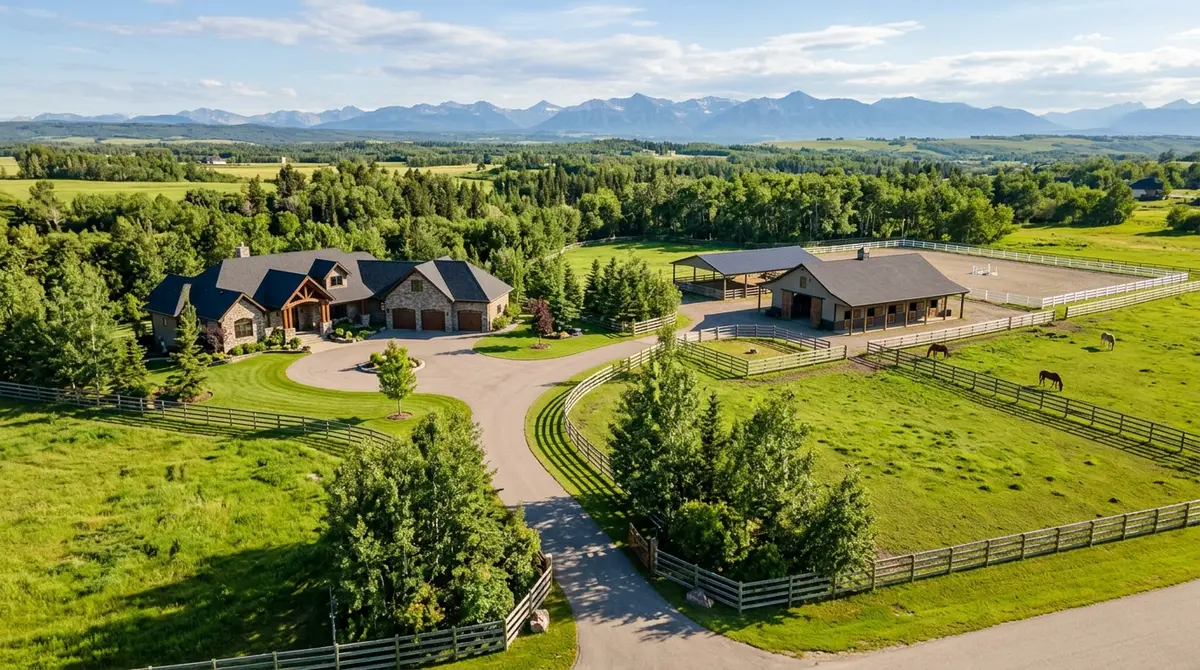
Properties on the rural periphery represent some of the most desirable real estate in Southern Alberta, offering homeowners a blend of tranquility and urban accessibility. These expansive lots, ranging from one to over fifty acres, provide unmatched privacy and space for recreational or agricultural activities. However, the unique characteristics of these sprawling properties present distinct challenges when securing additional financing.
Leveraging your land’s value allows you to access capital without breaking your current primary mortgage. This strategy is particularly advantageous in 2026, as breaking a historically low-interest first mortgage could trigger severe financial penalties. Homeowners typically utilize these funds for debt consolidation, property improvements, or investing in agricultural infrastructure.
Because these properties often feature hobby farms, equestrian facilities, or large residential outbuildings, they do not fit neatly into traditional lending algorithms. Lenders must evaluate complex variables like water rights, septic infrastructure, and outbuilding permits. According to Marcus Thorne, Chief Lending Officer at Prairie Financial: “Traditional banks often shy away from rural properties due to liquidity concerns, making alternative lenders the primary vehicle for acreage equity extraction in 2026.”
Urban vs. Rural Property Financing: A 2026 Comparison
Understanding the distinction between urban and rural financing is critical for a successful application. Acreage properties face different market dynamics, longer days-on-market metrics, and unique infrastructure requirements. These factors directly influence how underwriters calculate risk and determine loan terms.
If you are comparing a second mortgage to a cash-out refinance, the LTV caps associated with rural land will heavily dictate your financial strategy. To illustrate these differences, we have compiled a comparison of standard lending metrics reflecting the current 2026 lending environment.
| Lending Metric | Urban Residential Property | Acreage / Rural Property |
|---|---|---|
| Maximum Loan-to-Value (LTV) | Up to 80% – 85% | Typically capped at 65% – 75% |
| Appraisal Complexity | Standard automated or drive-by | Comprehensive manual appraisal required |
| Equity Requirement | 20% minimum | 25% to 35% minimum |
| Infrastructure Checks | Municipal services assumed | Well, septic, and access road verification |
| Processing Time | 3 to 7 business days | 14 to 21 business days |
As the table demonstrates, rural real estate requires a highly conservative lending approach. Borrowers must be prepared for extended approval timelines and stricter equity retention requirements.
Specialized Valuation: The “Highest and Best Use” Framework
The valuation of rural real estate presents unique challenges that significantly impact your borrowing power. Unlike urban subdivisions where comparable sales are abundant and easily matched, acreage properties require specialized appraisal techniques governed by organizations like the Appraisal Institute of Canada.
Appraisers cannot simply rely on square footage and bedroom counts. Professional rural appraisers must evaluate the land’s “Highest and Best Use” (HBU). This technical term refers to the reasonably probable and legal use of vacant land or an improved property that is physically possible, appropriately supported, and financially feasible. The HBU directly dictates the maximum appraised value of the property.
As Sarah Jenkins, Senior Rural Appraiser at the Alberta Real Estate Board, explains: “Valuing acreage properties requires a granular look at zoning potential and water rights, not just square footage. In 2026, a property’s ability to support secondary agricultural income can increase its appraised value by up to 18%.”
Zoning, Land Use, and Agricultural Potential
Zoning compliance is a major hurdle when securing additional financing on rural land. Lenders need absolute confirmation that your current property use aligns with municipal regulations. This includes verifying permitted uses for home-based businesses, livestock limits, or recreational facilities.
If your property has potential for subdivision or commercial agricultural use, this must be thoroughly documented. The Alberta Ministry of Agriculture and Irrigation provides strict guidelines on land use that appraisers must reference. Properties located within a 45-minute commuting distance of major business districts typically command premium valuations, provided their zoning allows for flexible usage.
Infrastructure Scrutiny: Wells, Septic, and Outbuildings
The presence of barns, heated workshops, and secondary suites adds immense complexity to the valuation process. These improvements can significantly enhance property value, provided they are fully permitted and built to current 2026 building codes. Unpermitted structures may actually detract from the value or require expensive retroactive permitting before a lender will approve funding.
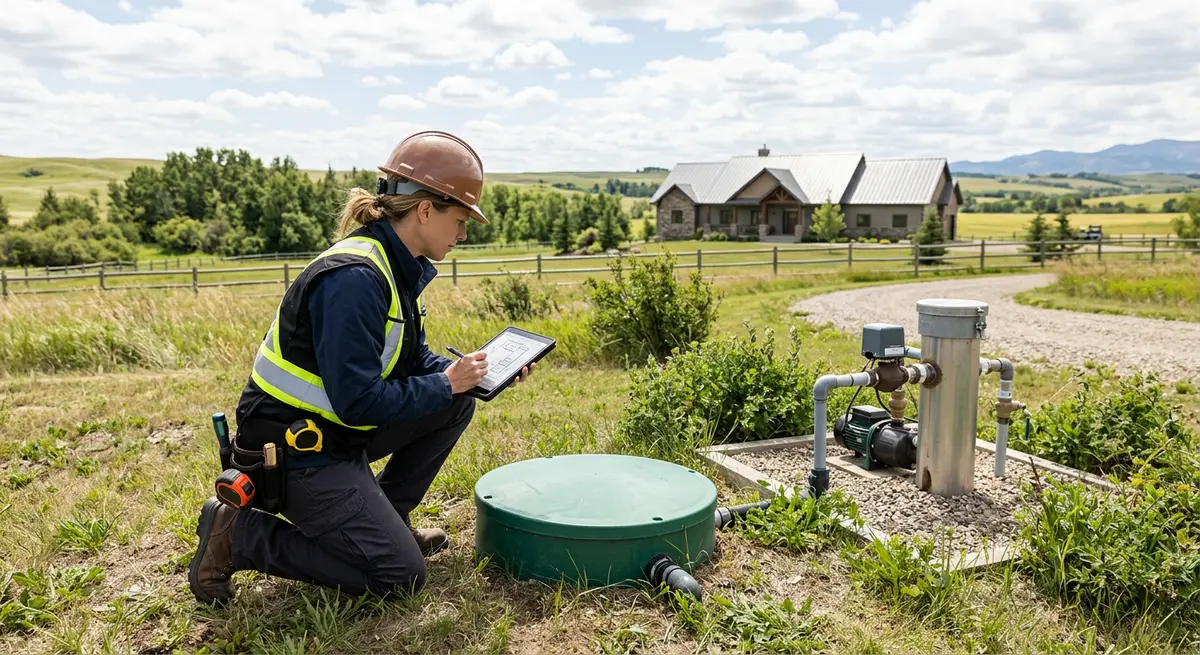
Furthermore, rural utilities are heavily scrutinized. Properties with reliable high-flow wells, modern septic fields, and municipally maintained access roads qualify for much better lending terms. Underwriters will require recent water potability tests and septic inspection certificates before releasing funds.
Strict Lending Criteria for Calgary Acreages
Securing secondary financing requires meeting specific criteria that differ substantially from standard urban loans. Because the pool of potential buyers for luxury rural properties is smaller, lenders view these assets as inherently less liquid. Consequently, borrowers must demonstrate stronger financial resilience.
Equity and Loan-to-Value (LTV) Thresholds
Most lenders require borrowers to maintain substantial equity positions in acreage properties. While urban homes might only require 20% equity, rural properties often demand 25% to 35% equity. This lower LTV ratio protects the lender against potential market downturns and the extended holding costs associated with selling rural real estate.
Credit score requirements also tend to be more stringent for prime rates. Many “A-tier” lenders prefer scores above 680 for competitive rural terms. However, if your score has been impacted by recent inquiries, knowing how to explain credit inquiries to an underwriter can salvage your application.
Income Verification for Hobby Farms and Self-Employed Owners
Income verification often requires extensive documentation, especially if the land generates revenue. Borrowers may need to provide tax returns showing farm income, lease agreements for tenant farmers, or documentation of equestrian boarding fees. Lenders want to understand exactly how property-related expenses impact your overall Debt-to-Income (DTI) ratio.
For self-employed acreage owners, proving income can be tricky. Lenders often use a “reasonability test” to assess your true earning potential. Understanding the nuances of verifying self-employed income is crucial for a smooth approval process.
Step-by-Step Guide to Securing Your Rural Equity Loan
Navigating the rural lending landscape requires a systematic approach. By following a structured process, you can minimize delays and secure the most favorable terms available in the 2026 market. Here is the exact process you should follow:
- Calculate Your Available Equity: Determine your property’s estimated current value and subtract your existing primary mortgage balance. Remember that lenders will typically only lend up to 65% or 75% of the total appraised value.
- Gather Comprehensive Documentation: Compile your property tax assessments, recent land surveys, well water certificates, and income verification documents. Proper preparation is essential. Reviewing a guide on organizing your mortgage paperwork can save you weeks of frustration.
- Order a Specialized Rural Appraisal: Work with an appraiser who specializes in rural properties. Ensure they have documented experience valuing outbuildings and agricultural land.
- Consult an Alternative Mortgage Broker: Since major banks often decline rural equity loans, partner with a broker who has direct access to private lenders and MICs.
- Complete Environmental and Zoning Checks: Provide any required Phase 1 Environmental Site Assessments (ESA) and municipal zoning compliance letters to satisfy lender conditions.
- Review and Sign Legal Documents: Carefully review the loan terms, paying close attention to interest rates, compounding frequencies, and potential renewal fees.
Why Alternative Lenders Dominate the Acreage Market
When traditional banking institutions hesitate, alternative lending solutions become invaluable for property owners. Private lenders and specialized mortgage companies possess the flexibility and expertise required to evaluate unique rural properties. They understand the nuances of the acreage market far better than standard bank underwriters.
Private lenders offer significantly faster approval processes, which is vital for time-sensitive financial needs. While interest rates are typically 2% to 4% higher than conventional bank rates, private lenders offer highly customized terms. These can include interest-only payments, flexible amortization periods, and open repayment schedules.
Mortgage Investment Corporations (MICs) represent another powerful tool for rural financing. MICs pool investor capital to fund loans that banks turn away. In 2026, MICs account for approximately 45% of all rural equity loans in the region. If you are a business owner operating from your acreage, exploring stated income options for business owners can help you bypass the stringent tax return requirements of traditional banks.
Essential Documentation for Rural Property Financing
The documentation requirements for rural financing are notoriously extensive. Property owners must provide comprehensive proof of their property’s characteristics, improvements, and regulatory compliance. This enhanced documentation mitigates the lender’s risk.
Building permits and compliance documentation for all structures must be provided. Unpermitted improvements can halt an application instantly. Furthermore, lenders will scrutinize your background. Knowing what to expect during the lender reference check process is a vital part of application preparation.
Land Surveys and Environmental Site Assessments (ESA)
Current land surveys are non-negotiable for acreage financing. Precise boundary identification is essential for determining the exact configuration of the property. Surveys must clearly show property lines, easements, right-of-ways, and any structural encroachments.
Environmental Site Assessments (ESA) may also be required, particularly for properties with previous agricultural or industrial use. A Phase 1 ESA, which averages around $2,500 in 2026, protects both the borrower and lender from future liability regarding soil contamination, buried fuel tanks, or hazardous waste.
Navigating Seasonal Market Dynamics in Alberta
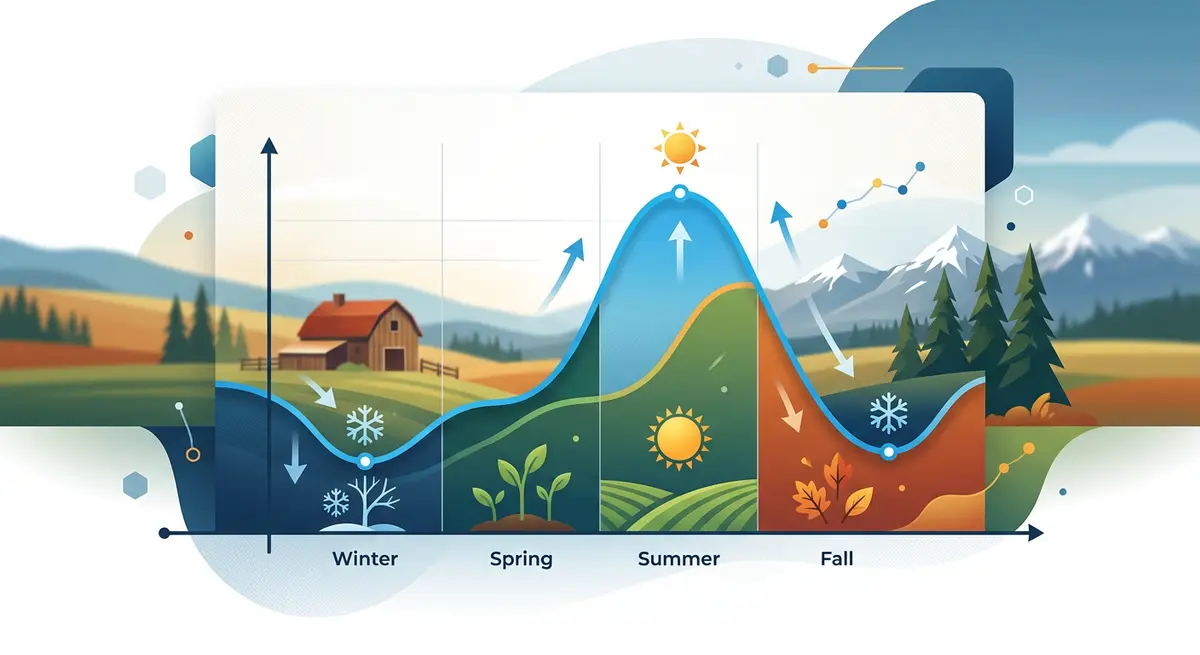
The rural property market operates under unique seasonal dynamics that dictate lending strategies. The market experiences pronounced seasonal patterns, heavily influencing property appraisals. Spring and summer months consistently show increased activity and higher valuations.
During optimal weather conditions, appraisers can fully assess landscaping, access roads, and agricultural potential. Conversely, winter valuations tend to be highly conservative. Snow cover obscures topography and makes infrastructure inspections difficult, often resulting in lower appraised values.
As Dr. Elena Rostova, Economics Professor at the University of Calgary, notes: “The 2026 shift in agricultural commodity prices has directly stabilized rural land valuations across Southern Alberta, but winter appraisals still suffer a 5% to 8% seasonal discount due to inspection limitations.”
Common Pitfalls to Avoid When Leveraging Rural Real Estate
Securing rural financing is fraught with potential missteps. One of the most common pitfalls is ignoring the fine print regarding interest calculations. Borrowers often focus solely on the interest rate while ignoring compounding terms. Understanding exactly how compounding frequency impacts your debt is crucial for calculating the true cost of borrowing over the life of the loan.
Another frequent error is failing to maintain rural infrastructure prior to the appraisal. A failing septic system or a dry well will immediately kill an application. Lenders view deferred maintenance on rural properties as a massive red flag indicating financial distress.
Finally, borrowers must be wary of changing interest rate environments. The Bank of Canada policy rates heavily influence private lending rates. Locking into a fixed-rate product during a volatile economic period can provide much-needed stability for acreage owners.
Frequently Asked Questions (FAQ)
Can I borrow against raw, undeveloped acreage?
Securing financing on raw, undeveloped land is extremely difficult and highly conservative. Lenders view vacant land as highly illiquid and typically cap LTV ratios at 50% or less, requiring substantial down payments or existing equity.
Do outbuildings increase my property’s appraised value?
Yes, but only if they are fully permitted, built to 2026 municipal codes, and contribute to the Highest and Best Use of the property. Unpermitted structures may actually decrease value due to the cost of retroactive compliance.
Why do rural loans take longer to process?
Rural loans require comprehensive manual appraisals, environmental site assessments, and municipal zoning checks. Verifying well water potability and septic compliance alone can add 7 to 14 days to the underwriting timeline.
Will a lender accept an automated valuation model (AVM) for my acreage?
No. Due to the unique nature of rural properties, lenders almost universally reject AVMs or drive-by appraisals. A full, manual interior and exterior appraisal by a certified rural appraiser is mandatory.
How does agricultural income affect my loan application?
Documented agricultural income can improve your Debt-to-Income (DTI) ratio, making it easier to qualify. However, you must provide formal tax returns or commercial lease agreements; projected or informal income is rarely accepted.
What happens if my well fails the potability test?
If your well water fails the health and safety potability test, the lender will halt funding. You will be required to install a water treatment system (like UV or reverse osmosis) and pass a re-test before the loan can close.
Conclusion
Leveraging the equity in your rural property requires a strategic approach, a deep understanding of specialized appraisals, and meticulous documentation. By recognizing the strict infrastructure requirements and partnering with alternative lenders who understand the 2026 acreage market, you can successfully access your capital without disrupting your primary mortgage. Proper preparation—from ensuring your septic system is compliant to timing your appraisal for the summer months—is the key to securing the most favorable terms.
If you are ready to explore your rural financing options or need assistance navigating the complexities of acreage appraisals, our team of experts is here to help. Contact us today to discuss your property’s potential and secure the funding you need.