To successfully prolong the redemption period during an Alberta foreclosure, a homeowner must file a formal Notice of Application and a sworn Affidavit with the Court of King’s Bench before the current deadline expires. This application must definitively prove that the property possesses sufficient equity to secure the lender’s investment, and it must demonstrate a highly probable, concrete plan to pay off the mortgage arrears, either through refinancing, a structured sale, or secured alternative lending.
Key Takeaways
- Time is Critical: Applications for an extension must be submitted before the initial Order Nisi period expires.
- Equity is the Deciding Factor: The Court primarily evaluates whether there is enough property value to protect the lender from financial loss during the extended timeframe.
- Concrete Plans Win: Vague promises will be rejected. You need an active real estate listing, an approved mortgage commitment, or a signed purchase contract.
- Affidavits Matter: Your sworn statement must include an updated property appraisal and clear evidence of your financial restructuring efforts.
- Alternative Financing: Securing secondary lending can often bypass the need for a court extension by immediately clearing the arrears.
Understanding the Order Nisi and Foreclosure Timelines in Alberta
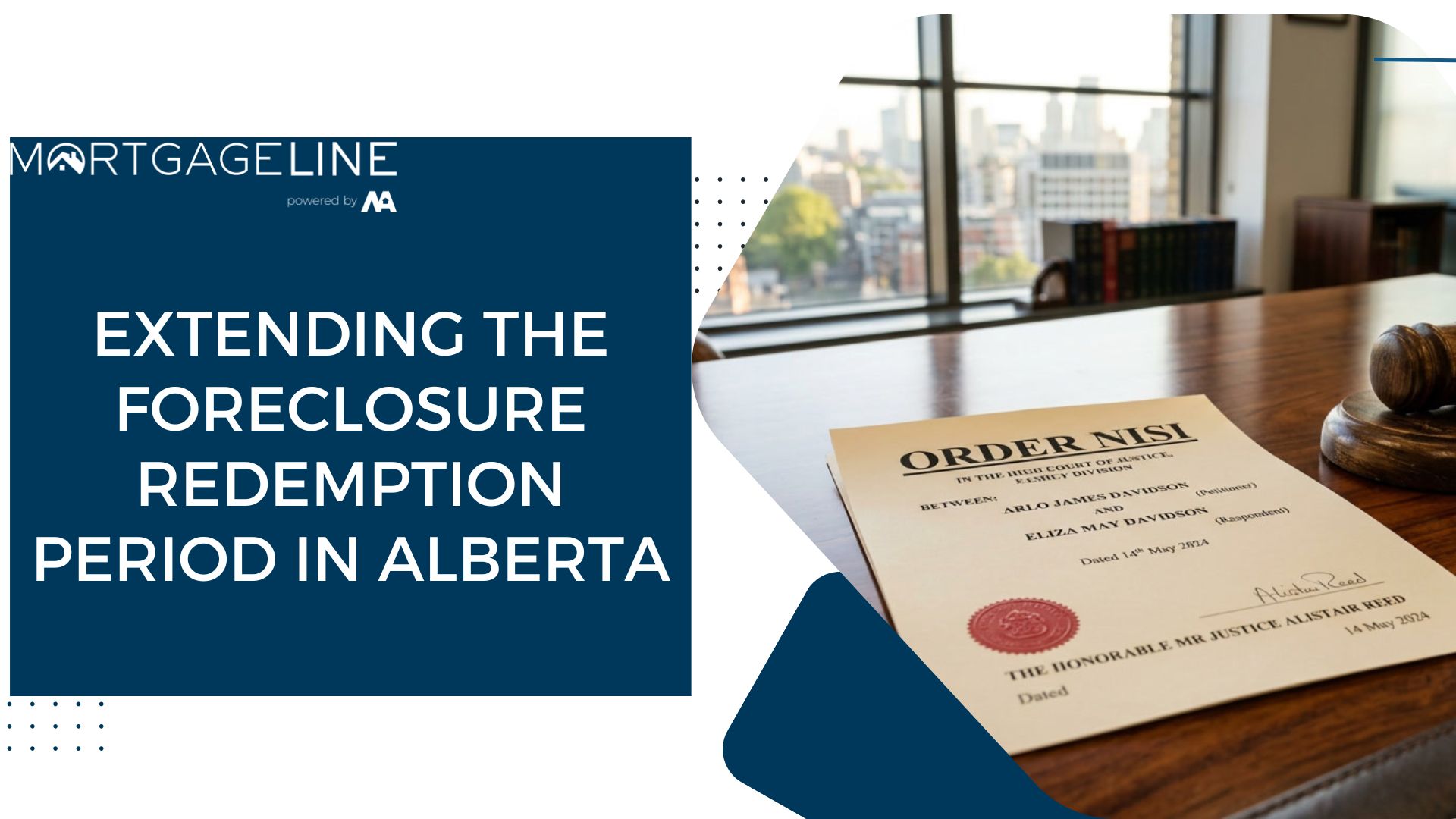
When a lender initiates legal action to recover an unpaid mortgage debt, the Alberta judicial system typically grants an Order Nisi. This order establishes the total amount owed and sets a specific timeframe for the homeowner to pay the debt—commonly referred to as the redemption period. Historically, and continuing into 2026, the standard duration granted by the courts is six months. However, lenders frequently petition to shorten this window to one day or one month if the property lacks equity or has been abandoned.
For homeowners actively working to save their property, six months can pass remarkably fast. Complex financial restructuring, securing specialized loans, or finding a buyer in a fluctuating real estate market often requires additional time. If you are responding to a foreclosure statement of claim, understanding how to petition the Master in Chambers for an elongated timeframe is a critical defense mechanism.
According to the Alberta Courts, a Master in Chambers has the discretionary authority to alter this timeline, provided the homeowner presents compelling legal and financial justification. The burden of proof rests entirely on the borrower to demonstrate that granting more time will not prejudice or financially harm the lender.
Legal Prerequisites for Delaying Property Forfeiture
The courts do not grant delays out of sympathy. The decision is rooted in statutory law and established legal precedents. When evaluating a request for an extension, the judiciary evaluates three primary criteria:
- Sufficient Property Equity: This is the absolute cornerstone of a successful application. If the property’s current market value is significantly higher than the total mortgage debt (including legal fees and accrued interest), the lender’s investment is deemed secure. Research from the Canada Mortgage and Housing Corporation (CMHC) indicates that properties with at least 20% equity are significantly more likely to receive favorable judicial extensions.
- A Viable Payout Strategy: You must present a tangible solution. This could be an unconditional offer to purchase from a third-party buyer, a conditional commitment letter from a private lender, or proof of impending funds from an estate settlement.
- Homeowner Conduct: The court will examine whether the property is being properly maintained, insured, and whether property taxes or condominium fees are current. Diligent maintenance reassures the court that the asset’s value is not deteriorating.

Step-by-Step Guide: Filing the Court Application
The procedural mechanics of securing more time require strict adherence to the Alberta Rules of Court. A minor procedural error can result in an outright dismissal of your application. While legal representation is highly recommended, understanding the exact process is vital for any homeowner managing their financial defense.
1. Obtain an Updated Property Appraisal
Before drafting any legal documents, you must obtain a certified appraisal from a licensed professional. A standard real estate agent’s Comparative Market Analysis (CMA) is often insufficient for court purposes. The appraisal provides the Master in Chambers with an objective, third-party valuation to calculate the exact equity margin protecting the lender’s loan.
2. Draft the Notice of Application
The Notice of Application is the formal legal instrument requesting a hearing before the Master in Chambers. It outlines the specific relief you are seeking (e.g., “An Order extending the redemption period by 90 days”) and cites the statutory authority under the Law of Property Act. This document must be filed at the courthouse where the original foreclosure action was commenced.
3. Prepare a Sworn Affidavit
Your Affidavit is your evidence. It is a legally binding, sworn statement detailing exactly why you need more time and how you intend to resolve the debt. A robust Affidavit should include:
- A copy of the certified property appraisal.
- Documentation of your current financial situation, including income statements or employment letters.
- Proof of your exit strategy, such as an active Multiple Listing Service (MLS) agreement, communications with alternative lenders, or evidence of clearing secondary liens like CRA arrears to facilitate refinancing.
- Photographic evidence that the property is adequately insured and maintained.
4. Serve the Lender and Attend the Hearing
Once filed, the Notice of Application and Affidavit must be formally served to the lender’s legal counsel. The Rules of Court dictate specific notice periods—typically five or more clear days before the hearing date. During the hearing, you or your lawyer will present the argument, the lender’s counsel will respond (often objecting if they feel the equity is thin), and the Master will render a decision.
Evaluating the Strength of Your Application
Judicial outcomes are heavily dependent on the quality of evidence presented. The following comparison illustrates the stark difference between a weak application that will likely fail and a strong application poised for success.
| Evaluation Criteria | Weak Application (Likely Denied) | Strong Application (Likely Approved) |
|---|---|---|
| Equity Position | Less than 5% equity; debt exceeds property value. | 20%+ equity verified by a certified appraisal. |
| Resolution Strategy | Vague intention to “find a better job” or “borrow from family.” | Signed purchase contract or formal mortgage approval letter. |
| Property Condition | Uninsured, property taxes in arrears, visibly deteriorating. | Fully insured, taxes current, photographic proof of upkeep. |
| Market Approach | Trying to sell privately (FSBO) at an inflated, unrealistic price. | Listed with a licensed Realtor at a competitive, market-driven price. |

Expert Insights on Alberta’s 2026 Foreclosure Climate
The economic landscape of 2026 has introduced new complexities to the property legal system. With fluctuating interest rates and evolving stress test regulations, traditional banking institutions are taking aggressive stances on arrears. Data from Statistics Canada highlights a 14% year-over-year increase in property litigation cases across the Prairie provinces. In this highly scrutinized environment, courts demand absolute precision from defendants.
As Jonathan Mercer, a Senior Litigation Consultant specializing in property law, explains: “In 2026, the Masters in Chambers are operating with zero tolerance for administrative delays. Homeowners who simply ask for more time because they are stressed will be denied. You must treat the application as a strict financial business proposal. Show the Court the equity, outline the precise exit strategy, and back it up with sworn, indisputable documents.”
Furthermore, navigating the intricacies of specific lender policies is crucial. For instance, managing a BMO foreclosure may involve different internal workout programs compared to stopping an RBC foreclosure. Understanding the plaintiff’s typical litigation tempo can inform how much time you realistically need to request.
Strategic Alternatives: Utilizing Equity to Bypass the Court
While filing an application for an extension is a valid legal maneuver, it is not always the most efficient or guaranteed method. If your property contains sufficient equity, alternative financing can render the entire legal debate moot. By securing secondary capital, you can immediately pay off the arrears, reinstate the mortgage in good standing, and stop the litigation process entirely.
Private lenders and equity-based financial institutions assess risk differently than traditional banks. They focus primarily on the asset’s value rather than the borrower’s credit score or recent financial missteps. For homeowners navigating the final order of foreclosure timeline, a secondary loan acts as a rapid financial bridge.
Dr. Elena Rostova, an independent financial analyst, notes: “Legal fees for contested applications can quickly exceed $5,000 to $8,000. For many property owners, particularly those who are new Canadians facing unexpected financial hurdles, utilizing home equity through a structured secondary loan is a safer, faster, and ultimately more cost-effective strategy than rolling the dice in a courtroom.”

Common Pitfalls to Avoid During Your Application
Even with substantial property value, certain missteps can be fatal to your legal request. The most prevalent error is waiting until the absolute last minute to file. The courts require adequate notice periods, and filing a last-minute emergency stay of proceedings is rarely viewed favorably unless an unprecedented emergency occurred.
Another frequent mistake is overvaluing the property in the Affidavit. Homeowners often rely on outdated municipal tax assessments or optimistic personal beliefs. If the lender’s counsel produces a starkly lower, certified appraisal, your credibility before the Master is instantly destroyed. Always rely on conservative, professional valuations.
Finally, failing to maintain transparent communication with your primary lender can hinder your case. Courts appreciate defendants who are actively attempting to negotiate in good faith. Document all communications, settlement offers, and restructuring attempts. This paper trail serves as powerful evidence of your proactive conduct.
Conclusion
Requesting a prolonged window to resolve mortgage arrears in Alberta is a rigorous legal procedure that demands compelling evidence of equity and a bulletproof exit strategy. By understanding the criteria used by the Master in Chambers, securing professional property valuations, and presenting a viable financial solution, you significantly elevate your chances of protecting your home from forfeiture. Whether you choose to navigate the court system or pursue rapid alternative equity financing, taking immediate, decisive action is paramount in 2026.
If you are facing legal deadlines and need to explore fast equity solutions to halt proceedings, do not wait until your time runs out. Contact our team of home equity experts today to discuss your options and secure the financial bridge you need.
Frequently Asked Questions
Can I request an extension after the redemption period has already expired?
Once the period expires and a Final Order has been granted, obtaining an extension is exceptionally difficult and rare. You would need to file an appeal demonstrating a massive miscarriage of justice or severe procedural errors by the lender.
How much does it cost to file an extension application in Alberta?
The standard court filing fee for a Notice of Application is relatively small (typically around $50 in 2026), but professional appraisal fees ($400-$600) and legal representation fees can easily push the total cost between $3,000 and $7,000.
Will the court grant more time if I simply cannot afford to move?
No. The court bases its decision on statutory law and financial equity, not personal hardship. You must prove the lender’s investment is safe and that you have a tangible plan to pay the debt.
Does listing my house for sale guarantee an extension?
While an active MLS listing shows good faith, it does not guarantee an extension. The listing price must be realistic according to current market conditions, and there must be enough equity to cover the debt upon sale.
What happens if the Master in Chambers denies my application?
If denied, the initial deadline remains firmly in place. Once that date passes, the lender will immediately proceed with a Final Order for Foreclosure or an Order for Judicial Sale to take possession of the property.