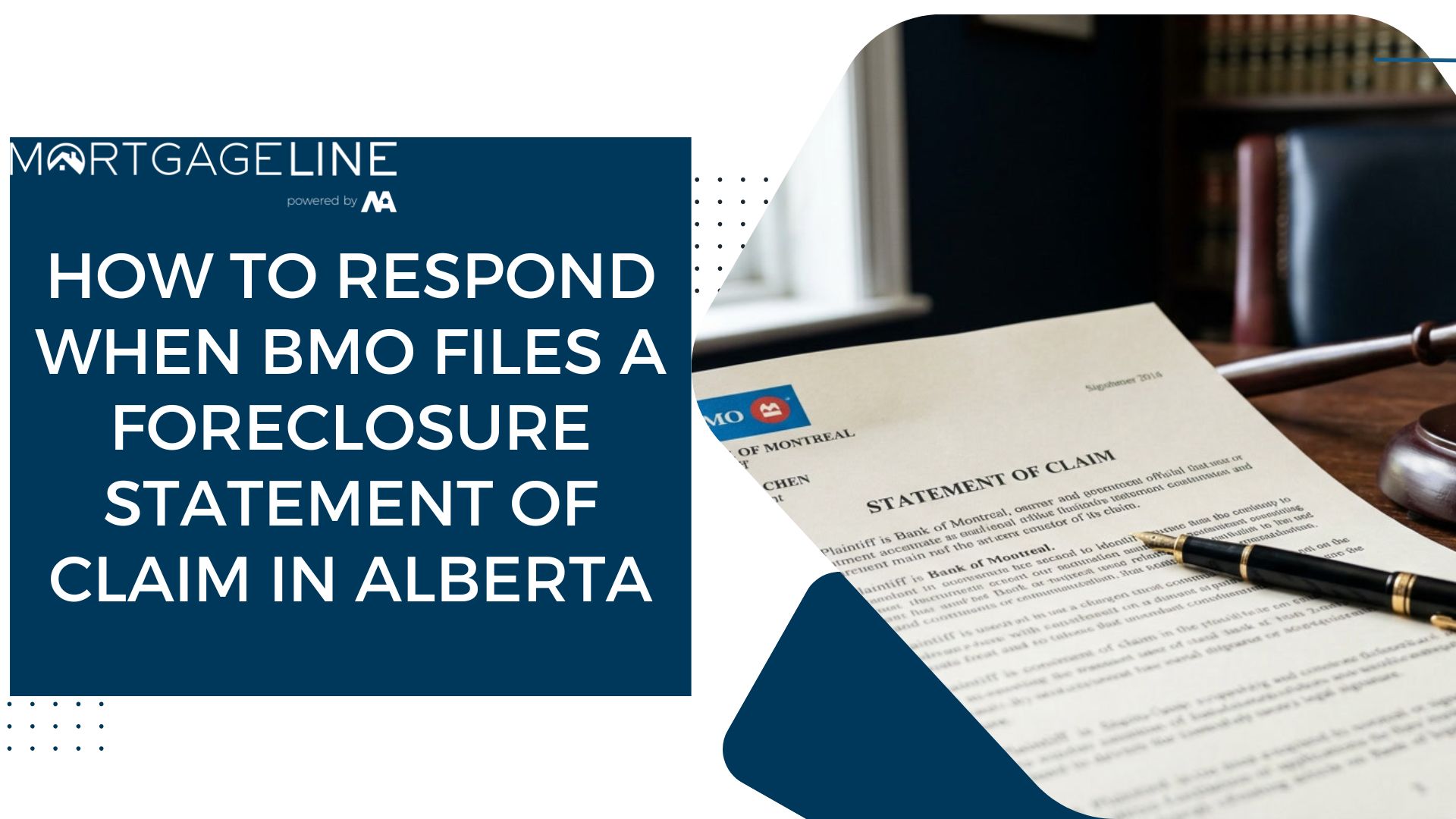
Receiving a Statement of Claim for foreclosure from the Bank of Montreal (BMO) triggers a strict legal countdown in Alberta. You have a limited window to file a formal response, and missing this deadline results in an automatic default judgment — meaning the court can order your property sold without hearing your side. The response document, called a Statement of Defence or a Demand for Notice, must be filed with the Court of King’s Bench within 15 days of service if you are in Alberta, or 30 days if served elsewhere in Canada. Acting immediately preserves your right to negotiate, raise defenses, or pursue alternative financing solutions to stop the foreclosure.
Key Takeaways
- You have 15 days (in Alberta) or 30 days (outside Alberta) to file a response after being served a BMO Statement of Claim.
- Filing a Statement of Defence or Demand for Notice prevents automatic default judgment and preserves your legal rights.
- Common defenses include improper service, lender non-compliance with mortgage terms, or errors in the claimed amount.
- Alberta’s foreclosure process follows the Law of Property Act, which provides a redemption period up to the point of a Final Order.
- Negotiating a forbearance agreement or refinancing through alternative lending can halt the process entirely.
- BMO, like all institutional lenders, must follow strict procedural steps before obtaining a Final Order of Foreclosure.
- Seeking independent legal advice is critical — procedural mistakes can cost you your home and any remaining equity.
Understanding the BMO Foreclosure Timeline in Alberta
Foreclosure in Alberta is a multi-stage judicial process governed by the Law of Property Act. BMO initiates the action by filing a Statement of Claim at the Court of King’s Bench. This document outlines the mortgage details, the alleged default amount, and the relief sought — typically an Order for Sale or Foreclosure. According to the Government of Alberta’s Court of King’s Bench Civil Practice Note 2, the timeline from filing to a Final Order can range from 6 to 12 months, depending on court scheduling and whether the homeowner contests the action.
The first critical milestone is service. A process server must personally deliver the Statement of Claim to you or an adult residing at your property. Once served, the clock starts. Alberta’s Alberta Rules of Court (Rule 3.31) mandates that a Statement of Defence be filed within 15 days. If you fail to respond, BMO can apply for a default judgment, effectively fast-tracking the foreclosure. Research from the Canadian Mortgage and Housing Corporation (CMHC) indicates that approximately 22% of foreclosure actions in Alberta proceed to default judgment due to non-response, underscoring the importance of immediate action.
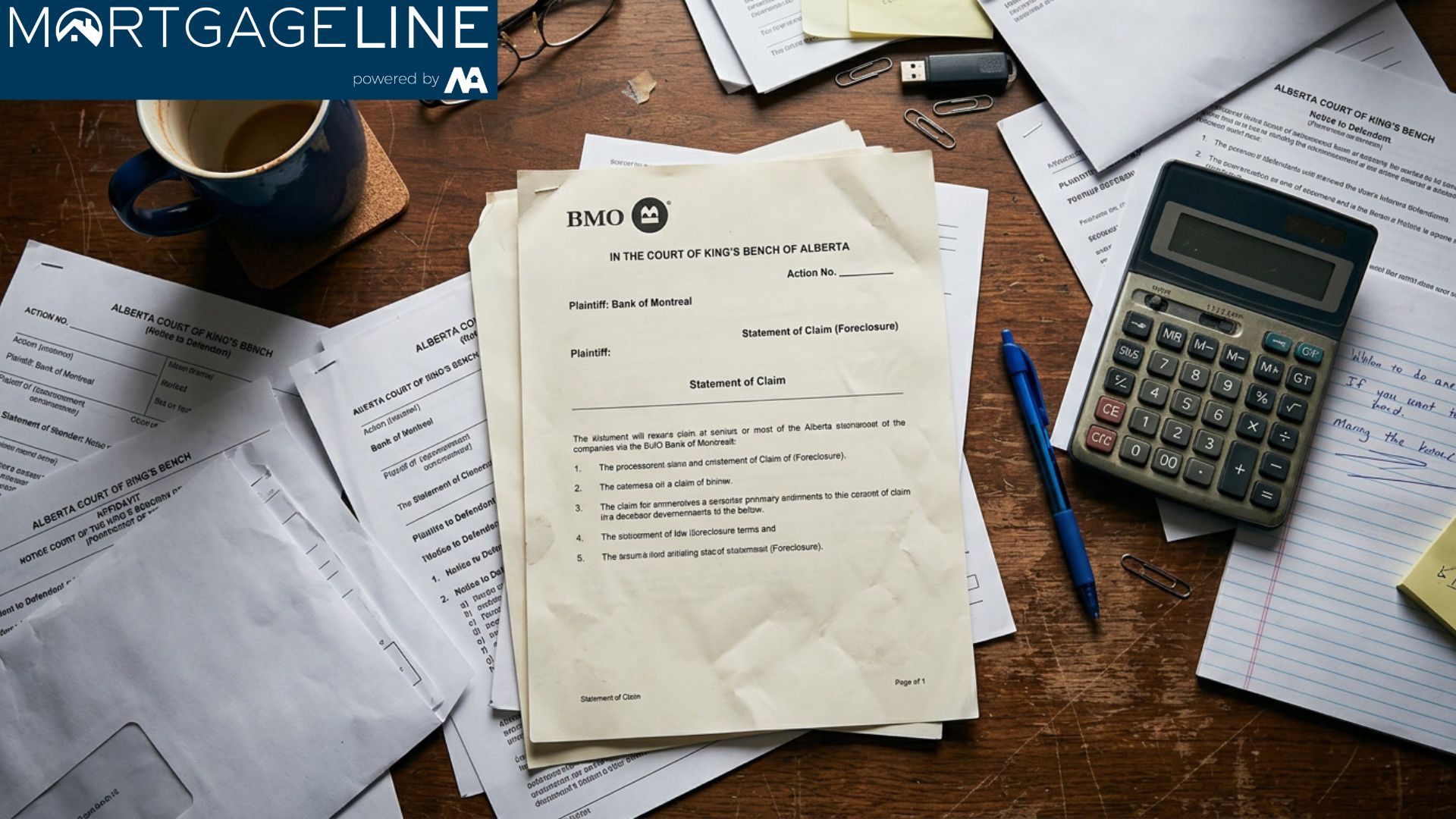
Step-by-Step: Filing Your Response to a BMO Statement of Claim
Responding to a foreclosure claim is procedural, but each step carries significant legal weight. Below is a numbered guide to navigating the response process in Alberta.
- Review the Statement of Claim Immediately: Verify the named parties, the mortgage registration number, the property legal description, and the claimed arrears amount. Errors in these details can form the basis of a defense. As Mark Weisleder, Senior Partner at Real Estate Lawyers.ca, notes: “A surprising number of foreclosure claims contain clerical errors in the legal description or outstanding balance. Catching these early can shift negotiation leverage to the homeowner.”
- Consult an Alberta Foreclosure Lawyer: Retain a lawyer experienced in Alberta foreclosure defense. They will assess whether you have substantive defenses — such as BMO failing to provide required notices under the Law of Property Act or breaching the duty of good faith in mortgage enforcement. Legal fees for a Statement of Defence typically range from $1,500 to $3,500, a fraction of the equity at stake.
- Draft and File a Statement of Defence: This document responds to each paragraph of BMO’s claim, admitting or denying allegations. You must also raise any affirmative defenses, such as improper service, payment miscalculations, or lender misconduct. File the original at the Court of King’s Bench and serve a copy on BMO’s solicitor of record.
- Alternatively, File a Demand for Notice: If you do not intend to contest the foreclosure but want to receive all subsequent court filings, file a Demand for Notice. This document ensures you are notified of every step, including applications for a Redemption Order or Final Order. It preserves your right to participate in later hearings.
- Prepare for the First Court Appearance: After filing, the matter proceeds to a case management or chambers hearing. Here, a Master in Chambers may set timelines for disclosure, questioning, and mediation. Alberta’s Court of King’s Bench reported that over 60% of foreclosure cases in 2026 were resolved through court-assisted mediation before reaching a Final Order.
Common Defenses Against a BMO Foreclosure Claim
Mounting a defense does not necessarily mean you deny owing money. It means you challenge the process or the amount claimed. Valid defenses in Alberta include:
- Improper Service: If the Statement of Claim was not served in accordance with the Alberta Rules of Court, the court may set aside the action.
- Lender Non-Compliance: BMO must comply with statutory notice requirements. A 2025 Alberta Court of Appeal decision in Royal Bank of Canada v. Robertson affirmed that lenders must strictly adhere to demand letter protocols before initiating foreclosure.
- Accounting Errors: Request a full mortgage payment history. Miscalculations in interest, penalties, or legal fees are common. A forensic audit by a mortgage professional can uncover discrepancies.
- Unconscionable Conduct: If BMO acted in bad faith — for example, refusing a reasonable repayment plan without cause — the court may grant relief.
According to a 2026 report by the Alberta Real Estate Association, approximately 18% of contested foreclosures result in a modified mortgage agreement or a stay of proceedings, allowing homeowners to retain their property.

The Redemption Period: Your Last Opportunity to Stop the Sale
Alberta law provides a redemption period — a final window to pay the full mortgage arrears, legal costs, and any other amounts owing to stop the foreclosure. This period ends when the court grants a Final Order of Foreclosure. The length of the redemption period is set by the court, typically between 30 and 90 days, but can be shorter in commercial cases. During this time, you can sell the property, refinance, or secure alternative funding to pay out BMO.
This is where many homeowners explore equity-based solutions. If traditional refinancing is unavailable due to damaged credit, private lenders or alternative mortgage providers can offer bridge financing to redeem the mortgage. The key is acting before the Final Order is granted. Once the Final Order is issued, the property vests in the lender, and the homeowner’s right to redeem is extinguished.
Negotiating with BMO: Forbearance and Settlement Options
Parallel to the legal process, direct negotiation with BMO’s foreclosure department is essential. BMO, like all Schedule I banks, has internal loss mitigation units. You can propose:
- Forbearance Agreement: A temporary pause or reduction in payments while you recover financially. BMO typically requires proof of hardship and a credible repayment plan.
- Repayment Plan: Catching up arrears over 6 to 24 months by adding a portion to regular payments.
- Voluntary Sale: If keeping the home is not viable, negotiating a voluntary sale with BMO’s consent can avoid a court-ordered sale, which often yields a lower price and higher legal costs.
As Sarah Thompson, a licensed insolvency trustee with MNP Ltd. in Calgary, explains: “Banks are not in the business of owning homes. They prefer a negotiated resolution. Homeowners who present a realistic, documented proposal often find BMO willing to pause legal action.”
What Happens If You Do Not Respond?
Ignoring a BMO Statement of Claim has severe consequences. After the 15-day window closes, BMO’s lawyer files a Praecipe for Default Judgment. The court then issues a Default Judgment, and BMO proceeds to apply for a Redemption Order and, ultimately, a Final Order of Foreclosure. At this stage, you lose the right to contest the debt amount or the foreclosure itself. The property is listed for sale, often through a court-appointed real estate agent, and any shortfall after the sale becomes a personal judgment against you — meaning BMO can pursue your other assets for the deficiency.
Statistics from the Office of the Superintendent of Bankruptcy Canada show that mortgage deficiency judgments are a leading cause of consumer insolvency filings in Alberta, accounting for 14% of all consumer proposals in 2026.
| Action | Deadline | Consequence of Missing |
|---|---|---|
| File Statement of Defence | 15 days (Alberta) / 30 days (outside AB) | Default Judgment; lose right to contest |
| File Demand for Notice | Same as Defence deadline | No notification of subsequent steps |
| Redeem Mortgage | Before Final Order granted | Property vests in lender; eviction |
| Negotiate Forbearance | Any time before Final Order | Foreclosure proceeds uncontested |
Alternatives to Litigation: Stopping Foreclosure Before the Final Order
Litigation is costly and stressful. Many homeowners successfully stop a BMO foreclosure by addressing the underlying financial distress. Options include:
- Private Second Mortgage Financing: If you have sufficient equity, a private lender can provide a second mortgage to pay out BMO’s arrears and legal costs. This buys time to stabilize finances or sell the property on your terms. According to a 2026 market analysis by the Mortgage Brokers Association of Alberta, private second mortgage originations for foreclosure rescue increased by 27% year-over-year.
- Consumer Proposal or Bankruptcy: Filing a consumer proposal under the Bankruptcy and Insolvency Act triggers an automatic stay of proceedings, halting the foreclosure immediately. This allows you to restructure debts, including mortgage arrears, over a 60-month period.
- Equity Sale or Joint Venture: Selling a portion of your home equity to an investor in exchange for a lump sum can clear the arrears without taking on new debt.
Each option has tax and legal implications. Consulting both a mortgage professional and a lawyer ensures you choose the path that preserves the most equity. For more on navigating bank-specific processes, review our guide on managing a BMO foreclosure in Alberta.

The Role of Independent Legal Advice in Foreclosure Defense
Alberta courts place high importance on procedural fairness. A lawyer ensures your response is technically compliant and strategically sound. They can also identify if BMO’s claim is defective. For instance, if the mortgage was originated through a broker and the disclosure was inadequate, a defense under the Fair Trading Act may apply. Additionally, a lawyer can negotiate directly with BMO’s counsel, often achieving a consent order that stays proceedings while a repayment plan is tested.
For homeowners considering refinancing to stop foreclosure, independent legal advice on second mortgages in Alberta is mandatory for private lending transactions, ensuring you understand the terms and risks.
Case Study: Calgary Homeowner Stops BMO Foreclosure After Default
Consider the case of a Calgary homeowner, referred to as “J.M.,” who fell 4 months behind on a BMO mortgage after a layoff in the energy sector. BMO served a Statement of Claim, but J.M. did not respond within 15 days, resulting in a default judgment. With the redemption period set at 60 days, J.M. secured a private second mortgage through a mortgage broker specializing in foreclosure rescue. The funds paid out the full BMO arrears, legal costs, and provided a 12-month buffer. J.M. then sold the property through a standard real estate listing, netting $85,000 in equity that would have been lost in a court-ordered sale. This outcome highlights the critical window between default and Final Order where action can still preserve equity.
Frequently Asked Questions
What is the difference between a Statement of Defence and a Demand for Notice?
A Statement of Defence contests the foreclosure claim by raising legal or factual defenses. A Demand for Notice does not contest the claim but ensures you receive copies of all future court documents. Filing a Demand for Notice is simpler but does not prevent a default judgment on liability — it only preserves your right to be heard on later steps like the redemption period length.
Can I stop a BMO foreclosure after a Final Order is granted?
Once a Final Order of Foreclosure is issued, the property legally transfers to BMO, and your right to redeem is extinguished. However, in rare cases, you may apply to the court to set aside the Final Order if there was a procedural irregularity or fraud. This is difficult and requires immediate legal intervention.
How much does it cost to file a Statement of Defence in Alberta?
The court filing fee for a Statement of Defence in the Court of King’s Bench is $250. However, legal fees for drafting and strategy typically range from $1,500 to $3,500, depending on complexity. Some lawyers offer unbundled services, where you pay only for document preparation.
Does filing a consumer proposal stop a BMO foreclosure?
Yes. Filing a consumer proposal under the Bankruptcy and Insolvency Act triggers an automatic stay of proceedings, which immediately halts all creditor actions, including foreclosure. You must include the mortgage arrears in the proposal. The stay remains in effect until the proposal is accepted or rejected by creditors.
What happens to my other debts if BMO gets a deficiency judgment?
If the foreclosure sale proceeds are less than the mortgage balance plus costs, BMO can obtain a deficiency judgment against you personally. This judgment can be enforced through wage garnishment, bank account seizure, or liens on other assets. Many homeowners file a consumer proposal or bankruptcy to discharge this deficiency.
Can I sell my house during the redemption period?
Absolutely. Selling the property during the redemption period is a common strategy. The sale proceeds pay out the BMO mortgage, legal costs, and any other encumbrances. Any remaining equity belongs to you. A voluntary sale typically yields a higher price than a court-ordered sale, preserving more equity.
How long does the entire BMO foreclosure process take in Alberta?
From the filing of the Statement of Claim to a Final Order of Foreclosure, the process typically takes 6 to 12 months. Contested cases can extend to 18 months or more. The timeline depends on court scheduling, whether you file a defense, and negotiation progress.
Conclusion
Responding to a BMO Statement of Claim for foreclosure in Alberta is a time-sensitive, multi-step process that demands immediate action. Filing a Statement of Defence or Demand for Notice within the 15-day deadline preserves your legal standing and opens the door to negotiation, mediation, or alternative financing. Alberta’s redemption period provides a final, powerful opportunity to settle the debt or sell the property on your terms. Whether you choose to contest the claim, negotiate a forbearance agreement, or secure bridge financing, the key is acting before the court issues a Final Order. The equity in your home is worth protecting. Explore your options today and connect with professionals who understand Alberta’s foreclosure landscape.
References
- Government of Alberta, Court of King’s Bench Civil Practice Note 2 — Alberta Courts
- Alberta Rules of Court, Rule 3.31 — Alberta King’s Printer
- Canadian Mortgage and Housing Corporation (CMHC) — CMHC
- Alberta Real Estate Association 2026 Market Report — AREA
- Office of the Superintendent of Bankruptcy Canada — Innovation, Science and Economic Development Canada
- Mortgage Brokers Association of Alberta 2026 Analysis — MBAA
- Royal Bank of Canada v. Robertson, 2025 ABCA — Alberta Court of Appeal