Falling behind on your home financing creates an incredibly stressful environment for your entire family. When you miss a scheduled payment with the Bank of Montreal (BMO), the institution initiates strict internal protocols to recover their capital. However, property laws in this province provide substantial protections for homeowners facing financial distress. Alberta utilizes a strict judicial system for handling defaulted mortgages. This legal framework dictates that a financial institution cannot simply seize your property or change your locks without formal permission from a judge.
Understanding the legal structure of these proceedings is your absolute strongest defense strategy. The court system mandates specific timelines, providing you with a critical window of opportunity to assess your financial standing, explore alternative funding solutions, and implement a realistic recovery plan. Whether your financial hardship stems from a sudden change in employment, unexpected medical expenses, or broader economic shifts, missing a few payments does not automatically mean you will lose your real estate asset. By acting quickly, communicating clearly with legal professionals, and leveraging the financial value you have already established in your property, you can regain complete control. We are here to provide clear, actionable information on how the courts operate and the exact mechanisms you can use to protect your home while managing a BMO foreclosure in Alberta.
Key Takeaways
- Alberta operates strictly under a judicial system, meaning banks must file a formal lawsuit and obtain a court order before taking possession of any real estate.
- The court typically grants a redemption period—often up to six months—giving you a specific timeline to pay the arrears and satisfy the legal claim.
- Ignoring legal documents accelerates the bank’s ability to act; you must file a formal legal response to protect your rights.
- Traditional banks will rarely approve a new loan or refinance your property if you are currently in active arrears.
- Alternative lenders focus heavily on your property’s equity rather than your credit score, providing a viable path to secure the funds needed to stop legal proceedings.
- The bank’s legal fees, property appraisal costs, and late penalties are continually added to your total outstanding mortgage balance during this entire process.
Overview
If you are researching the steps for managing a BMO foreclosure in Alberta, this comprehensive guide details every phase of the legal journey and the financial solutions available to you. We break down the timeline, from the initial missed payment to the critical court rulings. You will learn the difference between a Statement of Claim and an Order Nisi, and why your immediate participation in the legal process is absolutely vital. Furthermore, we explain how alternative lending provides a lifeline when major banks refuse to negotiate. By utilizing private equity, you can successfully pay off your arrears, cover accumulated legal fees, and secure your property’s long-term future.
Understanding BMO’s Internal Arrears Policies
Missed Payments and Bank Communications
The formal legal process does not begin the morning after your first missed payment. Typically, a financial institution will attempt to contact you internally through their collections department. After two or three consecutive missed payments, the bank escalates the matter to their external legal counsel. At this stage, you will receive a formal Demand Letter. This letter officially states that you are in breach of your mortgage contract and demands payment of the full arrears, plus any accumulated late interest, by a specific, hard deadline.
Receiving a Demand Letter is a serious warning, but it is not a court order. It is an opportunity to cure the default before the bank files a public lawsuit. If you have the funds available, paying the exact amount requested in the letter immediately halts any further legal action. To understand consumer rights regarding debt collection and mortgage arrears, reviewing the official guidelines provided by the Financial Consumer Agency of Canada offers valuable context on how federally regulated banks must operate.
The Limitations of Bank Loss Mitigation
When facing severe financial pressure, many homeowners mistakenly assume they can simply ask BMO to add the missed payments to the back of the loan. Unfortunately, major financial institutions operate under rigid federal guidelines. Once a mortgage is actively in the legal system, the bank considers the loan highly risky. While they may offer short-term deferrals early on, they will rarely modify the loan once legal action begins, and they certainly will not approve a new mortgage to replace the old one.
Applying for a refinance at a different major bank is typically unsuccessful as well. Traditional banks rely heavily on automated credit scoring and stringent income stress tests. Because your missed mortgage payments have severely damaged your credit report, an underwriter at a conventional bank will automatically decline your application. This rejection happens regardless of how much value your property actually holds.
The Judicial Process for Defaults in Alberta
Filing the Statement of Claim
If the deadline in the Demand Letter expires without payment, BMO’s lawyers will draft and file a Statement of Claim at the Court of King’s Bench. This document officially initiates the lawsuit against you. A process server will deliver this document directly to your residence. Once you are served in Alberta, you have exactly 20 days to respond.
The Statement of Claim outlines the exact amount you owe, the details of your original mortgage contract, and the bank’s clear intention to take possession of the property. It is critical that you do not ignore this document. If you fail to respond within the 20-day window, the bank can note you in default and proceed to the next legal step without your involvement. This oversight drastically accelerates the loss of your home. You can find detailed information on civil timelines at the official Alberta Courts website.
Filing a Demand of Notice or Statement of Defence
Upon receiving the Statement of Claim, your immediate next step should be consulting with a real estate lawyer to formulate your response. You generally have two distinct ways to respond legally. If you agree that you owe the money and simply need time to secure refinancing or sell the house, your lawyer will file a Demand of Notice. This document forces the bank to notify you of all future court applications, preventing them from securing legal orders behind your back.
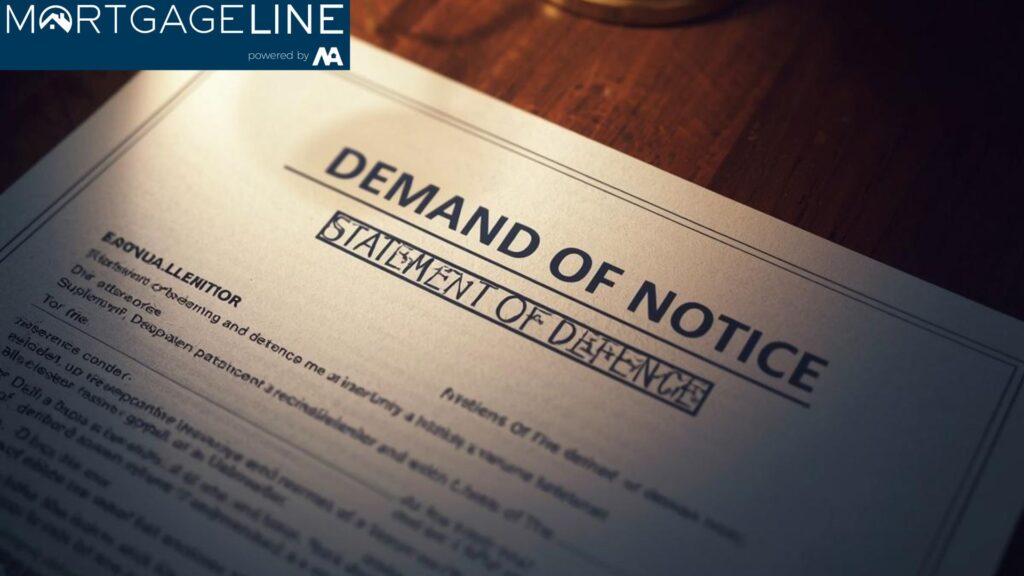
If there is a factual error in the bank’s claim—for example, if they calculated your arrears incorrectly or breached the terms of the mortgage themselves—your lawyer will file a Statement of Defence. This formally disputes the bank’s lawsuit and requires them to prove their case before a judge. Retaining a professional is highly recommended to protect your rights, and you can locate qualified legal representation through the Law Society of Alberta.
Court Orders and the Redemption Period
The Order Nisi Explained
Once the initial 20-day period passes and the bank proves you are in default, they will apply for an Order Nisi. This is the most critical ruling in the entire process. The judge will officially confirm the exact amount you owe, including the principal balance, arrears, interest, and the bank’s legal costs. More importantly, the Order Nisi establishes the “redemption period.”
The redemption period is a court-ordered timeline during which you have the absolute right to pay the arrears (or pay out the entire mortgage) and halt the lawsuit completely. In Alberta, the standard redemption period is six months. This gives you a specific half-year window to organize your finances.
Exceptions to the Standard Timeline
While six months is standard, there are situations where the court will drastically reduce this time. If BMO can prove to the judge that your home is vacant, severely damaged, or that you have little to no equity left in the property, they can ask the court to shorten the redemption period significantly. In extreme cases, a judge may reduce the redemption period to a single day. Maintaining the property and staying actively involved in the court proceedings prevents the bank from easily arguing that the home is abandoned.
Securing Private Equity to Save Your Property
Utilizing Alternative Capital and Lenders
The restrictive environment of traditional banking is exactly where the alternative lending market becomes your most valuable resource. Alternative lenders, also known as private lenders, operate on a fundamentally different philosophy. Instead of scrutinizing your damaged credit score, they focus almost entirely on the hard equity sitting in your real estate. Equity is the current market value of your property minus the outstanding balance of your mortgage.
If you have built up significant equity, private lenders can provide a completely new mortgage that pays off BMO entirely. This clears the default, dismisses the lawsuit, and provides you with a fresh start. For homeowners looking to effectively Stop Foreclosure Calgary, tapping into this alternative capital is frequently the only realistic way to retain ownership of the property when conventional institutions close their doors.
Appraising Your Home for Refinancing
To determine your eligibility for an alternative loan, the lender requires an independent, professional appraisal of your property. If your home is valued at $600,000 and your bank is suing you for a total balance of $350,000, you hold $250,000 in raw equity. Private lenders typically lend up to 75% or 80% of the total property value. In this scenario, they could comfortably provide a loan to pay off your old bank, covering all the arrears and associated legal fees.
Because speed is essential during a court process, alternative lenders operate with high efficiency. They can often approve and fund a Second mortgage Calgary within a matter of weeks. This allows your lawyer to satisfy the Order Nisi long before the redemption period expires. This highly effective strategy protects your valuable real estate portfolio from aggressive bank litigation.
Consolidating Debt to Regain Financial Stability
Addressing Property Taxes and Credit Cards
Financial distress rarely happens in a vacuum. If you fell behind on your mortgage, it is highly likely that other financial obligations have also slipped. Municipal tax arrears are particularly dangerous, as the city can place a priority lien on your home. If BMO discovers unpaid taxes, they will often pay them on your behalf to protect their security, then add that amount to your mortgage balance at a high penalty interest rate. High-interest credit card debt or unsecured personal loans also severely drain your monthly cash flow, making it impossible to catch up.

When you restructure your financing through a private lender, you can borrow slightly more than the mortgage balance to consolidate all these outstanding debts. You can use the extra funds to completely Pay Property Taxes and clear your credit card balances. Consolidating multiple expensive debts into one single mortgage payment dramatically improves your household budget.
Structuring Manageable Payments
The ultimate goal of refinancing is not just to pay off the bank, but to create a sustainable financial future. By wrapping your high-interest liabilities into a single, asset-backed loan, you reduce the sheer number of creditors demanding your attention. This consolidation strategy is a proven method for achieving Low Monthly Payments that you can comfortably manage moving forward. When your monthly output drops significantly, you gain the breathing room necessary to rebuild your credit score and eventually transition back to a traditional lending institution.
The Final Stages of the Court Process
The Order for Sale
If you reach the end of the redemption period and you have not paid the arrears or refinanced the property, the bank will return to court. They will ask the judge for an Order for Sale. This order grants the bank permission to list your property on the public real estate market using a licensed realtor. The property is typically listed at fair market value, and you are expected to cooperate with all requested showings.
While the property is listed, you often remain in the home. If a buyer makes an offer, the bank must take that offer back to the judge for formal approval. The judge will review the offer to confirm it is fair and reasonable. If approved, the house is sold, the bank takes what they are owed from the proceeds, and any remaining profit is given back to you. You can learn more about legal real estate transaction standards through the Real Estate Council of Alberta.
The Rice Order and Eviction
If the property sits on the market for an extended period without selling, or if the local real estate market is severely depressed, the bank may ask the court for a Rice Order. A Rice Order allows the bank to purchase the property themselves at a judge-approved price. Alternatively, the bank may ask for a final Order transferring the title of the property directly into their name.
At this stage, you lose all rights to the home, and you will be legally evicted. Furthermore, if the value of the home does not cover the entire debt, the bank may seek a deficiency judgment against you. This allows them to garnish your wages or seize other assets to recover their losses. Preventing the process from reaching this terminal stage is an absolute priority for affluent buyers and everyday families alike.
Taking immediate action is the only way to protect your property and your financial future. We have the expertise and the private lending network necessary to halt legal proceedings and restructure your debt. We work directly with your legal counsel to satisfy court orders and protect your equity. Contact The Second Mortgage Store at 1728 46 St NW, Calgary, AB, T3B 1B2, Canada, or call us directly at (403) 827 6630 to begin your financial recovery today. Securing the right financial partner makes saving your home entirely possible.
Common Questions About Managing a BMO Foreclosure in Alberta
Q: What exactly is a Statement of Claim?
A: A Statement of Claim is a formal legal document filed at the Court of King’s Bench that initiates a public lawsuit against you. It outlines the total amount you owe, your missed payments, and the bank’s intention to take possession of your property.
Q: Can the bank kick me out of my house immediately after one missed payment?
A: No. Because Alberta uses a judicial system, the bank cannot evict you without a final court order. You have the right to remain in the property during the redemption period and while the lawsuit is actively proceeding through the courts.
Q: How long is the standard redemption period in Alberta?
A: A judge typically grants a six-month redemption period. This gives you a specific half-year window to refinance the property, sell it yourself on the open market, or gather the funds to pay all outstanding arrears and legal fees.
Q: Can I list the house for sale myself while in default?
A: Yes. During the redemption period, you are highly encouraged to list the property for sale on the open market. Selling the house yourself generally results in a higher sale price than a bank-forced sale, which protects your remaining equity.
Q: Will the bank’s legal fees be added to my overall debt?
A: Yes. The terms of standard Canadian mortgages state that all costs incurred by the lender to collect the debt—including lawyer fees, court costs, and property appraisal fees—are added directly to your outstanding principal balance.
Q: What happens if I ignore the court documents delivered to me?
A: Ignoring the Statement of Claim allows the bank to note you in default. They can proceed with the lawsuit entirely unopposed, drastically speeding up the process and securing court orders to seize the property much faster.
Q: Can I get a new mortgage with bad credit due to missed payments?
A: Major traditional banks will not approve you with active arrears on your credit report. However, alternative and private lenders base their approvals on the available equity in your home, making it entirely possible to secure refinancing despite bad credit.
Q: What is a deficiency judgment?
A: If the property is sold by the court and the sale price is not enough to pay off your total mortgage debt, the bank can apply for a deficiency judgment. This allows them to pursue your other personal assets or garnish wages to collect the financial shortfall.
Conclusion
A legal action initiated by your financial institution is a severe threat to your long-term wealth, but it is never the final chapter of your homeownership journey. The judicial system provides specific timelines and opportunities designed to allow you to correct the default. By understanding the function of the redemption period and the strict limitations of traditional banks, you can pivot toward strategies that actually work. Alternative lending provides the essential liquid capital required to clear court orders, pay aggressive legal fees, and stabilize your household finances. Acting decisively protects the equity you have spent years building and stops the stressful cycle of litigation completely. If you are actively managing a BMO foreclosure in Alberta, The Second Mortgage Store is ready to provide the exact financing required to save your home.