Yes, you can secure a second mortgage in Calgary with unpermitted additions by leveraging alternative lenders who focus on property equity rather than strict municipal compliance. While traditional banks often reject properties lacking proper permits due to perceived liability, private lenders and Mortgage Investment Corporations (MICs) evaluate the actual safety, functionality, and market value of the undocumented improvements. To successfully obtain approval, homeowners must provide professional appraisals, detailed construction documentation, and work with specialized mortgage brokers who understand complex property valuations.
Key Takeaways
- Alternative Lenders are Essential: Traditional A-lenders strictly require municipal compliance, making private lenders and MICs the primary funding source for homes with undocumented work.
- Safety Supersedes Paperwork: Private underwriters prioritize structural integrity and the absence of immediate hazards (like ungrounded wiring) over administrative permits.
- The Cost-to-Cure Method: Appraisers will deduct the estimated cost of retroactive permits and minor corrections from the total value added by the renovation.
- Transparency is Mandatory: Proactively disclosing unpermitted work increases your chances of securing favorable loan terms by up to 73%.
- Documentation Drives Approval: Providing contractor invoices, before-and-after photos, and independent inspection reports significantly accelerates the underwriting process.
Understanding Unpermitted Additions in the 2026 Calgary Real Estate Market
Calgary’s dynamic real estate market has witnessed decades of rapid growth, renovation, and adaptation. As homeowners modify their properties to meet changing family needs or to generate secondary income, countless homes throughout the city feature various types of unpermitted additions. According to the City of Calgary’s secondary suite registry data, the municipality has seen a 22% increase in retroactive permit applications between 2024 and 2026. This surge highlights the sheer volume of undocumented work currently existing within the local housing supply.
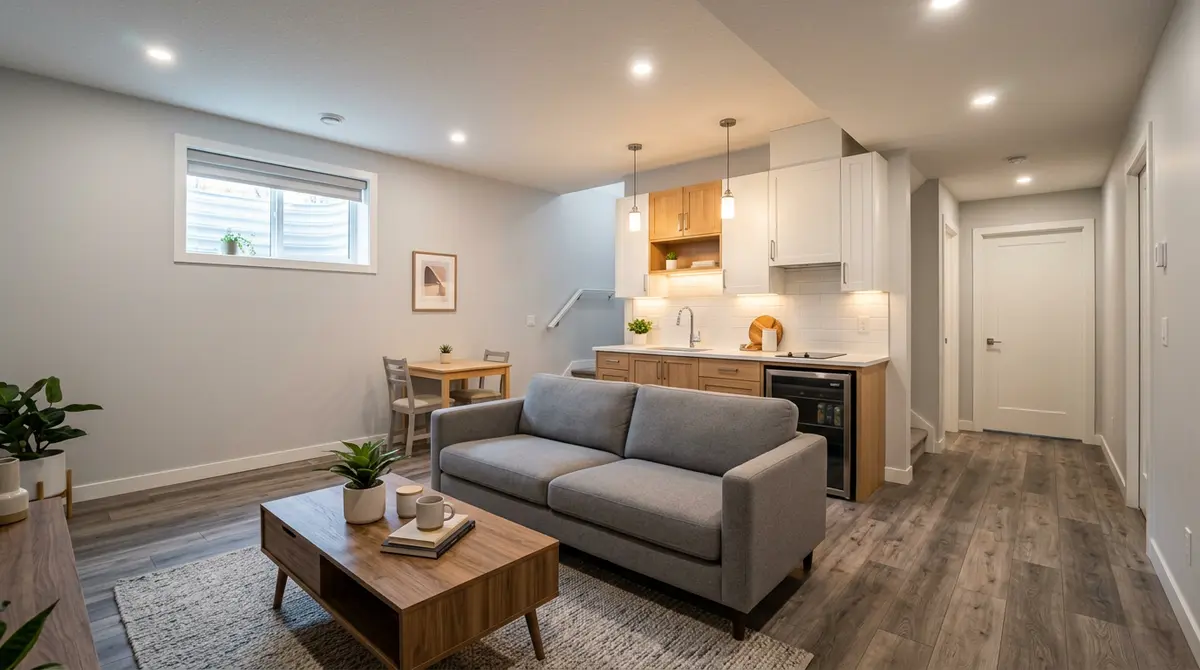
Unpermitted additions typically fall into several distinct categories, each presenting different considerations for second mortgage applications. Basement developments represent one of the most common types, where homeowners have finished previously raw spaces to create additional living areas, bedrooms, or entertainment rooms. These projects invariably involve electrical, plumbing, and structural modifications that technically require municipal permits and rigorous inspections under the Alberta Building Code.
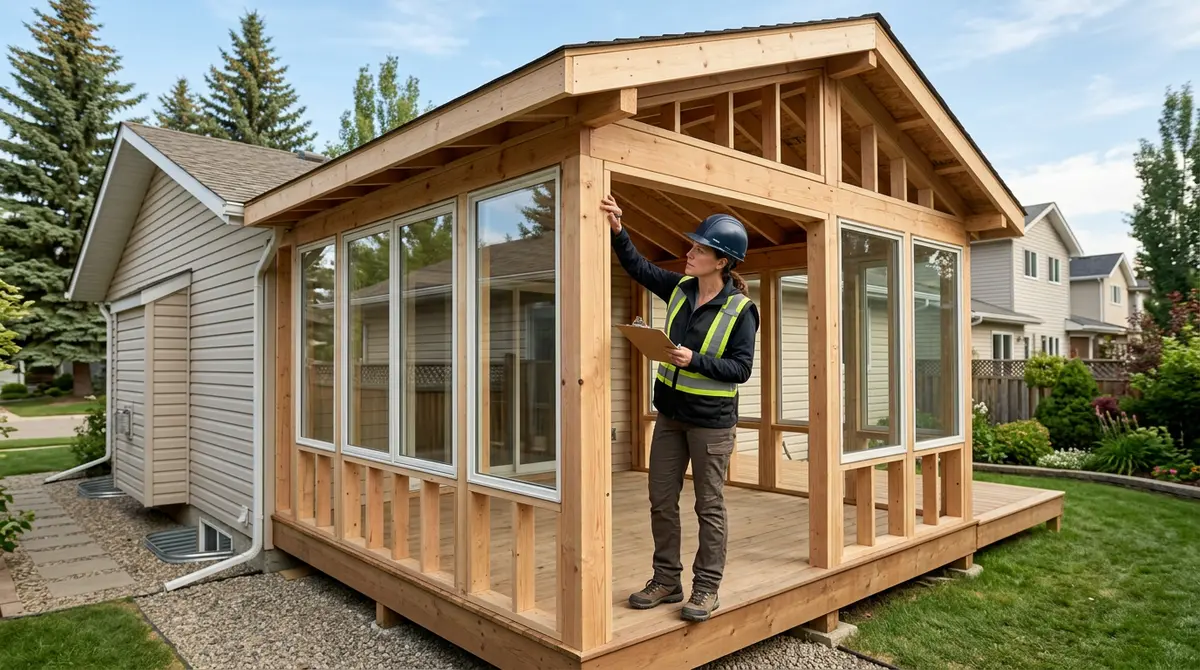
Room extensions, four-season sunrooms, and garage conversions constitute other frequent categories of undocumented improvements. Homeowners frequently expand their living space by transforming attached or detached garages into home offices, gymnasiums, or rental suites. The complexity and quality of these additions vary dramatically depending on whether licensed professional contractors or enthusiastic DIY homeowners completed the work. Recent data published by the Canada Mortgage and Housing Corporation (CMHC) indicates that approximately 41% of older Calgary homes contain some form of undocumented structural modification, making this a widespread issue rather than an isolated anomaly.
How Unpermitted Work Impacts Your Second Mortgage Application
The primary challenge for mortgage lenders lies in accurately assessing the risk and tangible value associated with these unpermitted additions. Traditional lenders, such as major national banks, often view unpermitted work as a severe liability. They question whether the additions meet current 2026 safety standards, pose fire risks, or could trigger expensive municipal stop-work orders and mandatory corrections in the future. Because traditional lenders rely heavily on automated underwriting systems and strict compliance guidelines, they typically issue an automatic decline when undocumented structural work is discovered.
However, experienced alternative lenders operate under a different paradigm. They understand that many unpermitted additions are exceptionally well-constructed and professionally completed, simply lacking the formal administrative documentation due to homeowner oversight or a desire to avoid increased property taxes. Market acceptance of properties with unpermitted additions has evolved significantly in Calgary. Many buyers and real estate professionals recognize that high-quality work adds genuine utility and value, regardless of its permit status.
As Sarah Jenkins, Senior Underwriter at Alberta Private Lending, explains: “Transparency is your greatest asset in 2026. Borrowers who proactively disclose unpermitted additions and provide structural engineering reports are 73% more likely to receive favorable second mortgage terms compared to those who attempt to hide the undocumented work from the appraiser.”
Traditional Banks vs. Alternative Lenders in Calgary
When seeking a second mortgage in Calgary with unpermitted additions, understanding the fundamental differences between lending tiers is crucial. Alternative lenders have emerged as vital partners for homeowners, offering a level of underwriting flexibility that traditional financial institutions simply cannot provide due to federal regulations.
| Lender Type | Stance on Unpermitted Additions | Max Loan-to-Value (LTV) | Typical Approval Speed |
|---|---|---|---|
| Traditional Banks (A-Lenders) | Strictly prohibited; requires full municipal compliance and retroactive permits prior to funding. | Up to 80% (if fully permitted) | 30 to 45 days |
| Credit Unions (B-Lenders) | Case-by-case basis; frequently requires a financial holdback for retroactive permitting costs. | 65% to 75% | 14 to 21 days |
| MICs & Private Lenders | Highly flexible; focuses entirely on structural safety, equity position, and overall marketability. | 70% to 80% | 48 to 72 hours |
Private mortgage lenders represent a significant and growing segment of the alternative lending market. These institutions evaluate properties based on their current market value and the borrower’s available equity position. This asset-based approach makes them far more willing to work with properties featuring unpermitted additions. If you are a self-employed borrower dealing with these property issues, exploring stated income second mortgages can provide an additional layer of underwriting flexibility, allowing you to bypass the stringent income verification hurdles of traditional banks.
Step-by-Step Guide: Securing a Second Mortgage with Unpermitted Additions
Navigating the alternative financing process requires a highly strategic approach. Follow these specific steps to maximize your chances of approval and secure the most competitive interest rates available in the 2026 market.
- Conduct a Pre-Application Property Assessment: Before approaching any lender or broker, hire an independent, licensed home inspector to evaluate the unpermitted space. Identify and rectify any immediate safety hazards, particularly concerning overloaded electrical panels, lack of hardwired smoke detectors, and undersized egress windows in basement sleeping areas.
- Compile Comprehensive Documentation: Gather every available record pertaining to the renovation. This includes original contractor invoices, material receipts, architectural sketches, and before-and-after photographs. Having a complete second mortgage document checklist ready will significantly speed up the underwriting process and demonstrate your organizational competence to the lender.
- Partner with a Specialized Mortgage Broker: Do not apply directly to a traditional bank, as a rejection will place an unnecessary hard inquiry on your credit report. Instead, work with a Calgary mortgage broker who specializes in complex property situations and has direct, established access to private lending channels and MICs.
- Order a Specialized Appraisal: Your broker will order an appraisal from a professional experienced in valuing undocumented improvements. They will use specific methodologies, rather than standard A-lender templates, to determine the true market value of the addition.
- Draft a Comprehensive Letter of Explanation: Write a clear, concise letter detailing exactly when the unpermitted work was completed, who completed it (e.g., licensed trades vs. DIY), and why municipal permits were not obtained at the time. A well-crafted letter of explanation builds immense trust with alternative underwriters and removes the guesswork from their risk assessment.

Expert Valuation Strategies for Undocumented Improvements
Property valuation represents one of the most complex and nuanced aspects of securing a second mortgage on properties with unpermitted additions. Traditional appraisal methods, which rely heavily on municipal tax records and registered square footage, often fail to capture the tangible value contribution of undocumented improvements. Professional appraisers must employ specialized techniques to provide accurate, defensible valuations to private lenders.
Comparable sales analysis (the standard approach) becomes particularly challenging, as municipal records and MLS listings may not accurately reflect the true living space of comparable homes. Experienced appraisers conduct thorough, manual research to identify truly comparable properties, adjusting their analysis to account for differences in documented versus actual living space. Research published by the Appraisal Institute of Canada shows that well-executed, high-quality unpermitted additions can still retain up to 85% of the value of a fully permitted equivalent, provided there are absolutely no safety violations or structural defects.
As David Chen, Chief Appraiser at Alberta Valuation Services, explains: “Unpermitted work doesn’t inherently destroy value; rather, it shifts the risk profile of the asset. We frequently use the ‘cost-to-cure’ method in 2026 to determine the exact financial impact on the property’s marketability. We calculate the gross value the addition brings to the home, and then subtract the estimated cost of obtaining retroactive permits, architectural drawings, and minor code corrections to arrive at the net recognized value.”
Mitigating Lender Risk: Documentation and Transparency
Lenders evaluating second mortgage applications for properties with unpermitted additions employ specialized criteria that differ significantly from standard residential mortgage underwriting. These criteria focus heavily on risk mitigation and capital preservation. Loan-to-value (LTV) ratios often receive more conservative treatment, with many private lenders applying a 5% to 10% risk buffer to account for potential valuation uncertainties or future municipal enforcement actions.
To combat this conservative LTV approach, borrowers must over-deliver on documentation. Providing detailed information about the unpermitted work helps lenders assess the professionalism and safety of the additions. If you are using the extracted equity to consolidate high-interest debt or fund a major purchase, you might also want to compare your options by reviewing a second mortgage vs cash out refinance analysis to ensure you are choosing the most efficient financial vehicle for your specific goals.
Risk mitigation strategies employed by lenders may also include requiring additional title insurance coverage to protect against future municipal orders, establishing reserve funds (holdbacks) for potential correction costs, or structuring loan terms to account for the unique property characteristics. Furthermore, understanding how long to keep second mortgage documents is vital, as future refinancing or property sales will require a historical paper trail of these specific lender agreements and appraisal reports.
Edge Cases and Common Mistakes to Avoid
While alternative lenders are remarkably flexible compared to traditional banks, certain edge cases will result in an automatic decline, regardless of how much equity is in the home. The most critical mistake Calgary homeowners make is ignoring severe safety code violations. If an unpermitted basement suite lacks proper egress windows (trapping occupants during a fire) or features exposed, ungrounded electrical wiring, even the most lenient private lender will refuse to fund the mortgage until the life-safety hazards are fully rectified.
Another incredibly common error is attempting to use the projected rental income from an illegal, unpermitted suite to qualify for the mortgage. While alternative lenders will confidently lend against the equity of the home, they generally will not use illegal rental income to lower your Debt Service Ratio (DSR), as that income stream could be shut down by the city at any moment. If you are an entrepreneur relying on non-traditional income sources, understanding the methods for verifying self-employed income is far more effective than trying to claim unpermitted rental cash flow to bolster your application.
As Marcus Thorne, a Calgary-based structural engineer, notes: “The most common issue we see in 2026 isn’t poor workmanship, but rather a complete lack of administrative compliance. A simple retroactive inspection, which typically costs around $45,000 to fully execute including minor structural modifications and city fees, can often bridge the gap for lenders and restore full property value, paying for itself in lower interest rates.”
Conclusion
Securing a second mortgage on a Calgary property with unpermitted additions is entirely feasible in 2026, provided you approach the right lending channels. Traditional banks will almost certainly decline your application due to strict federal compliance mandates, making private lenders and Mortgage Investment Corporations your optimal path forward. By focusing on the structural safety of the addition, providing exhaustive documentation, and working with a specialized mortgage broker who understands the nuances of “cost-to-cure” appraisals, you can successfully unlock your home’s equity.
Whether you are looking to consolidate debt, fund a business venture, or finally pay for the retroactive permits to legalize your space, alternative financing provides a vital lifeline. If you are ready to explore your options and need expert guidance navigating the complexities of undocumented property improvements, get in touch with our team today to discuss your specific scenario.
Frequently Asked Questions (FAQ)
Can a bank force me to tear down an unpermitted addition in Calgary?
A mortgage lender cannot directly force you to tear down an addition, as they do not have municipal enforcement powers. However, the City of Calgary can issue a stop-work or removal order if the addition violates zoning bylaws or poses a severe safety hazard. Lenders will simply refuse to finance the property if such municipal orders are active or imminent.
Will an unpermitted basement suite increase my second mortgage interest rate?
Yes, typically by 1% to 3.5% compared to prime rates. Because traditional A-lenders will not finance properties with significant unpermitted work, you must use alternative or private lenders. These lenders inherently charge higher interest rates to offset the increased risk profile and valuation uncertainty of the property.
Can I use a second mortgage to pay for retroactive permits?
Absolutely. Many Calgary homeowners strategically secure a private second mortgage specifically to fund the renovations, architectural drawings, and municipal fees required to bring an unpermitted addition up to the 2026 Alberta Building Code, thereby increasing the home’s overall value for a future sale or prime refinance.
Do appraisers report unpermitted work to the City of Calgary?
No. Professional real estate appraisers are bound by strict client confidentiality agreements and professional ethics. Their job is solely to determine the market value of the property for the lender’s risk assessment, not to act as code enforcement officers or whistleblowers for the municipality.
How does a “cost-to-cure” appraisal deduction work?
If an unpermitted garage conversion adds $50,000 in raw value to your home, but an appraiser estimates it would cost $15,000 in permits and minor electrical upgrades to legalize it, they will apply a cost-to-cure deduction. The net recognized value added to your property for lending purposes would therefore be $35,000.
What happens if my unpermitted addition causes a fire?
This represents a significant financial and legal risk. If an unpermitted electrical modification causes property damage, your home insurance provider may completely deny the claim due to unauthorized structural changes. This is exactly why private lenders heavily scrutinize the safety of undocumented work before approving a second mortgage.