Securing a second mortgage on a flood zone property in Calgary requires navigating strict lender risk assessments, mandatory overland water insurance, and specialized property appraisals. While traditional banks often restrict lending in designated floodways, homeowners can successfully access their home equity through private lenders and alternative mortgage investment corporations (MICs) by providing comprehensive flood mitigation documentation and accepting lower loan-to-value (LTV) limits. The process demands meticulous preparation, as lenders in 2026 heavily scrutinize environmental vulnerabilities before approving secondary financing.
Key Takeaways
- Designation Matters: Your specific municipal hazard designation (Floodway vs. Flood Fringe) dictates your lender options.
- Mandatory Insurance: Overland water and sewer backup insurance are non-negotiable and must cover the combined total of all mortgages on the property.
- Lower LTV Limits: Traditional lenders typically cap Loan-to-Value (LTV) ratios at 65-70% for riverfront properties.
- Alternative Lenders: Private lenders and MICs offer the most viable financing paths for homes in high-risk zones.
- Appraisal Reductions: Specialized appraisals often reflect a 5% to 15% value reduction compared to identical non-flood zone properties.
- Mitigation Adds Value: Proactive flood defenses, such as commercial sump pumps and backwater valves, significantly improve approval odds.
The 2026 Landscape of Calgary Flood Zone Designations
When considering secondary financing for riverside properties, homeowners face unique challenges that extend far beyond typical lending concerns. Calgary’s history with significant flooding events, particularly the devastating 2013 floods that caused over $5 billion in damages and affected more than 75,000 residents, fundamentally altered how financial institutions approach mortgage financing. Today, the intersection of flood risk and home equity lending creates a complex landscape where property values, insurance requirements, and lender risk assessments converge.
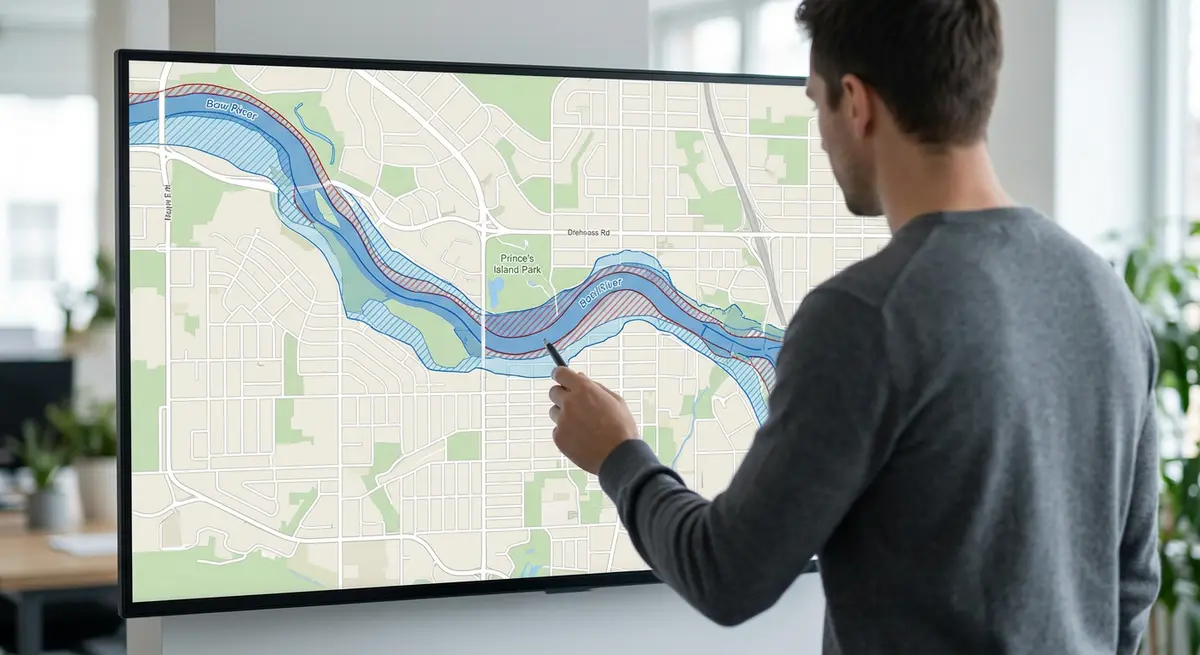
The regulatory environment surrounding flood zone properties has evolved significantly. As of 2026, the Government of Alberta’s flood mitigation strategies, including the completion of the Springbank Off-stream Reservoir (SR1), have reduced peak flood risks on the Elbow River by approximately 70%. However, lenders still maintain strict guidelines for properties located near the Bow River, Elbow River, and their tributaries. Calgary’s official flood hazard maps categorize properties into distinct risk levels, which directly impact your ability to secure secondary financing:
- The Floodway: This is the channel of the river and adjacent lands where waters flow fastest and deepest during a flood. Traditional “A-lenders” almost universally reject second mortgages here, requiring borrowers to seek private financing.
- The Flood Fringe: These are areas outside the floodway that may experience shallow, slower-moving water. Lenders are more amenable to financing here but require extensive documentation and proof of mitigation.
- Overland Flow Areas: These zones are susceptible to groundwater seepage and sewer backup. They require specific insurance endorsements but generally face fewer lending restrictions than the floodway or fringe.
Understanding these designations is crucial. Before applying, you must verify your property’s exact status. Gathering the right paperwork early is essential; you can learn more about organizing your mortgage paperwork to streamline this initial phase.
How Lenders Assess Risk for Riverside Properties
Financial institutions approach secondary financing on environmentally vulnerable properties with heightened caution. Lenders evaluate not only your creditworthiness and income stability but also the complex risk factors associated with climate hazards. The underwriting process typically begins with a Flood Hazard Determination, a formal assessment of your property’s vulnerability.
As Sarah Jenkins, Senior Risk Analyst at Alberta Mortgage Solutions, explains:
“Lenders in 2026 are not just looking at the property’s current state; they are forecasting 10-year climate models to determine the long-term viability of the collateral. If a property lacks municipal or private mitigation infrastructure, we automatically reduce the maximum allowable Loan-to-Value (LTV) ratio by 10% to 15%.”
Traditional lenders typically cap LTV at 65% to 70% for these properties, compared to the standard 80% available in non-flood areas. This means you must have significantly more equity built up in your home to qualify. Furthermore, processing times take an average of 14 to 21 days longer due to mandatory environmental audits and specialized underwriting reviews. If you are relying on a co-signer to strengthen your application, ensure you understand guarantor responsibilities, as guarantors take on significant liability if the property suffers uninsured water damage.
Mandatory Insurance Requirements and Coverage Complexities
Flood insurance requirements create a complex web of coverage needs that often exceed standard homeowner policies. Standard policies typically exclude overland water damage, meaning property owners must secure specialized endorsements through private insurers following Insurance Bureau of Canada guidelines. Lenders mandate comprehensive coverage that protects both the primary and secondary mortgage amounts.
This requirement can result in insurance premiums that are 40% to 60% higher than those for non-riverfront homes. Any lapse in this coverage typically triggers an immediate default provision in your mortgage agreement.
Comparison: Standard vs. Flood Zone Insurance Requirements
| Coverage Feature | Standard Home Insurance | Flood Zone Mortgage Requirement |
|---|---|---|
| Overland Water Protection | Optional / Often Excluded | Mandatory for Loan Approval |
| Sewer Backup | Optional Add-on | Mandatory (Minimum $50,000 limit) |
| Deductible Limits | Flexible ($500 – $2,000) | Strictly Capped (Usually max $5,000) |
| Proof of Coverage | Annual Renewal Notice | Continuous Coverage Verification Clause |
As Marcus Thorne, Director of Underwriting at Prairie Private Capital, states:
“Borrowers often overlook the strict continuous coverage clauses. A single lapse in overland water insurance can trigger an immediate default on a second mortgage in these high-risk zones. The lender’s collateral is entirely dependent on that policy remaining active.”
It is vital to maintain meticulous records of your insurance policies and correspondence. Consult our guide on how long to retain your mortgage documents to ensure ongoing compliance with lender covenants.

Property Valuation Challenges in Flood-Prone Areas
The valuation of environmentally sensitive properties requires specialized appraisal expertise. Appraisers must balance the highly desirable aspects of riverside locations—such as scenic views, mature trees, and pathway access—with the inherent risks and municipal regulatory restrictions. This delicate balance often results in a 5% to 15% value reduction compared to identical properties located just a few blocks away outside the hazard zone.
According to David Chen, Chief Appraiser at Calgary Valuation Experts:
“The presence of municipal mitigation infrastructure like the SR1 reservoir has stabilized property values in the flood fringe, but lenders still demand a conservative approach. We must identify truly comparable sales that share similar flood risk characteristics, which can be incredibly challenging in a tight 2026 real estate market.”
If you have invested in private flood mitigation—such as elevated utilities, specialized commercial drainage systems, or backflow valves—ensure these are prominently featured during the appraisal inspection. These improvements can positively influence lender decisions, mitigate the standard value reductions, and potentially increase your overall borrowing capacity.
Step-by-Step Guide: Securing Secondary Financing in a Flood Zone
Navigating the application process requires methodical preparation. Follow these exact steps to maximize your chances of approval and secure the best possible terms:
- Verify Your Exact Designation: Use the City of Calgary’s official flood information portal to determine if your specific address is in the floodway, flood fringe, or overland flow zone.
- Gather Mitigation Documentation: Compile all municipal permits, contractor invoices, and receipts for flood-proofing renovations. This proves to lenders that you have proactively managed the property’s risk.
- Secure Comprehensive Insurance: Obtain a binding quote for overland water and sewer backup insurance that covers the total value of both your first mortgage and the proposed new loan.
- Prepare Your Financial Profile: Ensure your income verification is flawless. Lenders will heavily scrutinize your Debt Service Ratios (GDS/TDS) to ensure you can afford the higher insurance premiums.
- Order a Specialized Appraisal: Work exclusively with an appraiser who has specific, documented experience valuing Calgary riverfront properties.
- Apply with the Right Lender: Bypass traditional banks if you are in a high-risk zone and approach specialized Mortgage Investment Corporations (MICs) or private lenders directly.
Alternative Financing Solutions and Private Lending
When traditional “A-lenders” prove reluctant to provide financing, alternative financing solutions become necessary. Private lenders and MICs offer more flexible approaches, focusing heavily on property equity and borrower exit strategies rather than strict adherence to traditional underwriting guidelines.
While private lenders are more accommodating of environmental hazards, their rates average 2% to 4% higher than traditional lenders to offset the risk. Additionally, borrowers must be mindful of how interest is calculated. Understanding how compounding frequency impacts your debt is critical when negotiating terms with alternative lenders, as private mortgages often compound monthly rather than semi-annually.
For some homeowners, adding a new loan might not be the most cost-effective route. Depending on your primary mortgage rate and potential penalty fees, you should compare a second mortgage vs cash out refinance to determine which option yields the lowest overall cost of borrowing over your intended timeline.
Case Study: Leveraging Equity in the Elbow River Flood Fringe
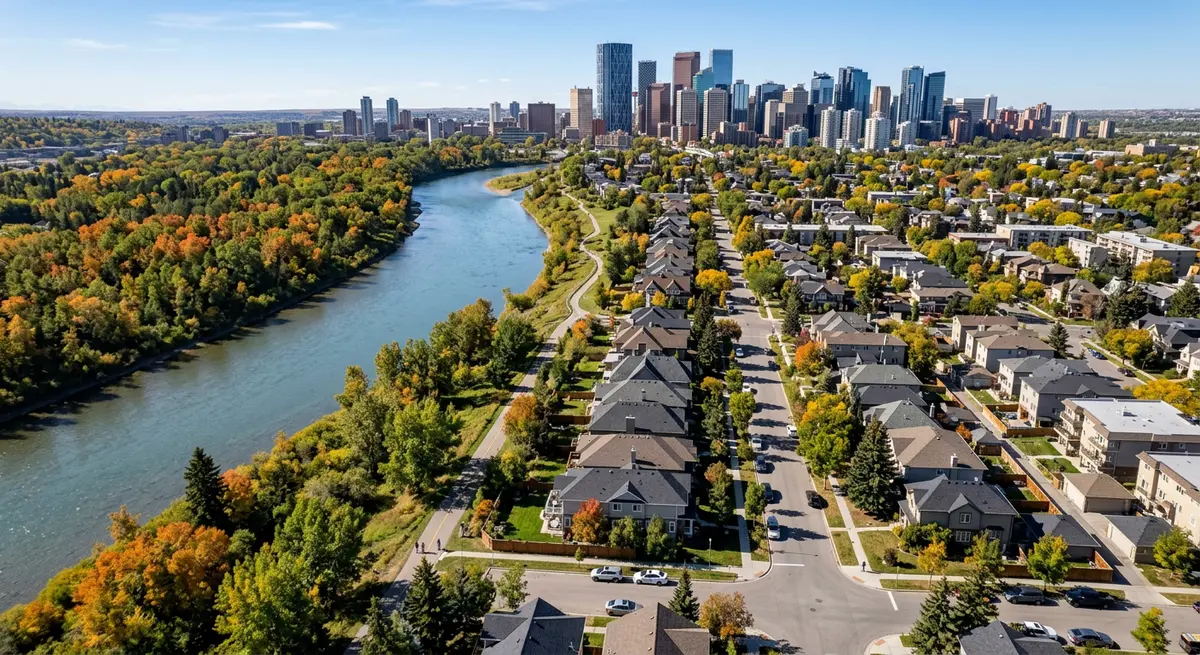
Consider the case of the Thompson family, who own a detached home in the Rideau Park neighborhood, officially designated as a flood fringe zone. In early 2026, they needed $100,000 to fund a major business expansion. Their primary bank, citing updated Bank of Canada risk guidelines for environmental hazards, declined their Home Equity Line of Credit (HELOC) application.
Instead of giving up, the Thompsons took a highly strategic approach. First, they provided documentation showing they had installed a $15,000 commercial-grade sump pump system and backwater valves with full municipal permits. Second, they secured an updated insurance policy explicitly covering overland water up to $1 million. Finally, they worked with a specialized mortgage broker who connected them with a local MIC.
Because the MIC underwriters could clearly see the mitigated risk and the strong equity position, the Thompsons secured a $100,000 loan at a reasonable 9.5% interest rate, with a 65% LTV. The lender even waived the standard environmental premium because of the proactive plumbing upgrades. (Note: If you are an entrepreneur worried about lenders verifying your business details, proper documentation is your best defense against rejection).
Common Mistakes to Avoid
When applying for secondary financing on environmentally sensitive properties, avoid these critical errors that frequently lead to application rejection:
- Hiding Unpermitted Renovations: Any basement development in a flood zone must have municipal permits. Unpermitted work will be flagged by the appraiser and will almost certainly kill the deal.
- Letting Insurance Lapse: Even a one-day lapse in coverage during the underwriting process will result in an automatic decline.
- Overestimating Property Value: Do not base your equity calculations on homes located three blocks away on higher ground. Flood zone properties have distinct micro-markets that must be respected during valuation.
Conclusion
Securing a second mortgage on a Calgary flood zone property in 2026 is entirely possible, provided you approach the process with the right documentation, appropriate insurance coverage, and realistic expectations regarding Loan-to-Value limits. By understanding your specific municipal designation, investing in proactive flood mitigation, and partnering with specialized alternative lenders, you can successfully leverage your home’s equity despite environmental challenges. If you are struggling to find a lender willing to work with your riverside property, get in touch with our team today to explore your private financing options.
Frequently Asked Questions (FAQ)
Can I get a second mortgage if my house is in the Calgary floodway?
Yes, but it is highly unlikely through a traditional bank. You will almost certainly need to use a private lender or MIC who specializes in high-risk environmental properties, and you should expect higher interest rates and lower loan-to-value limits.
How much does flood insurance increase my borrowing costs?
Mandatory overland water and sewer backup endorsements can increase your annual insurance premiums by 40% to 60%. Lenders factor these higher carrying costs into your Debt Service Ratios (GDS/TDS), which may slightly reduce your total borrowing capacity.
Will the 2026 SR1 reservoir completion improve my borrowing options?
Yes. The completion of the Springbank Off-stream Reservoir has significantly reduced the risk profile for properties along the Elbow River. Many alternative lenders have subsequently relaxed their LTV restrictions for homes in these specific protected zones.
Do I need a new appraisal if I had one done last year?
Yes. Lenders require an appraisal dated within the last 30 to 90 days, especially for environmentally sensitive properties. Market conditions and municipal flood mapping updates can change property valuations rapidly.
What happens if my property floods while I have a second mortgage?
If your property floods, your mandatory insurance policy will cover the damages up to your policy limit. The insurance payout is typically made payable jointly to you and your mortgage lenders to ensure the property is repaired and their collateral is protected.
Can I use the borrowed funds to build flood defenses?
Absolutely. Many homeowners use secondary financing specifically to fund flood mitigation renovations, such as elevating foundations or installing commercial drainage. Lenders often view this favorably as it ultimately protects their investment.